Category Archives: Advocacy

Where were the starving W. Hudson Bay polar bears in 2020 if the population had declined by 2021?

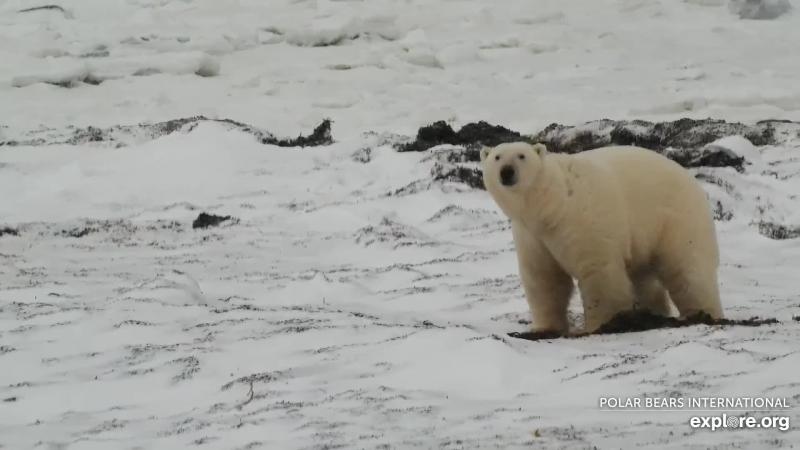
Polar bears are supposed to starve before they die, the experts said. They said only a few years ago that dead or emaciated individuals onshore were evidence that many polar bears would soon be dying of starvation out on the sea ice. So, if the Western Hudson Bay (WH) subpopulation had indeed dropped by 27% by late summer 2021 as researchers claimed, where are all the photos of starving bears in the fall of 2020, the year before the count? The photo below of a thin female and cub was taken in late fall of 2021 (the year of the count) by a stationary web cam. In other words, some bears came off the ice without an optimal amount of fat because of poor hunting conditions over the winter but they were still alive. We know that 2020 had the shortest ice-free season in at least 20 years (and no similar images were captured), so bears went into the winter of 2020/2021 in good condition. Ditto for 2017-2019. In contrast to 2021, in 2016 (the year of the previous survey that also indicated a declining population size), bears reportedly came off the ice in good condition.
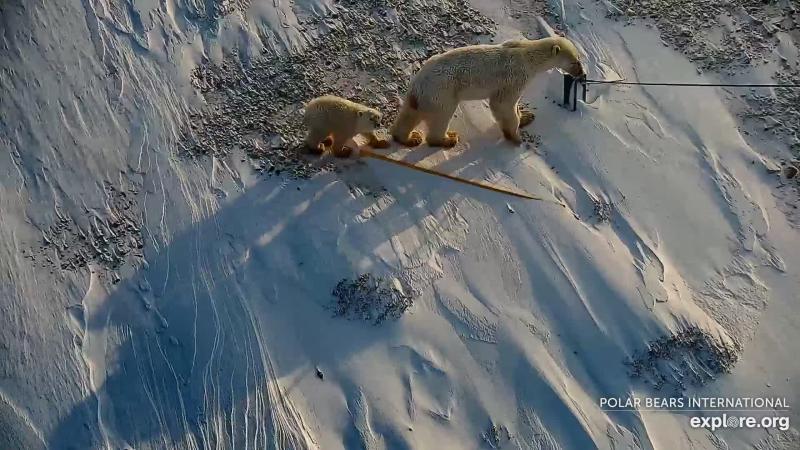
All I’ve seen are photos of fat bears and fat cubs, even a triplet litter in fall 2020. The shore of WH near Churchill should have been abounding with starving bears in 2020 (and in 2015), if the experts were right about starving bears preceding a population decline. More importantly, where are the studies on food-deprived bears onshore, as were done in the 1980s when WH bears were emaciated and cub survival poor (e.g. Ramsay et al. 1988)? WH bears are being used exclusively to model an implausibly pessimistic future for polar bears across the entire Arctic (Molnar et al. 2010; 2020), which means lack of good science for WH polar bears has big consequences. Covid restrictions in two of those ten years don’t excuse lack of study on this phenomenon.

Continue reading
W. Hudson Bay polar bear population decline stories are unethical and ignore critical caveats

Canadian government scientists created headline news worldwide last week when they told the media that Western Hudson Bay polar bear numbers appeared to have declined by 27% between 2017 and 2021, based on a survey report that has not been made public. This is called ‘science by press release’. Its practice is rightfully considered unethical, as it is usually associated withpeople promoting scientific ‘findings’ of questionable scientific merit who turn to the media for attention when they are unlikely to win the approval of the professional scientific community.

Not surprisingly, all of the stories stated or implied a strong association between this purported population decline and lack of sea ice due to ‘climate change’. However, sea ice conditions have been particularly good over the last five years–for both freeze-up and breakup dates–calling into question how ‘lack of sea ice’ could possibly be to blame for the apparent decline.

A Reuters story (dated 23 December 2022) admits this is the case and included another critical caveat that only one news outlet I saw bothered to mention, which happened to be BBC News:

Scientists cautioned a direct link between the population decline and sea ice loss in Hudson Bay wasn’t yet clear, as four of the past five years have seen moderately good ice conditions. Instead, they said, climate-caused changes in the local seal population might be driving bear numbers down.

For example, an Associated Press story published the day before (22 December 2022), picked up by many other outlets, did not include these critical pieces of information about recent good sea ice conditions and possible declines in seal abundance.

Continue reading

Polar bears of SE Greenland get shorefast ice necessary to hunt seals: not so unique after all

The 234 or so polar bears inhabiting the SE tip of Greenland, said to be genetically and ecologically unique because they are “surviving without ice“, have been experiencing sea ice formation along the shoreline this month just like other bears across the Arctic. Recall that shorefast ice formation attracts seals in the fall, which polar bears hunt successfully, and the following spring (April/May) provide a platform for ringed seals to give birth to their pups, which polar bears eat with gay abandon.

The photo above was taken by Kristin Laidre in March 2016: a bear this fat at the end of winter (i.e. before ringed seals are born in the spring) is living in productive habitat.

Continue reading

No evidence for BBC claim that Churchill is simply getting too warm for polar bears

Another pronouncement from conservation activists at Polar Bears International taken without a single check of facts makes the BBC look ineffective and gullible.

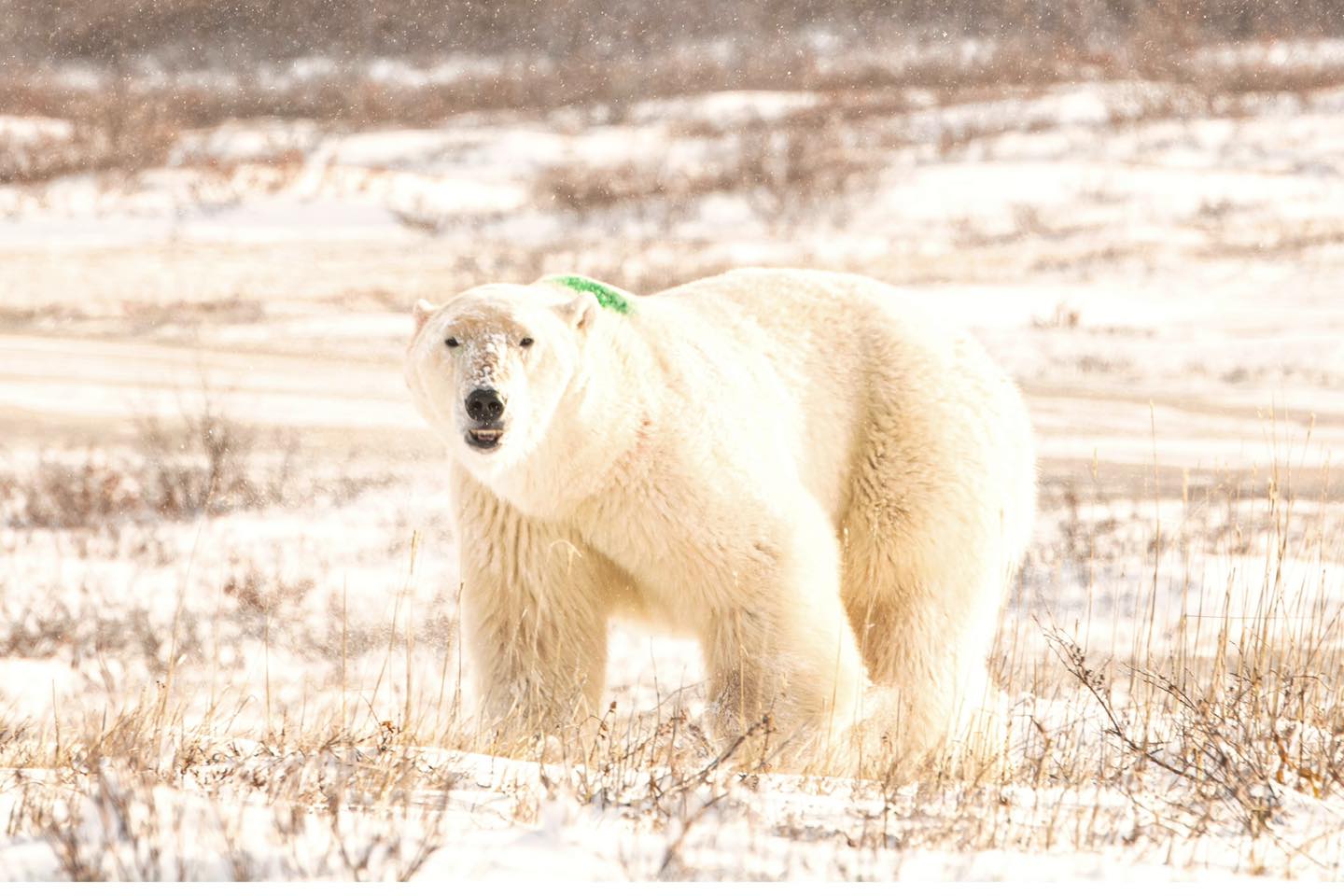
The photo above of a ‘green dot’ bear was taken 10 November 2022 by a Churchill resident. Bears released from the ‘polar bear jail’ when there is enough sea ice for them to resume hunting are marked with a green dot.

Continue reading

Arctic Report: primary productivity still high & sea ice flatline continues despite warmer temperatures

NOAAs annual Arctic Report Card is, for the most part, a valiant effort to turn good and ambiguous news into harbingers of climate change disaster. Primary productivity is up across most of the region (good news for wildlife) and despite Arctic temperatures being “twice as high” as the rest of the world in recent years, the summer sea ice ‘death spiral’ has failed to materialize.

Oddly, there is no bad news about polar bears (last mention was 2014). However, the media were told that the few hundred sea birds that died this year in the enormous Bering/Chukchi Sea region over the four months of summer in 2022 is a portend of climate change catastrophe–even though the authors of the NOAA report admit they have no conclusive evidence to explain the phenomenon. However, here are also some honest figures that are quite illuminating.

Continue reading

Polar bear habitat update: Winter conditions well on their way across the Arctic except in Svalbard

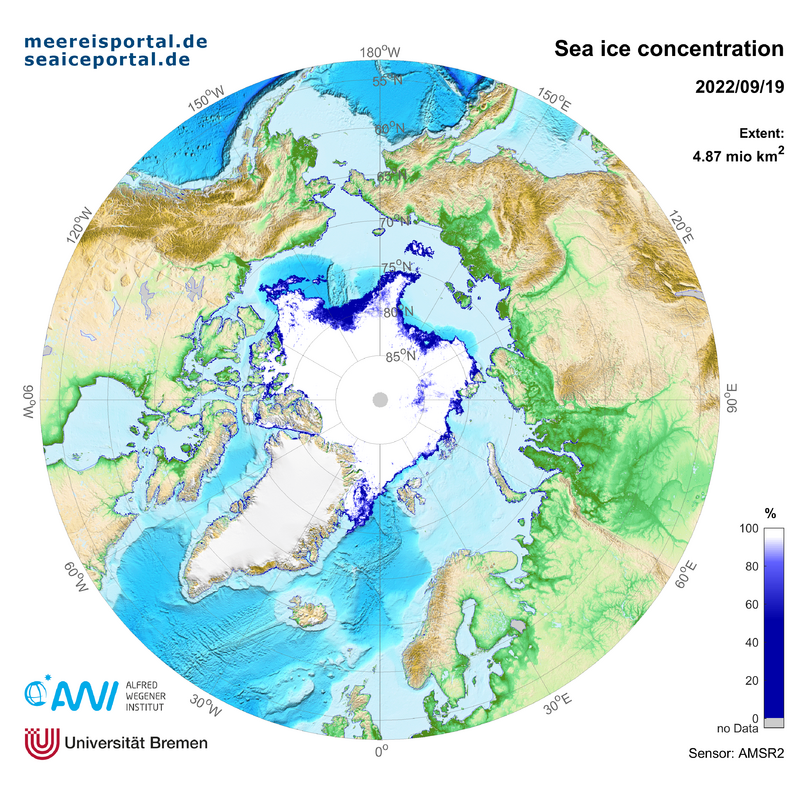
December is late fall in the Arctic: winter conditions are gearing up but are not in full swing everywhere. Sea ice is developing quickly over Hudson Bay and moving slowly towards the Bering Sea but the Svalbard archipelago is still devoid of pack ice.

Such conditions north of Norway have existed most years since 2005: it’s certainly not a new development for Svalbard to be free of surrounding pack ice in December (although there was lots of ice in 2019 and 2021 by late November). This means traditional denning areas on the eastern islands again cannot be used by pregnant polar bear females, because they must be ensconced in their dens by at least late November or so.

Some seem to think this is a calamity: that such ‘loss of habitat’ is a huge concern for the survival of the subpopulation, if not the entire species. However, the same conditions existed in 2011 and did not result in a dramatic decline in the population as measured in 2015 (Aars et al. 2017) because the bears knew how to respond. They have apparently moved north to make maternity dens on the sea ice or east to the Franz Josef Land archipelago in Russia (Aars 2015). These areas are still within the Barents Sea subpopulation boundaries and researchers have known for two decades that bears have moved around within it (Andersen et al. 2012; Derocher 2005; Maurizen et al. 2002).

Continue reading

Polar bear specialist calls Hudson Bay freeze-up ‘late’ yet bears were moving offshore 2 weeks ago

Predictably, polar bear specialist Andrew Derocher has finally posted a tracking map of the Western Hudson Bay bears his team has fitted with collars and eartags–two weeks after bears were released from Churchill’s polar bear jail, which is the local signal that there is enough sea ice for bears to leave shore. As I reported two weeks ago, release of jailed bears happened this year on 10 November. And as I predicted in that post, by waiting so long after that event to post his map, Derocher can make it seem to his naive followers on Twitter that the bears are just starting to leave now (the last map he posted was on 11 November, when none of his bears had moved). He reinforces this by calling WH freeze-up “late”, when by all objective measures (including local informants reporting bears on the ice) it was as early as it had been in the 1980s (Castro de la Guardia et al. 2017).

Recall that fall is the second-most important feeding season for polar bears, due to the fact that seals are strongly attracted to newly-forming sea ice. It’s their chance to regain some or all of the weight lost over the summer, before the long winter fast begins (while bears indeed hunt when they can, they are not often successful during the depths of the Arctic winter: most bears are at their lowest weight by March).

Continue reading

Arctic sea ice tipping point nonsense at COP27 refuted by last seven years of data

David Attenborough and his cronies at Netflix devoted an entire documentary last year (‘Breaking Boundaries‘) on the nonsense notion that the world is facing a dire ‘tipping point’ where calamity is inevitable, with the Arctic being ‘Ground Zero’ for these effects. However, their sea ice model has already been falsified by the last seven years of data.

Continue reading

Polar bear habitat update: ice forming along Hudson Bay, Wrangel & Franz Josef Islands surrounded

Western Hudson Bay polar bears near Churchill will be able to leave shore within days, at most one week later than in the 1980s, although you wouldn’t know that from the climate change activists at Polar Bears International who have spent the last week promoting some egregiously false and misleading statements. PBI controls the narrative surrounding Western Hudson Bay bears through their partnership with the biggest polar bear tourist outfits in Churchill and online.

Yesterday, it was “See how the climate crisis is changing their world”.

Developing no slower than it did in 2007 (16 years of no change), Arctic sea ice is providing polar bears in southern regions with their second-most critical feeding opportunities while in areas like Wrangel Island and Franz Josef Land, they now have easy access to and from important summer refuge/maternity denning islands. And contrary to predictions of increased ‘conflict’ between polar bears and people around Churchill, there have been fewer problem bear reports there in recent years, this year included. In other words, there is no ‘climate crisis’ for polar bears, even in Western Hudson Bay, and recent models of a dire future for polar bears are based on totally implausible worst-case climate scenarios. Sea ice loss since 1979 has been so gradual that polar bears have been able to adapt, either through natural selection or changes in behaviour.

UPDATE 12 November 2022. One of the independents on the ground near Churchill had this to say about the bears and freeze-up conditions this year:

“Bears started leaving on November 10; conservation emptied the jail on the 10th as well.”

[the 10th was the day this post was originally published; ‘the jail’ is the Churchill Polar Bear Alert Program’s ‘holding facility’, see report below]. This information suggests the average date for bears leaving shore will likely turn out to be 12-14 November, again earlier than the average for the 1980s (16 Nov +/- 5 days). There may still be a few bears on the shore of Wapusk National Park that seem to be in no hurry to leave, but a few stragglers doesn’t mean there isn’t ice available for hunting.

Continue reading

King Charles & David Attenborough parrot WWF activist nonsense they naively accept as ‘science’

The World Wildlife Fund (WWF) was created in 1961 to raise funds for wildlife conservation and immediately recruited European royalty to help attract wealthy benefactors. At first it was a novel good cause and this is why Britain’s royal family, plus their close friend David Attenborough, have been loyal supporters for six decades. However, for more than twenty years, the WWF has not been the benevolent conservation organization that it was in the 1960s yet these powerful men support them with more vigor than ever.

Prince Philip was the first president of the WWF-UK but ended his association with the group when they morphed into a politicized activist organization lobbying for the limitation of fossil fuels to curb human-caused global warming. However, Prince Charles, now King Charles III, became even more involved in WWF propaganda machine and eventually initiated son William, now heir apparent, into doing the same.

When the WWF began falsely promoting itself as a scientific authority a dozen or so years ago, these naive elite boosters accepted it without question, parroting unsubstantiated WWF climate doomsday talking points at every opportunity. These men don’t speak with an authority of their own knowledge on this topic: they use their exalted positions to assist the WWF and others achieve their utopian dream: destroy for others the capitalism that created their own wealth and power.

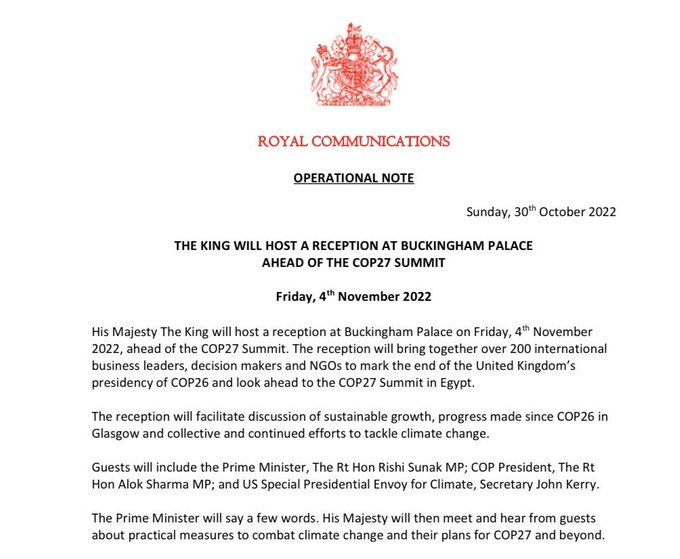
It is clear now that many of the goals of the WWF are also shared by the World Economic Forum (WEF), and that these complement the vision the King and David Attenborough have for the future. They all want a return to a world with fewer people that live meager, circumscribed lives while the rich carry on their jet-setting ways. The King will lobby again for their collective vision of the world this Friday at Buckingham Palace.

Attenborough also spoke out on the topic in person a few weeks ago (see below) after years of making documentaries and public statements that make his position very clear. Attenborough became an official WWF ambassador in 2015, the same year that the WWF partnered with Netflix and the BBC to make their first documentary, ‘Our Planet’. The WWF’s warped perception of science prevailed in ‘Our Planet’, so it’s no wonder the documentary is full of misleading and deceptive information. The film featured the infamous falling walrus fiasco that is the focus of my book, Fallen Icon: Sir David Attenborough and the Walrus Deception.

I have copied an excerpt below about the WWF-Royalty-Attenborough connection as important background to understanding the power structure of the climate change and animal conservation agenda that is now being pushed hard in an emotionally manipulative manner. I have spent years showing that conditions in the natural world are not as bad as Attenborough and the WWF insist and so do not warrant extreme ‘solutions’ as proposed by King Charles, the WEF, and many who will attend the COP 27. I will continue resisting this utopian fantasy.

Continue reading