Category Archives: Life History

More polar bear catastrophe hype: bears use four times more energy than expected

Last week (24 February 2021), The Guardian was promoting a study that claims polar bears now use four times more energy than expected to survive because of ‘major ice loss’ in the Arctic, as a way of suggesting that the animals are already on their way to extinction.

But like many papers of this type, this study by Anthony Pagano and Terri Williams (Pagano and Williams 2021) is yet another model describing what biologists think may be happening based on experimental data collected from individual bears, not a conclusion based on evidence collected from subpopulations with the worst amounts of ice loss.

Continue reading

Local guide says W Hudson Bay bears have recently ‘put on a lot of fat and are healthy’

Canadian polar bear guide Dennis Compayre has spent more than 20 years around Churchill, Manitoba, and his simple words in a 19 February CBC article promoting an upcoming CBC documentary special are clear: Western Hudson Bay (WH) polar bears are currently thriving.

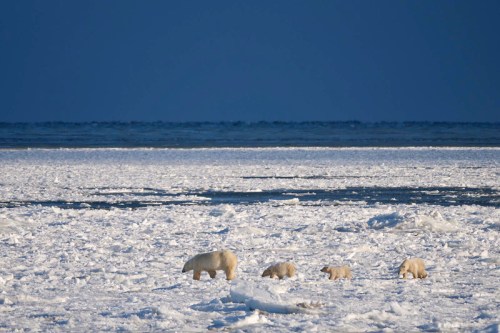
Mother with triplet cubs, 31 October 2020. Dave Allcorn photo.

Compayre does not appear to be a global warming skeptic: he seems to accept the prophesy that the future is grim for these bears. However, if he hadn’t I’m certain he wouldn’t have gotten the job as guide for this Nature of Things documentary, hosted by Canada’s ultimate carbon dioxide doom-master David Suzuki. However, he is at least willing to tell the truth about what has been happening over the last four years (the time it took to film this documentary) with WH polar bears. Continue reading

Not a myth: State of the Polar Bear Report shows 2020 was another good year for polar bears

The ‘State of the Polar Bear Report 2020’ is now available. Forget hand-wringing about what might happen fifty years from now – celebrate the fabulous news that polar bears had yet another good year.
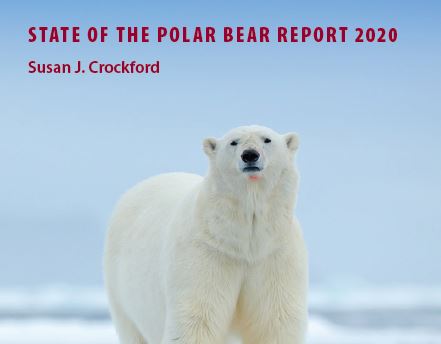
Press release from the Global Warming Policy Forum:
Download the report here.

Cite as:

Crockford, S.J. 2021. The State of the Polar Bear Report 2020. Global Warming Policy Foundation Report 48, London.


London, 27 February: A prominent Canadian zoologist says that Facebook’s information is gravely out of date and 2020 was another good year for polar bears.


In the State of the Polar Bear Report 2020, published by the Global Warming Policy Foundation (GWPF) on International Polar Bear Day, zoologist Dr. Susan Crockford explains that while the climate change narrative insists that polar bear populations are declining due to reduced sea ice, the scientific literature doesn’t support such a conclusion.

Crockford clarifies that the IUCN’s 2015 Red List assessment for polar bears, which Facebook uses as an authority for ‘fact checking’, is seriously out of date. New and compelling evidence shows bears that in regions with profound summer ice loss are doing well.

Included in that evidence are survey results for 8 of the 19 polar bear subpopulations, only two of which showed insignificant declines after very modest ice loss. The rest were either stable or increasing, and some despite major reductions in sea ice. As a result, the global population size is now almost 30,000 – up from about 26,000 in 2015.

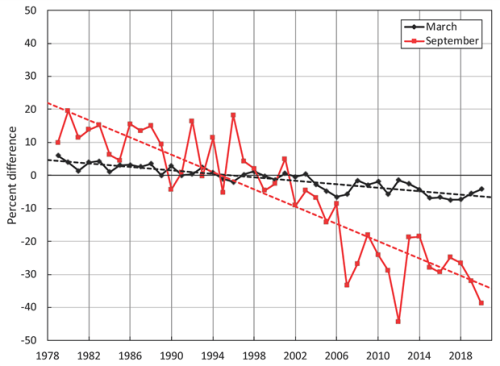
Dr. Crockford points out that in 2020, even though summer sea ice declined to the second lowest levels since 1979, there were no reports of widespread starvation of bears, acts of cannibalism, or drowning deaths that might suggest bears were having trouble surviving the ice-free season.

As Crockford’s report reveals, plankton growth – the critical health measure of marine life in the Arctic – reached record highs in August 2020. More plankton (‘primary productivity’) due to less summer ice means more fodder for the entire food chain, including polar bears. This explains why bears are thriving in areas such as the Barents Sea, which have seen reduced levels of sea ice.

Dr. Crockford notes that, ironically, polar bears in Western Hudson Bay experienced excellent ice conditions for the fourth year in a row in 2020. Bears were fat and healthy when they arrived on shore for the summer. Some spent as little as three months on shore – about one month less time than most bears did in the 1980s and two months less than bears did in the 1990s and 2000s.

Dr. Crockford explains that polar bears are more flexible in their habitat requirements than experts assumed and less summer ice has so far been beneficial rather than detrimental.

“Polar bears continue to be described as ‘canaries in the coal mine’ for the effects of human-caused climate change, but the evidence shows they are far from being a highly-sensitive indicator species. It’s not a myth: 2020 appears to have been another good year for polar bears.”


Key Findings

  • Results of three new polar bear population surveys were published in 2020 and all were found to be either stable or increasing.
  • Southern Beaufort polar bear numbers were found to have been stable since 2010, not reduced as assumed and the official estimate remains about 907.
  • M’Clintock Channel polar bear numbers more than doubled from 284 in 2000 to 716 in 2016, due to reduced hunting and improved habitat quality (less multiyear ice).
  • Gulf of Boothia numbers were found to be stable, with an estimate of 1525 bears in 2017; body condition increased between study periods and thus showed ‘good potential for growth’.
  • At present, the official IUCN Red List global population estimate, completed in 2015, is 22,000-31,000 (average about 26,000) but surveys conducted since then, including those made public in 2020, would raise that average to almost 30,000. There has been no sustained statistically significant decline in any subpopulation.
  • Reports on surveys in Viscount Melville (completed 2016) and Davis Strait (completed 2018) have not yet been published; completion of an East Greenland survey is expected in 2022.
  • In 2020, Russian authorities announced the first-ever aerial surveys of all four polar bear subpopulations (Chukchi, Laptev, Kara, and Barents Seas), to be undertaken between 2021 and 2023.
  • Contrary to expectations, a new study has shown that polar bear females in the Svalbard area of the Barents Sea were in better condition (i.e. fatter) in 2015 than they had been in the 1990s and early 2000s, despite contending with the greatest decline in sea ice habitat of all Arctic regions.
  • Primary productivity in the Arctic has increased since 2002 because of longer ice-free periods (especially in the Laptev, East Siberian, Kara, and Chukchi Seas but also in the Barents Sea and Hudson Bay), but hit records highs in 2020; more fodder for the entire Arctic food chain explains why polar bears, ringed and bearded seals, and walrus are thriving despite profound sea ice loss.
  • In 2020, contrary to expectations, freeze-up of sea ice on Western Hudson Bay came as early in the autumn as it did in the 1980s (for the fourth year in a row) and sea-ice breakup in spring was also like the 1980s; polar bears onshore were in excellent condition. These conditions came despite summer sea-ice extent across the entire Arctic being the second lowest since 1979. Data collected since 2004 on weights of female polar bears in Western Hudson Bay have still not been published; instead, polar bear specialists have transformed standard body condition data collected 1985–2018 into a new metric for population health they call ‘energetics’, which cannot be compared with previous studies. Meanwhile, they continue to cite decades-old raw data from previous studies to support statements that lack of sea ice is causing declines in body condition of adult females, cub survival, and population size.
  • Contrary to expectations, in Western Hudson Bay, many polar bears remained on the deteriorating sea ice much longer than usual in summer, and stayed ashore longer in fall after official freeze-up thresholds had been reached, calling into question the assumed relationship between sea-ice coverage and polar bear behaviour and health. Some bears that left the ice in late August and then returned before late November would have spent only three months onshore – about one month less time than typical in the 1980s, and two months less than in the 1990s and 2000s.
  • There were few problem polar bear reports in 2020, except for one fatal polar bear attack in August, in a campground near Longyearbyen, Svalbard. Ryrkaypiy, Chukotka, which in 2019 was besieged by more than 50 bears that had congregated to feed on walrus carcasses nearby, avoided a similar problem in 2020 by posting guards around the town. The town of Churchill saw the lowest number of problems bears in years.
  • In 2020, virtually all polar bear research was halted across the Arctic for the entire year due to restrictions on travel and efforts to isolate vulnerable northern communities from Covid-19.

Arctic report card 2020 highlights the huge benefit of less summer sea ice: more food

As well as summarizing sea ice changes, NOAA’s 2020 Arctic Report Card features two reports that document the biggest advantage of much less summer sea ice than there was before 2003: increased primary productivity. Being at the top of the Arctic food chain, polar bears have been beneficiaries of this phenomenon because the Arctic marine mammals they depend on for food – seals, walrus and bowhead whales – have been thriving despite less ice in summer.

Continue reading

Polar bears again attracted to Russian town by dead walrus Attenborough blames on no sea ice

In the news again: Cape Schmidt (on the Chukchi Sea) made famous by Sir David Attenborough’s false claim that walrus fell to their deaths because of lack of sea ice due to climate change when a clever polar bear hunting strategy was actually to blame.

Ryrkaypiy overrun by polar bears WWF photo

Ryrkaypiy overrun by polar bears Dec 2019 WWF photo

Last year in December (above), some bears were feeding at Ryrkaypiy’s garbage dump and wandering around town after being displaced from feeding on walrus carcasses by bigger, stronger bears on the nearby point.

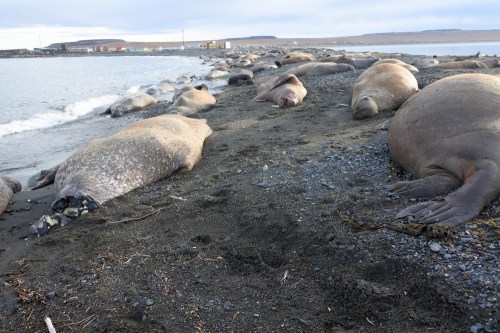
This year, the town has managed to keep the bears out of town, so while the residents are having no real problems, more than 30 bears have been spotted near town, almost certainly feeding on natural-death carcasses of walrus along the shore (see photo below from 2017 where Ryrkaypiy can be seen in the background).

Continue reading

The conundrum of Hudson Bay bears that left shore late in 1983 with video from CBC archives

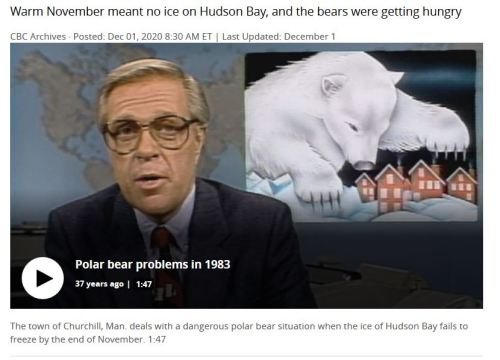
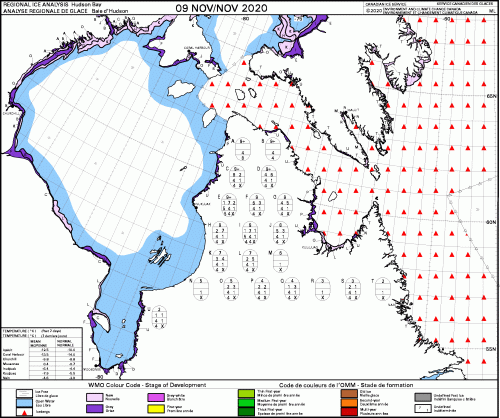
In 1983, it was claimed that freeze-up of Hudson Bay was so late that polar bears didn’t leave the shore until the 4th of December – several weeks later than had been usual at that time. However, the fact that sea ice charts show significant ice offshore weeks before that time suggests something else was probably going on.

About three weeks ago, CBC News republished an article (with video) from their 1983 archives for 1 December, about the plight of the people of Churchill who had already suffered one death and one serious mauling by polar bears. That was thirty-seven years ago, long before lack of sea ice was blamed for everything bad that happened to Western Hudson Bay polar bears. In fact, rather than a really late freeze-up, it appears the problem had more to do with the fact the bears had had an especially tough spring that year and arrived onshore in only ‘OK’ condition – and as a consequence, the town dump became such a strong attractant for many bears that they were reluctant to leave when the sea ice formed offshore.

Continue reading

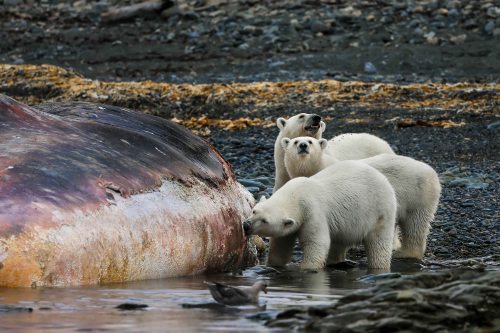
Speculation on ice-trapped whales: science-based fiction vs. dishonest science

Ice entrapment of whales is known to happen across the Arctic, including Davis Strait and the Gulf of St. Lawrence. How common such phenomena were in the past or might be in the future are subjects of conjecture. However, while speculation is the bread-and-butter of science-based fiction, it is the bane of peer-reviewed science.

I’ve written two novels informed by science set a bit in the future (2025-2026) in Eastern Canada: EATEN was set in Newfoundland and my latest book UPHEAVAL –see a review here – is set in Cape Breton Island, Nova Scotia. In UPHEAVAL, one of the issues I explore is ice entrapment of large whales, like North Atlantic right whales. I speculate in the story whether carcasses of ice-killed whales might provide a powerful enough attraction to lure Davis Strait polar bears down from Labrador and the Strait of Belle Isle into the Gulf of St. Lawrence – and if they did, what might be the repercussions of that shift in distribution.

Here I argue that a novel is the appropriate place for this kind of speculation and researchers who offer such conjecture to the public in a way that conflates a science-informed guess with evidence-based fact risks eroding public trust in science.

Continue reading

Polar bear habitat update for late November

Sea ice formation is ahead of usual in some regions and behind in others but overall, sea ice habitat is abundant enough for this time of year for virtually all polar bears across the Arctic to be back out on the sea ice hunting seals.

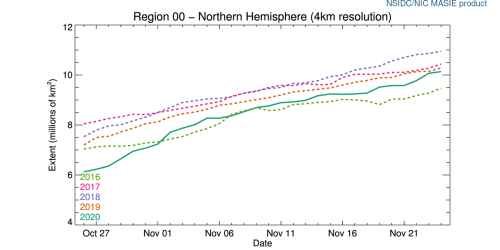
Overall, there was more sea ice at 24 November 2020 than there was on the same date in 2016, which was the last year that a number of polar bear subpopulations were surveyed, including Western and Southern Hudson Bay, Southern Beaufort, Chukchi Sea (Crockford 2019, 2020), see graph below from NSIDC Masie:

Northern Hemisphere sea ice at 24 November, 2016-2020.

UPDATE 27 November 2020: Problem bear report published today (for week 13, Nov. 16-22) has been added below.

Continue reading

Strange sea ice pattern over Hudson Bay as winds blow polar bears offshore

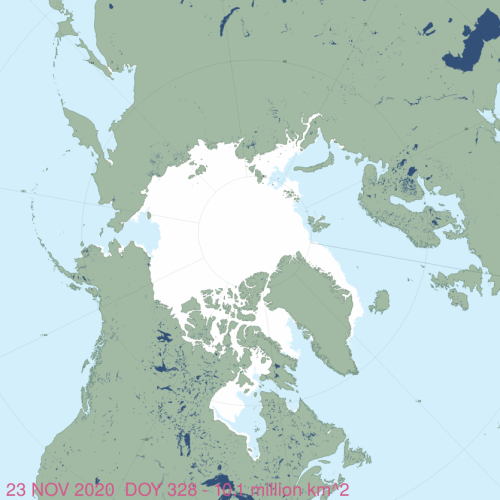
Winds blew a huge mass of new shorefast sea ice way out into Western Hudson Bay a few days ago (13 November) and very likely took some polar bears with it. This offshore wind phenomenon is common at this time of year – it happened in 2017 – and is often part of the yearly ‘freeze-up’ process for sea ice. But the extent of ice and the distance blown offshore in Hudson Bay this year is impressive.

In previous years, this has happened very early in the freeze-up sequence, well before the ice was thick enough to support polar bears. This year is different: freeze-up was early (starting in late October) and the ice was thick enough off Western Hudson Bay to support bears hunting successfully for seals by the last day of October. By 7 November, most bears had left for the ice, with only a few stragglers left behind – since they were all in good condition due to a late breakup of the ice this summer, there were remarkably few problem with bears in Churchill and some seemed in no hurry to leave once the shorefast ice started to form.

It’s doubtful that any bears out on that wind-blown ice are in any kind of peril. As long as the ice is thick enough to support their weight, they should be fine – and keeping themselves busy catching seals.

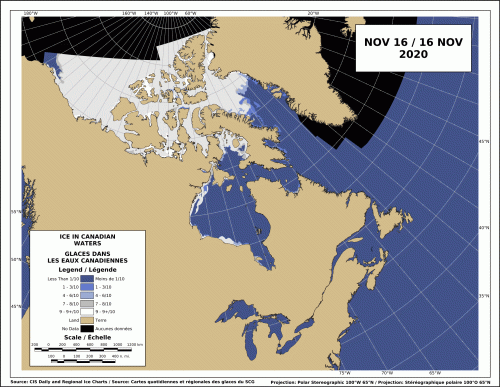
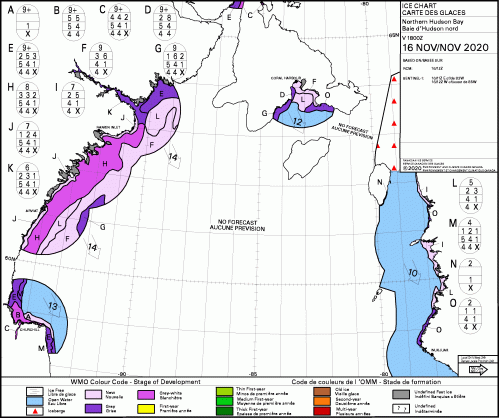
The chart above is from NSIDC Masie for 15 November 2020 (Day 320) – it showed the same large offshore patch of ice the day before. However, only today did the Canadian Ice Service (CIS) chart show even part of the offshore patch (below):

In this case, I’m trusting the Masie chart because it seems the CIS sensors aren’t yet set to pick up ice that’s far offshore, as the detailed stage of development chart for 16 November (below) shows (grey-white ice is 15-30 cm thick, grey ice is 10-15 cm, but see discussion below):

However, after I’d almost given up that we’d hear from Andrew Derocher about his polar bears with still-functioning collars, he posted a tracking map late today (below). Even his chart shows that big patch of offshore ice but he didn’t comment on it at all. It appears that of the 9 collars he deployed on females last year only one is on the ice, well offshore (north of Churchill).

Derocher is still claiming that this is not an early freeze-up year even though it’s clear many bears have already left for the ice and only a few stragglers remain, including most of his collared bears. However, some of his bears are probably pregnant (especially the two furthest inland) and won’t be going anywhere this fall. And we already know that many of Derocher’s collared bears were very late to come onshore in August and having only spent 3 months onshore rather than 4 or 5 months they are used to, may now be in no hurry to leave – especially since they know that seals are to be had out on that ‘very thin’ ice just offshore.

Unfortunately, the Polar Bear Alert Program in Churchill decided not to issue a report for the first week in November (2-8 Nov), so there is no information on the progress of freeze-up and polar bear movements from that authority. There might be one issued tomorrow for the second week (9-15 Nov), if so I’ll post it here.

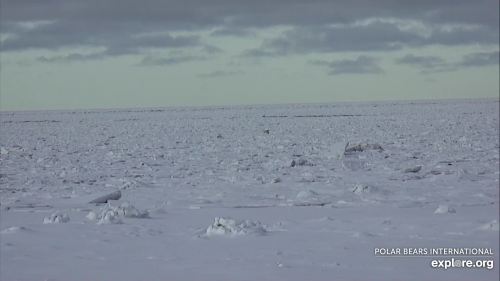
It’s important to know that even big male bears only need ice that’s about 30 cm thick to hold their weight. And while the newly formed grey ice is technically only 10-15 cm (see the stage of development chart above), the ice offshore this year is very compressed and buckled (see below from 7 November), making it thicker than it might appear on the official ice charts.


Shorefast ice formation and the fall feeding season for polar bears

What may seem like a silly question is actually fundamental to polar bear survival: in the fall, why do Western Hudson Bay bears correctly expect to find seals in the new ice that forms offshore? Why are seals attracted to that new ice – called ‘shorefast ice’ or ‘fast ice’ – when they would clearly be safer out in the open water where there is no ice and no bears?

As the picture below attests, polar bears can and do kill ringed seals in the new ice that forms off the coast of Western Hudson Bay even when it is but a narrow strip of thin ice – and so close to shore their successes can be caught on camera.

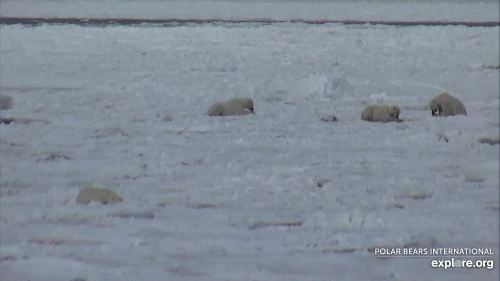
Three adult male polar bears share a seal kill on the newly-formed ice off Wapusk National Park, Western Hudson Bay. 5 November 2020. Buggy cam, Explore.org

A different bear was also filmed killing another seal on 31 October. And these are only the kills we know about along a very short stretch of coast – the killing is almost certainly going on up and down the entire coast, into James Bay (see below), where there is just as much ice but no cameras.

As far as I am aware, this seal killing by polar bears goes on in newly-formed shorefast ice everywhere across the Arctic in early fall, not just in Hudson Bay. Although the timing varies, virtually everywhere in the peripheral seas of the Arctic Ocean (Barents, Kara, Laptev, Chukchi, Beaufort, as well as Baffin Bay and Davis Strait), shorefast ice forms before the mobile ice pack expands to meet the ice developing from shore.

This shorefast ice formation in fall provides a predictable but short-lived source of prey for polar bears as they strive to regain some of the weight lost over the summer.

Continue reading