Category Archives: Life History

Explaining abundant polar bear sightings on the East Coast as an upshot of sea ice loss is absurd

Last week, a senior producer at CBC News, in order to concoct a timely story for ‘Earth Day’, attempted to explain the high number of sightings of polar bears this April in Newfoundland and Labrador, compared to the last two years, as a consequence of climate change and its handmaiden, loss of Arctic sea ice.

Title: ‘With an extinction threat looming, no wonder polar bears are at our door — and on the roof: there’s a grim reason why polar bears have been frequently showing up in coastal communities’. CBC News, 23 April 2022

The problem with this narrative is that the East Coast had much reduced sea ice in 2021 and virtually no polar bear sightings in Newfoundland and none in Labrador. There was more ice in 2020 than 2021 but also few bears. This year, ice extent was similar to 2020 for most of the region but polar bear sightings were up considerably.

In fact, the two years with the most sightings and problems with polar bears since 2008 were 2017 and 2018: in 2017, sea ice was exceptionally thick in April (although average in extent) and by June the sea ice was so thick and enduring that the Newfoundland fishing fleet couldn’t get out for spring openings; 2018 was another year of average sea ice extent and had even an even larger number of sightings than 2017, in Newfoundland especially (Crockford 2019:32). This suggests the sea ice vs. polar bear correlation on the East Coast since 2008 – if there even is one – may be the opposite of that stated in the CBC article: less ice usually means fewer bears onshore in Newfoundland and Labrador and more ice often means more bears.

Continue reading
More fat polar bear sightings around homes on Newfoundland’s Northern Peninsula

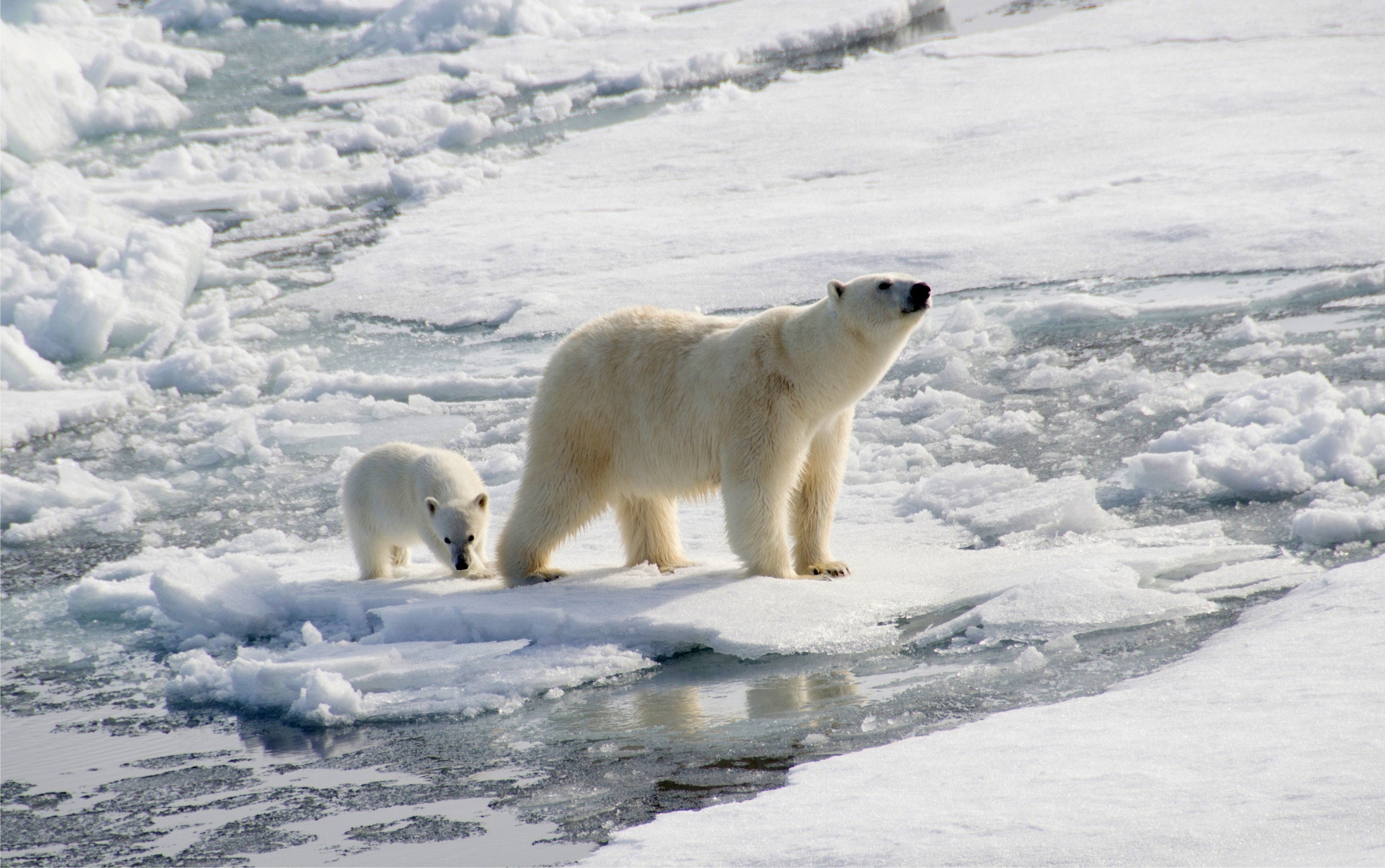
Two recent incidents really remind me of the opening scene in my polar bear attack thriller, EATEN, and this time both were captured on film. They involved bears in good physical condition and luckily, no one has been hurt. There is still sea ice off the Northern Peninsula, which has brought the bears from the north.

On Sunday (10 April) in St. Anthony, a woman was alerted by her dog to what she though was someone on the front porch and found herself literally face to face with a polar bear when she opened the door; it then hopped up on her roof. The next day, in Goose Cove, a woman watched two bears (probably a female with a two year old male cub) explore the outside of a neighbour’s house and then walk across her driveway.

Continue reading

Sea ice average for March is the metric used to compare to previous winters

The average sea ice cover at the end of March is the metric used to compare ‘winter’ ice to previous years or decades, not the single-day date of ‘most’ ice. This year, March ended with 14.6 mkm2 of sea ice, most of which (but not all) is critical polar bear habitat. Ice charts showing this are below.

But note that ice over Hudson Bay, which is an almost-enclosed sea used by thousands of polar bears at this time of year, tends to continue to thicken from March into May: these two charts for 2020 show medium green becoming dark green, indicating ice >1.2 m thick, even as some areas of open water appear.

Continue reading

Good news for polar bears and seals: new study finds multiyear Arctic sea ice is getting thinner

The fact that multiyear sea ice got thinner between 2018 and 2021 as documented by a new study, is ultimately good news for polar bears: less multiyear ice compared to first year ice is better for all marine mammals in the Arctic. Polar bears and seals, for example, are dependent on the seasonal ice that forms every winter (Atwood et al. 2016; Durner et al. 2009). Multiyear ice is simply too thick for any purpose except as a summer refuge for polar bears (for which land will do just as well) and a platform for maternity dens over the winter, for which thick first year ice will often do just as well (Anderson et al. 2012; Rode et al. 2018).

Continue reading

Polar bears at Kolyuchin Island weather station provide a rare photographer’s treat

Russian wildlife photographer Dmitry Kokh took some photos and video last year of polar bears hunkered down at an abandoned weather station on the Chukchi Sea coast and he apparently won a prize for one of them, shown below. The shots are very cool, so I’ve provided some context for the story and posted the video here.

‘Summer Season’ by Dmitry Kokh
Continue reading

East Coast sea ice so far similar to last year

Davis Strait ice pack is slowly moving south this year just as shorefast ice is developing in-place along the Labrador shoreline, similar to last year. East Coast harp seals that give birth in the region in March depend on this ice and so do many Davis Strait polar bears that feed on those newborn seals. In contrast, in 2017 the ice off Labrador was broader by mid-January (even more so by mid-February) and that seems to have made a huge difference by April, when ice north of Newfoundland was thick and extensive.

Compared to last year at this time, there was somewhat less ice along the Labrador coast but the difference is really negligible. By April, ice extent was well below average, especially in the Gulf of St. Lawrence, and there were few sightings of polar bears along the Labrador and Newfoundland coasts.

Back in 2017 at the same time (below), the band of ice along the southern Labrador coast was much broader, indicating more movement of Davis Strait ice from the north. This resulted in so many polar bear sightings in Newfoundland and Labrador by March and April that I could hardly keep up reporting them (Crockford 2019:32):

East coast conditions could change significantly over the next few weeks however, especially if weather conditions bring more north winds.

References

Crockford, S.J. 2019. State of the Polar Bear Report 2018. Global Warming Policy Foundation Report 32, London. PDF here.

Remembering the terrorizing Belushya Guba polar bears: lots of Barents Sea ice cover this year

Three years ago, the Russian village of Belushya Guba on southwest coast of Novaya Zemlya on the Barents Sea got international attention for the dozens of polar bears that had invaded the local dump and some aggressive bears were terrorizing local residents. The phenomenon was of course blamed on climate change by virtually all media outlets largely because there was no sea ice on that coast at the time (as had been true many years before without bear trouble).

This year is a different story completely. It’s only early January and already there is abundant ice along the west coast of Novaya Zemlya; ice in the Barents Sea in general is well up over recent averages and the pack is already converging on Bear Island (Bjørnøya) to the south of the Svalbard archipelago. Ice this far south often brings polar bear visitors to the weather station there but that doesn’t usually happen until March or April.

You’ll find references in previous posts linked here.

Continue reading

A ‘mass exodus’ of polar bears from Alaska to Russia has taken place, local residents claim

An article in a UK newspaper yesterday contains a claim made by local residents that polar bears which used to hang around Utqiagvik (formerly known as Barrow) in western Alaska, are ‘moving to Russia’ (i.e. the Chukchi Sea) in a ‘mass exodus’. It’s certainly possible but if so, it should come as a surprise to no one and is good news for polar bears.

If the allegation is upheld by scientific evidence, polar bears will not have been pushed out of Alaska by lack of summer sea ice (i.e. ‘forced to migrate’) but rather pulled into the Chukchi Sea by abundant food resources that did not exist when summer ice cover was more extensive. It’s a big difference and it speaks to the benefits of less summer sea ice that no one wants to discuss.

Moreover, moving temporarily to where conditions suit them best is what polar bears do all the time: it’s not a new phenomenon, it’s a prominent feature of their biology (Crockford 2019).

Continue reading

Walrus video you can let your kids watch

A National Geographic short of a walrus cow and her newborn calf, from 2009, that’s appropriate for kids.

Merry Christmas everyone!

Educational video about Arctic sea ice to bookmark: excellent for adults and children

One of the recommended videos I included in my Arctic Sea Ice Ecosystem Teaching Guide is a film called “Edge of Ice”. Produced in 1986 (before climate change hype pervaded everything), this 55 minute documentary from the National Film Board of Canada (filmed in Lancaster Sound, Canada) is an excellent summary of Arctic sea ice and its ecology. Available for free streaming here.

Narrated in parts by an Inuk hunter, it not only shows virtually all of the species associated with ice edges in the central Canadian Arctic, including polar bears, but also explains the process of freezing and thawing; life under the ice and the importance of polynyas.

Worth bookmarking for future viewing if you can’t get to it right away. Beats watching the news these days. It’s also a reminder to tell your homeschooling friends and relatives over the holidays about my free Teaching Guide resource: it’s something many parents will find useful.