Category Archives: Polar bear attacks

Western Hudson Bay polar bears in great shape after five good sea ice seasons

Polar bear researcher Andrew Derocher says it takes four years of good sea ice conditions to recruit a polar bear from birth but implies that 2019 is the first year in decades that conditions for bears have been ‘good’ in Western Hudson Bay. He thinks he can get away with saying this because he hasn’t published any of the data on body weight and body condition he’s collected on these bears over the last 25 years (apparently, whatever funding agency pays for his research does not require him to publish the data he collects).

But independent observations such as dates of ice freeze-up in fall, ice breakup in summer, dates and condition of bears recorded onshore, suggest he’s blowing smoke: at least five out of five of the last sea ice seasons for WH bears have been good. That means we should be seeing more bears in the next official population count.

Churchill Seal River Lodge triplets_30 Sept 2017

Continue reading

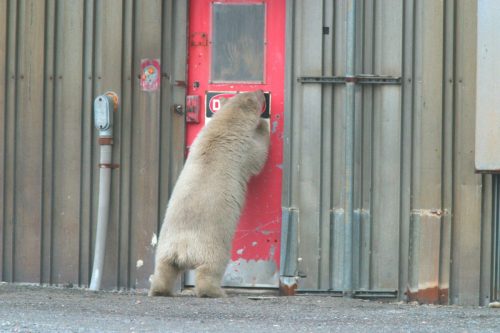
Churchill polar bear activity report for week 7 shows oddly few problems so far

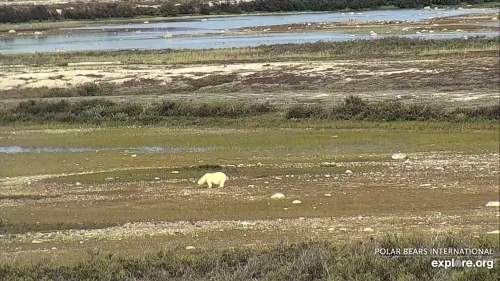
It’s week 7 of the Churchill polar bear season that began in early July and it’s been remarkably quiet: compared to 208 and 2016, there were half as many problem bear incidents in 2019. A few bears have come off the ice near the community and they’ve been in good shape, as are the bears to the east at Cape Churchill (see one captured on live cam 23 August shown below) and the north at Seal River.

churchill-fat-bear-cape-east-23-aug-2019_explore-dot-org-cam.jpg

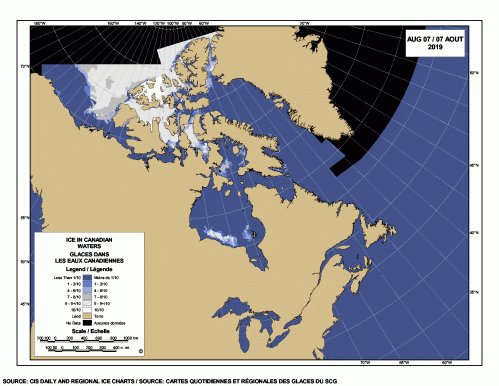
But it looks like many more bears than usual may have decided to ride out the slow-melting ice that lingered well past the first week of August and came ashore further south, towards the Manitoba/Ontario border.

Sea ice Canada 2019 Aug 7

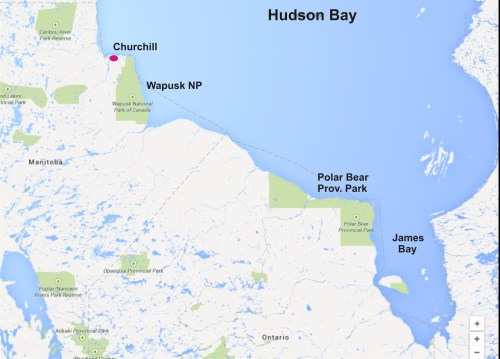
If so, these bears will have to make their way north over the summer so they can intercept the first ice forming along the northwest coast off Wapusk National Park near Churchill. That’s why Western Hudson Bay bears are said to undergo a migration: no matter where they leave the ice in summer, most bears head to areas around Churchill so that they can resume seal hunting on the early fall ice.

Wapusk Nat Park_Hudson Bay_Google maps_w Churchill

A paucity of bears around Churchill in late summer/early fall is not unprecedented, however. Stirling and colleagues pointed out that in 1972 and 1973, for reasons they could not explain, there had been fewer bears than usual around Churchill well before freeze-up and therefore, fewer problem bears (Stirling et al. 1977:17).

Below is a comparison of the Polar Bear Alert Program report for last week (Week 7, Aug 19-25) to previous years.

Continue reading

Media and USGS biologist sensationalize recent report of a polar bear encounter in Alaska

It’s been a slow summer for polar bear news to hype, so we shouldn’t be surprised that a local report that polar bears this summer have descended on the town of Kaktovik, Alaska one week earlier than 2017 has morphed into an international story that makes a 2016 research report sound like this year’s news, with headlines trumpeting: “polar bear encounters are increasing” due to a longer open water period. Nevertheless, it was reported just two weeks ago that Alaska has not had a polar bear attack since 1993.

polar_bear-US FWS_young bear Alaska maybe Kaktovik no date

This is a particularly blatant example of how the media skew polar bear ‘news’ for public consumption, aided by scientists with a particular message to sell. Not surprisingly, a number of essential facts have been left out of this sensationized account, in part because the polar bear specialist the media consulted left those facts out of his statement.  This is the sort of bias displayed by polar bear specialists that I discuss in my new book, The Polar Bear Catastrophe That Never Happened.

Continue reading

Not predicted: more sea ice than average in southern-most Arctic first week of August

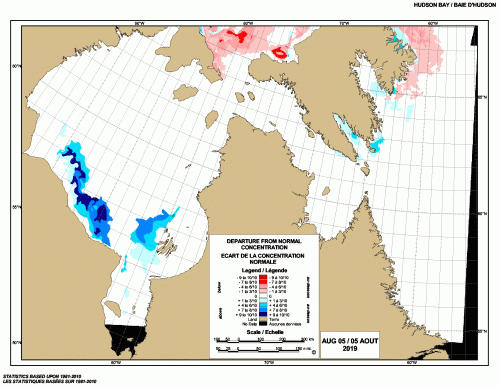
Polar bear habitat update for the first week of August 2019 shows there is still more sea ice than average in Hudson Bay, the southern-most area of continuous habitation for this species. That certainly wasn’t part of the predictions of doom, especially since freeze-up in that region for the last two years has also been earlier-than-average which means a shorter ice-free season than we’ve seen for decades.

Hudson Bay weekly departure from normal 2019 Aug 5

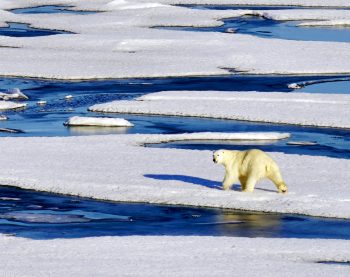
Despite ice coverage for the Arctic ice as a whole being marginally lower than it has been since 1979 for this time of year, sea ice for the first week of August was also above average around Svalbard in the Barents Sea and higher than the last few years in the Central Arctic, which is a critical summer refugium for polar bears that live in the peripheral seas of the Arctic Ocean, including the Chukchi (see photo below, taken in early August 2018).

Chukchi Sea polar bear Arctic_early August 2018_A Khan NSIDC small

Continue reading

Polar bear spotted on Bear Island (Barents Sea) this winter for the first time in 8 years

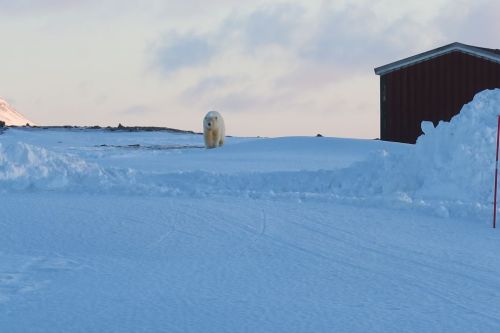
A polar bear was spotted this year on Bear Island (Bjørnøya) in the southern Barents Sea on 8 March by the crew at the Meteorological Station. The last time these workers had seen a polar bear was 2011 but this year extensive Barents Sea ice literally brought a bear to their doorstep, similar to the way that sea ice brings bears to southern Labrador and Newfoundland in late winter and spring.

Bear island 8 March 2019_first bear seen by Meteorological Institute station crews since 2011_Bjørnøya Meteorological Station photo

After below-average ice cover around Svalbard for most of the winter months of January and February, by early March the ice had expanded so far to the south it reached Bjørnøya. It was the kind of ice that hadn’t been seen in decades and almost immediately, a polar bear was spotted on shore. Given the length of time that the ice surrounding the island persisted, it is likely more bears came ashore but were not seen: the Meteorological Station at the north end of the island is the only place that people live over the winter (see maps below).

Continue reading

RCMP on manhunt spot a fat polar bear far from the coast of Western Hudson Bay

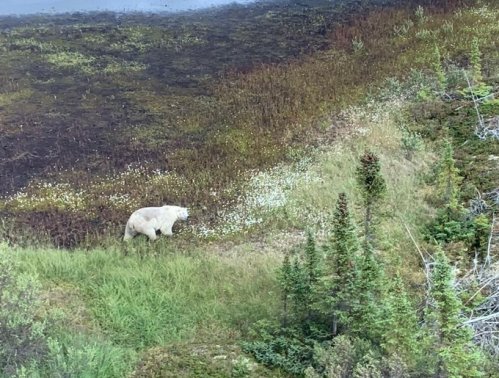
In the course of a manhunt for two murder suspects wanted in British Columbia, Royal Canadian Mounted Police posted a photo of a fat polar bear they spotted about 200 km north of Gillam, Manitoba.

Fat pb spotted by RCMP outside Gillam during manhunt 27 July 2019

This fat bear – as would any others that might be spotted in the area – is a pregnant female from the Western Hudson Bay subpopulation intent on finding a secure place to dig a den in the permafrost where she can stay cool over the summer and give birth this winter.

However, true to form, The Guardian (28 July 2019) ludicrously suggests those on the hunt for the murder suspects are now at risk of a polar bear attack:

The threat of a polar bear attack has become a reality for the huge Canadian police and military contingent searching for the teenage duo suspected of shooting dead Australian tourist Lucas Fowler, his US girlfriend and a university botanist.

Continue reading

Skinny polar bear far inland in Siberia not due to sea ice loss but a rare normal event

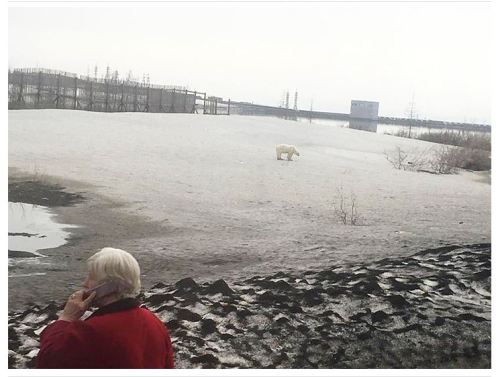
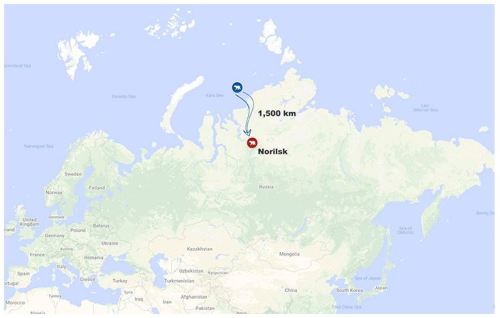
A thin polar bear has wandered more than 1000km south of the Kara Sea into the Siberian town of Norilsk, which has happened at least once before in the 1970s. It is reminiscent of a similar incident this past winter in Alaska and there is no reason to blame this on lack of sea ice.

Norilsk starving bear 17 June 2019 Siberian Times photo

From the Siberian Times earlier today (17 June 2019) comes the report that a bear that did not get enough to eat this spring (due to any number of reasons, including competition from larger, stronger bears) and went looking for easier food sources. No mention is made that this incident should be blamed on global warming.

Update 18 June 2019: Lack of any evidence that this incident was due to lack of sea ice didn’t stop Reuters from implying this was indeed the case, a theme picked up by the UK Telegraph, the BBC, and The Guardian.

Norilsk starving bear 17 June 2019 Siberian Times map

Quotes and video from the story below. Continue reading

Polar bear habitat update at mid-June: more than enough for survival

Here we are at the middle of June, when most polar bears are pretty much done with hunting seals for the season. And despite hand-wringing from some quarters, sea ice extent is down only marginally from average at this time of year and certainly not enough to impact polar bear survival.

Polar_bear Bering Sea 2007 USFWS lg

Given the large expanse of open water in the Southern Beaufort so early in the season, one resident pessimist insists those polar bears are “challenged” by the lack of ice. If he is right, there should be reports of dozens upon dozens of skinny and dying bears along the coast of Alaska this summer. If not, he will pretend he never suggested any such thing.

So far, despite the early loss of ice in some regions, there have been no reports of polar bears ashore unusually early. Hudson Bay still has lots of thick first year ice, so despite the overall reduced Arctic ice coverage, none of the three Hudson Bay polar bear populations are facing the earlier-than-usual sea ice breakup this year as we keep being promised will show up. In fact, there hasn’t been a significantly early breakup in Western Hudson Bay since 2010 (see previous posts here and here).

Continue reading

Photographer’s claims that Inuit hunting is unsustainable are not supported

A campaign by an anti-hunting Norwegian photographer to destroy the market for legally-hunted polar bears in Canada makes a few disturbingly false claims and an article at National Geographic in which he is quoted further distorts the picture of polar bear conservation. I understand that some people object to hunting and wish more people felt like they do – but this sort of argument is unlikely to sway any but the most gullible.

Cover photo Ole J Liodden small web

Norwegian photographer Ole Liodden apparently has a master’s degree in “nature management and environmental policy“. He takes fabulous polar bear pictures (I purchased one of them, above, for the cover of my novel, EATEN) but his crusade to ban hunting and trade in polar bear products world-wide has lead him to misrepresent essential facts, which is no way to win an argument. A National Geographic writer and several polar bear specialists have provided additional spin and used it as an excuse to promote their failed prophesies that polar bears are doomed: “Should polar bear hunting be legal? It’s complicated” (28 May 2019).

Continue reading

Even with Inuit lives at stake, polar bear specialists make unsupported claims

The standoff between Inuit and polar bear specialists regarding the status of polar bears in Canada is not going to end until someone in authority demands to see the data scientists insist contradict Inuit knowledge.
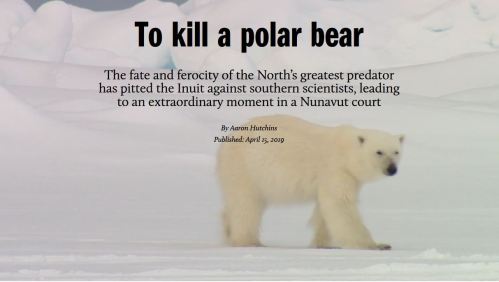
Macleans to kill a polar bear headline 21 April 2019

An article in Maclean’s Magazine (15 April 2019), entitled “To Kill a Polar Bear”, explores some of the feelings and opinions of folks involved but fails to ask whether the data support the rhetoric advanced by scientists. Author Aaron Hutchins takes the scientists at their word, that seeing more bears than 20 years ago is all because of lack of sea ice. However, from what I’ve seen, he might as well trust a fox in a hen house.

Ian Stirling is quoted by Hutchins insisting that polar bears in Western Hudson Bay continue to suffer from the effects of declining sea ice, without mentioning that ice cover has been essentially static on Hudson Bay since at least 2001 (Castro de la Guardia et al. 2017; Lunn et al. 2016) and fall freeze up dates for the last two years were earlier than most years in the 1980s:

“This year saw the seventh-lowest Arctic sea ice levels since the National Snow and Ice Data Center first started gathering satellite data 40 years ago, with the long-term trend clearly downwards. And the negative effects on polar bears can be clearly seen in the science, says Stirling, pointing to the closely studied subpopulation along western Hudson Bay: “They’re losing body condition. Reproductive rates have dropped. Survival rates of young have plummeted. Every indication you would expect from a declining population is there.”

However, as I’ve pointed out previously (last year and in 2012), there are no recent data published that support these claims: the only information that exists is at least 25 years old. And the fact that no such data have been published suggests strongly that it either does not exist or does not show what Stirling claims it shows.

Yet, the government of Canada is willing to bet the lives of Inuit on their belief that polar bear specialists would never stretch the truth to qualify for government grants.

Continue reading