Posted onJune 9, 2024|Comments Off on Huge area of open water on Hudson Bay created by wind, not ice melt, NSIDC experts confirm
Sea ice experts at the US National Snow and Ice Data Center just confirmed my suspicion that the huge area of open water in eastern Hudson Bay during May this year was caused by winds, not ice melt. In other words, it’s a rare occurrence but not a sign of extra-early sea ice melt caused by global warming.
Money quote: “Unusual strong and persistent winds from the east caused the low extent.”
Posted onJune 4, 2024|Comments Off on New data show Svalbard polar bears are fatter than they were in 1993 despite continued low sea ice
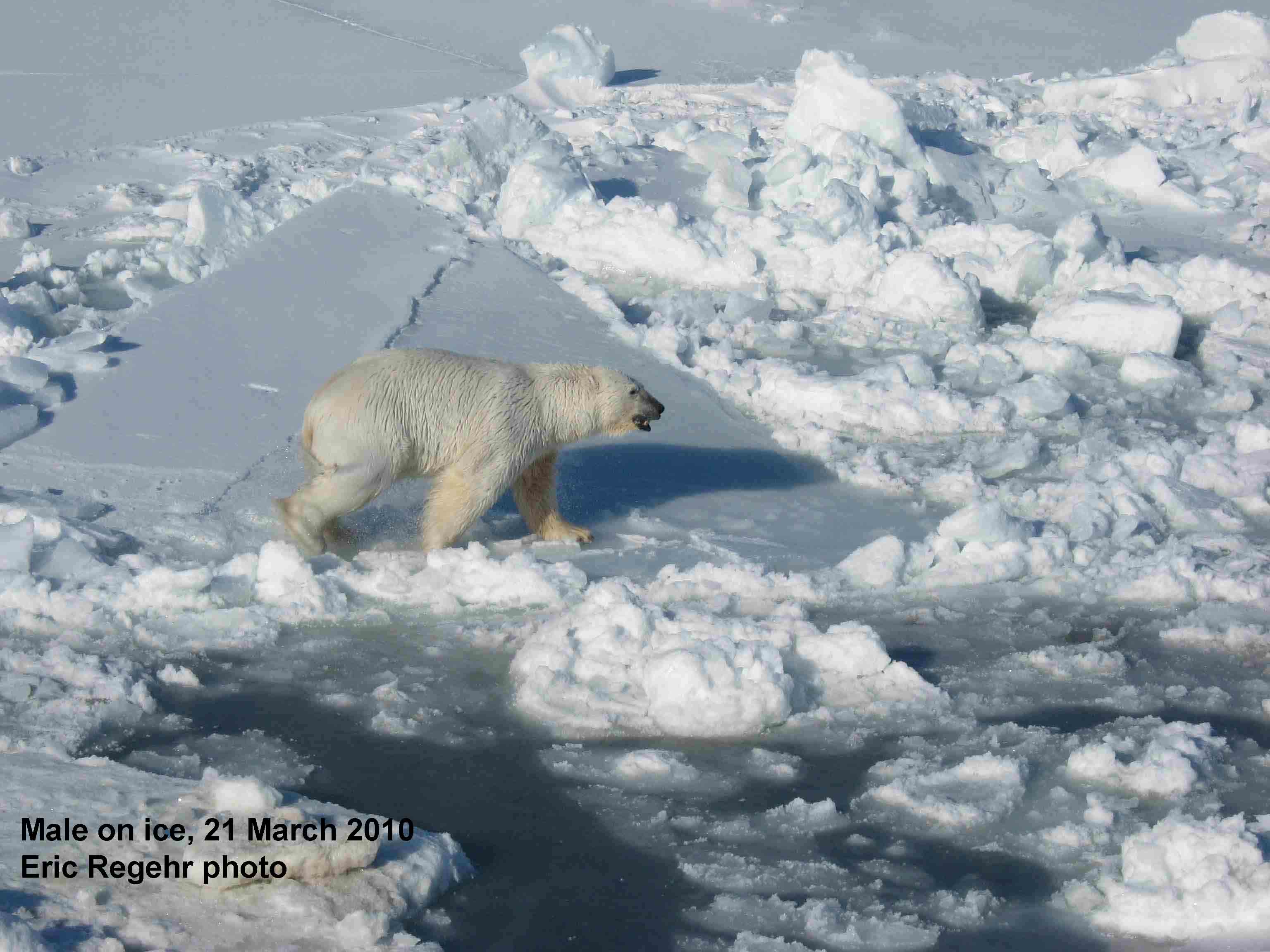
Researchers at the Norwegian Polar Institute have finally updated their spring data, which show male polar bears in 2024 were even fatter than they were in 1993 and litter sizes of new cubs were just as high, despite continued low sea ice in the region over the summer months especially.
Posted onApril 28, 2024|Comments Off on Polar bears are going extinct? Actually, they’re not! A new video worth watching and sharing
Great Barrier Reef specialist Peter Ridd has just published an excellent video about my work and the way I’ve been treated by the scientific community just for pointing out that polar bear populations have failed to respond as predicted to the recent decline in Arctic sea ice.
The report Peter refers to in the video is this one, which was published in February 2024:
Crockford, S.J. 2024. State of the Polar Bear 2023. Briefing Paper 67. Global Warming Policy Foundation, London. Download pdf here.
In other words, the polar bear catastrophe we were promised never happened. In case you missed it, I wrote a book about that. Polar bears across the Arctic are thriving: not just because their numbers have increased overall but because the field data collected from bears in regions that have had the most dramatic declines in summer sea ice, including the Barents Sea and the Chukchi Sea, show the bears are healthy and reproducing well.
Comments Off on Polar bears are going extinct? Actually, they’re not! A new video worth watching and sharing
Posted onApril 2, 2024|Comments Off on A good year for Svalbard polar bears due to abundant sea ice coverage
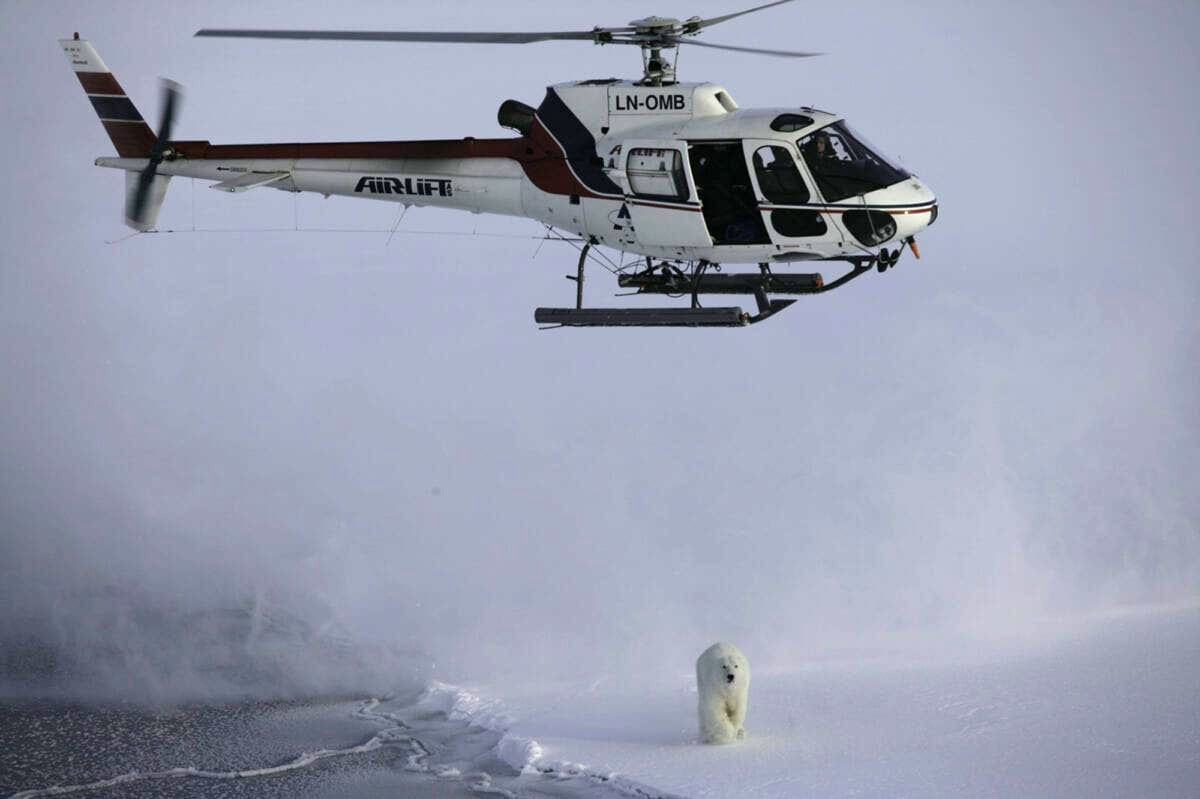
A sow and a pair of half-grown cubs recently paid a visit to the Polish Research Station in southwestern Svalbard without causing any more trouble than racing heart-rates, according to a report in The Guardian today.
Money quotefrom the leader of the expedition [my bold]:
This year the team had seen more polar bears than usual, he added. Usually there were around 20 bear sightings a year, but this year there had been close to 40 sightings since June and they expected to see more in their final three months.
“So far, we have not observed any clearly emaciated individuals. This year is probably a good year for Svalbard’s polar bears because there is a lot of sea ice here compared to recent years,” he said [The Guardian, 2 April 2024, see photo above].
Posted onMarch 25, 2024|Comments Off on 2024 Arctic sea ice maximum a whopping 14th below average following hottest year since 1850
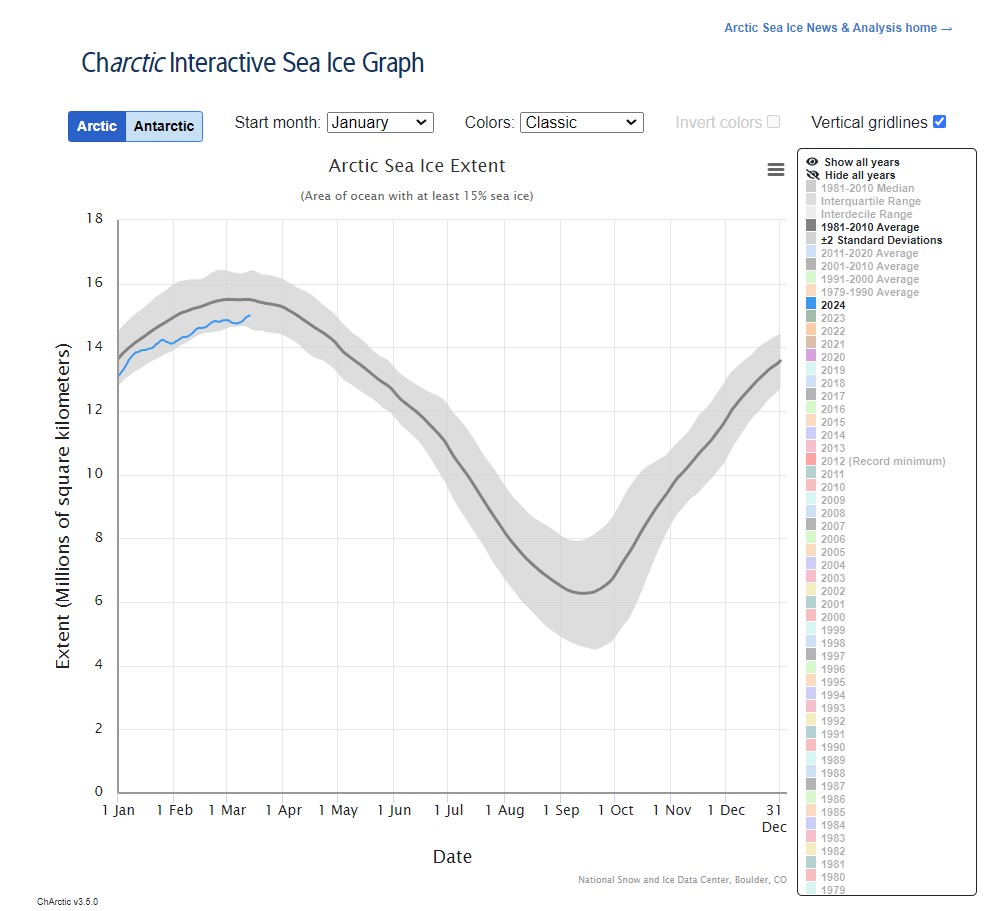
Officially, the maximum winter sea ice extent for 2024 was 15.01 mkm2, reached on 14 March. At an unimpressive “14th lowest” on record, this is astounding news for the winter following the “hottest year on record.” Undeterred, the US government headline writers at the National Snow and Ice Data Center (NSIDC) today went for “Arctic sea ice reaches a below-average maximum.” Note the long-term average (1981-2010) is only 15.65 mkm2 and 15.01 is within 2 standard deviations (see below, screencapped 14 March 2024).
Posted onMarch 9, 2024|Comments Off on Hudson Bay polar bears now considered most likely to survive future sea ice loss
Over the last 10 years, Hudson Bay polar bears have morphed from being the “most at risk” across the Arctic to the “least at risk.” Who would have thought?
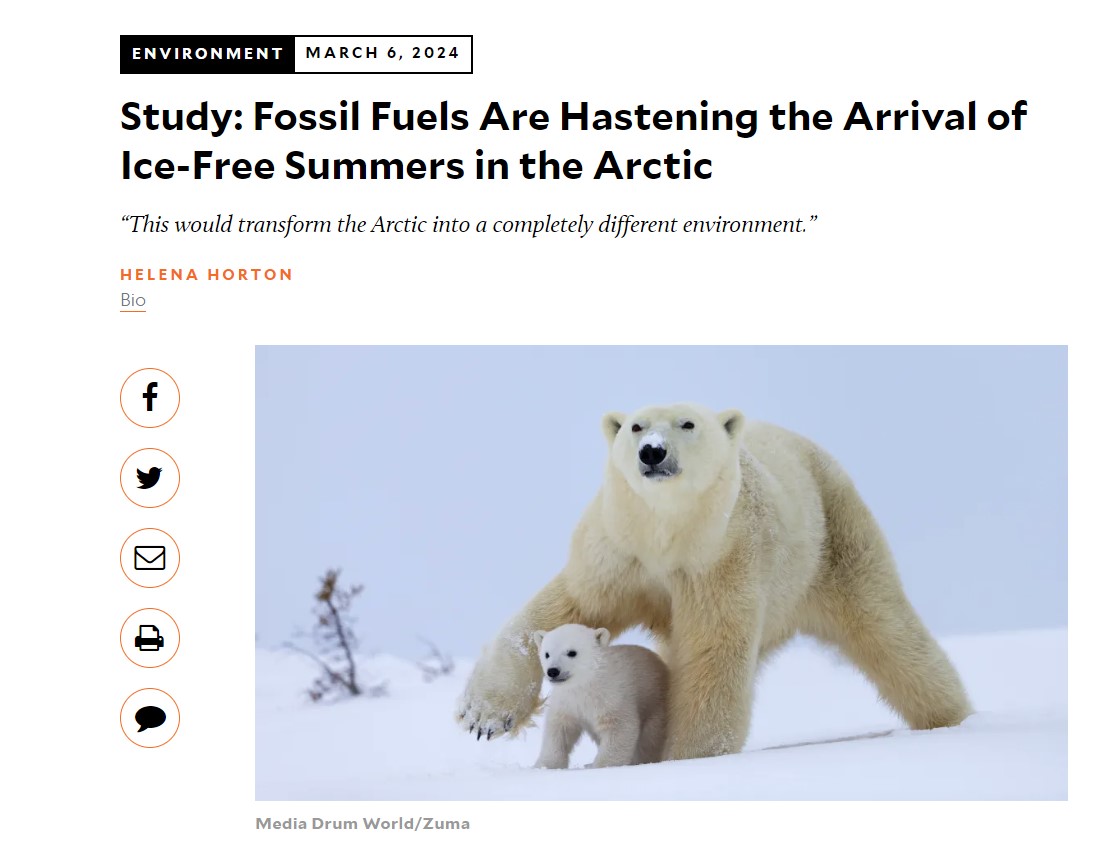
That’s probably because the experts now have to admit that polar bear numbers have not declined since 2004 and bears have been in good body condition since at least 2016. Southern Hudson Bay bears have apparently increased in number since 2016. How ironic is it that the photo above, taken in Hudson Bay — the only Arctic region where trees grow — was used to illustrate a recent Mother Jonesarticle promoting a new prediction of future Arctic summer sea ice loss that’s said to pose a threat to polar bear survival.
Posted onFebruary 27, 2024|Comments Off on State of the Polar Bear 2023: W. Hudson Bay polar bear numbers have not declined since 2004
In my State of the Polar Bear 2023 report for the Global Warming Policy Foundation, I discuss recent news relevant to polar bear conservation and science issues. The most startling of these is the revelation that Western Hudson Bay polar bear numbers have not declined since 2004.
Posted onFebruary 13, 2024|Comments Off on When polar bears die, they die of starvation: new Nature paper is propaganda, not news
Is it a coincidence that a paper reporting the results of a no-news study on polar bears, but which predicts future starvation due to climate change, was published two weeks to the day ahead of a climate change marketing event made up by the activist organization Polar Bears International? I doubt it.
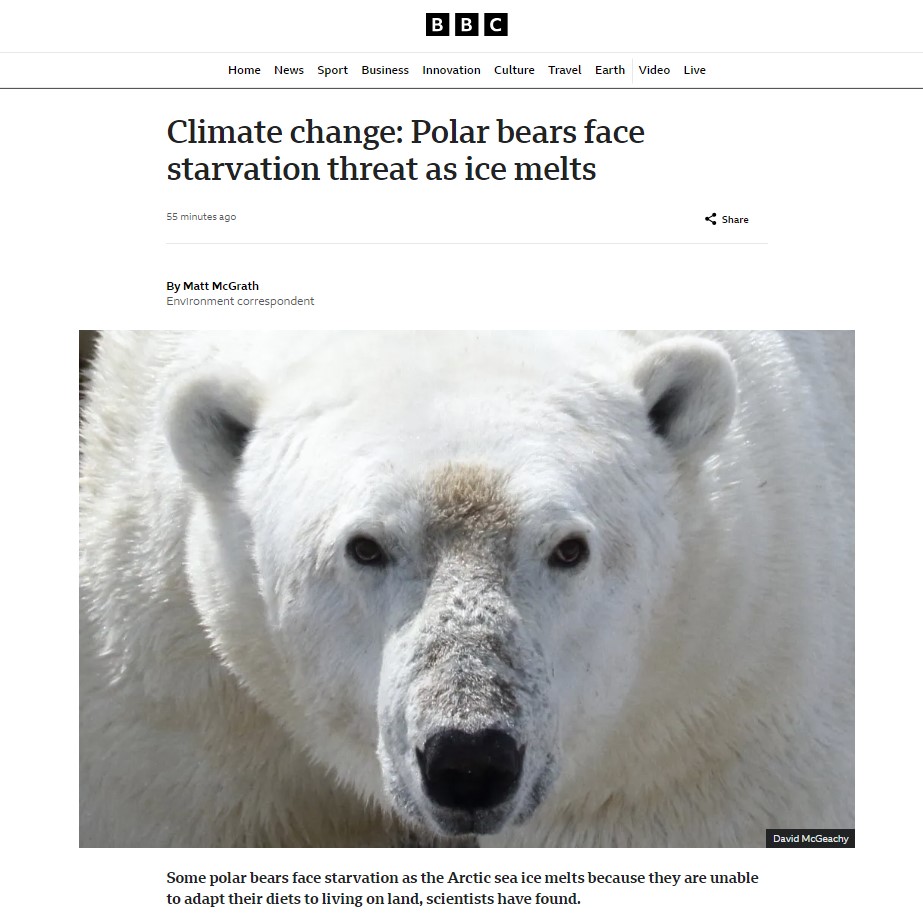
And do I think the high-profile journal Nature Communications would not only agree to publish such a useless bit of propaganda but also rig the timing to advance the climate change emergency narrative? Silly question. And the media worldwide are of course lapping it up, happy for an excuse to promote the perils of climate change, see here, here, and here using images of fat polar bears. Image above is from the BBC headline, 13 February 2024.
They believe this strategy is effective because they think the public is stupid, but they are deluding themselves. Most people are now laughing at their obvious acts of desperation.
Posted onFebruary 8, 2024|Comments Off on Activists just can’t stop using emotional blackmail to sell the climate change narrative
Even though a big deal was made earlier this year about climate activists not using polar bears anymore to try and sell the climate change emergency narrative, they just can’t seem to help themselves.
So it’s not at all surprising that yet another amateur climate activist has resorted to using the emotional ploy of a photo of a polar bear on sea ice to win the 2023 Wildlife Photo of the Year People’s Choice Award sponsored by the Natural History Museum London (UK).
His thought-provoking image is a stark reminder of the integral bond between an animal and its habitat and serves as a visual representation of the detrimental impacts of climate warming and habitat loss.“
Except for the lying and obfuscation that most of us have come to expect, I’ve mostly been left to reiterate that polar bears are not “canaries in the coal mine” indicators of climate change and to point out that Arctic sea ice extent and polar bear survival are not inextricably tied. For example, in some specific areas of interest, like Western Hudson Bay, there has not been a consistent decline in sea ice over the last few decades and bears are not attacking people at increased rates because they are desperately hungry. In other areas, like the Svalbard area of the western Barents Sea, sea ice has declined dramatically in recent years yet polar bears have not been attacking people more than usual.
Contradictions and failed predictions abound.
All in all, a rather boring year for the anticipated implosion of polar bear health and survival, despite my constant tracking of publicly-available information. That said, I would like to take this opportunity to thank you all again for your continued support, and especially those who have donated hard-earned cash over the last few months: your support makes it possible for me to continue my work keeping polar bear science honest. Together, we have made a difference and I know it’s worth the fight. Because if we let evidence-based science die without challenge, we lose our ability to make sense of the world.
Watch polar bear habitat reform in the Canadian Arctic: “last 10 days” Canadian Ice Service animation (works anytime) HERE.
See Quote archive for details.










 polarbearscience
You must be logged in to post a comment.