In contrast to summer sea ice, winter ice in the Arctic was again abundant this year. The slight decline since 1979 has so far been no cause for concern to polar bears, who are thriving.
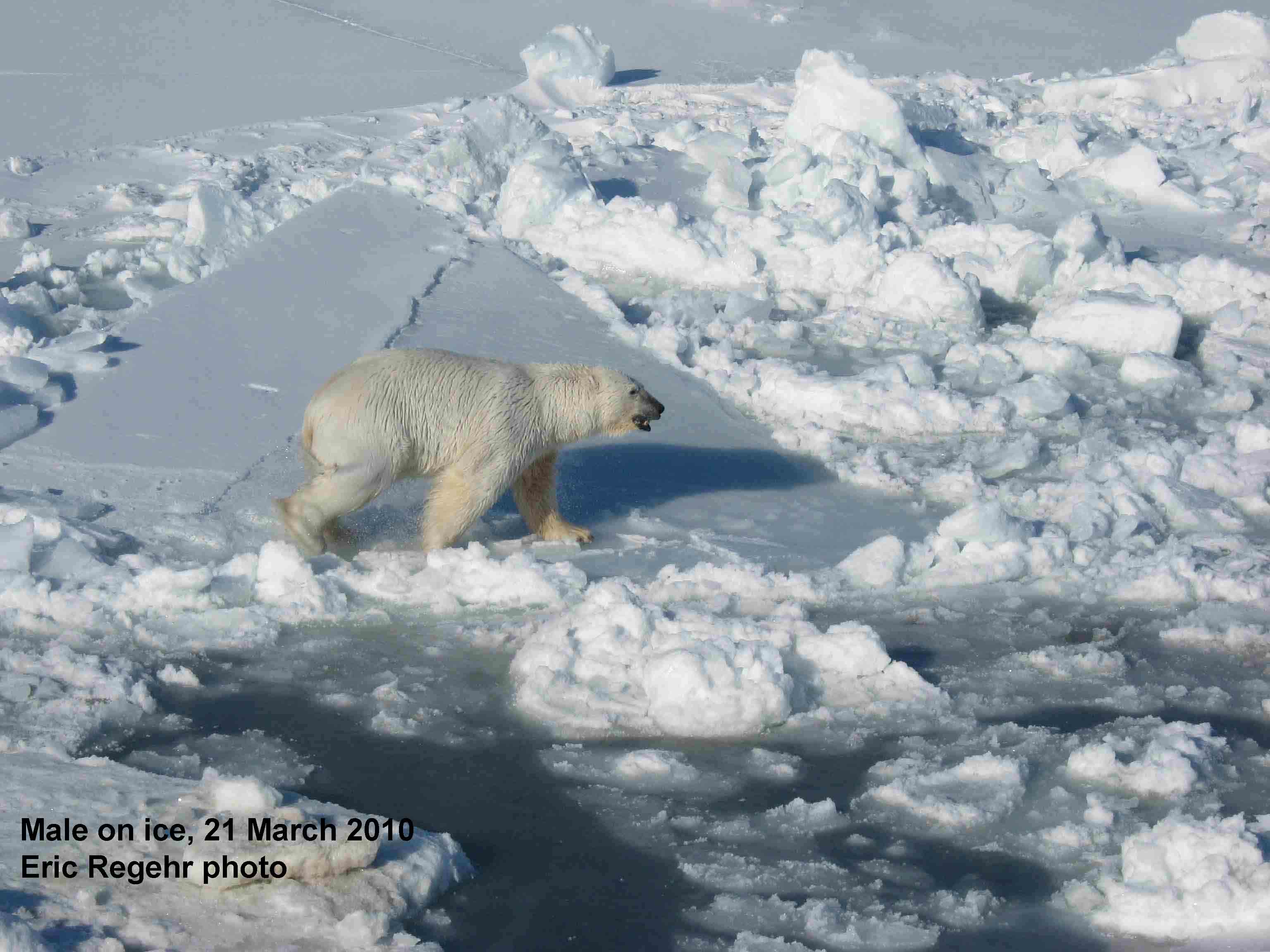

In contrast to summer sea ice, winter ice in the Arctic was again abundant this year. The slight decline since 1979 has so far been no cause for concern to polar bears, who are thriving.
Comments Off on Winter sea ice habitat for polar bears still abundant enough to sustain a thriving species
Posted in Life History, Sea ice habitat
Tagged Barents Sea, Bering Sea, extent, first year ice, Hudson Bay, polar bear, sea ice, seals, subpopulations, thickness, walrus
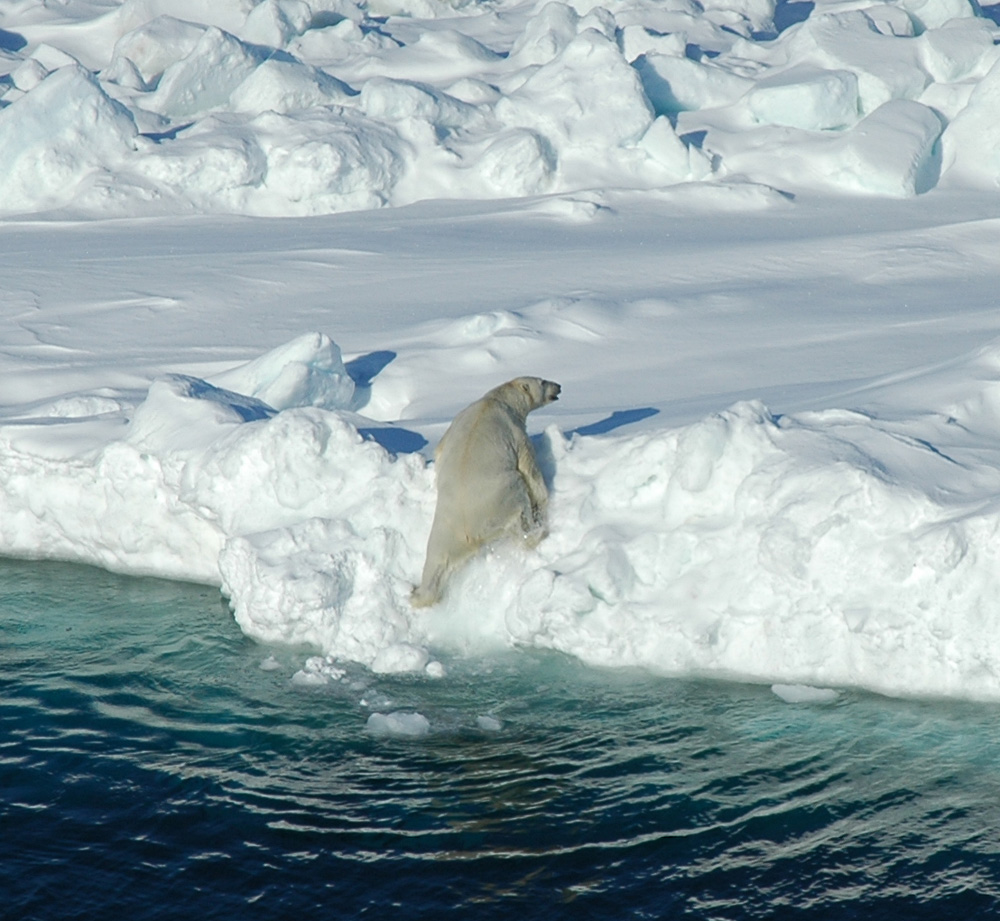
Recent reports out of southern Labrador highlight how common it is to find polar bears onshore at this time of year. The small coastal community of Black Tickle seems to take the prize for the highest number of incidents and sightings but Happy Valley-Goose Bay is the somewhat surprising contender. [see correction below] Photo below is from Black Tickle.
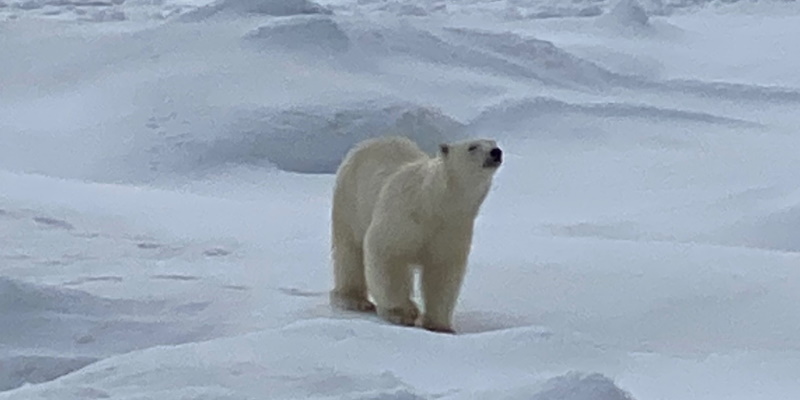
Since early March, polar bear sightings in Newfoundland and Labrador have been common. The bears, of course, have come south on the Labrador Sea pack ice looking for fat newborn harp seals, which are now so abundant in the region that nearly a year’s worth of food could probably be consumed in a week or so. It appears that already well-fed bears may look around for what else could be added to their menu or just need a break to digest between meals. Photos of some of the bears sighted are all in good or excellent condition, and few of the animals seem to be intent on causing real trouble for locals–a far cry from the bear that wandered off the ice into Wales, Alaska earlier this year and killed a young mother and her infant son.
Continue readingComments Off on Southern Labrador coastal landscape dominated by fat polar bears in March
Posted in Life History, Polar bear attacks, Sea ice habitat
Tagged Black Tickle, encounters, fjord, Goose Bay, Happy Valley, harp seals, Jeffrey Keefe, Labrador, pack ice, polar bear, ringed seal, sightings
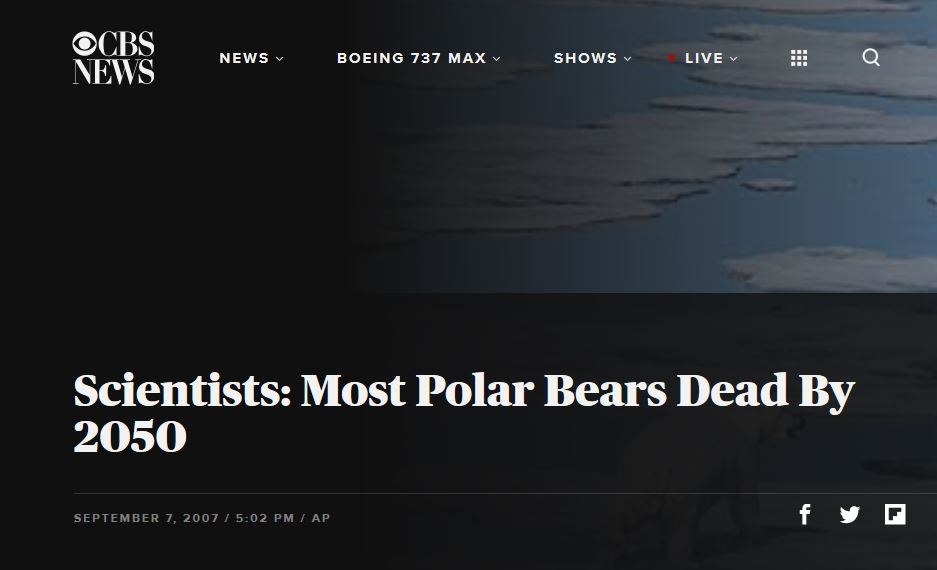
Experts who used the American Endangered Species Act (ESA) to list polar bears as ‘threatened’ in May 2008 were mistaken: sea ice authorities got their predictions wrong about future ice extent and polar bear specialists erroneously declared that two-thirds of polar bears would disappear if summer sea ice declines continued unabated.
By 2007, there was even less summer sea ice than computer models of the day had predicted (Stroeve et al. 2007, see red line on graph below) and in 2012, it dropped to just above 3 mkm2.
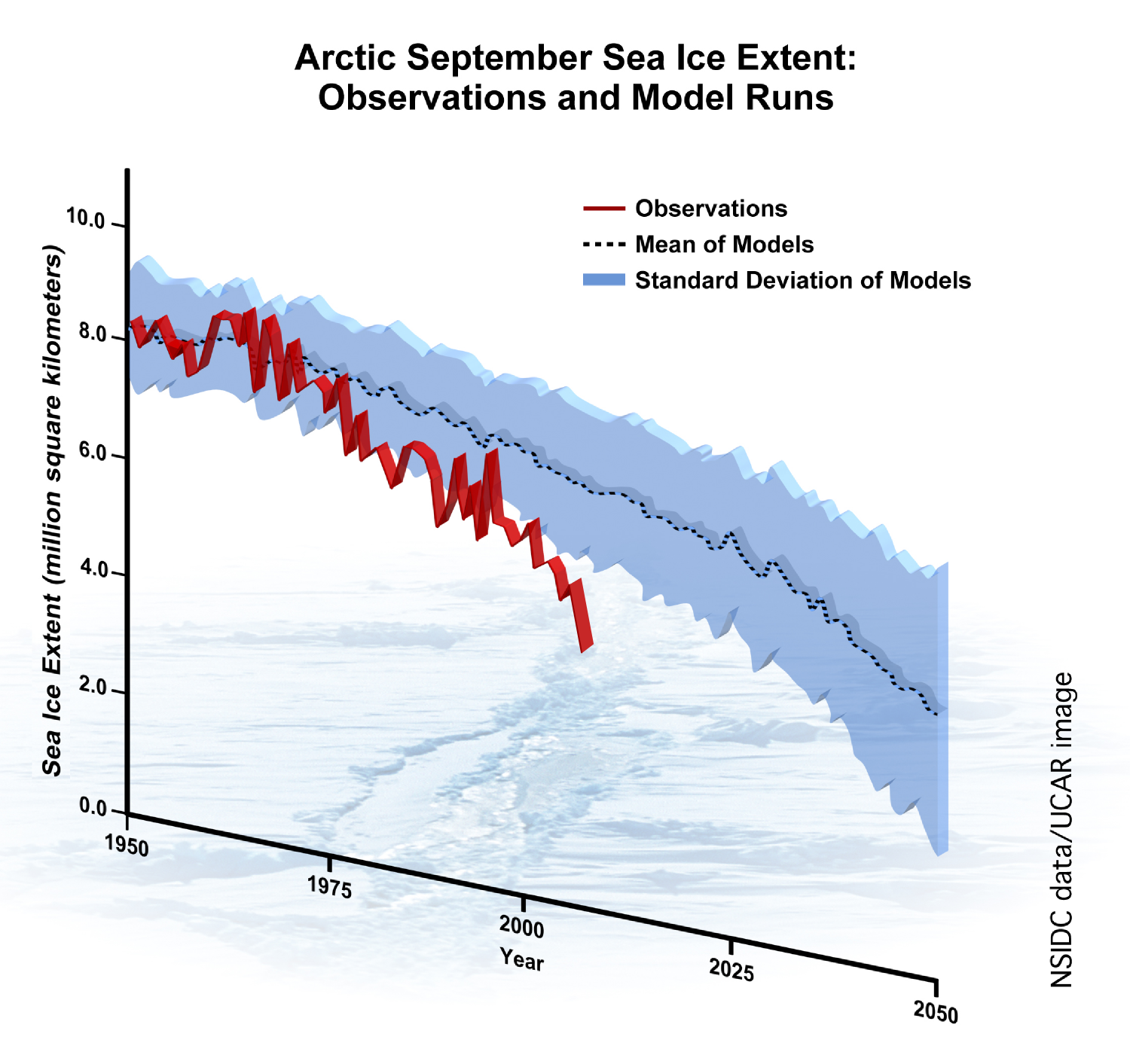
Updated sea ice predictions published in 2014 by the Stroeve team (see below) went to the other extreme, using totally implausible RCP 8.5 scenarios to predict a virtually ice-free Arctic (< 1 mkm2 ice extent) before 2040, which seem just as likely to be just as wrong as their 2007 attempt (Hausfather and Peters 2020; Pielke and Ritchie 2021; Stroeve et al. 2007, 2014; Swart et al. 2015).
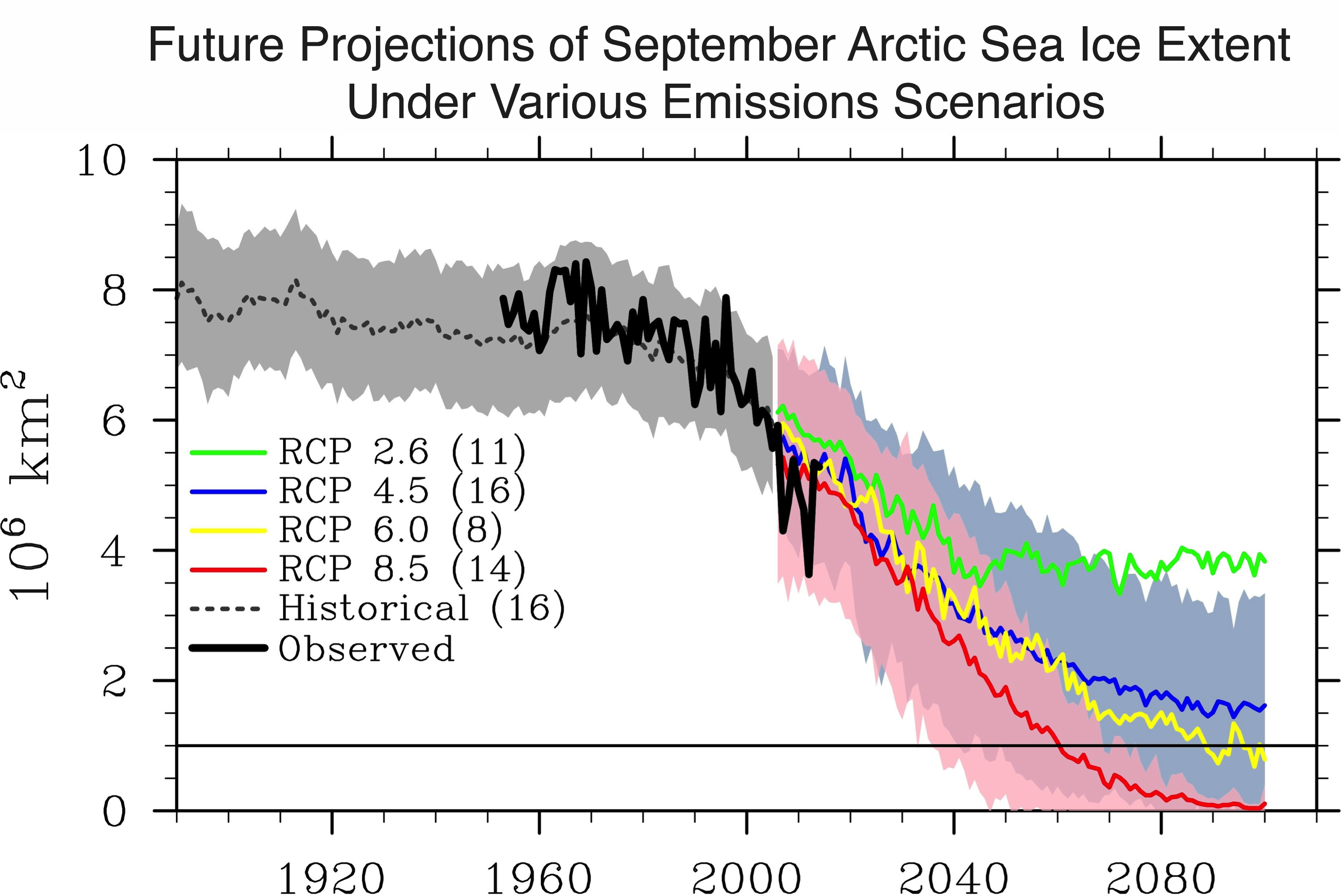
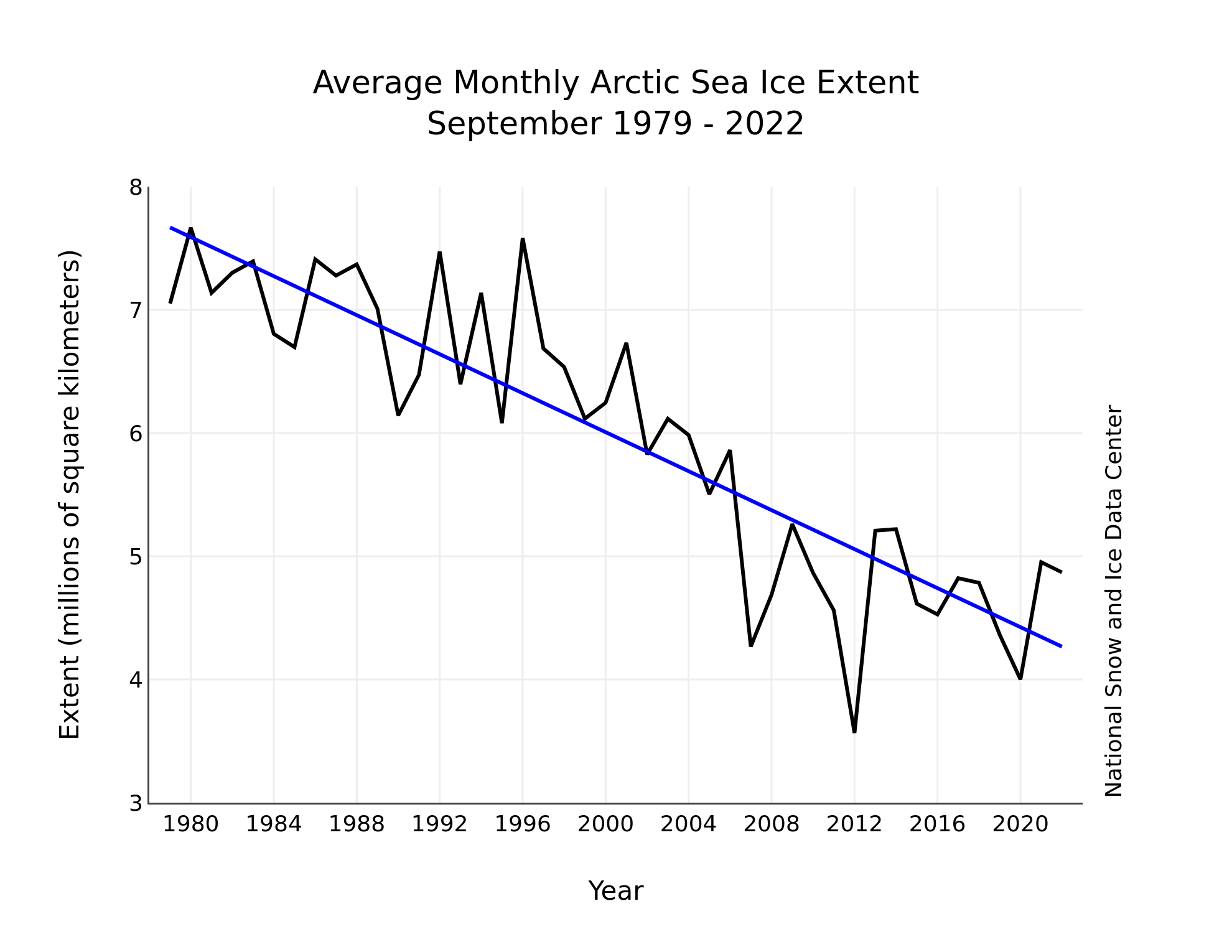
In fact, for 12 years out of the last 15, summer ice extent has been below 5.0 mkm2 (often well below), which polar bear experts had not anticipated would happen until at least 2050 (Amstrup et al. 2006).
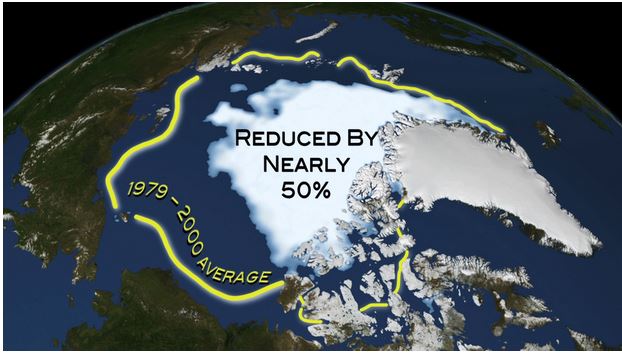
In 2012, NOAA sea ice experts summarized this sea ice loss as “reduced by nearly 50%” since 1979:
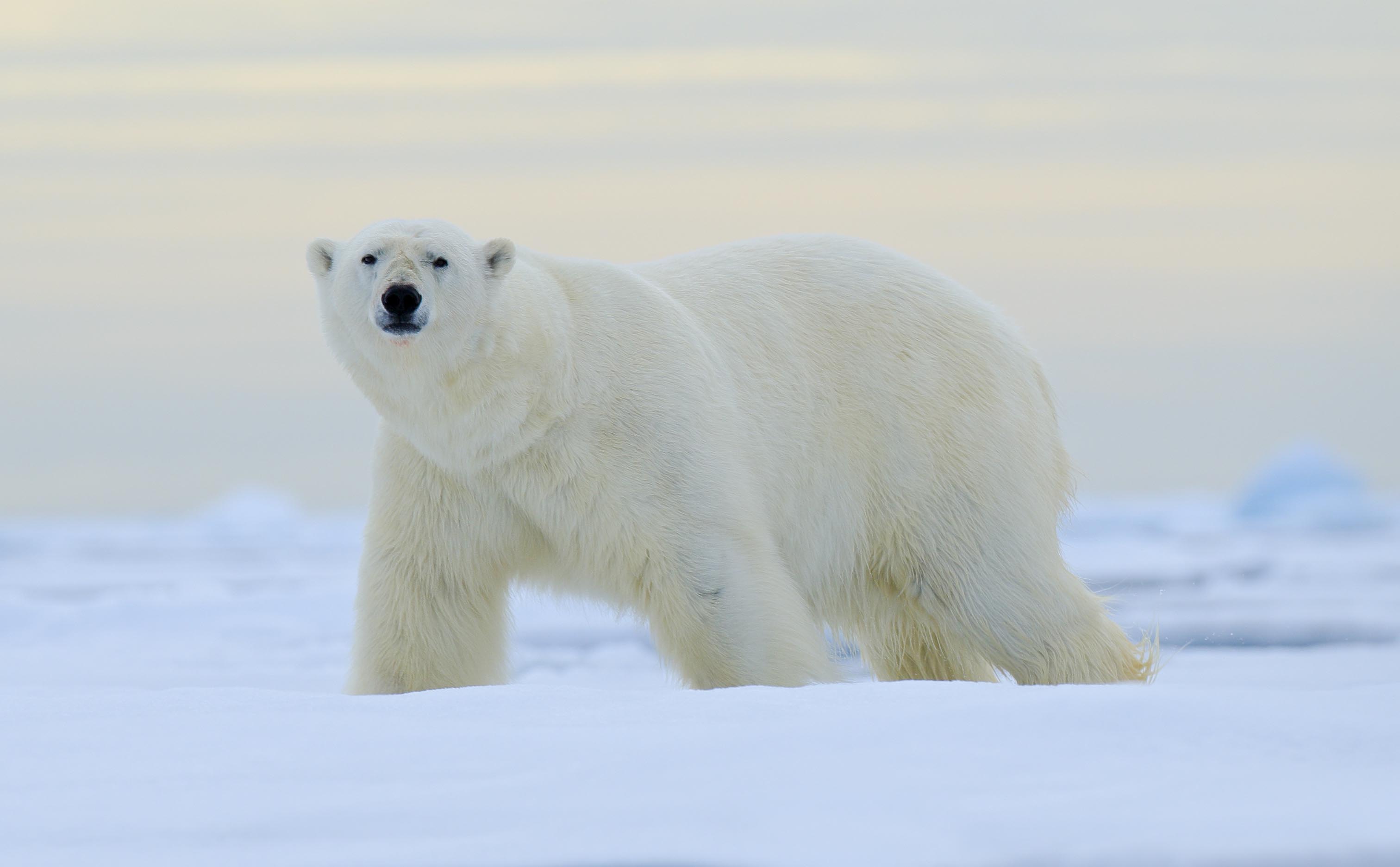
Despite this dramatic decline in sea ice, polar bears are still abundant and thriving because polar bear specialists got it wrong about the bears’ need for this habitat in summer (Crockford 2017, 2019; Crockford and Geist 2018). Polar bear turned out to be more flexible and resilient than predicted and many subpopulations are better off than before. Davis Strait and Chukchi Sea bears are doing very well: Barents Sea bears in particular are thriving despite by far the most sea ice loss of any Arctic region (e.g. Conn et al. 2021; Frey et al. 2022; Haavik 2022; Lippold et al. 2019; Peacock et al. 2013; Regehr et al. 2018; Rode et al. 2014, 2018, 2021, 2022).
This was not what had been predicted when the bears were listed as ‘threatened’ in 2008.
Conclusion: Despite the Arctic warming four times as fast as the rest of the world with rising CO2 levels and almost 50% less summer ice than there was in 1979, polar bears are no closer to extinction than they were 15 years ago, according to the results of field studies. There is no existential emergency for polar bears or any other Arctic sea mammals due to declining summer sea ice, despite continued messages of doom from remorseless experts.
References
Amstrup, S.C., Marcot, B.G. & Douglas, D.C. 2007. Forecasting the rangewide status of polar bears at selected times in the 21st century. US Geological Survey. Reston, VA. Pdf here
Conn, P.B., Chernook, V.I., Moreland, E.E., et al. 2021. Aerial survey estimates of polar bears and their tracks in the Chukchi Sea. PLoS ONE 16(5): e0251130. https://doi.org/10.1371/journal.pone.0251130
Crockford, S.J. 2017. Testing the hypothesis that routine sea ice coverage of 3-5 mkm2 results in a greater than 30% decline in population size of polar bears (Ursus maritimus). PeerJ Preprints 19 January 2017. Doi: 10.7287/peerj.preprints.2737v1 Open access. https://peerj.com/preprints/2737/
Crockford, S.J. 2019. The Polar Bear Catastrophe That Never Happened. Global Warming Policy Foundation, London. Available in paperback and ebook formats.
Crockford, S.J. and Geist, V. 2018. Conservation Fiasco. Range Magazine, Winter 2017/2018, pg. 26-27. Pdf here.
Frey, K.E., Comiso, J.C., Cooper, L.W., et al. 2022. Arctic Ocean primary productivity: the response of marine algae to climate warming and sea ice decline. 2022 NOAA Arctic Report Card, https://doi.org/10.25923/0je1-te61
Haavik, E. 2022. ‘Svalbard’s polar bears persist as sea ice melts — but not forever. The World, 21 July.
Hausfather, Z. and Peters, G.P. 2020. Emissions – the ‘business as usual’ story is misleading [“Stop using the worst-case scenario for climate warming as the most likely outcome — more-realistic baselines make for better policy”]. Nature 577: 618-620. https://www.nature.com/articles/d41586-020-00177-3
Lippold, A., Bourgeon, S., Aars, J., et al. 2019. Temporal trends of persistent organic pollutants in Barents Sea polar bears (Ursus maritimus) in relation to changes in feeding habits and body condition. Environmental Science and Technology 53(2):984-995.
Pielke, R., and Ritchie, J. 2021. How climate scenarios lost touch with reality. Issues in Science and Technology 37(4): 74-83. https://issues.org/climate-change-scenarios-lost-touch-reality-pielke-ritchie/
Pielke Jr, R., and Ritchie, J. 2021. Distorting the view of our climate future: The misuse and abuse of climate pathways and scenarios. Energy Research & Social Science72: 101890. https://www.sciencedirect.com/science/article/abs/pii/S2214629620304655
Regehr, E.V., Laidre, K.L, Akçakaya, H.R., Amstrup, S.C., Atwood, T.C., Lunn, N.J., Obbard, M., Stern, H., Thiemann, G.W., & Wiig, Ø. 2016. Conservation status of polar bears (Ursus maritimus) in relation to projected sea-ice declines. Biology Letters 12: 20160556. http://rsbl.royalsocietypublishing.org/content/12/12/20160556 Supplementary data here.
Rode, K.D., Regehr, E.V., Douglas, D., et al. 2014. Variation in the response of an Arctic top predator experiencing habitat loss: feeding and reproductive ecology of two polar bear populations. Global Change Biology 20(1):76-88. http://onlinelibrary.wiley.com/doi/10.1111/gcb.12339/abstract
Rode, K.D., Olson, J., Eggett, D., et al. 2018. Den phenology and reproductive success of polar bears in a changing climate. Journal of Mammalogy 99(1):16-26. here.
Rode, K. D., Regehr, E.V., Bromaghin, J. F., et al. 2021. Seal body condition and atmospheric circulation patterns influence polar bear body condition, recruitment, and feeding ecology in the Chukchi Sea. Global Change Biology 27:2684–2701. https://doi.org/10.1111/gcb.15572
Rode, K.D., Douglas, D.C., Atwood, T.C., et al. 2022. Observed and forecasted changes in land use by polar bears in the Beaufort and Chukchi Seas, 1985-2040. Global Ecology and Conservation 40: e02319. https://doi.org/10.1016/j.gecco.2022.e02319
Stroeve, J., Holland, M.M., Meier, W., Scambos, T. and Serreze, M. 2007. Arctic sea ice decline: Faster than forecast. Geophysical Research Letters 34:L09501. https://agupubs.onlinelibrary.wiley.com/doi/10.1029/2007GL029703
Stroeve, J.C., Markus, T., Boisert, L., et al. 2014. Changes in Arctic melt season and implications for sea ice loss. Geophysical Research Letters 10.1002/2013GL058951. https://agupubs.onlinelibrary.wiley.com/doi/full/10.1002/2013GL058951
Swart, N.C., Fyfe, J.C., Hawkins, E. et al. 2015. Influence of internal variability on Arctic sea ice trends. Nature Climate Change 5:86-89.
Comments Off on 15 years after ESA listing as ‘threatened’ due to sea ice loss polar bears are abundant & thriving
Posted in Advocacy, Conservation Status, Sea ice habitat
Tagged Arctic, climate change, emergency, endangered, ESA, failed, global warming, observations, polar bear, predictions, sea ice, threatened
It seems that every fall and winter for the last decade at least, there has been hand-wringing about the lack of Svalbard sea ice and what a tragedy this is for polar bears. And like clockwork, before the end of winter (30 March) every year, the pack ice returns in time for spring: for ringed and bearded seals to give birth–and for the polar bears to gorge themselves on the fat newborns.
This year there is even ice as far south as Bear Island (Bjørnøya) and it’s only 15 March. This has happened several times now in the last 10 year. So much for the catastrophe! And soon Norwegian biologists will be out checking on the health of these bears, which they do every year and report their results online for everyone to see.
Continue readingComments Off on Return of Svalbard sea ice in time for seal births and the polar bear feeding bonanza
Posted in Life History, Sea ice habitat
Tagged Bear Island, feeding, pack ice, polar bear, prey, pupping, Svalbard
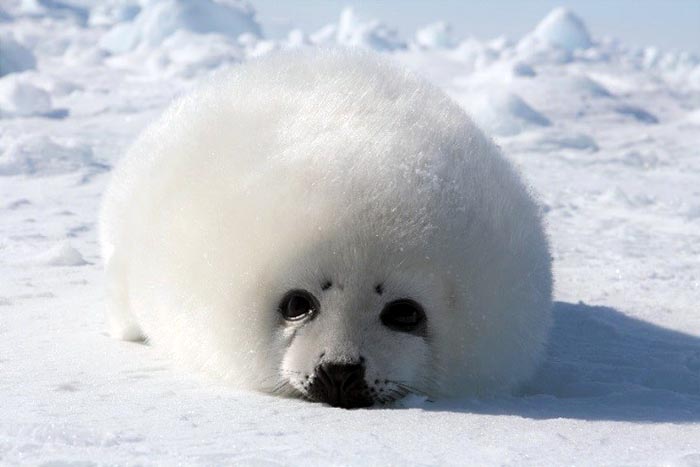
The main birthing period for NW Atlantic harp seals has arrived. Local populations of ringed and bearded seal pups will soon follow but in the Gulf of St. Lawrence in eastern Canada, the pupping season for harp seals that is usually in progress by this time has likely been redirected north due to lack of suitable ice conditions. Sea ice off Labrador and Newfoundland is in good condition and this is where the vast majority of the global population go to give birth (ca. 7.6 million vs. 1.5 million in the White Sea and 434,000 in east Greenland).
Comments Off on Birthing season for harp seals in Labrador Sea just in time to feed hungry polar bears
Posted in Life History, Polar bear attacks, Sea ice habitat
Tagged adaptation, East Greenland, evolution, Gulf, harp seal, hunting, Newfoundland, North Atlantic, polar bear, prey, pups, The Front, West Ice, whelping, White Sea
A small pod of white-beaked dolphins entrapped on Friday (10 March) by a sudden surge of ice along the northern Newfoundland coast were lucky to have been rescued by humans before polar bears could get to them. We know the bears are around, drawn south by the millions of harp seals giving birth to their pups in the area. In April 2014, something similar happened to white-beaked dolphins in Svalbard and they became a welcome meal for at least six polar bears (Aars et al. 2015).
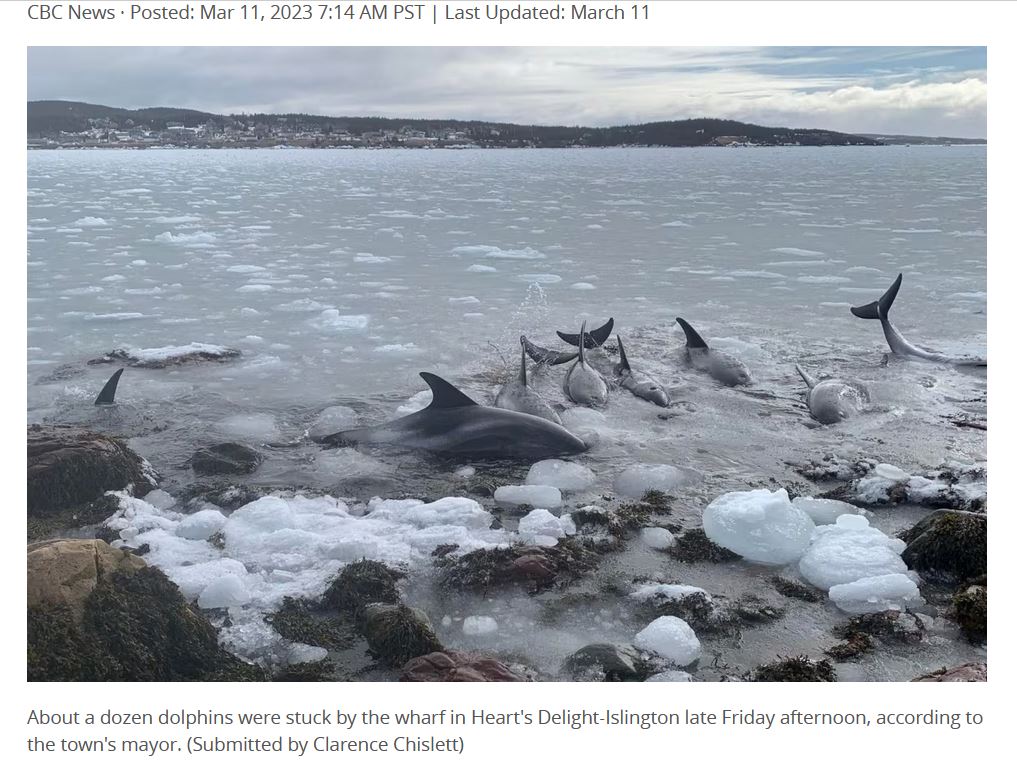
UPDATE 20 March 2023: Another pod of white-beaked dolphins has perished from the ice over the weekend. More than 30 dolphins were trapped near the town of Carbonear, which is on Conception Bay (the next big bay southeast from Trinity Bay), according to CBC News. Given the ice conditions, this is almost certainly a different pod to the one reported on two weeks ago.
Dolphins getting stuck in sea ice is a fairly regular occurrence, said Ledwell. [Wayne Ledwell of Whale Release and Strandings]
“It’s been happening here forever,” he said, adding it’s not just a problem for dolphins. “It kills blue whale and humpback whales and whatever gets into it.”
Continue readingComments Off on Ice-entrapped dolphins in Newfoundland lucky not to have been eaten by polar bears
Posted in Life History, Sea ice habitat
Tagged dolphin, ice-entrappment, Newfoundland, polar bear, prey, Svalbard, trapped, Trinity Bay
Conservation officials issued an alert to residents of coastal communities to be aware of polar bears coming ashore over the last week in northern Newfoundland and southern Labrador, after a woman photographed a bear outside her home on Tuesday morning (7 March 2023). Since no bears in this subpopulation are tracked with satellite radio collars, we have no idea if there are a few dozen bears — or a few hundred of them — hunting on the ice and available to come ashore when the opportunity arises.
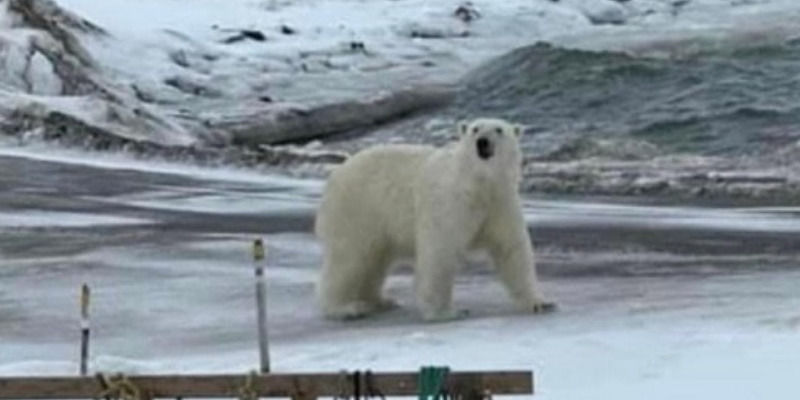
Recall that in April 2017, after more than a dozen bears had been spotted onshore in the region since early March, polar bear specialist Andrew Derocher told CBC Radio that this was bad news for the bears.
Continue readingComments Off on Polar bear sightings and sea ice conditions in Newfoundland & Labrador 2023 vs. 2017
Posted in Life History, Polar bear attacks, Sea ice habitat
Tagged Atlantic, Davis Strait, encounters, maritimes, polar bear, sightings
The Polar Wildlife Report is a peer reviewed summary of the most recent information on polar animals, relative to historical records, based on a review of 2022 scientific literature and media reports. It is intended for a wide audience, including scientists, teachers, students, decision-makers and the general public interested in animals that live in Arctic and Antarctic habitats, including polar bears, killer whales, krill, and penguins.

Comments Off on Polar Wildlife Report reveals Arctic and Antarctic animals were thriving in 2022
Posted in Conservation Status, emperor penguin, Population, Sea ice habitat, Summary, walrus
Tagged Antarctic, Arctic, beluga, bowhead, killer whale, penguin, polar bear, sea ice, Southern Ocean, walrus, Weddell seal
There is irrefutable evidence from Barents and Chukchi Sea subpopulations, among others, that polar bears are fat and reproducing well despite marked declines in summer sea ice over the last two decades. These indicators of physical and reproductive health, in any species, are signs of thriving populations. However, these facts negate the premise that polar bears require abundant summer sea ice to flourish, and that creates a problem for polar bear specialists who continue to make that claim (Amstrup et al. 2007; Crockford 2017, 2019).
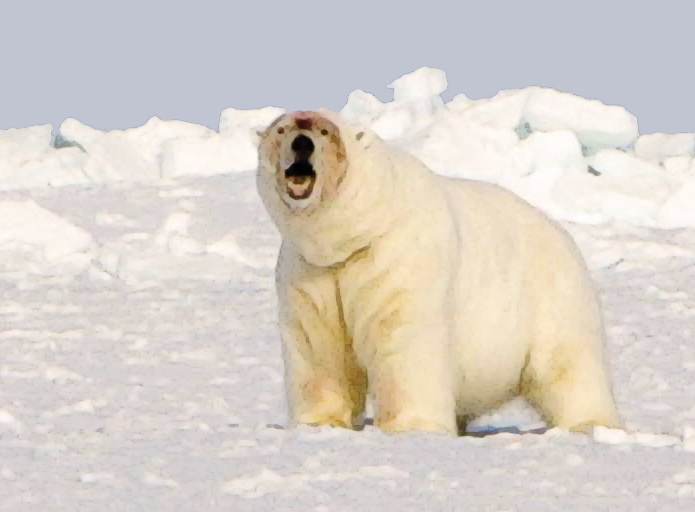
In other words, the assessment that polar bears are currently thriving is not based solely on estimates of a slight increase in global population size but on published data gathered from field studies on the bears’ physical and reproductive health.
Oddly, biologists repeatedly turn to data from Western Hudson Bay to drive home to the public their preferred message that polar bear health and abundance are being negatively affected by recent summer sea ice declines. However, they fail to mention that robust field data from many other regions, including the Barents and Chukchi Seas, support the opposite conclusion. Moreover, wherever possible, they mumble under their breath (or leave out entirely) the fact that poor ice conditions could not be blamed for a 27% decline in polar bear numbers in Western Hudson Bay since 2016 — because their own data showed sea ice conditions had been strong!
Continue readingComments Off on Published field study observations – not population size – prove polar bears are thriving
Posted in Advocacy, Conservation Status, Population, Sea ice habitat
Tagged body condition, cub production, cubs, data, facts, fat bears, health, observations, polar bear, population size, survival
There’s abundant sea ice in the Bering, Greenland and Labrador Seas, although less than usual in the Barents Sea because strong winds drove the ice north. Any time there is a bit less sea ice than usual the catastrophists begin caterwauling but this time the rhetoric is a little different.

Comments Off on Low mid-winter polar bear habitat in Barents Sea spawns warnings of more human-bear conflicts
Posted in Polar bear attacks, Sea ice habitat
Tagged attacks, conflicts, habitat, interactions, polar bear, problem bears, sea ice, winter




 polarbearscience
You must be logged in to post a comment.