Tag Archives: global warming

Claim of range-contraction of polar bears due to declines in summer sea ice doesn’t hold up

Have polar bears suffered a contraction of their historical range due to recent declines in summer sea ice? Buried in a recent journal article lies such a claim, one I can’t recall having seen before. That makes it worth close examination.
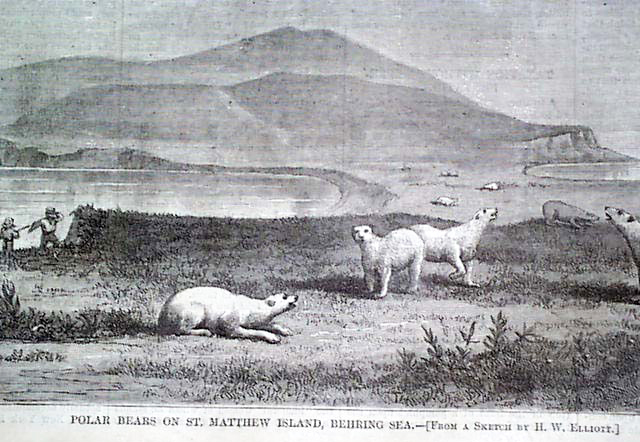
Figure 2. A drawing of polar bears on St. Matthew Island that accompanied the May 1, 1875 Harper’s Weekly Journal of Civilization article written by Henry Elliot. See here.

A drawing of polar bears on St. Matthew Island that accompanied the May 1, 1875 Harper’s Weekly Journal of Civilization article written by Henry Elliot. See here.

The assertion appears in the introduction of a recently published paper that got a lot of attention online (“Implications of the Circumpolar Genetic Structure of Polar Bears for Their Conservation in a Rapidly Warming Arctic” by Peacock and colleagues (2015), discussed previously here, news coverage here and here).

Here is how the authors put it:

There is already evidence of change in the contemporary distribution of polar bears. For example, polar bears, once common in Newfoundland [29], are now seen there only infrequently and in small numbers. Similarly, polar bears once regularly summered on St. Lawrence and St. Matthew islands in the Bering Sea [30–32]. Now they are irregularly observed in the Bering Sea and do not spend summers on St. Matthew Island. Although these changes in polar bear distribution may also have been related to overharvest, the recent reductions in the extent of sea-ice due would prevent current and regular use of these areas.[my emphasis]

There are three main reasons the claim doesn’t hold up to scrutiny:
Continue reading
Editorial calls for more jobs for polar bear biologists

An editorial in the Edmonton Journal this morning (“Stand on guard for polar bears”) takes a most extraordinary position: that the results of two recent papers of dubious value should motivate Canada to create more jobs for polar bear biologists, “protect” the Canadian Arctic Archipelago (from what, they don’t say), and galvanize Canada’s position with respect to curtailing carbon dioxide emissions. In that order.

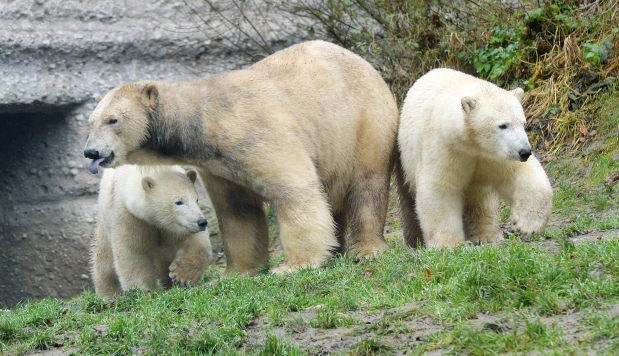
Edmonton Journal editorial photo 22 January 2015

Edmonton Journal editorial photo 22 January 2015. Munich Zoo bears.

First, the unnamed editors1 say: “This country needs more eyes and ears monitoring the health, numbers and locations of its polar bear populations.

Why would they come to that conclusion? They quote University of Alberta’s Andrew Derocher (who supervises a number of students doing polar bear research in Western Hudson Bay):

“If Canada was doing the right thing, we’d have extensive monitoring,” University of Alberta polar bear researcher Andrew Derocher said to the Journal in late 2014.

Continue reading

‘Threatened’ status for Arctic ringed seals under ESA makes no sense

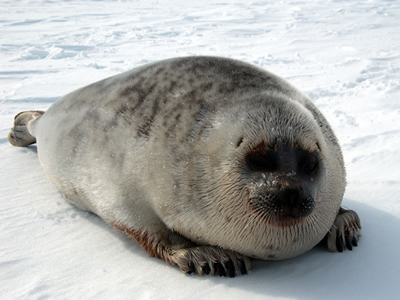
Recent research (Crawford and Quakenbush 203; Rode et al. 2014) has shown that sea ice declines in the Chukchi and Beaufort Seas have made life better for ringed seals, not worse (as predicted) – ringed seals are in better condition and reproducing better than they were in the 1970s. Why? Ringed seals do most of their feeding in the open-water period (Young and Ferguson 2013), so a longer open-water season means fatter, healthier seals and more fat pups for polar bears to hunt the following spring.

Ringed_seal_2_NOAA

However, Arctic ringed seals (as well as bearded seals) were designated as ‘threatened’ by the USA in 2012 under the Endangered Species Act, based on predicted ice and snow declines due to prophesied global warming. These listings are all about future threats, with no pretense of on-going harm.

Virtually no other Arctic nation has taken this step for Arctic seals — see previous discussion here. There are lots of ringed seals — an estimated 3-4 million world-wide and about 1.7 million within the critical habitat proposed by NOAA (see below).

As weak as the case for listing polar bears as ‘threatened’ has proven to be, the case for listing ringed and bearded seals is even more feeble (a judge has already sent the bearded seal listing back to the drawing board).
Continue reading

‘Threatened’ Arctic species comparison shows USA most assertive about global warming

A cross-Arctic comparison shows that the US has been the most aggressive in designating polar bears and their main prey species as ‘threatened with extinction’ due to the predicted effects of human-caused (“anthropogenic”) global warming (AGW), even though the US has the least amount of sea ice habit of all circumpolar nations.

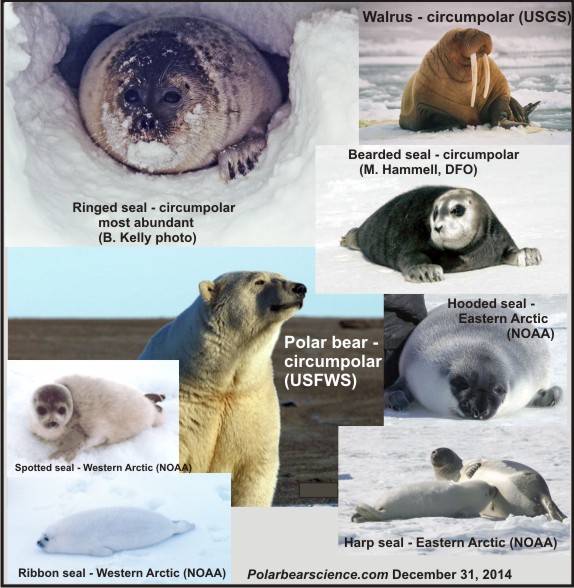
Arctic marine mammals_Dec 31 2014_Polarbearscience

I’ve made a chart listing the conservation status of these species across all Arctic nations (Canada, Russia, Norway, Denmark (for Greenland) and the USA), as well as the one international body that considers the conservation status of all species (International Union for Conservation of Nature, IUCN).

Oddly, the IUCN considers the polar bear vulnerable due to future threats from predicted sea ice losses but not ringed seals or bearded seals. This situation highlights the capricious nature of the use of “future threats” (almost exclusively based on predictions of AGW) as a valid criteria for evaluating the conservation status of Arctic marine mammals. It also suggests why the IUCN has tightened considerably its rules regarding this practice.

Continue reading

“Meltdown: Terror at the Top of the World” — new book exploits polar bear attack to sell fear of sea ice decline

The polar bear attack that was all over the news last summer is now an ebook about global warming. The Maine lawyer who was mauled by a bear while on a hiking trip to Labrador (and lived to tell the tale) has allowed his story to be co-opted by an activist journalist to promote fears of sea ice decline, polar bear extinction, and man-made global warming.

Melt-down_Terror at the Top of the World_Nov 12 2014 press release book cover

The press release issued yesterday by the news group that published the book and employs author Sabrina Shankman (InsideClimateNews), described it this way:

“A riveting new e-book about the battle between man, beast and Nature in a warming world. Called Meltdown: Terror at the Top of the World, the e-book tells the story of the hikers’ harrowing encounter with a polar bear; of the plight of the polar bear in general, facing starvation and extinction as the sea ice melts and its habitat disappears; and of the Arctic meltdown, the leading edge of man-made climate change.”

I have little doubt the man mauled by the bear was indeed terrified and that his companions were as well. However, that horror is exploited shamelessly in this book as a means to promote anxiety over the future survival of polar bears and instill panic over a prophesied Arctic “meltdown.”
Continue reading

Polar bear listed as a migratory species by UNEP to restrict oil exploration & extraction

In a press release this afternoon, the Convention on the Conservation of Migratory Species of Wild Animals (CMS) announced it had added polar bears to their list of Appendix II migratory species. [CMS is a pseudo-arm of the UN Environment Programme, the UNEP1]

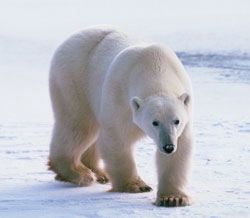
polarbear_new_USGS
The Polar Bear, the largest apex predator on Earth is affected by climate change that has led to the loss of 2 million m2 of sea ice. The Appendix II listing introduces the global perspective of existing threats to Arctic species stemming from shipping and oil exploration, making it a case for all CMS Parties.

But why formally list the polar bear as a migratory species when it is protected under several other national and international programs?

UPDATED 10 November 2014, see additions below
Continue reading

BBC provides a forum for desperate biologists: “Will polar bears become extinct?”

Yesterday, the BBC published a story that gave the two most alarmist polar bear researchers on the planet a forum to market their ‘polar bears are doomed’ message. This time the desperation shows: watch how these biologists move the goal-posts, make claims so misleading they border on lies, and pretend they don’t have big, big trouble with their predictive models.

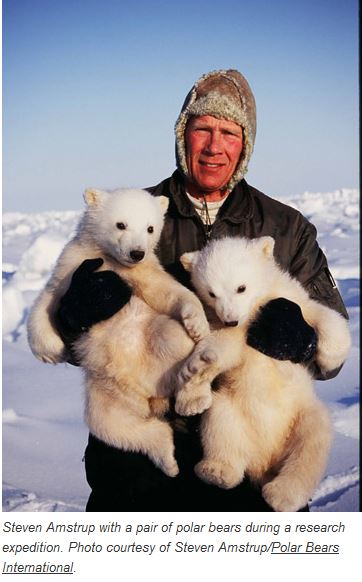
Amstrup_only solution_with 2 cubs_Oct 8 2014

Amstrup photo that accompanied an interview last month.

Continue reading

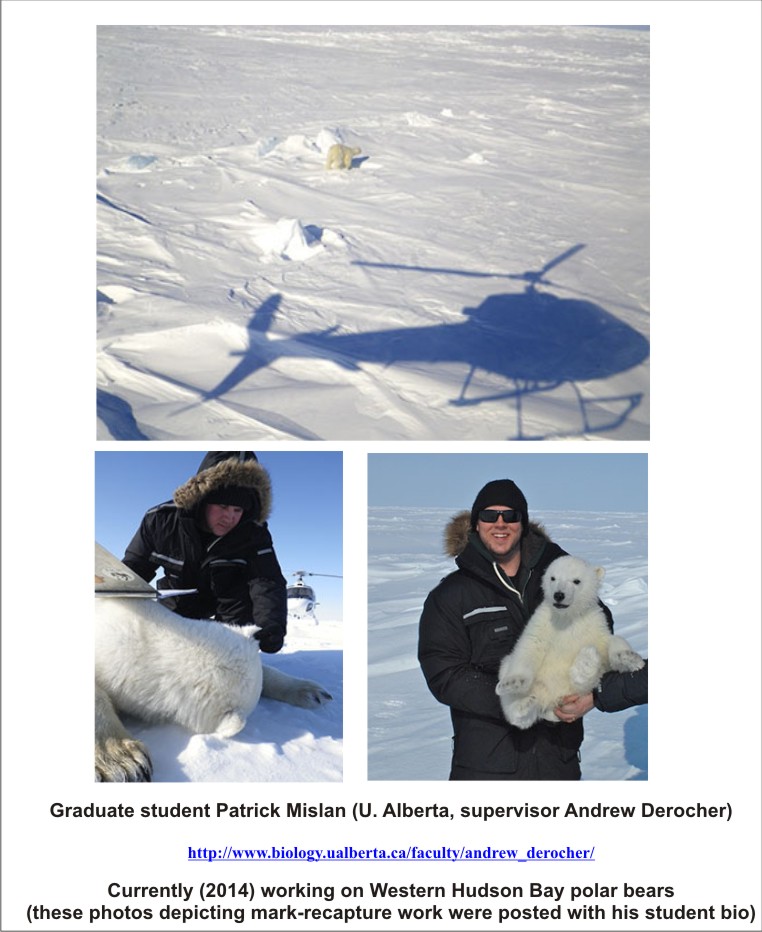
Polar bear biologists doing mark-recapture work in Hudson Bay may have misled the world

What exactly are Western Hudson Bay (WHB) polar bear researchers hiding? Since 2004, research on the body condition and cub production of Western Hudson Bay (WHB) polar bears has been carried out but none of the results of these mark-recapture studies have been made public.

U Alberta student Mislan bio photos_PolarBearScience

The researchers all claim that WHB polar bears are struggling to survive because of recent sea ice changes but won’t release the 10 years worth of updated information they possess on the bears or the sea ice.

Continue reading

Walrus mass haulout hype refuted, the video

Produced by the Global Warming Policy Foundation, there is now a short video summary of my recently-released GWPF briefing paper, which I wrote and narrated.

Walrus fuss_GWPF video Crockford

Watch it below:

Available also at GWPF TV“The Walrus Fuss – Walrus haulouts are nothing new.”

The briefing paper is here.

Save

Walrus and sea ice, a summary

I’ve written a briefing paper for the GWPF refuting claims that huge herds of Pacific walruses hauled out on land are a sign of global warming.

Here’s the GWPF press release:

London, 20 October: A briefing paper published today by the Global Warming Policy Foundation refutes claims that Arctic walruses are in distress and danger due to global warming.

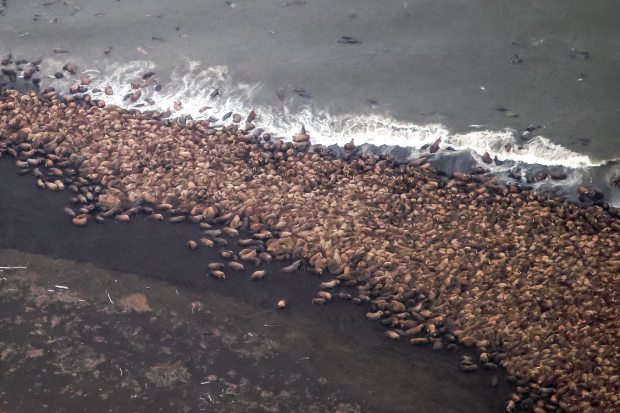
The paper, written by Canadian zoologist Dr Susan Crockford, assesses the recent mass haulouts of walrus females and calves on the beaches of Alaska and Russia bordering the Chukchi Sea. The events have been blamed by US government biologists and WWF activists on lack of summer sea ice, amplified into alarming scare stories by news media around the world.

Such claims ignore previous haulouts that suggest a different cause. Scientific reports about large walrus haulouts that have occurred repeatedly over the last 45 years show that they are not new phenomena for this region.

At least two documented incidents of similar magnitude have occurred in the recent past: one in 1978, on eastern St. Lawrence Island and the other in 1972, on the western end of Wrangel Island. The 1978 event involved an estimated total of almost 150,000 walrus hauled out within in a small geographic area.

Moreover, sea ice maps for the months when known mass haulouts occurred, compared to years when they did not, suggest no strong correlation with low sea ice levels.

“The WWF and American walrus biologists have categorically linked the Point Lay mass haulout event to global warming, but available evidence suggests that’s alarmist nonsense,” Dr Crockford said.

“Blaming lack of sea ice for recent events ignores the documented factor – large population size – that drove walruses onto beaches en masse in the past, when plenty of ice was available. Conservation measures have almost certainly led to a spectacular recovery of walrus numbers over the last few years. This suggests that recent mass haulouts are more an indicator that Chukchi walrus are nearing maximum capacity than a sign of impending global warming catastrophe,” Dr Crockford added.

Here’s the paper. [Link fixed, h/t HO]

Save