Tag Archives: Newfoundland

East Coast crawling with polar bears since early March thanks to the pack ice

The  hot polar bear news right now is the large number of sightings of bears onshore in Newfoundland and Labrador – even the CBC is impressed.
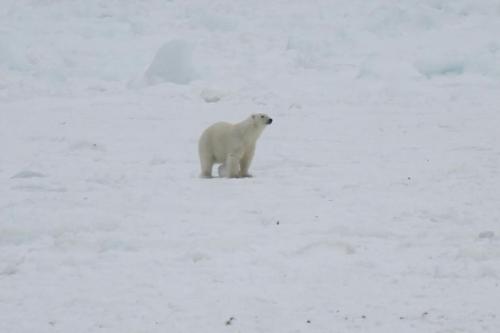
Melrose nfld Polar Bear 02_2017 April 3_Brandon Collins shared photo The Packet

Photo taken by Brandon Collins in Melrose (on the Trinity Bay side of the peninsula) Monday 3 April 2017

All the bears have been brought to land by the abundant pack ice that’s been present off Labrador and northern Newfoundland (the territory of Davis Strait polar bears), which also killed a humpback whale that got trapped against the north shore (a not unusual event, apparently).

Mapping the reports of polar bear sightings since early March helped me get a handle on the total number of encounters: more than a dozen, it turns out.  There have been a few bear sightings in this region every year recently but such high numbers are remarkable, especially so early in the season. When will it end?

Increased numbers of bears in the population is one explanation for increased numbers of encounters onshore at this time of year, although recent storms may have encouraged more bears than usual to come ashore in Newfoundland.

My picture annotated map and a list of sighting reports, with links, is below but stay tuned: this story may not be over yet.

UPDATE 4 April: more photos and sea ice maps added below.

UPDATE 5 April: another sighting, in St. Brendan’s (west of Bonavista), added to the map below and quotes from one witness. The map is now Version 2. A sea ice map for 5 April has also been added at the end of the post.

UPDATE 9 April: another sighting and a bear casualty, see below. Map revised again.

UPDATE 14 April: CBC Newfoundland article (12 April: Highway of ice: Easy route for polar bears chasing food, prof says) based on my radio interview that aired 11 April.

UPDATE 22 April: Another sighting west of St. Anthony on Wednesday, 19 April has been added to the map (now Version 4) and an alert that I’ve added a new post (21 April) about the claim by one vocal polar bear specialist that all of these sightings are the result of “failed” sea ice conditions off Newfoundland and Labrador this year (seriously, I’m not making this up). I’ve added the most recent ice map at the end of this post.
Continue reading

Polar bear habitat update for Canada at mid-February

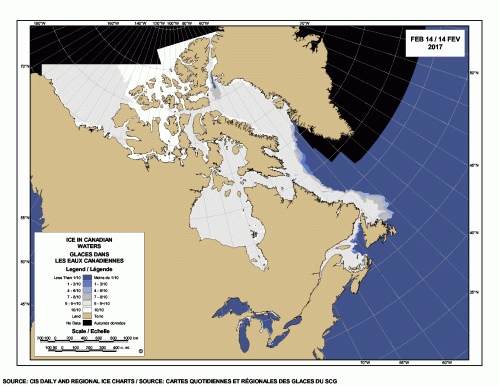
Mid-February is the tail end of the winter fast for polar bears. Sea ice is approaching it’s maximum global extent but local maximum extents may vary. Most of the sea ice in Canada is locked in already but two regions still vary at this time of year: the Labrador Sea off Labrador and Newfoundland – where polar bears come to feed on an abundance of newborn harp seals – and the Gulf of St. Lawrence, where polar bears have not been spotted in more than 60 years. sea-ice-extent-canada-2017-feb-14_cis

There is almost certainly enough ice for harp seals to give birth in the Gulf this year, if the ice holds (despite some premature hand-wringing by seal biologists). There is more ice in the Gulf and off Newfoundland this year than there was in 2013 (see map below). Continue reading

Canadian Prime Minister risked being EATEN by polar bears on Fogo this year

This week (Tuesday 9 August), British Columbia’s Knowledge Network is re-running the 2015 documentary about the revitalization of Fogo Island, the Newfoundland location featured in my polar bear attack thriller, EATEN. It’s called Strange and Familiar: Architecture on Fogo Island and highlights the Fogo Island Inn, where our recently elected Prime Minister Justin Trudeau apparently spent a weekend earlier this year – gambling he could avoid a lethal encounter with a hungry polar bear when fictional others haven’t been so lucky.

Fogo Island special on Knowledge Network_9 Aug 2016

The Prime Minister and his family stayed at the Fogo Island Inn over Easter (25-28 March 2016). Did Justin Trudeau know they could have been EATEN by a polar bear at that time of year? Were members of his security detail actually prepared for a polar bear attack?

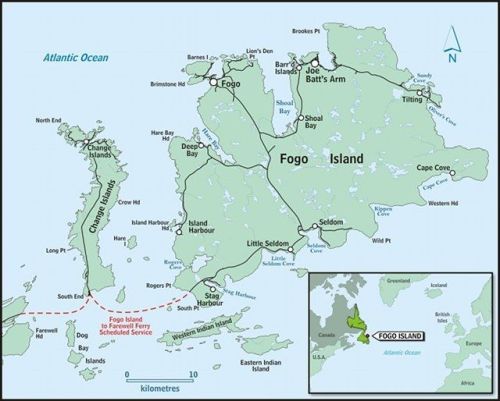
Did Trudeau’s advisors do any preparatory reading? I mean, seriously: aside from reading my terrifying science-based novel (where polar bear attacks take place right outside the Fogo Island Inn where the Trudeaus were staying), Fogo (see maps below) has a recent history of polar bear visits.

Most bears come ashore on Newfoundland in late March-early April, although this year one came ashore on Fogo in late January. Another was shot in early May this year as it advanced on an RCMP officer near one of the artist’s studios on Fogo. I guess I’ll have to send a complimentary copy to Ottawa…because next time, what with polar bear numbers increasing in that region, this high-profile family might not be so lucky.

“What-if” indeed…the risks they took are mind-boggling. Continue reading

RCMP shot fearless polar bear that came ashore on Fogo Island, Newfoundland

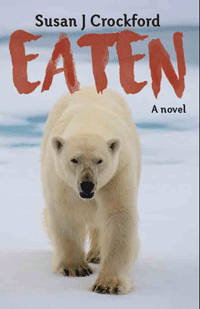
Just look at the polar bear on the cover of my new novel (right sidebar) and image that bear coming towards you with no intention of stopping. That’s what a Newfoundland RCMP officer faced yesterday – and he did what he had to do.

Fogo polar bear shot_CTV May 2 2016

This is the usual time for polar bear visits to northern Newfoundland but this one had a sad ending. The bear that came ashore at Deep Cove (where some of the action in my novel EATEN takes place, near the artist studio pictured in the photo shown above) on Fogo Island (map below) was killed by RCMP due to fears for public safety when it kept approaching officers even after warning shots were fired.

Maps and quotes from the 2 May CTV report below:

UPDATE 4 May 2016: more detailed (and accurate) information added below from a new CBC report – apparently, the bear was a large juvenile male, not an adult as originally reported, and was larger than initial reports indicated.

Continue reading

Polar bear visits Newfoundland community of Goose Cove

Goose Cove on the Great Northern Peninsula, western Newfoundland, had a polar bear visitor onshore yesterday. That’s typical for this region at the this time of year. The bear wasn’t seen, reported the Northern Pen (8 April 2016), but resident Jim Rice, who spotted the bear tracks in the snow, had this to say:

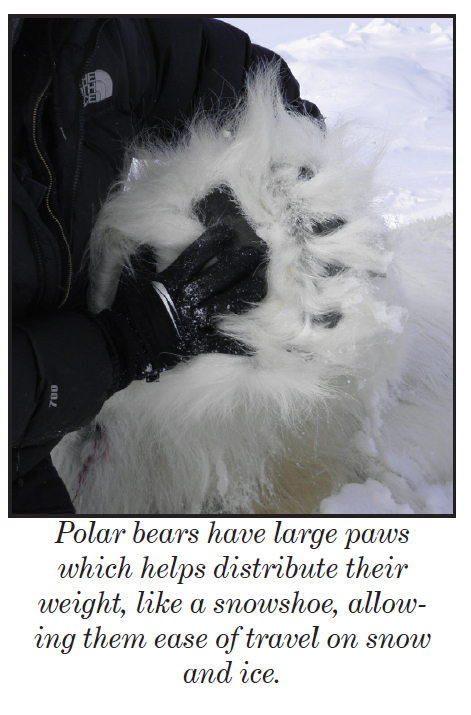
“I put my boot into one of the tracks, and I wear a size 12 boot, and it was the whole way around my boot,” said Rice. “So I didn’t stick around too long after that because I didn’t know if it was still in the area.”

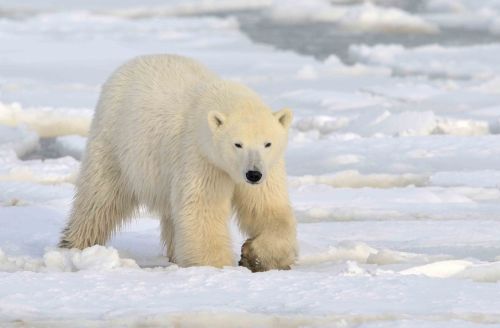
Polar bear foot_USFWS_PolarBearNews2013

Goose Cove is featured in my polar bear attack thriller, EATEN in which polar bears come ashore much earlier than usual because their food source has failed – and terrorized the northern coast. A scarier story than well-fed bears ashore in April, after feeding for a month or so on harp seal pups.

Map below, from my novel, as well as sea ice conditions at the time.
Continue reading

Worrywart biologists fuel media fearmongering over winter sea ice levels

Have you heard the old adage, “Don’t buy trouble”? I’m thinking we could use a lot more of that attitude from polar bear and Arctic seal biologists these days.

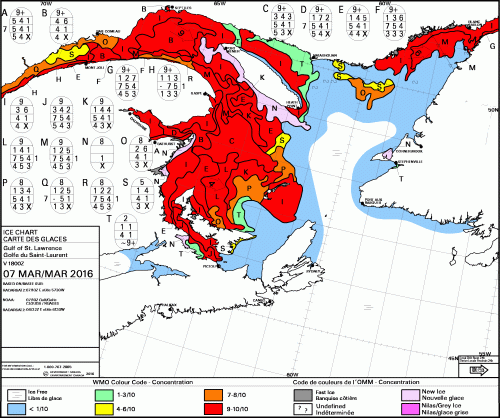
Gulf St Lawrence ice conc 7 March 2016_CIS

In an interview with CBC News yesterday, Department of Fisheries and Oceans Canada (DFO) seal specialist Mike Hammill fed the fear the media wanted to hear while admitting this year’s low ice levels in the Gulf of St. Lawrence will not affect harp seal numbers significantly (7 March 2016, Lack of ice means fewer seal pups off the Magdalen Islands this year: Researcher says impact on overall herd limited, but ice patterns over time could be concern”).

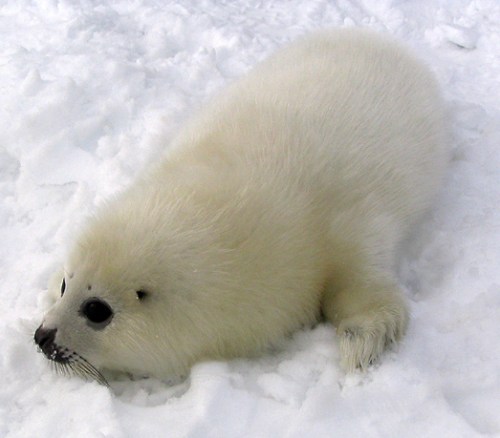
Harp sea newborn_wikipedia

And University of Alberta’s Andrew Derocher has been busy tweeting his heart out that slightly lower than average sea ice levels this winter could mean a “challenging” spring for some polar bears – as if spring isn’t always challenging for some bears (especially young bears that are inexperienced hunters and low in the social hierarchy – meaning bigger, older bears often steal their kills – and old bears that are running out of steam).
Continue reading

Harp seal: most abundant Arctic seal is an undervalued polar bear prey species

The harp seal is the most abundant seal species in the northern hemisphere (estimated to number more than 9 million animals – that’s more harps than ringed seals) but are found only in the North Atlantic. Partly because they give birth on mobile pack ice, harps have their pups earlier in the season than all other Arctic seals, which means that in some regions, they are a critical food source for polar bears that have eaten little over the winter months.

Harp seal pup_DFO Newfoundland

Although young ringed seals are considered the primary prey of polar bears throughout the Arctic, young harp seals undoubtedly represent an increasingly important resource for populations of Davis Strait, East Greenland and Kara Sea bears.

Most of the harp seals in the NW Atlantic/Atlantic Canada (about 80% of them) have their pups off Newfoundland and Labrador, an area known as the “Front” (the location of my polar bear attack novel, EATEN: special deals all this week). Harps seals at the Front now provide a huge prey base for polar bears of the large (and possibly still growing) Davis Strait subpopulation (photo below courtesy DFO Canada).

There are an estimated 7.4 million harps in Atlantic Canada today (range 6.5-8.3m), an exponential increase over the early 1980s, when perhaps only half a million so remained.  Pagophilus groenlandicus was assigned a conservation status of ‘Least Concern’ by the IUCN Red List in June last year (Kovacs 2015), when it was estimated that the global population size of the harp seal was greater than 9 million animals and probably growing1, 2 due to reduced human hunting:

“…harp seals have been harvested for thousands of years but currently the population is large and the number of animals harvested is declining.” [my bold]

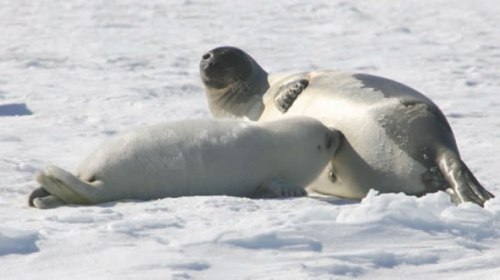
Photographers and animial rights activists love cute, fluffy harp seal pups and rarely mention the carnage that goes on in spring as polar bears devour the naive youngsters. See the video below (from 2008), for an example of the cuteness factor.

Continue reading

Polar bears roaming Labrador in winter due to climate change, says minister

This is a follow-up to a post on my book blog that I wrote this morning because it’s relevant to the scenario I describe in my novel, set in the year 2025 in northern Newfoundland. I’m cross posting it for the benefit of regular readers here.

It appears that most of the blame for this phenomenon of multiple sightings of hungry bears onshore in the dead of winter (creating havoc and roaming among houses in the coastal Labrador communities of Black Tickle and Charlottetown) has been placed squarely on…climate change. By a government minister. You have to hear this man’s words to believe it.

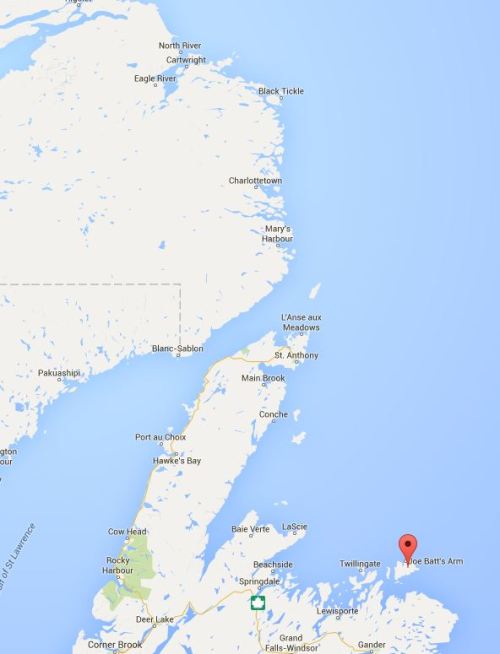
Labrador south and Fogo Nfld marked

Continue reading

Polar bears rarely come ashore in January but one did on Tuesday

Polar Bear stock image gg66298544_sm

In a life-mimics-fiction moment, this report appeared Tuesday morning (26 January) in The Telegram newspaper in Newfoundland:

“The RCMP is warning the public after reports were received of a polar bear in Tilting. Fresh bear tracks were seen in the Fogo Island community Tuesday.”

Tilting is a small town on the eastern shore of Fogo Island (see map below): Fogo Island sits off the northeast shore of Newfoundland (and is featured prominently in my new polar bear attack novel). Fogo Island lays at about the same latitude as London, England. The CBC, Canada’s national news outlet, also ran the story.

Fogo_on Fogo Island Newfoundland details

A government public advisory issued yesterday stated:

“Residents are cautioned following reported sightings of polar bears tracks near the community of Titling, on the eastern end of Fogo Island. Conservation officers confirmed the tracks to be within one kilometre of the community and believe the polar bear has since returned to saltwater. [my bold]

Polar bears are not usually seen onshore in Newfoundland until late March or April (previous stories here and here), after the ice has been close to shore for week and bears have feed extensively on newborn harp and hooded seal pups. Bears that come ashore in January – well before seal pups are born in spring (late February/mid-March) – can potentially be very dangerous because they are likely very hungry. None of the reports of this sighting gave any indication of the probable age of this bear. However, it must be kept in mind that young bears (3-5 years old) are more apt to be in a desperate state at this time of year.

Or, perhaps the bear caught interesting smells coming from shore and decided to take a short swim to check it out. The sea ice was still offshore at the time (see maps in yesterday’s post) but clearly, not too far off for the bear to swim. There may have been icebergs frozen into the pack ice that broke away (too small to show up on ice maps), that brought the bear further south than it would have ventured on its own.

It is a rare event for a polar bear to come ashore at Newfoundland in January, but it has happened before. Apparently, another bear came ashore, also on Fogo Island – in 1935 – and attacked someone. See the story below.
Continue reading

2015 was a great year for polar bears and for EATEN

Not only did we see plenty of great news about polar bears but EATEN (my first novel) is now well on it’s way to being a resounding success. Don’t let your friends and colleagues have all the nightmares! Fabulous read for a long cold NH winter’s night but also an excellent choice for the beach…perhaps fewer nightmares?

polar_bear570  ONTARIO MINISTRY OF NATURAL RESOURCES

The Canadian Ice Service predictions for winter 2016 off eastern Canada (where my novel takes place) is for extensive ice for the third year in a row. That means only nine years to go for the situation in 2025 to meet my speculations regarding a most terrifying onslaught of starving polar bears in Newfoundland.

I don’t ask for donations here at PolarBearScience – if you appreciate my efforts (418 posts and almost 630,000 views since late July 2012) and would like to see more of the same, please buy a copy or two of my book (and don’t forget to go back and leave a brief review; only the number of stars count). Paperback editions here and here; Ebooks for immediate gratification (Kindle; All other e formats).

EATEN-cover-front_thumbnail

In 2015, the Arctic Fallacy was exposed, there were official admissions of population increases (here and here) – all after we had Twenty Good Reasons Not to Worry About Polar Bears.

More of the same for 2016!

A heartfelt Happy New Year to you and yours, from a Canadian zoologist not afraid to wonder ‘what if’ but honest enough to call the output fiction.

Susan