Tag Archives: polar bear

Western Hudson Bay sea ice breakup for polar bears like the 1980s for 3 of the last 5 yrs

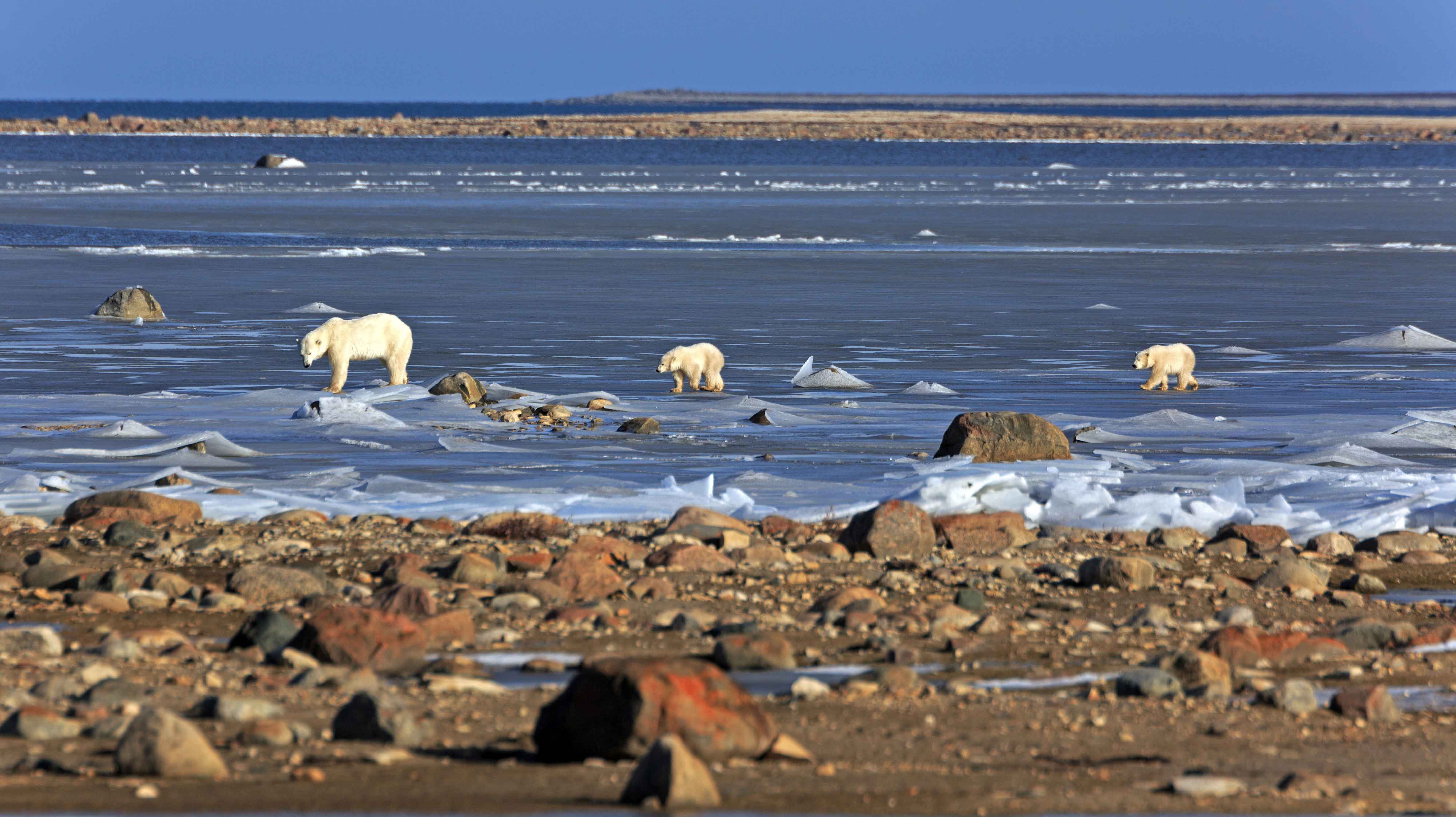
The 1980s and early 1990s are said to have been the “good old days” for sea ice conditions and polar bears in Western Hudson Bay, with all tagged bears usually ashore by mid-to-late August. Then an abrupt step-change in sea ice breakup dates brought polar bears to shore an average of two weeks earlier in the late 1990s. From then until 2019, the only significant outlier to all tagged bears being ashore by about late July was 2009, which was such an unusually cold year that the last bears came ashore about August 20.

That pattern changed in 2020, when the last bears came off the ice as late as they had in 2009, on August 21. Something similar happened in 2022, when the last bears came off a small remnant of ice even later, about August 26. And this year, the bears may be moving ashore even later: there is even more ice remaining off WH and much of it is thick compacted ice that hasn’t melted much over the last few weeks, which means bears have been as late onshore as the 1980s for three out of the last five years.

Continue reading
Fatal polar bear attack in Davis Strait last week: important details being withheld

A man was killed last week (August 8) by two polar bears on a small island off the east coast of Baffin Island in Nunavut, multiple reports have confirmed — although precious few details have been provided, other than that one of the bears was killed immediately afterward. The name of the victim (an employee of a government radar site) has not been released, and no information on the condition of the bears or the circumstances of the attack have been provided. Major news outlets have had to pad their stories with details from previous attacks and other filler.

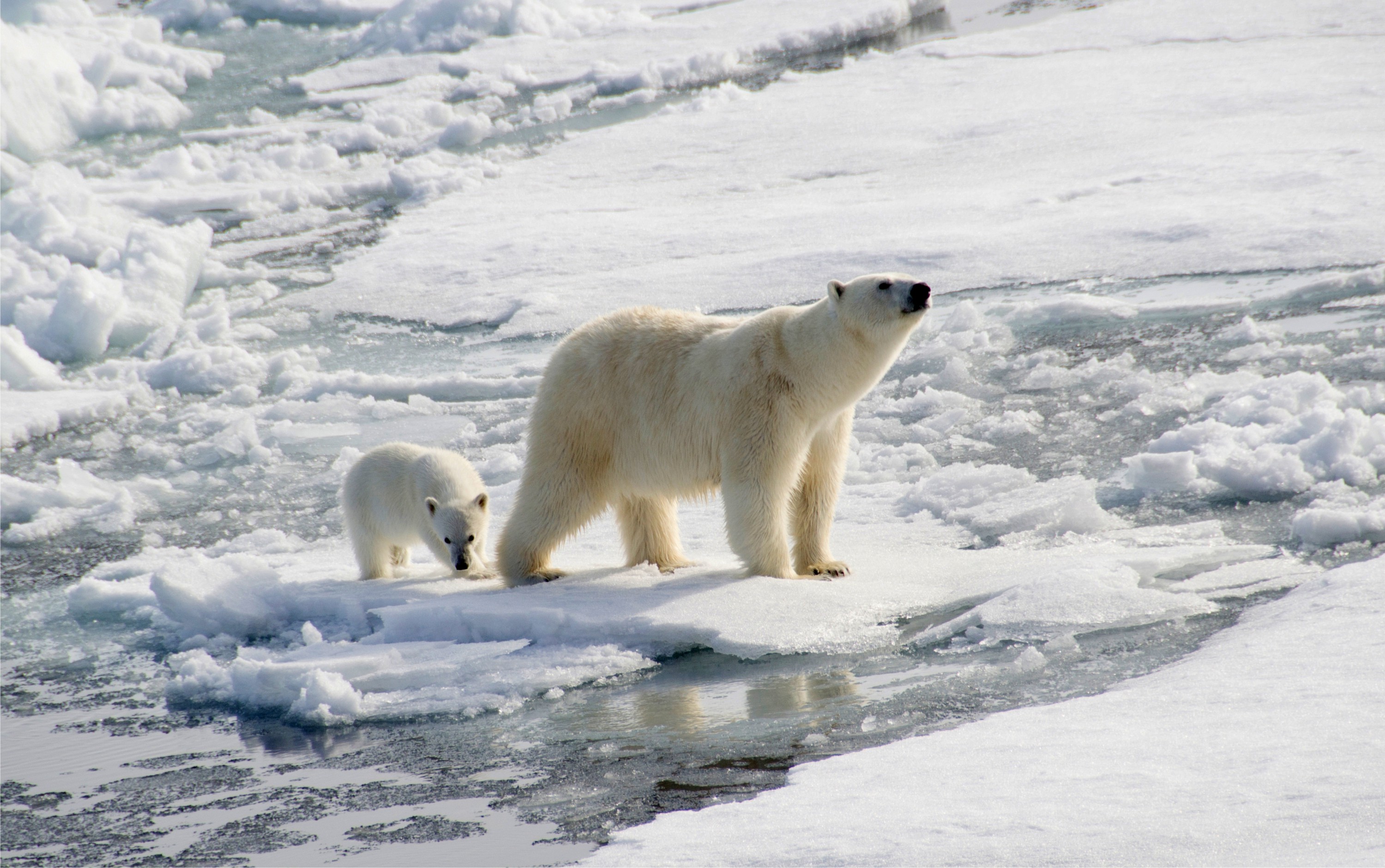
A Svalbard sow and half-grown male cub that’s as big as she is.

However, an attack by two bears sounds suspiciously like the sow and half-grown cub involved in another fatal attack in 2018 in Foxe Basin, even though adult females with cubs are one of the least common perpetrators of serious attacks on people.

Why are officials not saying if this was yet another fatal assault by an adult female with a cub, even five days after the attack? Perhaps because they think it makes the bears “look bad” and strengthens the Nunavut case for recently including equal numbers of females and males in their hunting quotas? Time will tell.

Continue reading

Last month of Arctic spring fails to bring sea ice to its knees, even in Southern Hudson Bay

Polar bear habitat for June — the last month of spring in the Arctic — is still within 2 standard deviations of the long-term average despite sea ice experts’ predictions that catastrophic declines can be expected any year now.

The Arctic sea ice cover in June 2024 retreated at a below average pace, leading to a larger total sea ice extent for the month than in recent years. NSIDC, 3 July 2024

Oddly, the National Snow and Ice Data Center (NSIDC) employees who wrote up the sea ice summary for June felt it appropriate to bring up a recently-published prediction of impending doom for Southern Hudson Bay polar bears based on a sea ice prediction (Stroeve et al. 2024), which I covered here. The inclusion of this topic is a naked promotion of the Stroeve sea ice modelling paper which not only doesn’t fit the reality of this year’s sea ice conditions but their discussion doesn’t include a single piece of evidence that Southern Hudson Bay polar bears came off the ice earlier than usual.

Continue reading

Arctic sea ice at the summer solstice: more polar bear habitat than 2022 after hottest year on record

We are just into the 2024 sea ice melt season in the Arctic with no signs of any big, dramatic changes despite claims that 2023 was the warmest year on record (since 1850). There is still abundant sea ice habitat for polar bears ahead of the summer months (July-September) when Arctic ice melts back considerably.

Polar bears in Western Hudson Bay are still on the ice despite vast open water levels normally signaling “breakup” has happened: the wind-driven ice is packed tight against the western shore and the bears are still on it.

Continue reading

New Hudson Bay sea ice modelling paper is more utterly useless fearmongering about polar bears

A new collaboration by sea ice and polar bear specialists that predicts a catastrophic future for polar bears in Hudson Bay (Stroeve et al. 2024) can be dismissed as yet another bit of utterly useless fearmongering for two reasons: 1) it’s a model projection that uses widely discredited SSP5-8.5 “business as usual” climate scenarios for its predictions; and 2) it’s based on the false premise that Western and Southern Hudson Bay polar bears have already suffered harm from reduced sea ice blamed on fossil fuel-caused global warming.

The fact that recently-deceased Ian Stirling was a prominent co-author should come as no surprise: his irrational promotion of the idea that future “climate warming” could doom polar bears to near-extinction – even after recording and publishing evidence to the contrary – will go down in history as an appalling violation of scientific principles.

Adding to the dubious validity of the paper: lead author Julienne Stroeve’s 2007 paper predicting summer sea ice decline by 2050 was proven wrong by actual data by the time it was published (Stroeve et al. 2007, 2014) and a more recent update failed to foresee the recent 17-year stall in decline. And co-author Steve Ferguson, a seal biologists, rashly stated in 2016 that Hudson Bay could be ice-free in winter as early as 2021 [which, needless to say, never came close to fruition].

I’d say if Southern Hudson Bay polar bears might be extirpated as soon as 2030, as the paper’s co-author Alex Crawford suggests, the global temperature and ice melt had better get a move on: a survey showed the SH population was thriving in 2021 and Hudson Bay sea ice hasn’t hit any kind of death spiral in the three years since.

Continue reading

Huge area of open water on Hudson Bay created by wind, not ice melt, NSIDC experts confirm

Sea ice experts at the US National Snow and Ice Data Center just confirmed my suspicion that the huge area of open water in eastern Hudson Bay during May this year was caused by winds, not ice melt. In other words, it’s a rare occurrence but not a sign of extra-early sea ice melt caused by global warming.

Money quote: “Unusual strong and persistent winds from the east caused the low extent.”

Continue reading

New data show Svalbard polar bears are fatter than they were in 1993 despite continued low sea ice

Researchers at the Norwegian Polar Institute have finally updated their spring data, which show male polar bears in 2024 were even fatter than they were in 1993 and litter sizes of new cubs were just as high, despite continued low sea ice in the region over the summer months especially.

Continue reading

Ian Stirling, grandfather of polar bear biologists, dead at 82

Ian Stirling, who laid the foundation for our understanding of polar bear ecology and almost single-handedly made the polar bear an icon of global warming, died last week in Edmonton at the age of 82 [my mistake in the headline: he would have turned 83 this September]. Stirling was said to have played a critical and calming diplomacy role at international Polar Bear Specialist Group meetings but over the last several decades, like so many other “conservationists,” he became an outspoken activist for what he called the “climate warming” issue.

It was sad for me to have witnessed a respected and dedicated biologist turn his back on science the way he did but I am also saddened by his passing. He truly did make a huge contribution to science but could have done so much more with the time he had.

Continue reading

Polar bears are going extinct? Actually, they’re not! A new video worth watching and sharing

Great Barrier Reef specialist Peter Ridd has just published an excellent video about my work and the way I’ve been treated by the scientific community just for pointing out that polar bear populations have failed to respond as predicted to the recent decline in Arctic sea ice.

Dr. Ridd has been treated equally abominably, as he explains here.

Here’s the video: Polar bears: They are going extinct!? 27 April 2024 [length 6:57]

The report Peter refers to in the video is this one, which was published in February 2024:

Crockford, S.J. 2024. State of the Polar Bear 2023. Briefing Paper 67. Global Warming Policy Foundation, London. Download pdf here.

In other words, the polar bear catastrophe we were promised never happened. In case you missed it, I wrote a book about that. Polar bears across the Arctic are thriving: not just because their numbers have increased overall but because the field data collected from bears in regions that have had the most dramatic declines in summer sea ice, including the Barents Sea and the Chukchi Sea, show the bears are healthy and reproducing well.

A good year for Svalbard polar bears due to abundant sea ice coverage

A sow and a pair of half-grown cubs recently paid a visit to the Polish Research Station in southwestern Svalbard without causing any more trouble than racing heart-rates, according to a report in The Guardian today.

Money quote from the leader of the expedition [my bold]:

This year the team had seen more polar bears than usual, he added. Usually there were around 20 bear sightings a year, but this year there had been close to 40 sightings since June and they expected to see more in their final three months.

So far, we have not observed any clearly emaciated individuals. This year is probably a good year for Svalbard’s polar bears because there is a lot of sea ice here compared to recent years,” he said [The Guardian, 2 April 2024, see photo above].

Continue reading