Tag Archives: polar bears

Public misled about W Hudson Bay bears since November 2013

Leading polar bear biologists knew by November 2013 that mark-recapture studies showed the Western Hudson Bay subpopulation had not changed appreciably since 2004 but none said so. This includes Steven Amstrup and Ian Stirling at Polar Bears International, Andrew Derocher (University of Alberta), and Nick Lunn (Canadian Wildlife Service), all of whom are (or have been) extensively involved in Western Hudson Bay polar bear research and have made recent statements to the media on this topic.
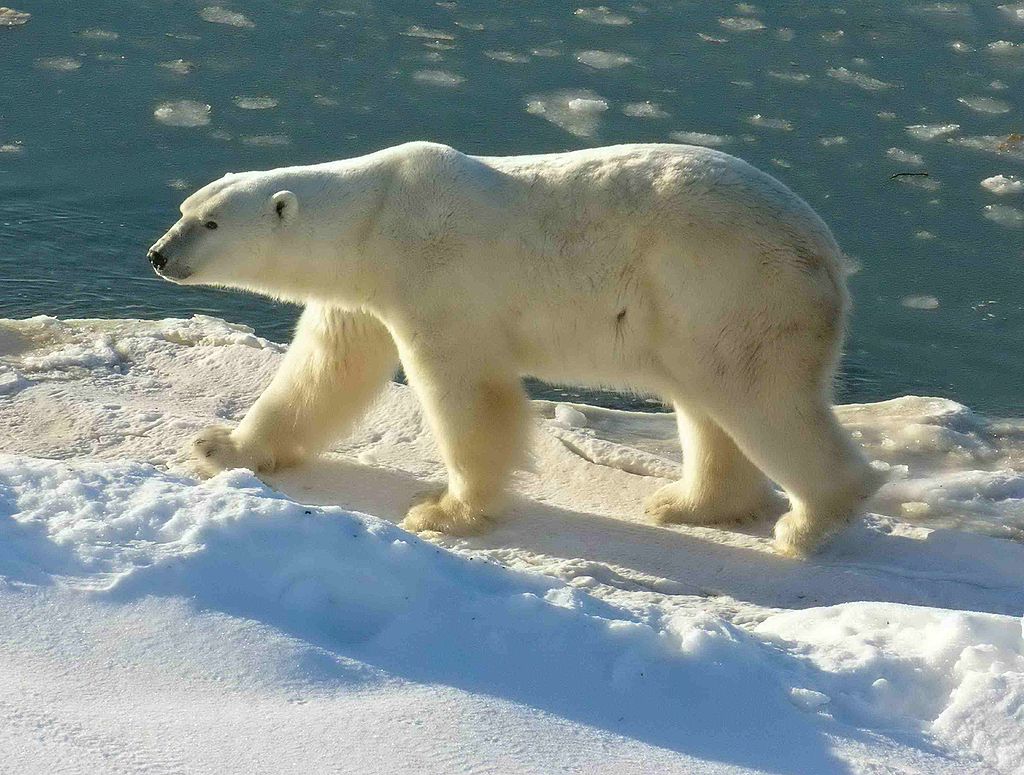
Polar_Bear_2004-11-15_Wapusk Nat Park_Wikipedia

More details have emerged about the status of Western Hudson Bay (WHB) polar bears (reported a few days ago here), reported this morning in NunatsiaqOnline, excerpts below.

The story reveals that there are two Canadian Wildlife Service (Environment Canada) reports containing population estimates of Western Hudson Bay polar bears – one produced in 2011 and another in November 2013 (reversing the 2011 conclusion) – that have not been made public.

[In contrast, Nunavut Government reports on their 2011 population estimate, based on aerial surveys, were made public in both draft and final report formats (and have since been peer-reviewed and published)]

The conclusion of the 2013 report, quoted in this mornings article, suggests that some of our most vocal polar bear specialists have been misleading the public about the status of the Western Hudson Bay population for the last year.
Continue reading

Tracking polar bears in the Beaufort Sea – November 2014 map

Here is the November 2014 follow-up to my post on the July 2013 track map for female polar bears being followed by satellite in the Beaufort Sea by the US Geological Survey (USGS) – “Ten out of ten polar bears being tracked this summer in the Beaufort Sea are on the ice.”

See that post for methods and other background on this topic, and some track maps from 2012 (also available at the USGS website here). The USGS track map for November 2014 is copied below.

 Figure 1. Original caption: "Movements of 12 satellite-tagged polar bears for the month of November, 2014. Polar bears were tagged in 2014 on the spring-time sea ice of the southern Beaufort Sea. All twelve of these bears have satellite collar transmitters. Polar bear satellite telemetry data are shown with AMSR2 remotely-sensed ice coverage for 30 November, 2014." Click to enlarge, original here.


Original caption: “Movements of 12 satellite-tagged polar bears for the month of November, 2014. Polar bears were tagged in 2014 on the spring-time sea ice of the southern Beaufort Sea. All twelve of these bears have satellite collar transmitters. Polar bear satellite telemetry data are shown with AMSR2 remotely-sensed ice coverage for 30 November, 2014.” Click to enlarge, original here.

All twelve bears (all females) are finally visible on this map, confirming my suspicion that two were so close together they overlapped. Three out of the twelve “Southern Beaufort” bears were in the Chukchi Sea at the end of November (west of Point Lay, see discussion here). If you missed it, my October 2014 post on the progress of these bears has some maps from previous years that are worth reviewing.

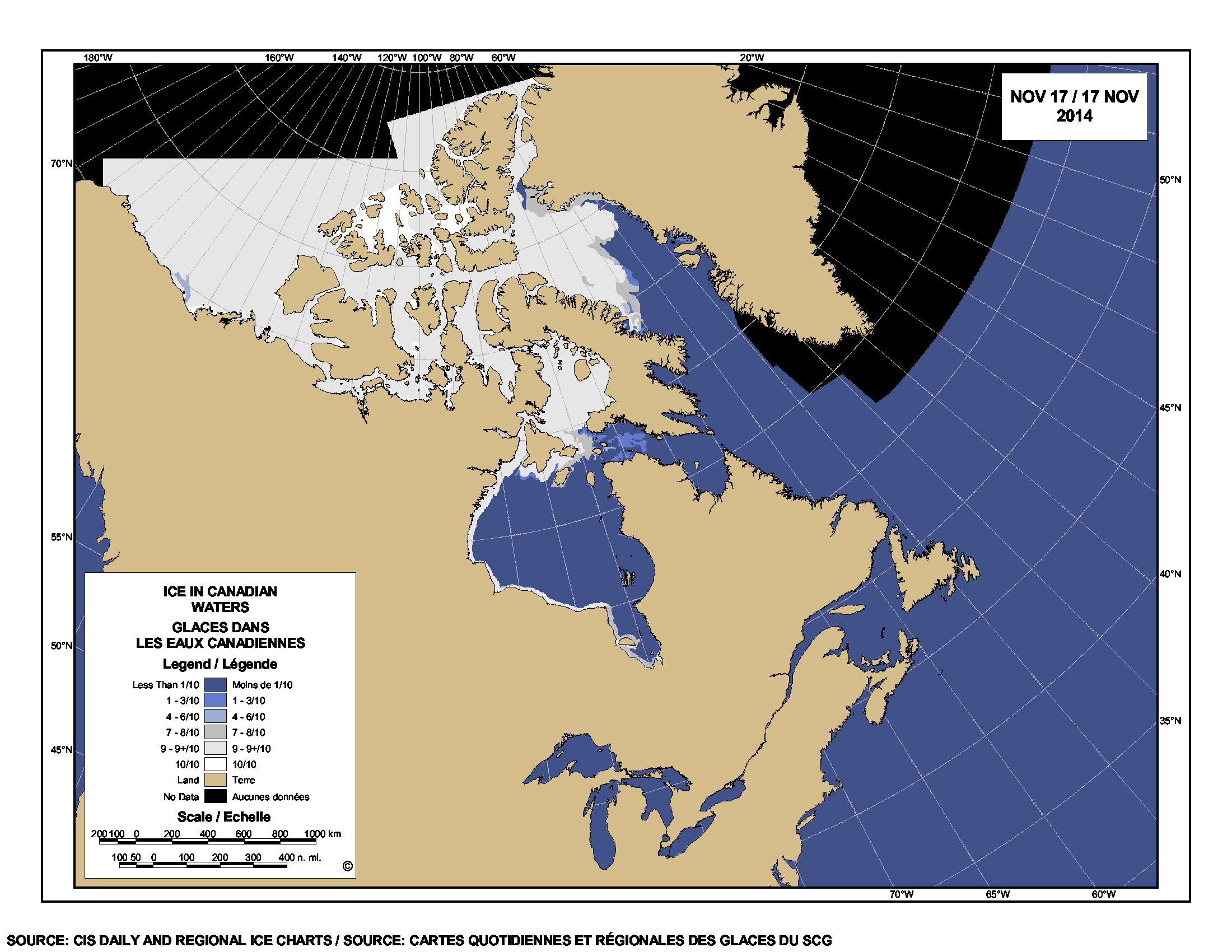
Hudson Bay freeze-up update – most polar bears on the ice

Latest sea ice maps and charts from the Canadian Ice Service show significant ice building quickly along the west coast of Hudson Bay, enough to allow polar bears out to hunt.

Kelsey Eliasson reported from Churchill earlier today that most of the polar bears have moved onto the ice.

Sea ice extent Canada 2014 Nov 17 CIS

Continue reading

Tracking polar bears in the Beaufort Sea – October 2014 map shows most ice since 2010

Here is the October 2014 follow-up to my post on the July 2013 track map for female polar bears being followed by satellite in the Beaufort Sea by the US Geological Survey (USGS) – “Ten out of ten polar bears being tracked this summer in the Beaufort Sea are on the ice.”

See that post for methods and other background on this topic, and some track maps from 2012 (also available at the USGS website here). The USGS track map for October 2014 is copied below (Fig. 1).

For the end of October, there was more ice in the Southern Beaufort this year than there has been since 2010.

Eight bears (all females) were on the ice and four were onshore. Only six of the eight on-ice bears were actually in the Southern Beaufort – the other two were in the Chukchi Sea (west of Point Lay, see discussion here).

Note that the recent boundary change between the Southern and Northern Beaufort subpopulations (the US/Canada boundary of the Southern Beaufort), reported here, has not addressed the fact that many western “Southern Beaufort” bears move into the Chukchi Sea. Continue reading

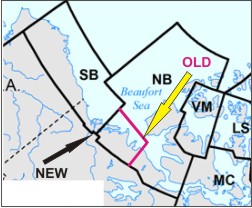
Beaufort Sea polar bear subpopulation boundary has been changed

Environment Canada recently posted a set of maps on its website that show it has moved the boundary between the polar bear subpopulation it shares with the USA — without a word to the media or a note anywhere.

EC S_N Beaufort boundary change Sept 8 2014_cropped PolarBearScience

Continue reading

Tracking polar bears in the Beaufort Sea – September 2014 map

Here is the September 2014 follow-up to my post on the July 2013 track map for female polar bears being followed by satellite in the Beaufort Sea by the US Geological Survey (USGS) – “Ten out of ten polar bears being tracked this summer in the Beaufort Sea are on the ice.”

See that post for methods and other background on this topic, and some track maps from 2012 (also available at the USGS website here).

The USGS track map for September 2014 is copied below (Fig. 1).

At the end of September, with sea ice starting to rebuild, it appears there were 8 bears on the ice and three on land.

The situation for September was not very much different from August, except that two of the 11 bears (up from one) were on the ice in the Chukchi Sea in September, a phenomenon that was recently acknowledged to have affected the last population estimate for the Southern Beaufort subpopulation.

Continue reading

About the time I asked a challenging question at a global warming workshop

When you really want to challenge a speaker at a scientific meeting or public lecture, deciding what’s the best question to ask is often difficult. Here’s an example that might inspire you.

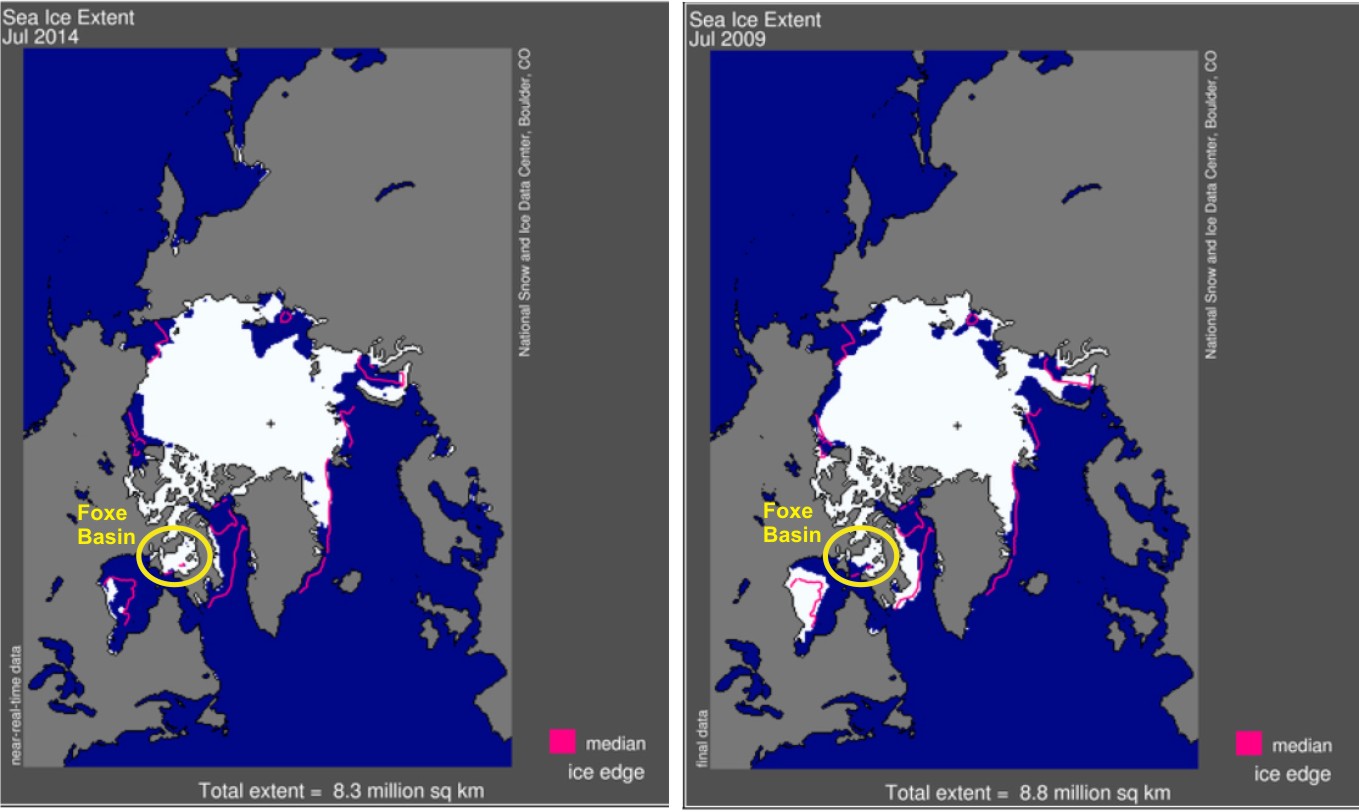
In 2009, I asked polar bear biologist Lily Peacock what appeared to be an innocuous question about Foxe Basin sea ice1 at a scientific workshop that got everyone’s attention.

The question — and the reaction — might surprise you.

Arctic sea ice 2009 vs 2014 NSIDC BIST Foxe Basin marked_PolarBearScience Continue reading

Andrew Derocher raises the “starving polar bears” issue in DailyMail interview

In what looks like a follow-up to last week’s CBC documentary, The Politics of Polar Bears, the London (UK) based DailyMail published interviews with polar bear biologists Mitch Taylor and Andrew Derocher (September 9, 2014).

The CBC film did have a one scientist vs. another” flavor about it and this article definitely echoes that approach. My comments below on Derocher’s insinuations and questions about starving bears and global warming.
Continue reading

Tracking polar bears in the Beaufort Sea – August 2014 map

Here is the August 2014 follow-up to my post on the July 2013 track map for female polar bears being followed by satellite in the Beaufort Sea by the US Geological Survey (USGS) – “Ten out of ten polar bears being tracked this summer in the Beaufort Sea are on the ice.”

See that post for methods and other background on this topic, and some track maps from 2012 (also available at the USGS website here).

The USGS track map for August 2014 is copied below (Fig. 1).

Compare this to July’s map (Fig. 4). The 20 bears from May (down to 13 in June) are now down to 11. All seven of the bears outfitted with glue-on satellite transmitters in April [either males or subadult animals] have either moved out of the area or their tags have fallen off or stopped transmitting. This means that all of the bears shown on the maps below are females.

At the end of August, nearing the minimum extent of ice for this year, seven bears were on the ice and only four were on land.
Continue reading

Polar Bears International responds to “The Politics of Polar Bears”

Well, sort of — what they did was provide a logical fallacy reply to an almost incoherent comment by a PBI Facebook supporter who had watched the documentary and complained of bias (such a predictable response).

See what you think, screen-cap below (taken September 3, 2014 at about 2PM Pacific Time.
[UPDATE added September 4, 2014 at 8:30PM Pacific, see below]

Continue reading