Tag Archives: sea ice

No extirpation looms for Svalbard polar bears: no pending catastrophe in Norway

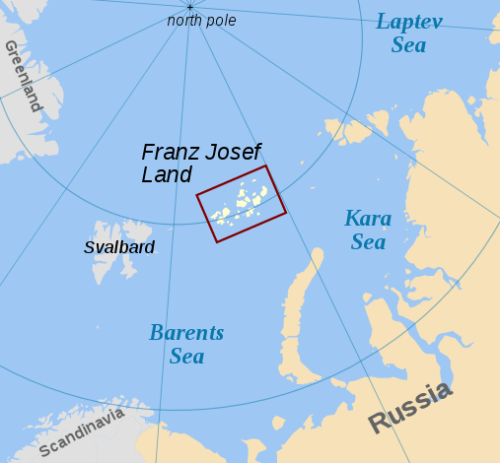
Despite a wild claim that a “slow Arctic freeze” this year increases the risk that polar bears will become extinct, sea ice charts show ice returning earlier than it has for decades everywhere except the Svalbard area of the Barents Sea. That’s good news for pregnant polar bears. Although Svalbard is without ice, that’s been true for so many years that pregnant Svalbard females long ago abandoned the use of islands they used in good ice years and now make their dens in the Franz Josef Land archipelago to the east (which is still within the Barents Sea subpopulation region).

Svalbard polar bear fall 2015_Aars

Polar bears give birth around 25 December each year, so pregnant females prefer to be snug in a safe den by around the end of November at the latest. That’s been possible for all regions of the Arctic this year, including the Barents Sea — because sea ice returned to Franz Josef Land weeks ago, even though Svalbard is still ice-free.

Franz_Josef_Land_location_wikipedia

Major denning areas in Russia, including Wrangel Island, have been surrounded by ice since the middle of the month, allowing pregnant females that did not remain on shore over the summer to return to make maternity dens. Elsewhere, bears that have been confined to shore over the ice-free season (such as along Hudson Bay and Baffin Island in eastern Canada) returned to the ice to hunt seals weeks ago after the earliest freeze-up in more than two decades.

Continue reading

Hudson Bay polar bear habitat is highest in more than two decades for this time of year

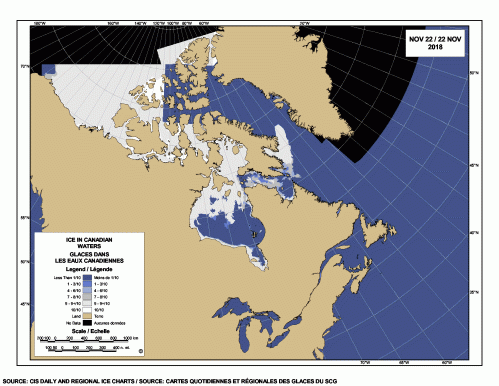
More ice in Hudson Bay and adjacent regions than we’ve seen at this time of year for more than two decades: not since 1993 has there been as much polar bear habitat in the 2nd-last week of November.

Sea ice Canada 2018 Nov 22

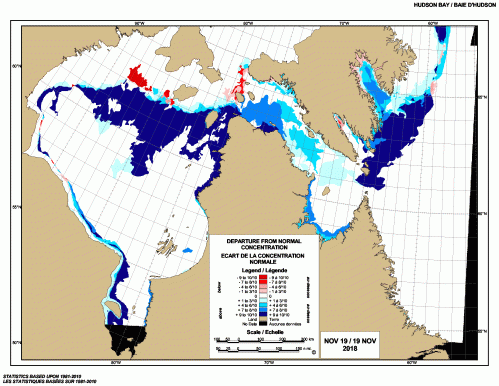
The anomaly chart for this week is almost all blue:

Hudson Bay weekly departure from normal 2018 Nov 19

Other years back to 1994 had much less ice for the 2nd-last week in November, as the charts below show. Colour charts are only available from 2004.

Continue reading

My fabulous polar bear science book for kids now also available in Norwegian

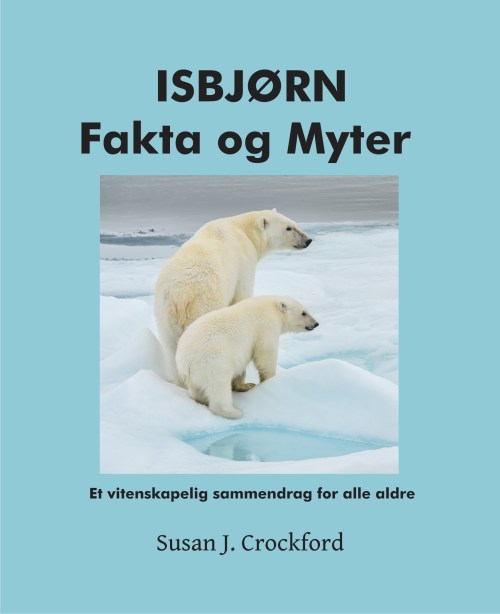
Polar Bear Facts and Myths (for children aged 7 and up) is now avaiblable in Norwegian!

The same day as a glowing review of the Dutch translation of my popular children’s science book appeared in de Telegraaf (front page and all of page 5, 19 November 2018, pdf here), I am thrilled to announce that this important book is now available in Norwegian via Amazon worldwide, including European outlets.

Crockford FM front cover Norwegian FINAL 18 Nov 2018 3 inch

The translation was done by native Norwegian speakers Arve Tunstad and Morten Jødal. In Norwegian the book is called ISBJØRN Fakta og Myter.

Please pass along to your friends, relatives, and colleagues in North America and abroad (calling all Sons of Norway). The English version is still available in paperback and ebook formats. Other translations in French and German are already available: five languages in all, including Dutch.

shutterstock_473571037 (2) purchased 3 November_smaller

Details below on the Norwegian version. Continue reading

Chukchi Sea polar bears number almost 3000 according to new survey results: update

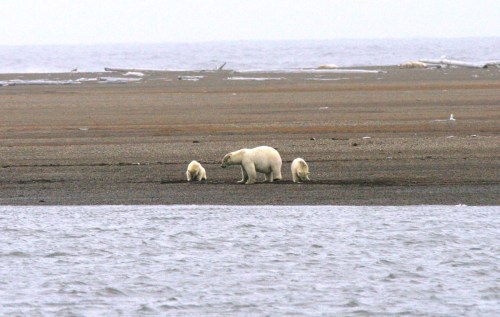
The Chukchi Sea finally has a polar bear population estimate! According to survey results from 2016 only recently made public, about 2937 bears (1522-5944) currently inhabit the region, making this the largest subpopulation in the Arctic. This is exciting news — and a huge accomplishment — but the US Fish and Wildlife Service responsible for the work has been oddly mum on the topic.
beaufort-bears_-suzanne-miller-usfws-3-af-2c-on-spit-1.jpg

Not only that, but an extrapolation of that estimate calculated by USFWS researchers for Chukchi plus Alaska (the US portion of the Southern Beaufort Sea subpopulation) was estimated at 4437 (2283-9527), although with “significant uncertainty.” Nevertheless, it means the 2016 estimate for Alaska could be roughly three times what it was in 2010: a whopping 1500 or so, up from about 450 (or about 225-650) for the same area estimated during the last survey (Bromaghin et al. 2015: Fig. 5a).

Even if the real number for Alaska is only twice as large (~1000), that’s still a huge improvement. It would eliminate the Southern Beaufort as the only polar bear subpopulation in the Arctic to have shown a significant decline blamed on human-caused global warming (Crockford 2018). If the recovery is real, it means the 2004-2006 decline was a temporary fluctuation after all, just like previous declines in the region. I expect, however, that it will take a dedicated SB population survey for officials to concede that point.

There is not yet now a detailed report to cite (Regehr et al. 2018 in prep, see update below), but the numbers were announced at the 10th meeting of the Russian-American Commission on Polar Bears held at the end of July this year (AC SWG 2018) by Eric Regehr (formerly of the US Fish & Wildlife Service, as of 2017 at the University of Washington). [h/t to G.H.] This was the same report that raised the quota for subsistence hunting in the Chukchi from 58 to 85, based on these new figures, as I discussed last week.
Wrangel Island polar bear with cubs 2015 news story

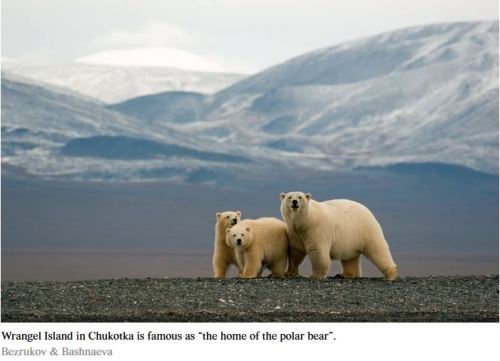
From “Military bases to open on Wrangel Island and Chukotka” 22 October 2015.

Regehr was quoted as saying:

“Chukchi bears remain larger and fatter and have not seen downward trends in cub production and survival, according to new preliminary information on the health and numbers of bears.”

UPDATE 15 November 2018: The scientific paper describing the entirely new method (yes, yet another one: see Bromaghin et al. 2015) used to estimate the size of the Chukchi Sea population is now available (University of Washington press release here), in an open-access paper: Regher et al. 2018. News reports (see one here) spin the positive outcome as something that researchers expected all along but that’s simply not true. They expected Chukchi Sea bears and Southern Beaufort Sea bears to respond similarly to reduced amounts of summer sea ice, as explained here and in Crockford 2017).
Continue reading

Nunavut government has a draft plan to deal with unsafe numbers of polar bears

In the news today: “Nunavut Draft Plan Says There Are Actually Too Many Polar Bears In Territory” (CTV News via The Canadian Press, Bob Weber, 12 November 2018).

Polar Bear seaweed_Lorraine Brandson Churchill_taken Nov 2012

Polar bear eating seaweed near Churchill, Manitoba (November 2012). Lorraine Brandson photo.

From the Canadian Press story:

“There are too many polar bears in parts of Nunavut and climate change hasn’t yet affected any of them, says a draft management plan from the territorial government that contradicts much of conventional scientific thinking.

The proposed plan — which is to go to public hearings in Iqaluit on Tuesday — says that growing bear numbers are increasingly jeopardizing public safety and it’s time Inuit knowledge drove management policy.

“Inuit believe there are now so many bears that public safety has become a major concern,” says the document, the result of four years of study and public consultation.”

I’ve noted previously that there were two fatal polar bear attacks in Hudson Bay this summer. Both of them happened outside local communities and both happened early during the ice-free period (when bears would have been onshore for only a few weeks). Neither incident can be reasonably blamed on lack of sea ice, an extended ice-free period, or lack of management of problem polar bears within or near communities. The bears involved in the August attack were described as being in good condition.

Update 13 November 2018: See The Guardian‘s take on this story, by a different writer. Despite potential to talk to other polar bear specialists about this issue, only Derocher is quoted. Is no one else talking? “Polar bear numbers in Canadian Arctic pose threat to Inuit, controversial report says” (The Guardian, 13 November 2018).

Update 14 November 2018: See a new CBC story on Inuit perspectives on this issue. “Nunavut community says Inuit lives need to be protected over polar bear population” (CBC News, 14 November 2018).

Continue reading

W Hudson Bay freeze-up earlier than average for 2nd year in a row, polar bear hunt resumes

This is the second year in a row that freeze-up of Western Hudson Bay ice has come earlier than average. Movement of tagged bears and reports by folks on the ground in WH show some polar bears are starting to hunt seals on the sea ice that’s developing along the shore. It’s unlikely that a strong wind will again blow the newly-formed ice offshore (as happened earlier this year) because the ice is more extensive. It seems polar bear viewing season in Churchill will be ending early this year, just like it did last year.

Tundra Buggy Cam_10 Nov 2017_bear headed offshore pm

The 9 November map Andrew Derocher (University of Albera) published on twitter showing tagged and collared polar bear movements on Hudson Bay makes it look like almost no ice is present:

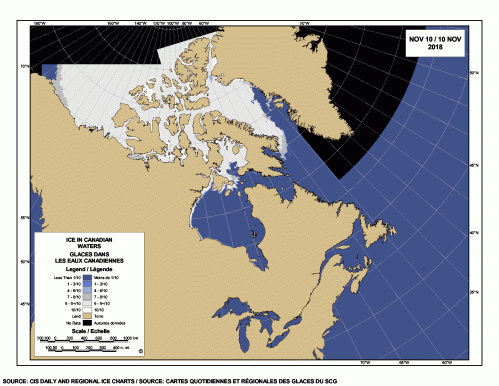
However, the Canadian Ice Service chart for 10 November shows the ice very clearly:

Sea ice Canada 2018 Nov 10

UPDATE 13 November 2018: See more recent ice charts and the latest (November 4-11, week 19) report from the Polar Bear Alert Program in Churchill that confirms the bears are moving offshore.

Continue reading

Polar bears waiting for ice on Russian coast of Chukchi Sea threaten village residents

Ryrkaypiy on the Chukotka coast of Russia is similar to Churchill, Manitoba: both human settlements are of similar size and are close to where polar bears wait for sea ice to form in the fall and where some pregnant females make their maternity dens in preparation for the birth of cubs over the winter (Durner et al. 2018:xxii). Sea ice advances from the west along the Chukotka shore and bears cannot move offshore to resume hunting until the sea ice reaches the village of Ryrkaypiy. According to the Siberian Times, the village is again having problems with local polar bears, as they have for the last several years (including 2013).

Mother with cubs Russia_shutterstock_71694292_web size

“At least twelve polar bears are inside the village, with some of them paying daily visits.

The rest are within three kilometres away.

‘We have to constantly scare the bears away with signal rockets, so far thanks to efforts of the Bear Patrol we manage well’, said acting head of Ryrkaypiy Yevgenia Malakhova.

The large group of bears started to form a month ago when they came close to Cape Kozhevnikov.

‘Now the bears moved close to the village, they also walk back and forth all along the shore line. The animals are irritated because they are ready to leave the area and start hunting in the deep sea, but ice is too thin’, said Malakhova.

All 760 locals are aware of the dangerous situation and take extreme care when moving around the place.”

More below, including map and ice chart.

Continue reading

Fall polar bear habitat update: 3 mkm2 Arctic sea ice increase in the last two weeks

What a difference two weeks make! When the seasonal minimum Arctic sea ice extent occurs in September, polar bear doom-mongers always forget to tell you that within two months, sea ice will return to virtually all regions where polar bears have spent the summer on land, including Hudson Bay. Just as it did in 2007, when polar bears did not die by the thousands due to lack of fall sea ice, polar bear habitat is reforming.

Polar bear tests thin ice_Laidre_UW_no copyright_taken22August2015_sm

This year, the seasonal minimum came on 23 September. Despite the fact that the US National Snow and Ice Data Center proclaimed that “unusual warmth” in the Arctic continued during October, over the last two weeks sea ice expanded from 6 mkm2 to 9 mkm2. At the current rate of ice growth documented by sea ice charts (see below), Arctic sea ice will be wide-spread by 23 November.

Continue reading

Churchill’s polar bear problems took time and money to resolve

Churchill, Manitoba is proud of its management of problem polar bears and rightly so. But it took time and money to implement the solutions that allowed Churchill to function as it does today, and that should be a lesson for other Arctic communities that have only really started to have problems with polar bears in recent years.

Churchill polar bear_mother_with_cub 2009 Wikipedia

For those who want to understand the problems facing other communities, including Arviat (formerly “Eskimo Point”), a town 260 km north of Churchill. Arviat has a population more than three times the size of Churchill and has been having significant problems with bears since about 2007. I’ve made an excerpt of an excellent paper written by Ian Stirling and colleagues that was published back in 1977 (Stirling et al. 1977).

It describes in detail the problems Churchill had with polar bears in the 1960s and 70s when bear numbers were on the rise — and the various steps that were taken to try and resolve them (even by the time the paper was written, not all of them had been adequately resolved, see Kearney 1989).  It’s a fascinating read — see it here.

Continue reading

Arctic sea ice habitat for polar bears is like a big pond that dries up partially in summer

What’s a good analogy for sea ice as essential polar bear habitat? Biologist Andrew Derocher claims that the soil in a forest is appropriate, because without the soil you can’t have the forest ecosystem. However, that’s a specious comparison because the amount of soil in a forest does not change markedly with the seasons the way that Arctic sea ice does.

polar-bear-arctic-ice_21-aug-2009_patrick-kelley-us-coast-guard.jpg

A much better analogy is a big pond that dries up a bit every summer. The amount of habitat available to sustain aquatic plants, amphibians and insects is reduced in the dry season but many species have special adaptations for surviving reduced water availability. For the rest of the year, however, the pond provides an abundant and non-limiting habitat for all the creatures and plants that live there.

Beaver pond USFWS

Continue reading