Tag Archives: status

Challenging Alaska polar bear research sound bites and bewildering ESA status

Beaufort Sea male polar bear USGS_2005 Amstrup photo

It’s easy to take polar bear research papers at face value but it’s not very scientific. The snappy sound bites provided for the benefit of the media – whether they’re embedded in press releases or in published abstracts – don’t cut it with trained scientists. Trained scientists read the whole report, critically examine the evidence it contains and assess that evidence within the context of previous knowledge. That’s what they are trained to do.

I challenge the superficial summary on the status of Alaskan polar bear populations provided by FactCheck.org journalist Vanessa Schipani.  Schipani disputed a comment made by Alaska Senator Lisa Murkowski that, according to the latest research Alaskan polar bear population numbers are strong and healthy. I’m not especially interested in the political context of the statement, only Schipani’s bald claim that Murkowski’s declaration is false.

I’ve read all the relevant papers in full and I contend that the evidence supports Murkowski’s statement. Schipani is confusing the issue by regurgitating ‘facts’ that don’t tell the truth of the matter. By the sum of accounts, Alaskan polar bear populations are indeed healthy and strong – whether or not this status will continue is an entirely different question. Continue reading

Ten dire polar bear predictions that have failed as global population hits 22-31k

Grim predictions of the imminent demise of polar bears – their “harsh prophetic reality” as it’s been called – have been touted since at least 2001. But such depressing prophesies have so widely missed the mark they can now be said to have failed.

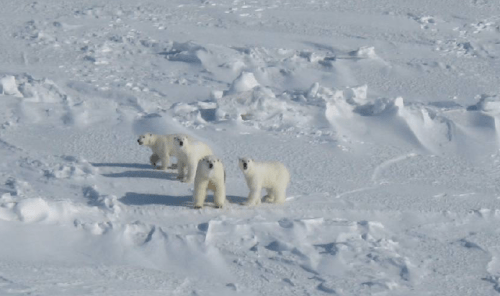
Rode and Regehr 2010_Chukchi_report2010_triplets redone PNG


While polar bears may be negatively affected by declines in sea ice sometime in the future, so far there is no convincing evidence that any unnatural harm has come to them. Indeed, global population size (described by officials as a “tentative guess“) appears to have grown slightly over this time, as the maximum estimated number was 28,370 in 1993 (Wiig and colleagues 1995; range 21,470-28,370) but rose to 31,000 in 2015 (Wiig and colleagues 2015, [pdf here] aka 2015 IUCN Red List assessment; range 22,000-31,000).

These ominous prophesies have been promoted primarily by Ian Stirling, Steven Amstrup, Andrew Derocher and a few other IUCN Polar Bear Specialist Group (PBSG) members but ironically, it’s data collected by their colleagues that’s refuted their message of doom.

Here are the predictions (in no particular order, references at the end):
Continue reading

Many otherwise intelligent people believe only a few hundred polar bears remain

The other day, I got a call from an international journalist who admitted he’d done no research into the polar bear issue but believed, based on media reports he’d heard, that there must only be about 100-200 bears remaining in the Arctic. I know he’s not alone.

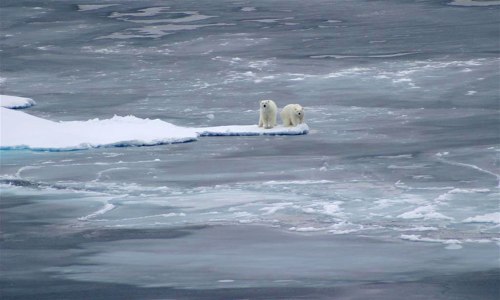
polar-bears-3-large_USGS

This journalist was utterly astonished to learn that the IUCN Red List assessment in 2015 put the polar bear population total at 22,000-31,000 bears and demanded proof that this was true.

Here is a summary of the Red List report, with references and links to the report:

The 2015 IUCN Red List assessment update for polar bears (published 18 November 2015) states that the global polar bear population is 22,000 – 31,000 (26,000), that the current trend is ‘unknown’ and that there is only a 70% chance that polar bear numbers will decline by 30% in 35 years (with virtually zero chance that the numbers will decline by 80% or more by 2050) – in other words, zero chance of extinction. [Detailed in a document called 22823 Ursus maritimus]. It classifies the polar bear as ‘vulnerable’ to extinction based on predictions of future sea ice decline due to global warming [similar to ‘threatened’ by other organizations] Pdf here.

Below is a list of what truly worrying species declines look like: that is, animals whose numbers have actually declined, no prophesies involved (Adler 2008).
Continue reading

The old ‘website revision’ excuse for not updating polar bear status changes

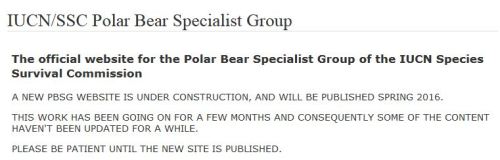
Apparently, the IUCN Polar Bear Specialist Group (PBSG) thinks that it’s OK to mislead the public on the conservation status of polar bears for half a year because its website is being revamped. This conservation organization is of the opinion that people landing on their website while searching for official polar bear status information don’t need to know right away that a new IUCN Red List document was published in November 2015. We know this because the message below appeared on the PBSG homepage 14 January 2016 (text in bold was there previously: the new message is in CAPS), screencap of entire page at 16 Jan 2016 pdf here:

PBSG website notice_2016 Jan 14 update

It appears that the PBSG feels that the public can wait to be told about 2015 Red List decision until the PBSG are ready for them to be told, which could be anywhere from March to the end of June 2016, depending on what definition of “spring” they use. Anyone (like moi) suggesting this tactic is paramount to withholding unpleasant information is just being “impatient.”

Decide for yourself but to me, this PBSG message speaks volumes: it says the 2015 IUCN Red List assessment is bad news for polar bear predictions of gloom and doom. Polar bear specialists don’t want to talk about it because it is a slap-down of all previous attempts at predicting a grim future for the bears (see the summary at the end of this post).
Continue reading

Organizations fail to acknowledge 2015 Red List polar bear assessment info

You have to know that the 2015 IUCN Red List assessment for polar bears contains good news because no one is talking about it – and none of the online information sources I’ve checked have updated their polar bear profiles to reflect it.

For all its flaws (including the deceptive focus on summer sea ice), this Red List update is the most statistically robust, in-depth study of the conservation status of polar bears – why is it being ignored, especially by the conservation organizations people turn to for information online?

UPDATE: see 18 January 2016 post here.

Continue reading

IUCN Red Book officials forced scientific standards on polar bear predictive models

As I reported Thursday, the IUCN announcement of a new Red List assessment for polar bear got the usual overwrought attention from international media outlets. However, not one of these contained a quote from a polar bear biologist.

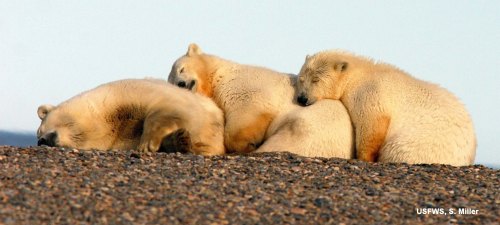
polarbears-arcticnatlwildliferefuge-suzannemiller-usfws_labeled_sm

Steven Amstrup, science spokesperson for activist conservation organization Polar Bears International, has so far had nothing to say to the media. Yet, Amstrup was a co-author of the IUCN Red List report. Not until late in the day following the release of the report did his his organization’s website post a short, bland news report (“Climate Change Still Primary Threat to Polar Bears”).

Similarly, Ian Stirling, Andrew Derocher, Nicholas Lunn (also a co-author of the IUCN Red List report), and former WWF employee Geoff York – who are usual go-to guys for polar-bears-are-all-going-to-die media frenzies – have so far been silent and invisible on this issue.

In addition, while the IUCN press release [backup here: 2015 IUCN Red List press release_Nov 19 2015] included a quote from IUCN Polar Bear Specialist Group (PBSG) chairman Dag Vongraven, as of this morning (21 November, PST), the website of the PBSG contains no mention of this decision – no item in the “News” category  and, more importantly, no update of the status table  or global estimates to reflect the changes contained in the report  (even though they obviously knew it was coming months ago: the report was submitted to the IUCN Red List 27 August 2015).

In my opinion, this silence says it all: polar bear specialists know this assessment is a severe de facto critique of their 2008 assessment (as well as Amstrup’s predictive models) and it’s a big step backwards for their conservation activism. I expect they are silent because they are royally pissed off.

However, this assessment is good news because finally, some standards of scientific rigor have been applied to polar bear predictive models – even though the PBSG were still been allowed to pretend that summer sea ice coverage is critical to polar bear health and survival (Crockford 2015).  Continue reading

IUCN Red List says global polar bear population is 22,000 – 31,000 (26,000)

The long-awaited 2015 IUCN Red List assessment for polar bears was released today (Wiig et al. 2015) and it includes some rather astonishing details − including the fact that the population trend is unknown.
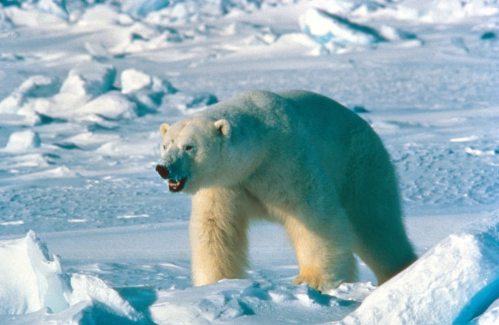
polar_bear_usfws_no date_sm

1) It confirms the global population size I published in May 2015 (20,129-32,558; average 26,344). See the graph below, now amended to reflect this point. If global numbers do decline over the next 35 years, it will be from a high point not previously acknowledged by the IUCN Polar Bear Specialist Group (PBSG).
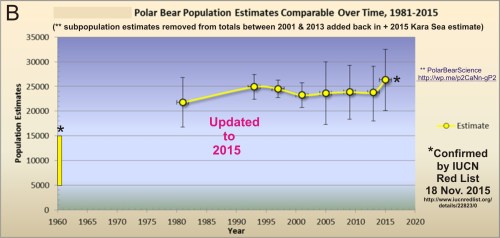
Crockford OFFICIAL polar bear numbers to 2015_IUCN concurrs Nov 18

2) The current population trend is listed as: ? Unknown. [NOT declining – if anyone claims it is, send them here: IUCN Red List U. maritimus]

3) It puts the generation time for polar bears at 11.5 years (range 9.8-13.6), a huge drop from the 15 years used in previous predictive models. This change makes a big difference to the model results: three generations (the minimum period needed to show a trend) are now 35 years rather than 45 years.

4) It states there is a 70% chance of a 30% decline in polar bear numbers by 2050 and a 7% probability of a reduction > 50% if sea ice declines as predicted, but noted the large amount of uncertainty in these projections. That means there is a greater chance that numbers will not decline by 30% in the next 35 years (a 30% chance) than that the numbers will decline by 50% or more by 2050. That sounds like good news to me.

5) It will continue to list polar bears as Vulnerable. PBSG biologists managed to prevent polar bears from being listed as Least Concern or perhaps Near Threatened. But they had to give up a lot to get it.

6) The report supplement (Wiig et al. 2015 supppl.) explained why they did not calculate extinction probabilities and extinction is not mentioned at all on the IUCN Red List polar bear assessment page. This assessment only considers the probabilities of a decline in population size by 2050.

Yet, a spokesperson for the IUCN apparently stated (The Guardian, Climate change is ‘single biggest threat’ to polar bear survival; 19 November 2015 ) that:

“There is a high risk of extinction and the threat is serious,” said Dena Cator of the IUCN’s species survival commission. “You could consider polar bears to be a canary in the coal mine. They are an iconic and beautiful species that is extremely important to indigenous communities. But changes to their sea ice habitat are already being seen as a result of climate change.”

Apparently Dena Cator does not expect that people will read the report or find the assessment page on the IUCN Red List website – or she’s giving her personal opinion rather than explaining the report results. More on the points above and links to the report supplement pdf below, with quotes.
Continue reading

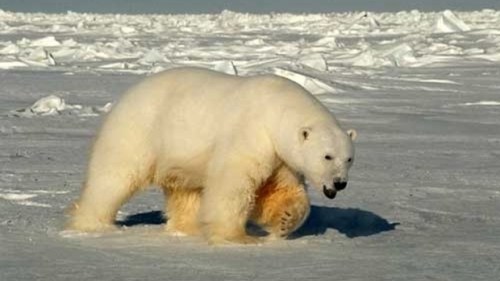
University newspaper misleads readers on status of Western Hudson Bay polar bears

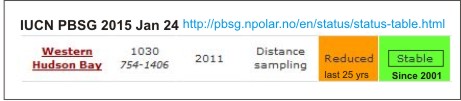
Even though polar bear experts admit there has been no trend in sea ice breakup or freeze-up dates since 2001 – and both Canadian and International experts say this subpopulation is stable – the public is still being misled about the status and condition of polar bears in Western Hudson Bay.

WHB status 2015 IUCN PBSG_PolarBearScience

The latest example of misinformation about Western Hudson Bay polar bears appears in a feature story carried by the campus newspaper of York University (Ontario, Canada), meant to highlight the work of biology graduate student Luana Sciullo.1
Continue reading

Twenty good reasons not to worry about polar bears

PB  logo coloured Here’s a new resource for cooling the polar bear spin, all in one place. I’ve updated and expanded my previous summary of reasons not to worry about polar bears, which is now two years old. In it, you’ll find links to supporting information (including previous blog posts of mine that provide background, maps and extensive references), although some of the most important graphs and maps have been copied into the summary. I hope you find it a useful resource for refuting the spin and tuning out the cries of doom and gloom about the future of polar bears — please feel free to share. Pdf here of the text below.

This is the 1st anniversary of Canada providing population estimates and trends independent of the pessimistic prognostications of the IUCN/SSC Polar Bear Specialist Group (PBSG) — so let’s celebrate the recent triumphs and resilience of polar bears to their ever-changing Arctic environment.

AK PB N Shore-USFWS Barrow_labeled
Continue reading

W Hudson Bay polar bear population no longer “declining” – where are the headlines?

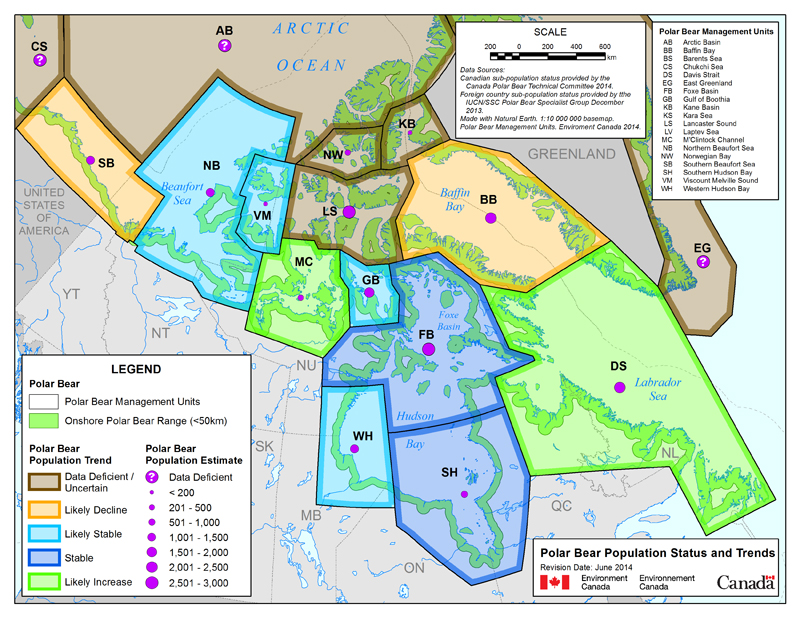
Why are the #saveourseaice folks at Polar Bears International, who have being working in Western Hudson Bay for decades, not dancing in the streets of Churchill? Environment Canada’s Polar Bear Technical Committee upgraded the status of Western Hudson Bay polar bears from “declining” to “likely stable” four months ago (details here). Why has this fabulous news not made major headlines around the world?

Figure 4. Environment Canada's "Map 3: 2014 Canadian Polar Bear Subpopulation and Status Map," original here.

Figure 1. Environment Canada’s “Map 3: 2014 Canadian Polar Bear Subpopulation and Status Map,” original here. Western Hudson Bay is “WH.”

After years of being told by polar bear specialists and activists organizations like Polar Bears International and the World Wildlife Fund that the Western Hudson Bay (WHB) population is already suffering mightily because of global warming, it now appears that is far from the truth.

Continue reading