Category Archives: Advocacy

White Lie: Polar bear starvation is virtually never caused by sea ice loss

Starvation due to natural causes is the leading cause of death for polar bears and loss of body condition (getting thinner) is therefore the first symptom of impending death for virtually all polar bears that die naturally. However, polar bear specialist Andrew Derocher claims that loss of body condition is also the first symptom of climate change for polar bears.

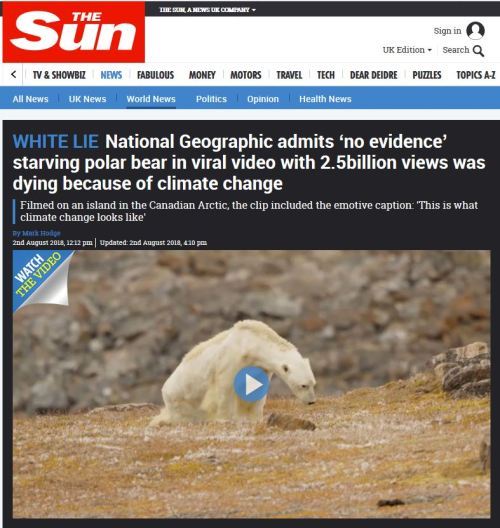
white-lie_the-sun-on-ng-apology-2-aug-2018-headline.jpg

But how do you tell the difference between polar bears made thin by man-made climate change and those who are thin due to natural causes?

You can’t. Even a necropsy will not be conclusive because there are so many natural reasons for a bear to lose weight — and even starve to death — that’s it’s virtually impossible to say that any thin bear is skinny due to a lack of sea ice.

Emaciated polar bears like the one above from Somerset Island in the Canadian Arctic,1 captured on camera in August 2017, are being used to promote the idea that polar bears are already dying of starvation due to climate change. That’s a big white lie, as the headline above suggests: seven months later, National Geographic has admitted as much. Here I show why it could not have been true in the first place (with references from the scientific literature).

UPDATE: 29 August 2018: See my op-ed in the National Post (29 August 2018) and the GWPF video below on this issue:

Continue reading

Before National Geographic apologized for hyping the starving polar bear video they exploited it to promote a message of doom

Back in early February this year, National Geographic used their “this is what climate change looks like” video to promote a newly-published polar bear study and endorse conservation activist Steven Amstrup’s debunked and abandoned prediction of polar bear catastrophe due to global warming. Even with this revelation, the starving polar bear video fiasco is not yet over.
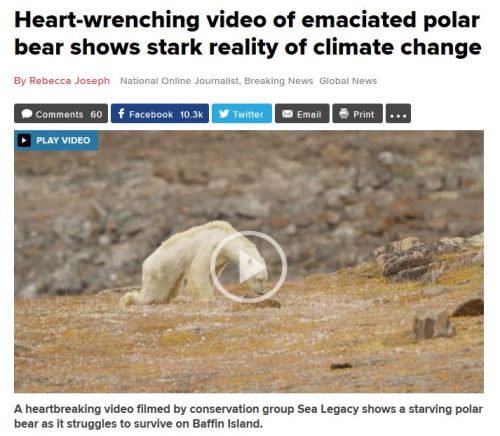
Baffin Island starving pb headline_GlobalNews_8 Dec 2017

Polar Bears Really Are Starving Because of Global Warming, Study Shows (National Geographic, 1 February 2018).

The initial focus of the February 2018 National Geographic article was a study published that week by Anthony Pagano and colleagues (Pagano et al. 2018; Whiteman 2018), suggesting that a few polar bears in the Southern Beaufort Sea were not getting enough to eat in early spring from 2014-2016 (with no reference to sea ice conditions; see my critique of that study here).

Then, Steven Amstrup, spokesman for activist organization Polar Bears International, is quoted as saying (my bold):

“If these results hold up [from Pagano’s study], then it shows that the loss of sea ice may have a bigger impact on the bears than previously thought, said Amstrup, a former USGS polar bear expert. Amstrup’s own 2010 study projected that continued decline in sea ice would reduce the global population of bears by two thirds, to less than 10,000 by 2050.

Seriously, no one except Amstrup and his Polar Bears International fanbase are citing his outlandish 2010 prediction, which is just a rehash of his 2007 USGS internal report and its 2008 journal version (Amstrup 2007, 2008, 2010). Amstrup’s prediction is not only a failure (Crockford 2017, 2018; Crockford and Geist 2018) but it’s been abandoned by his colleagues for vaguer or more moderate predictions of population decline (e.g. Atwood et al. 2015, 2016; Regehr et al. 2016).

National Geographic has now apologized for saying that the emaciated bear in the SeaLegacy video they so heavily promoted was “what climate change looks like” (and replaced the caption with “this is what starvation looks like,” even though there is no evidence the bear was starving from lack of food rather than from severe illness).

But the damage is done. By endorsing the discredited polar bear survival predictions of Amstrup along with the video, National Geographic degraded itself even further in the eyes of rational and informed readers. I’ll have more to say on the SeaLegacy video exploited by National Geographic and its message that starving polar bears are victims of climate change in a subsequent post: we haven’t yet reached the end of this debacle.

References

Amstrup, S.C., Marcot, B.G. & Douglas, D.C. 2007. Forecasting the rangewide status of polar bears at selected times in the 21st century. US Geological Survey. Reston, VA. Pdf here

Amstrup, S.C., Marcot, B.G., Douglas, D.C. 2008. A Bayesian network modeling approach to forecasting the 21st century worldwide status of polar bears. Pgs. 213-268 in Arctic Sea Ice Decline: Observations, Projections, Mechanisms, and Implications, E.T. DeWeaver, C.M. Bitz, and L.B. Tremblay (eds.). Geophysical Monograph 180. American Geophysical Union, Washington, D.C. http://onlinelibrary.wiley.com/doi/10.1029/180GM14/summary and http://alaska.usgs.gov/science/biology/polar_bears/pubs.html

Atwood, T.C., Marcot, B.G., Douglas,D.C., Amstrup, S.C., Rode, K.D., Durner, G.M. and Bromaghin, J.F. 2015. Evaluating and ranking threats to the long-term persistence of polar bears. USGS Open-File Report 2014–1254. Pdf here.

Atwood, T.C., Marcot, B.G., Douglas, D.C., Amstrup, S.C., Rode, K.D., Durner, G.M. et al. 2016. Forecasting the relative influence of environmental and anthropogenic stressors on polar bears. Ecosphere, 7(6), e01370.

Crockford, S.J. 2017. Testing the hypothesis that routine sea ice coverage of 3-5 mkm2 results in a greater than 30% decline in population size of polar bears (Ursus maritimus). PeerJ Preprints 2 March 2017. Doi: 10.7287/peerj.preprints.2737v3 Open access. https://doi.org/10.7287/peerj.preprints.2737v3

Crockford, S.J. 2018. State of the Polar Bear Report 2017. Global Warming Policy Foundation Report #29. London. pdf here.

Crockford, S.J. and Geist, V. 2018. Conservation Fiasco. Range Magazine, Winter 2017/2018, pg. 26-27. Pdf here.

Pagano, A.M., Durner, G.M., Rode, K.D., Atwood, T.C., Atkinson, S.N., Peacock, E., Costa, D.P., Owen, M.A. and Williams, T.M. 2018. High-energy, high-fat lifestyle challenges an Arctic apex predator, the polar bear. Science 359 (6375): 568 DOI: 10.1126/science.aan8677

Whiteman, J.P. 2018. Out of balance in the Arctic. Science 359 (6375):514-515. http://science.sciencemag.org/content/359/6375/514

Sea ice silly season: Wadhams spouts fake facts about polar bears of northern Greenland

As the seasonal minimum for Arctic sea ice approaches, the media get carried away by hyperbole. Tha’t been true since 2007. This year, other outlets will need to work hard to beat yesterday’s bit of nonsense from The Independent trying to out-do The Guardian: it not only includes false polar bear facts (from sea ice researcher Peter Wadhams) but leads with last year’s controversial SeaLegacy video of an emaciated polar bear. Sea ice silly season has truly begun.

East Greenland Scorsby Sound March 2011 on Kap Tobin_Rune Dietz_press photo

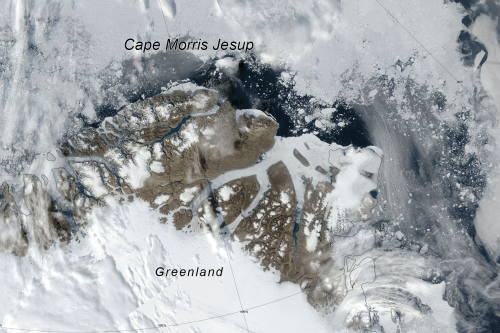
Wadhams (described as “one of the UK’s leading sea ice scientists” although not a particularly respected one) was interviewed about the small area of open water that opened up over the last few days in northern Greenland (see NSIDC photo below), driven by offshore winds (not melt). This region is the eastern-most part of the area that is considered the “last holdout” for Arctic sea ice: an immense band of very thick (4-20m) multiyear ice that stretches across the Arctic Ocean shores of the Canadian Arctic Archipelago.

The open water is expected to last a few days at most but Wadhams was absolutely breathless with dire warnings of what this might mean for the future of polar bear in the region (about which he knows nothing), rhetoric ramped up even further by the news outlet with quotes from co-director of the Grantham Institute (London), Martin Siegert, and predictions on how low the sea ice minimum might be.

Greenland north open water_13 Aug 2018 NASA_NSIDC 15 Aug 2018 report

Cape Morris Jesup on 13 August 2018. W. Meier, NSIDC/NASA.

I think this is a truly spectacular example of the ignorance of scientists speaking outside their area of expertise used to mislead the public but decide for yourself.

Continue reading

Polar bears do not outnumber people in Svalbard and the backlash against ecotourism over a justified defensive kill

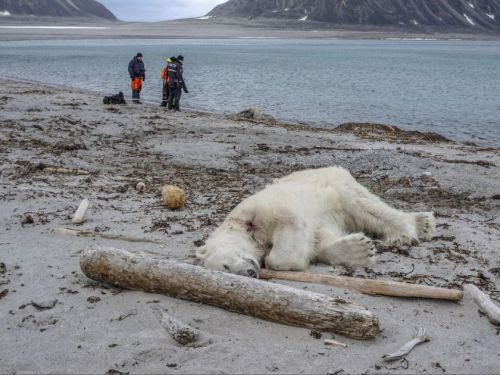
It is often said that there are more polar bears than people in Svalbard, Norway (see BBC, “Polar bear shot dead after attacking cruise ship guard29 July 2018). But that isn’t true now and probably hasn’t been for a very long time. This pseudo-fact (a misunderstanding made by tourism promoters) continues to be quoted as the story about the Svalbard polar bear shot by a cruise ship bear guard last week evolves in the online and print media. The media continue to focus on social media backlash against ecotourism, which is nothing like the pushback about the starving polar video from last year.

Svalbard dead bear_Gustav Busch Arntsen_Governor of Svalbard_NTB Scanpix via AP 28 July 2018

Continue reading

The truth behind the Baffin Bay starving polar bear video is worse than we thought

Remember that video of an emaciated Baffin Island Somerset Island polar bear that went viral last December?1 In an unexpected follow-up (“Starving-Polar-Bear Photographer Recalls What Went Wrong“; National Geographic, August 2018 issue), photographer Cristina Mittermeier makes some astonishing admissions that might just make you sick.

Baffin Island starving pb headline_GlobalNews_8 Dec 2017

It turns out they didn’t just come across the dying bear the day it was filmed: it was spotted at least two days earlier by Paul Nicklen. He must have had a satellite phone with him when he saw the bear but the only call he made was to his film crew — he made no attempt to find a local conservation officer to euthanize the bear, which would have been the right thing to do.

ADDED July 27 2018: Calling a conservation officer to euthanize the bear would have been the right thing to do not only out of compassion (and to know the cause of illness, because a necropsy would have been done), but because a starving bear is especially dangerous: it would have been a potential danger to any unsuspecting person who set foot on the island (he was strong enough to swim away, so was probably strong enough to kill a child, if not an adult).

The bear’s emaciated, near-death stagger2 was simply too tantalizing to pass up (video needs action: an emaciated dead bear would not been nearly as effective). Mittermeier claims they knew when they filmed the bear that he was sick or injured, but Nicklon presented it as an effect of climate change regardless. Mittermeier now says National Geographic simply “went too far” with their video caption (“This is what climate change looks like“), that she and Nicklan “lost control of the narrative.”

Actually, what they lost was their humanity.

Continue reading

US FWS proposes changes to Endangered Species Act, polar bear champions panic

Headline run by The Independent last Friday (20 July 2018):

‘A death sentence for polar bears’: Trump administration seeks changes to endangered species protections: Conservation groups are already vowing to sue the Donald Trump administration if the revisions go into effect

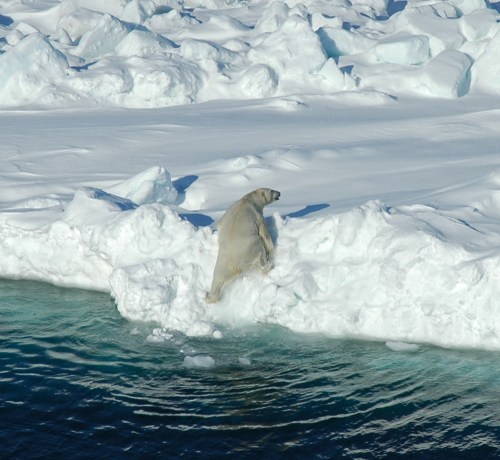
Beaufort Sea male polar bear USGS_2005 Amstrup photo

Such over-the-top rhetoric is as predictable as puddles after a cloud-burst (see a statement by the WWF here, and the Center for Biological Diversity (source of the “death sentence for polar bears” claim here) but the proposed changes only apply to future listings, not listings already in place. See the USFWS press release below.

However, both The Independent and ABC News featured polar bears in their stories, a species listed as threatened in 2008.

It would be hard to beat the irony of ABC: it ran video of fat Kaktovik polar bears behind their anchor as he delivered the ESA story. The Independent not only used the “death sentence to polar bears” quote but included the video clip from last year of the dying Baffin Island bear even though it is very likey the bear was emaciated due to cancer rather than lack of food (Crockford 2018).

Why would anyone mention polar bears? Why is the Center for Biological Diversity so afraid?

Because if polar bears face a delisting challenge, the new rules apply.

Continue reading

Sea ice is critical habitat for polar bears from late fall through late spring only

Sea ice is said to be “an essential habitat for polar bears” but that’s an overly simplistic advocacy meme as ridiculous as the “no sea ice, no polar bears” message with which the public is constantly bombarded. Polar bears require sea ice from late fall to late spring only: from early summer to mid-fall, sea ice is optional. Historical evidence of polar bears that spent 5 months on land during the summer of 1874 proves an extended stay ashore is a natural response of polar bears to natural summer ice retreat, not a consequence of recent human-caused global warming. Sea ice is a seasonal requirement for polar bears: it’s not necessary year round.

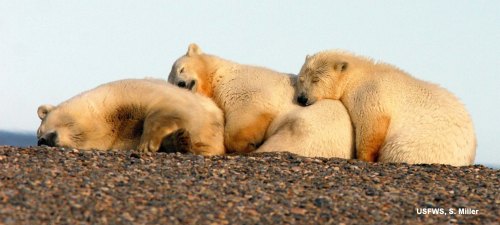
polarbears-arcticnatlwildliferefuge-suzannemiller-usfws_labeled_sm

[This PBI newsletter from 2011 repeats this meme and Andrew Derocher’s recent tweet conveys a similar message (“Sea ice loss = habitat loss for polar bears”)]

As long as sea ice is available from late fall through late spring (December to early June) and accompanied by abundant seal prey (sometimes it isn’t, see Derocher and Stirling 1995; Stirling 2002; Stirling et al. 1981, 1982, 1984), polar bears can survive a complete or nearly complete fast from June to late November (and pregnant females from June to early April the following year). That’s the beauty of their Arctic adaptation: fat deposited in early spring allows polar bears to survive an extraordinary fast whether they spend the time on land or sea ice.

Young and very old bears, as well as sick and injured ones, are the exception: these bears often come ashore in poor condition and end up dying of starvation — as a much-publicized bear on Baffin Island who likely had a form of cancer did last summer (Crockford 2018). Competition with bigger, stronger bears means these bears can’t keep what they are able to kill and they are most often the bears who cause problems. Starvation is the leading natural cause of death for polar bears because if they cannot put on the fat they need in spring, they will not survive the low food months of summer and winter, whether they are on land or out on the sea ice (Amstrup 2003). Continue reading

Svalbard polar bear data 2016 through 2018 shows no impact of low ice years

Last week, the Norwegian Polar Institute updated their online data collected for the Svalbard area to include 2017 and 2018 — fall sea ice data and spring polar bear data. Older data for comparison go back to 1993 for polar bears and 1979 for sea ice, showing little to no impact of the reduced ice present since 2016 in late spring through fall.

Svalbard polar bear_NP015991-isbjorn-JA

Here’s what the introduction says, in part [my bold]:

“…The polar bear habitat is changing rapidly, and the Polar Basin could be ice-free in summer within a few years. Gaining access to preferred denning areas and their favourite prey, ringed seals, depends on good sea ice conditions at the right time and place. The population probably increased considerably during the years after hunting was banned in 1973, and new knowledge indicates that the population hasn’t been reduced the last 10-15 years, in spite of a large reduction in available sea ice in the same period.”

See Aars et al. 2017 for details on the 2015 Svalbard polar bear population count, keeping in mind that the subpopulation region is called “Barents Sea” for a reason: only a few hundred individuals currently stick close to Svalbard year round while most Barents Sea bears inhabit the pack ice around Franz Josef Land to the east (Aars et al. 2009; Crockford 2017, 2018).
Continue reading

Activist laments ESA listing of polar bears in 2008 failed to achieve her political goals

The activist lawyer primarily responsible for polar bears being listed as ‘threatened’ on the US Endangered Species List (ESA) in 2008 is frustrated that those efforts have not generated her preferred political action. Kassie Siegel also claims in another 10 years it will be too late to save polar bears from extinction — despite clear evidence to the contrary.

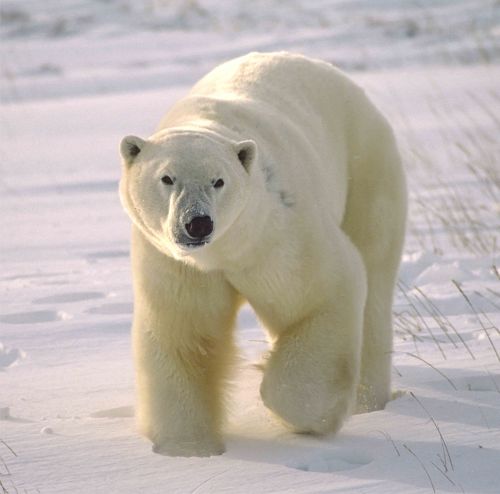
Walking bear_129029633_web size

In an emotional rant over at The Hill with a predictably hysterical headline, Siegel perhaps reveals more than she should about her motivation (“Keeping fossil fuels in the ground is the only way to save polar bears ravaged by climate change,” 26 May 2018).

Continue reading

IUCN polar bear specialists reject IPCC- supported forecasts of sea ice based on CO2

In case you missed it — or missed the significance of it — polar bear specialist Mitch Taylor correctly pointed out in his recent essay (a response to the New York Times article that appeared Tuesday (10 April) about the Harvey et al. (2018) BioScience paper) that the IUCN Polar Bear Specialist Group have given up using computer models of future sea ice extent based on rising CO2 levels supported by the IPCC.

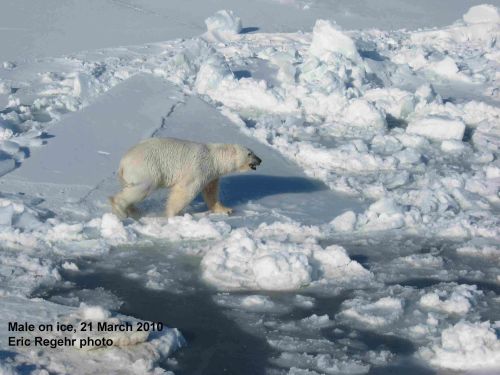
Polar_Bear_male_Regehr photo_March 21 2010_labeled

Their latest assessment (Regehr et al. 2016) does not link polar bear survival models to climate modeled forecasts of Arctic sea ice decline but rather to an assumption that declines already documented will continue in linear fashion over this century.

This means that CO2 emissions blamed on human fossil fuel use is no longer directly tied to the predicted future decline of polar bear numbers: IUCN polar bear specialists simply assume that sea ice will continue to decline in a linear fashion with no cause attributed to that decline except the broad assumption that anthropogenic climate change is to blame for Arctic sea ice declines since 1979.

No wonder former USGS polar bear biologist Steve Amstrup never refers to this IUCN PBSG study: he and the organization that now employs him, Polar Bears International, are still firmly wedded to the concept that CO2 is the sea ice control knob.

Continue reading