Category Archives: Life History

Western & Southern Hudson Bay polar bears experience earliest freeze-up in decades

This is shaping up to be one of the shortest ice-free seasons in at least 20 years for both Western and Southern Hudson Bay polar bears.

Hudson Bay sea ice at 2 November 2020. NSIDC Masie chart.

Last week, sea ice started forming along the shore of Hudson Bay, from the north end all the way south into James Bay. So far, the shorefast ice that’s forming is only a narrow strip along the coast but is thickening and becoming broader each day, which means that unless something changes dramatically, the bears should all be on the ice at the end of the week, an exodus from shore that hasn’t happened this early in WH since 1993 (the earliest since 1979).

The last WH tagged polar bear didn’t leave the ice this year until 21 August, which means if it’s on the ice by the end of this week it will have spent only 11 weeks onshore – less than 3 months. Even the first bears that came ashore in mid-July will have only spent about 16 weeks on land – at least a month less than they did a decade ago (Stirling and Derocher 2012). Four months spent ashore was the historical average for Western Hudson Bay bears in the 1970s and 1980s (Stirling et al. 1977, 1999). This year, most polar bears will have spent only about 13-14 weeks on land because they did not come ashore until early August.

UPDATE 8 November 2020: Report from Churchill area polar bear guide Kelsey Eliasson, via Facebook Saturday 7 November: “Most bears have left on the ice – including peanut – but still some stragglers” [Peanut’ is a well-known female who has two cubs this year]. See below for sea ice chart for 8 November shows broadening band of grey ice clearly thick enough to support the weight of adult bears (and the same thing is happening in Southern Hudson Bay):

Hudson Bay North daily stage of development 2020 Nov 8_all grey ice

Continue reading

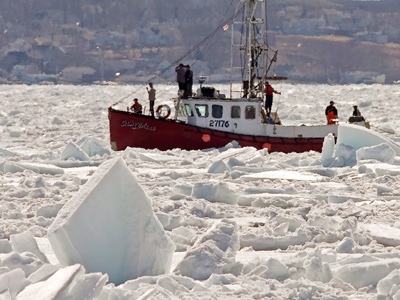
My new novel set in the Gulf of St. Lawrence has a surprising twist

My fictional story about sea ice, polar bears and upheaval in 2026 – a followup to EATEN – is coming soon. Prepare for the unexpected.

CTV news_Cathy Erlene sealer heavy ice off North Sydney_Saturday March 28 2009

A video to help set the mood…

Some surprises in polar bear sea ice habitat at mid-October 2020

Arctic sea ice has been growing steadily since the minimum extent was reached a month ago, with shorefast ice now developing along the Russian and Alaskan coastlines as ice cover expands in the Central Canadian Arctic. So while it’s true that the main pack of Arctic ice is far from the Russian shoreline, rapidly developing shorefast ice will allow bears to begin hunting seals long before ice in the central Arctic Basin reaches the Siberian shore, as they do in Western and Southern Hudson Bay every fall.

Cropped sea ice extent at 15 October 2020 (Day 289), NSIDC Masie.

And speaking of Western Hudson Bay, it’s a very slow season around Churchill for problem polar bears (photo below) – the quietest mid-October for the Polar Bear Alert Program in the last five years and perhaps the quietest in decades (which I could say for sure if I had the records but I do not).

Continue reading

Churchill problem polar bear report for week 3 and a triplet litter of cubs spotted

Courtesy the Town of Churchill:

Also, note that a mother with a litter of triplets spotted along the coast of Wapusk National Park (just east and south of Churchill) in good condition, 15 September 2020 (see photo below). Biologist Nick Lunn falsely claimed in 2018 that no triplet litters had been born in Western Hudson Bay since 1996 – a correction made later claimed Lunn meant there hasn’t been any triplet litters seen in the fall, which was also not true in 2017 or in 2020:

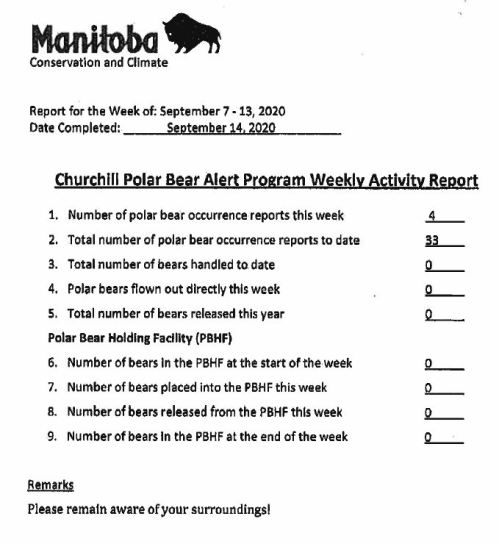
Compare weekly stats above for this year to a few previous years at the second week in September:

Continue reading

First polar bear alert report for Churchill an astonishing seven weeks later than last year

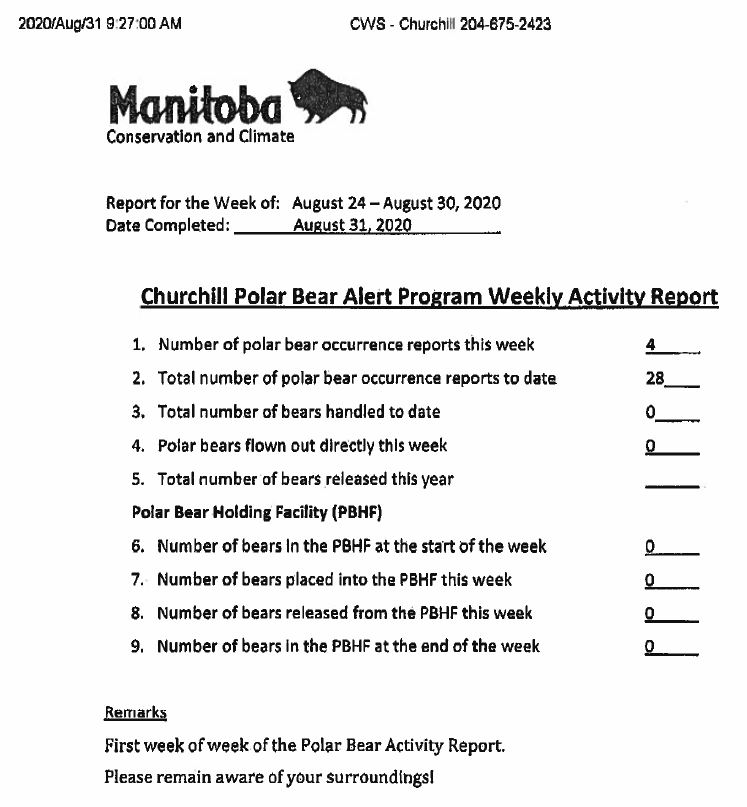
The first report of the Polar Bear Alert Program in Churchill, Manitoba was released today (1 September), a full seven weeks later than last year due to many bears remaining on the Western Hudson Bay ice much later than they have done in the past.

2020 Aug 31 - Polar Bear Stats_week 1 jpeg

As I mentioned previously, as long as I’ve been collecting these published reports (2015), there has not been a first report of the season issued later than the second week in July, so this year is really unusual and I suspect similar to the 1980s.

I thought it possible that this was a Covid-related delay getting conservation officers to Churchill but as you’ll see above, that appears not to be the case: there simply have been not enough serious problems with bears in Churchill to warrant sending officers out before last week. No information on the general condition of bears was included this year, as it has been in other years (see below).  Activity this last week in August 2020 was similar to the first week in July 2018.

Polar bear Cape East 0 Wakusp NP _24 Aug 2020 earlier

Continue reading

Amid crying over low Arctic ice, W Hudson Bay polar bears leave ice as late as 2009

This year, the last collared Western Hudson Bay polar bear to leave the ice left as late, or later, than the last collared bear did in 2009 (which was an unusually late breakup year) and so far, all bears spotted have been in good physical condition despite inhabiting one of the most southern regions of the Arctic. All the while, sea ice experts have been hand-wringing about low Arctic sea ice –– in general and as polar bear habitat.

Polar bear Cape East 0 Wakusp NP _24 Aug 2020 earlier

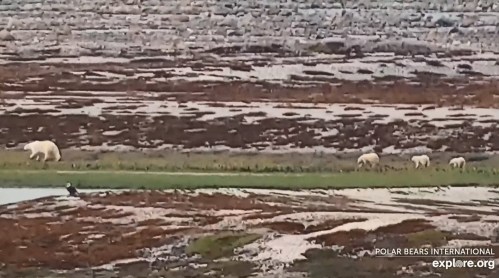
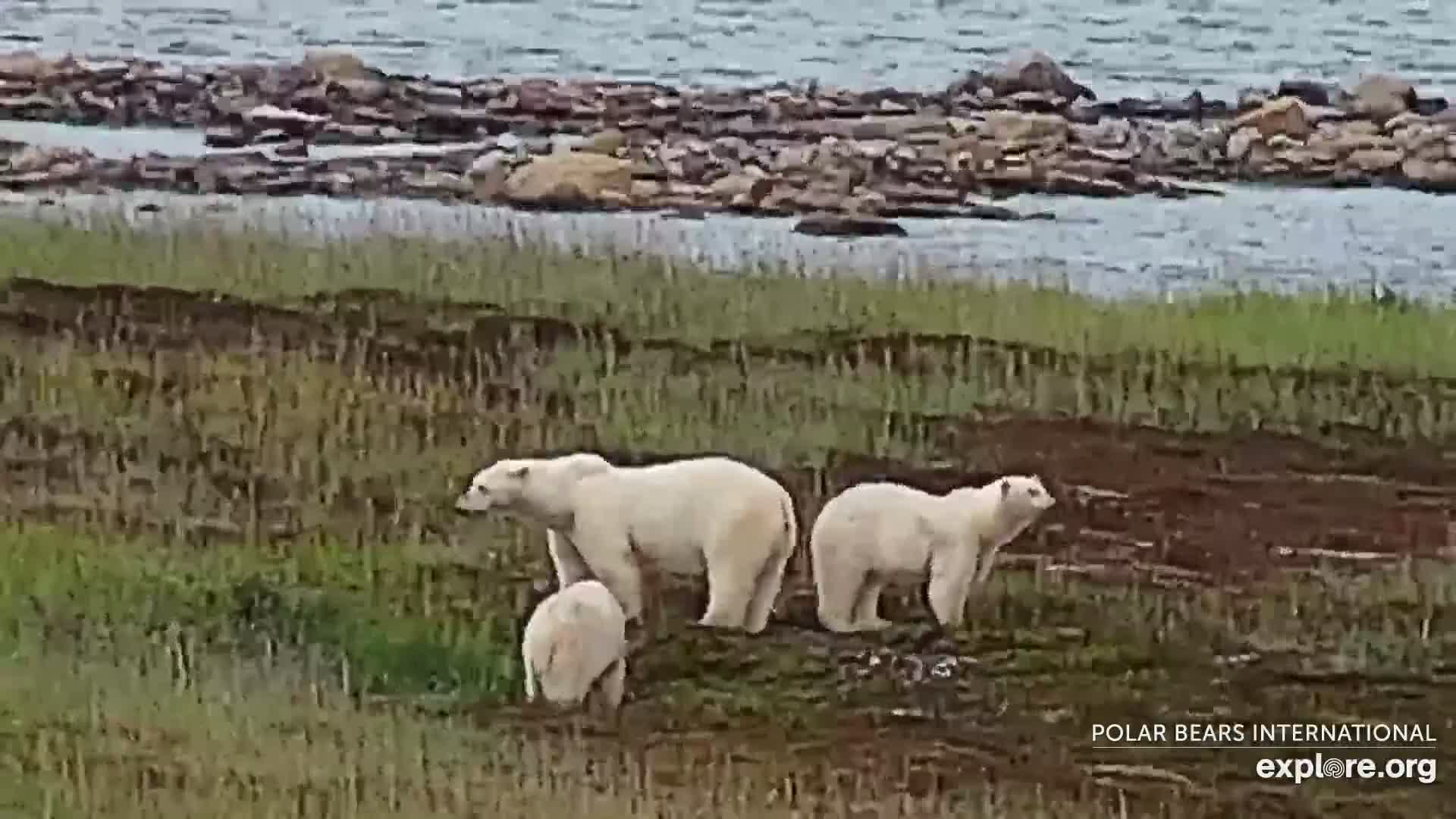
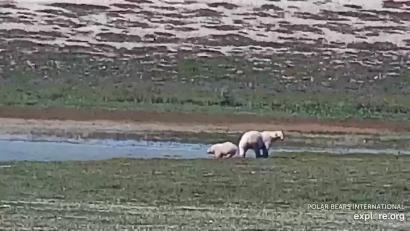
A female with two yearling cubs on the shore of Wakusp National Park, Western Hudson Bay on 24 August 2020. Taken via livecam from almost a mile away.

Continue reading

Few bears on the ice off Western Hudson Bay at 14 August but will be onshore soon

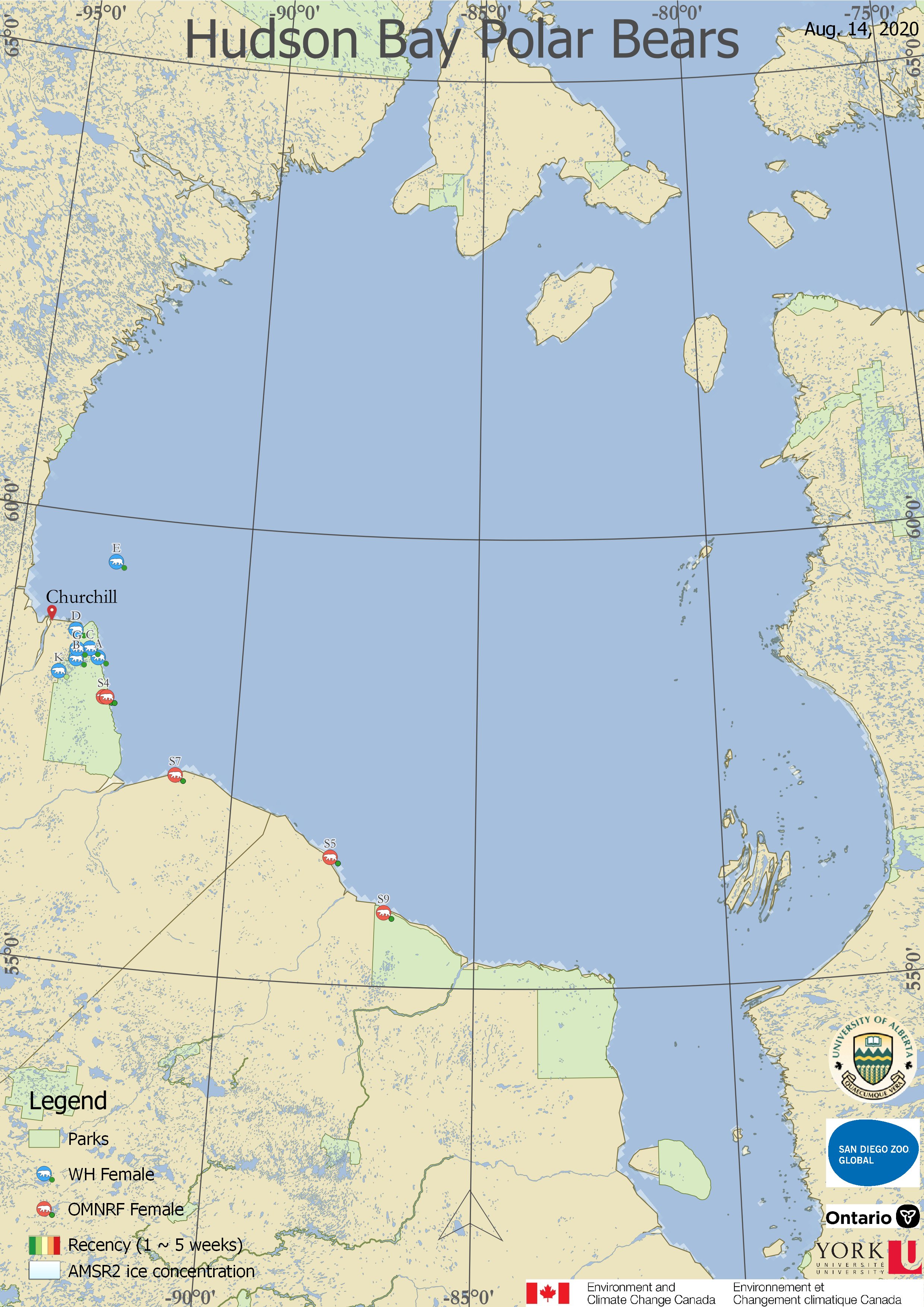
Polar bear biologist Andrew Derocher published a tracking map of his collared polar bear females that shows one bear (out of 11) still on the rapidly diminishing ice north of Churchill in Western Hudson Bay – and where there is a collared female, there is almost certainly other bears doing the exact same thing:

Derocher 2020 WHB tracking map 14 Aug_1 bear still on the ice

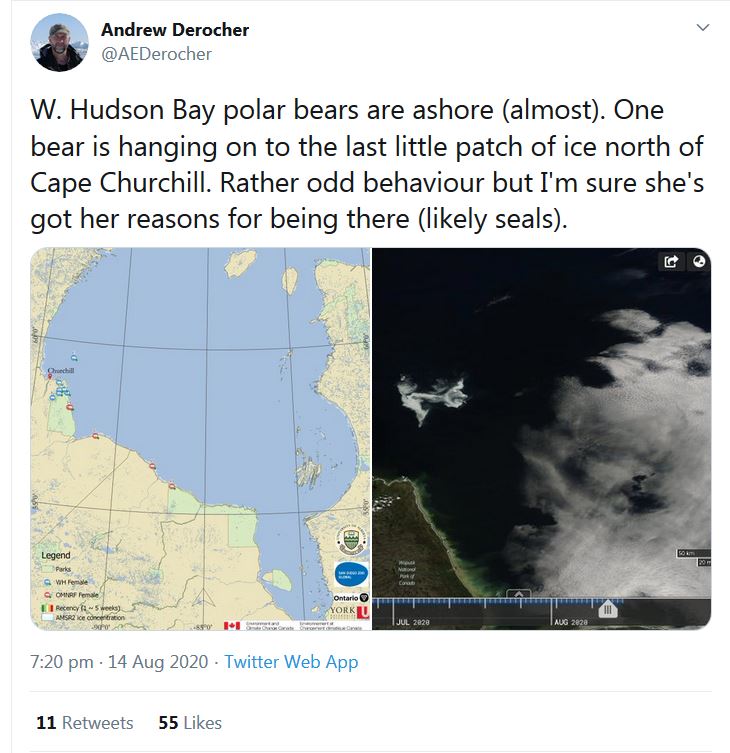
Without evidence to support such a claim, Derocher (below) assumes this collared female is probably hunting seals. In fact, last year he admitted that most bears on Hudson Bay from at least July onward are unlikely to be successfully hunting seals:

Derocher 2020 Aug 14_1 bear still on the ice at 14 Aug odd behaviour

Continue reading

Many W Hudson Bay polar bears still offshore at 7 August despite apparent low ice levels

Contrary to all expert expectations, five female polar bears (45%) out of eleven that had tracking collars attached last year were still out on the sea ice that’s lingering along the western shore of Hudson Bay as of 7 August. And if five collared bears are out there, then there are almost certainly many more without collars doing the same thing. This pattern of bears staying out on the ice long after the so-called ‘critical threshold’ of 50% concentration has passed has been going on since at least 2015 and many bears on tracking maps in July and August appear to be on ice that doesn’t exist.

Chukchi Sea polar bear Arctic_early August 2018_A Khan NSIDC small

There are two explanations for this pattern and both are likely true: 1) much more ice actually exists on Hudson Bay than satellites can detect and 2) polar bear experts are wrong that Western Hudson Bay polar bears head to land soon after sea ice concentration drops below 50%. Models that predict a catastrophic future for Western Hudson Bay polar bears (Castro de la Guardia et al. 2013; Molnar et al. 2020) assume that ice coverage of less than 50% in summer greatly reduces polar bear survival. However, if polar bears do not always head to land when sea ice drops below 50% then the models cannot possibly describe their future accurately. In other words, depending on the discredited ‘worst case’ RCP8.5 climate scenario for the most recent polar bear survival model that extrapolates from Western Hudson Bay bear data to many other subpopulations, as I discussed previously, may not be its only fault.

Continue reading

Six good years in a row for the polar bear subpopulation used to predict species demise

In something resembling a new pattern for Western Hudson Bay polar bears, most of the animals are still out on the ice in late July this year, just like they were in the 1980s. The same thing happened last year but was brushed off as a happy anomaly. However, after last fall’s 1980s-like early freeze-up, this makes the sixth year in a row of good to very good sea ice conditions for Western Hudson Bay polar bears. No wonder polar bear experts haven’t published these data: good sea ice conditions along with polar bears coming ashore fat and healthy are not just inconvenient – they threaten to destroy the extinction panic narrative that depends on Western Hudson Bay bears showing evidence of harm from reduced sea ice.

WH 18 Sat July 2020 noon PT Cape East fat mother and cub_Wakusp NP explore dot org livecam

Fat mother and cub onshore at Wakusp National Park, Western Hudson Bay 18 July 2020, one of the first of the season.

Continue reading

10 fallacies about Arctic sea ice & polar bear survival refute misleading ‘facts’

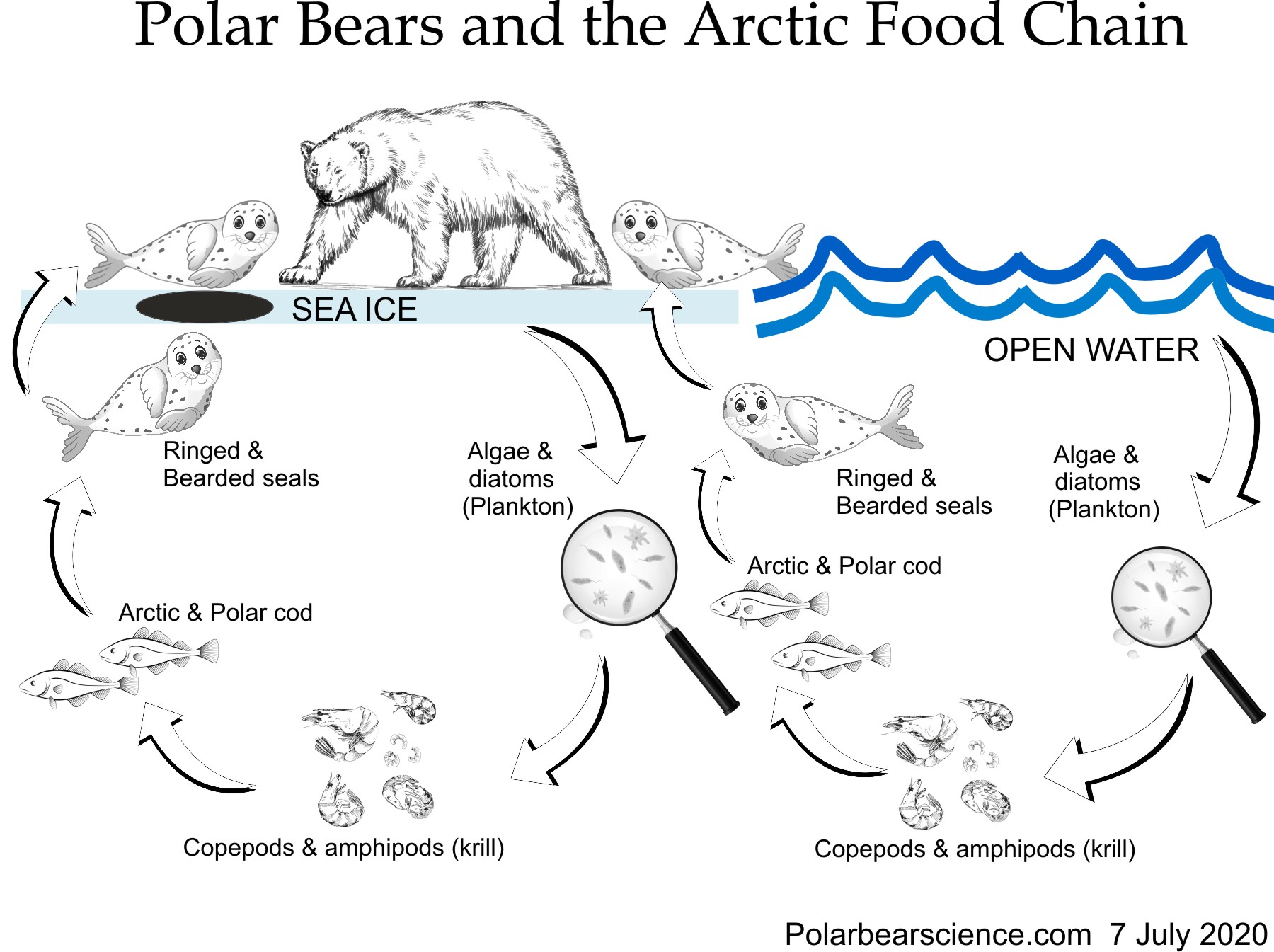
This updated blog post of mine from last year is as pertinent now as it was then: it’s a fully-referenced rebuttal to the misleading ‘facts’ so often presented this time of year to support the notion that polar bears are being harmed due to lack of summer sea ice. Polar Bears International developed ‘Arctic Sea Ice Day’ (15 July) to promote their skewed interpretation of polar bear science at the height of the Arctic melt season. This year I’ve add a ‘Polar Bears and the Arctic Food Chain‘ graphic, which readers are free to download and share. For further information, see “The Polar Bear Catastrophe That Never Happened“.

Polar bear top of Arctic food chain 7 July 2020

Continue reading