Category Archives: Life History

Harp seal: most abundant Arctic seal is an undervalued polar bear prey species

The harp seal is the most abundant seal species in the northern hemisphere (estimated to number more than 9 million animals – that’s more harps than ringed seals) but are found only in the North Atlantic. Partly because they give birth on mobile pack ice, harps have their pups earlier in the season than all other Arctic seals, which means that in some regions, they are a critical food source for polar bears that have eaten little over the winter months.
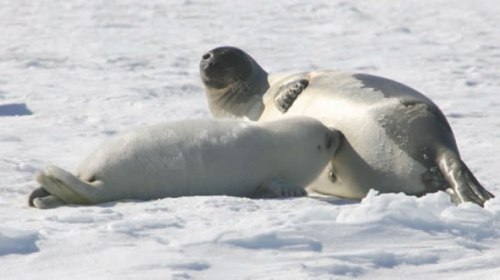
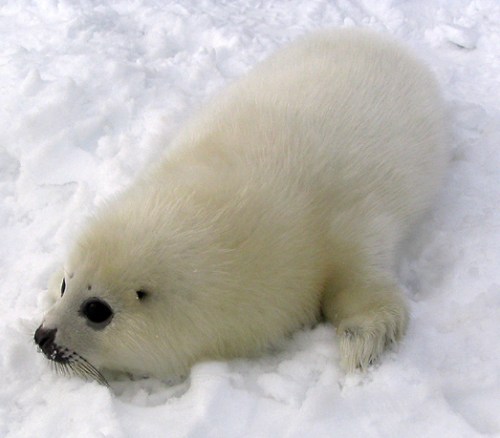
Harp seal pup_DFO Newfoundland

Although young ringed seals are considered the primary prey of polar bears throughout the Arctic, young harp seals undoubtedly represent an increasingly important resource for populations of Davis Strait, East Greenland and Kara Sea bears.

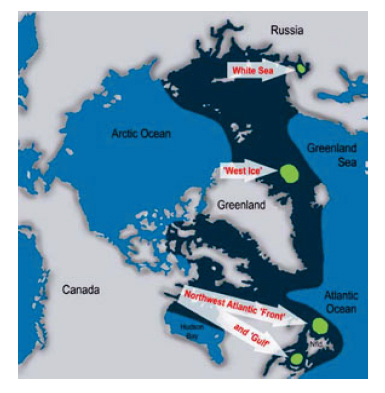
Most of the harp seals in the NW Atlantic/Atlantic Canada (about 80% of them) have their pups off Newfoundland and Labrador, an area known as the “Front” (the location of my polar bear attack novel, EATEN: special deals all this week). Harps seals at the Front now provide a huge prey base for polar bears of the large (and possibly still growing) Davis Strait subpopulation (photo below courtesy DFO Canada).

There are an estimated 7.4 million harps in Atlantic Canada today (range 6.5-8.3m), an exponential increase over the early 1980s, when perhaps only half a million so remained.  Pagophilus groenlandicus was assigned a conservation status of ‘Least Concern’ by the IUCN Red List in June last year (Kovacs 2015), when it was estimated that the global population size of the harp seal was greater than 9 million animals and probably growing1, 2 due to reduced human hunting:

“…harp seals have been harvested for thousands of years but currently the population is large and the number of animals harvested is declining.” [my bold]

Photographers and animial rights activists love cute, fluffy harp seal pups and rarely mention the carnage that goes on in spring as polar bears devour the naive youngsters. See the video below (from 2008), for an example of the cuteness factor.
Continue reading

Cannibalism video shot in 2015 did not involve a starving polar bear

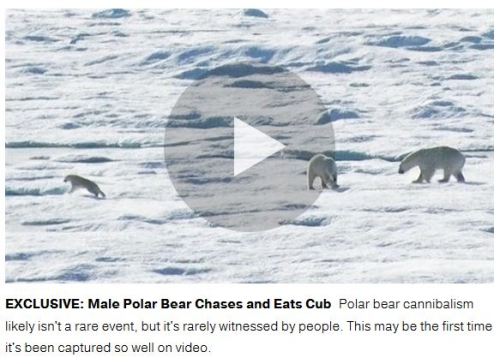
National Geographic has just posted an exclusive video shot mid-summer of 2015 of a male polar bear killing and eating a young cub.

National Geographic 2015 cruise Cannibalism video screencap_Feb 23 2016

It’s worth watching (23 February 2016; Polar bear cannialzies cub) [update: Youtube version posted below]. It was filmed in 2015 in Baffin Bay at mid-summer (during either their July 28-Aug 9 or Aug 7- 19 cruise; pdf of itinerary, dates and prices – oh my god, the prices! here). [Summer is 1 July-30 September]

You’ll soon realize the male bear was not thin or starving (as was true of a much-publicized 2011 event captured on film off Svalbard).

It is also obvious based on the dates listed above that this incident debunks the explanation that cannibalism by adult males is driven primarily by their desire to mate with the mother of the consumed cub: this incident occurred sometime between August 7 and August 19 (as I was informed via email, by a reader on one of those two cruises), which is well past the breeding season for polar bears. A male bear would not still have viable sperm by August and a female could not be forced into estrus. [added 26 February 2016]

National Geographic is already hyping this incident as more evidence of climate change harming polar bears, as the article accompanying the video suggests. However, this is just the typical oversell that accompanies much to do with polar bear these days.

The bear was not “driven to desperation” : he simply took advantage of a rare chance to eat during the summer:

“Without the ability to hunt seals, polar bears may be driven to ever more extreme cannibalism, if they’re not already.”

It’s clear to me that this was an opportunistic kill made at a time of year when few seals are available, as even Stirling admits. It reiterates the point I’ve made many times before, that polar bears on the sea ice in summer have few feeding opportunities.

Incidents of cannibalism cannot be said to be increasing because there is no scientific baseline for which recent occurrences can be compared. Scattered anecdotal reports of any behaviour cannot be touted as evidence for a trend even though they may be of interest and worth recording.

UPDATE 23 February 2016: Video now posted on Youtube, see it copied below:

Polar bear habitat mid-winter update

Sea ice extent in the Arctic is a bit below average this year at mid-winter but there are no data to suggest this situation will have a negative impact on polar bears.

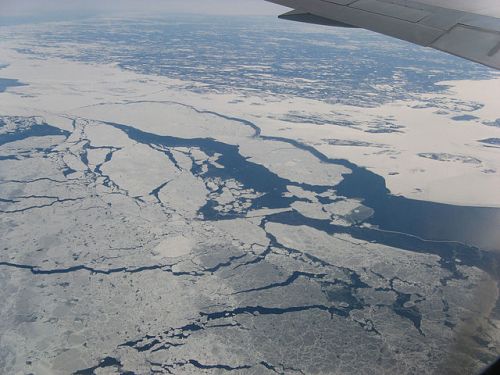
Sea_ice_near_coast_of_Labrador_-b_wikimedia_sm_26 March 2007

[Photo above is sea ice off the coast of Labrador, Canada on 26 March 2007 (from Wikimedia): polar bears in the southern portion of the Davis Strait subpopulation have been particularly successful in recent years because in late March through May/June they hunt abundant numbers of young harp and hooded seals in this habitat]

Polar bear researchers presume that most animals eat little to nothing over the winter, because it explains why even non-pregnant bears are at their lowest weight at the beginning of spring.

Sea ice charts and maps below. Continue reading

Polar bears rarely come ashore in January but one did on Tuesday

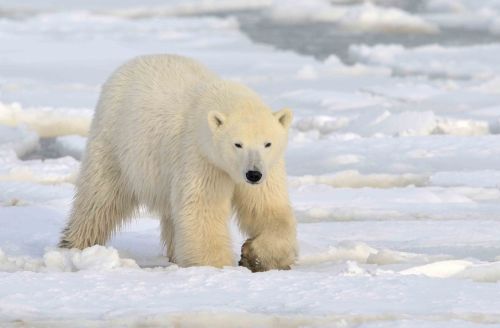
Polar Bear stock image gg66298544_sm

In a life-mimics-fiction moment, this report appeared Tuesday morning (26 January) in The Telegram newspaper in Newfoundland:

“The RCMP is warning the public after reports were received of a polar bear in Tilting. Fresh bear tracks were seen in the Fogo Island community Tuesday.”

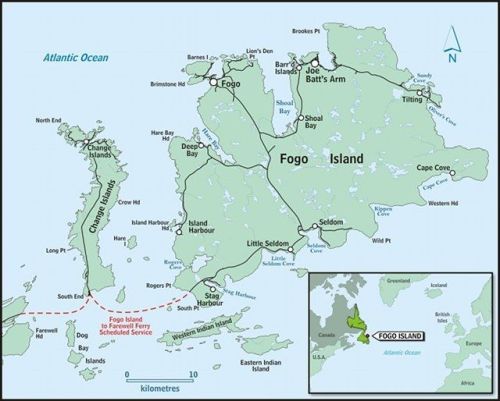
Tilting is a small town on the eastern shore of Fogo Island (see map below): Fogo Island sits off the northeast shore of Newfoundland (and is featured prominently in my new polar bear attack novel). Fogo Island lays at about the same latitude as London, England. The CBC, Canada’s national news outlet, also ran the story.

Fogo_on Fogo Island Newfoundland details

A government public advisory issued yesterday stated:

“Residents are cautioned following reported sightings of polar bears tracks near the community of Titling, on the eastern end of Fogo Island. Conservation officers confirmed the tracks to be within one kilometre of the community and believe the polar bear has since returned to saltwater. [my bold]

Polar bears are not usually seen onshore in Newfoundland until late March or April (previous stories here and here), after the ice has been close to shore for week and bears have feed extensively on newborn harp and hooded seal pups. Bears that come ashore in January – well before seal pups are born in spring (late February/mid-March) – can potentially be very dangerous because they are likely very hungry. None of the reports of this sighting gave any indication of the probable age of this bear. However, it must be kept in mind that young bears (3-5 years old) are more apt to be in a desperate state at this time of year.

Or, perhaps the bear caught interesting smells coming from shore and decided to take a short swim to check it out. The sea ice was still offshore at the time (see maps in yesterday’s post) but clearly, not too far off for the bear to swim. There may have been icebergs frozen into the pack ice that broke away (too small to show up on ice maps), that brought the bear further south than it would have ventured on its own.

It is a rare event for a polar bear to come ashore at Newfoundland in January, but it has happened before. Apparently, another bear came ashore, also on Fogo Island – in 1935 – and attacked someone. See the story below.
Continue reading

Polar bear habitat at 26 January 2016

There is still below average ice extent in the Barents Sea but there is no data whatsoever to indicate that this situation poses a problem for polar bears, given that as far as researchers know, polar bears eat little or nothing during the winter. That’s why the bears are at their leanest at the end of winter and why seal pups born in early spring are such a critical food source.

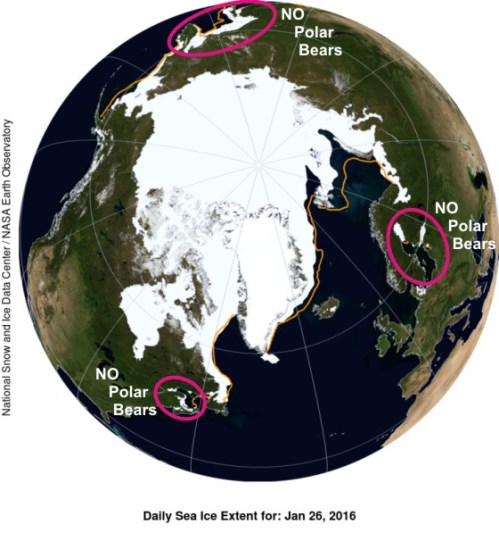
Note on map below (from WUWT Sea Ice Page, marked; original here) that polar bears are not found in three areas that are included in the total Arctic ice extent figures: below-average or above-average ice in the Sea of Okhotsk, Baltic Sea, and Gulf of St. Lawrence have no impact on polar bear health and survival.


Polar bear habitat at 26 Jan 2016_no bears marked_PolarBearScience_sm

Additional ice maps below. Continue reading

Human sees cute – polar bear sees dinner

Newborn harp seals are food for Davis Strait, East Greenland and Kara Sea polar bears but wildlife photographers see only cute furry babies with big eyes and trusting natures.

Harp sea newborn_wikipedia

See these photos taken some unknown spring (early March) in the Gulf of St. Lawrence, Canada (published 29 December 2015 by Mailonline): the pups are kind of skinny when first born but fatten up quickly on fat-rich milk from their attentive mothers. Ask yourself: does this photographer know that the fattest of these baby seals he oh’s and ah’s over in his commentary are just what polar bears depend on for their existence – and that the bears will eat as many of them as they can catch, peeling them like bananas so that they can eat the skin and fat first?

The title of the piece is: “Eye-eye! Cheeky seal cubs just a few days old wink and pose for the camera as they wait for their mother to feed them:

  • The young Harp seal pups had never seen humans before the pictures were taken
  • They were photographed in their habitat of Madeleine Island in Quebec, Canada
  • Harp seals are solitary animals except during breeding season, when they congregate in their thousands

“These seal-ebrities from Canada are pictured striking hilarious poses that even Cara Delevingne would be proud of.

The three Harp seal pups – just days old – were passing time while they waited for their mother to return from hunting.

One pup looked straight to the camera with a cheeky wink, while another lay on its back looking longingly at the lens.

The impressive poses were captured by photographer Gunther Riehle, who was lucky enough to get just feet away from the baby seals on Madeleine Island in Quebec.”

See the photos here. Harp seal and hooded seal distribution and breeding areas in the Eastern Arctic (from DFO Canada).

Harp and hooded seal pupping areas and distribution_Stenson 2014 fig 1

More polar bear seal prey info here. See potential consequences of lots of polar bears depending on abundant harp seals north of Newfoundland in my novel, EATEN.

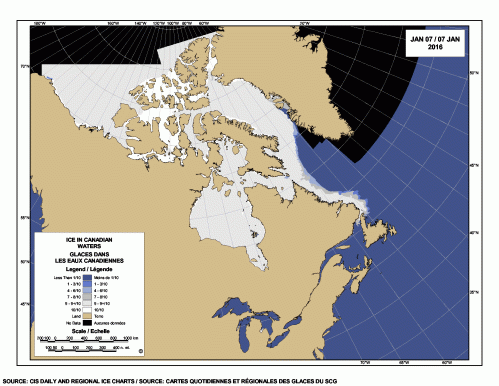
Davis Strait polar bear habitat well above average for the first week of winter

The region inhabited by the Davis Strait subpopulation of polar bears dips as far south as James Bay and has a history of highly variable sea ice coverage.

Canadian Arctic Jan 7 2016_CIS

For the last two years Davis Strait sea ice in March has been well above average, while other years it been well below. You might be surprised to hear that 1969 had the lowest February/March ice coverage over the entire the 1969-2002 record (Johnston et al. 2005: 211), which ice charts show now extend to 2015 (see below). Reports of sealers working north of Newfoundland and in the Gulf of St. Lawrence in the first few decades of the 20th century show this variability has likely always been a characteristic of the area (Ryan 2014).

Remarkably, this year’s ice coverage for the first week in January is well above what they were in 2014 and 2015 – even though those two years were above average by March. In fact, there hasn’t been this much polar bear habitat in the Southern Labrador Sea in the first week of January since at least 1993.
Continue reading

Tracking polar bears in the Beaufort Sea – one tagged bear left at year end 2015

I’ve combined the months of November and December for this post on USGS polar bear tracking in the Beaufort Sea because there’s not much to tell: there’s one tagged bear left and she’s going almost nowhere. Where’s the news in that?

Beaufort tracking USGS bear-movements-November 2015 sm

Movements of 1 satellite-tagged polar bear female for the month of November, 2015; shown with sea ice coverage at 30 November 2015. This bear was tagged in the spring of 2015 in the Southern Beaufort Sea. See original image here and December movements below.

Actually, it does tell us something: this female is probably in a sea ice den, a relative common phenomenon in the Beaufort Sea. And she’s on ice that’s out over very deep water. Continue reading

Some polar bears make poor choices, like this one in James Bay

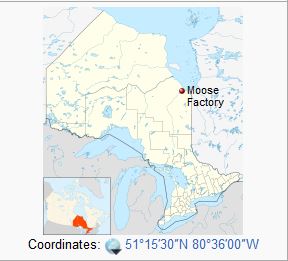
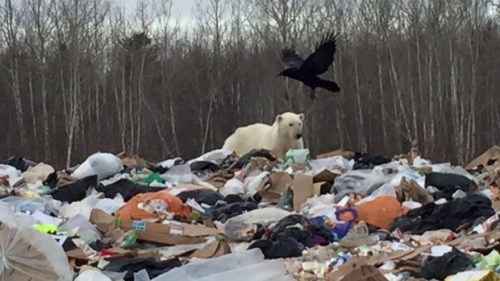
CBC reported this morning that a polar bear was shot last Friday (18 December) at the dump in Moose Factory, Ontario – long past the date when bears in Southern Hudson Bay are usually out on the ice. But a single bear in trouble does not spell catastrophe for the species or the local population: how many times does this need to be said?

Moose Factory_Wikipedia

Claims of “almost no ice” seem a bit disingenuous, since this seems to be the only bear caught in this situation (if there are others, no one has reported it): other bears appear to have either made use of the ice that was present (see map below) or walked north until they found more ice. This bear (picture below) seems to have decided that the fare on land might do for a while longer, which suggests he’s either a subadult bear (with little experience) or an old one – looks like the former to me in the picture below but the report doesn’t say.

Moose Factory_polar-bear-in-dump_CBC Dec 22 2015

Continue reading

Barents Sea polar bears adapt to changing sea ice conditions

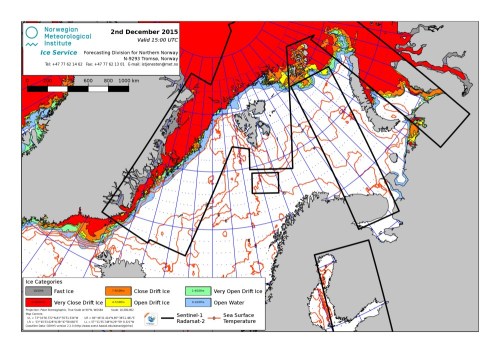
Sea ice development in eastern Svalbard this fall is lagging well behind the rest of the Arctic. Several polar bear researchers (e.g., Andrew Derocher here and here) have recently been raising the alarm that this might be devastating for Barents Sea females looking for suitable denning sites.

Barents Sea ice 2015 Dec 2_NIS_sm

The implication is that pregnant polar bear females are inflexible – so fixated on one location to give birth that they are unable or unwilling to choose an alternative if conditions preclude using their preferred location this year. However, the available facts do not support such a pessimistic attitude.
Continue reading