Category Archives: Polar bear attacks

Polar bears onshore in Svalbard update: bears again run out of Longyearbyen

Update to 18 Jan 2017 post: For at least 10 days, officials in Longyearbyen, Svalbard have been trying to keep a particularly persistent female polar bear and her two cubs away from the community. After being chased away last week, Sunday night (22 Jan) the trio appeared again at dog kennels at the edge of town but this time, but this time officials drove them even further south.

svalbard-female-2-cubs-23-jan-2017_icepeople-news

Continue reading

Polar bears onshore in Svalbard in most dangerous season for bear attacks

Yesterday marked the first report I’ve found for polar bears onshore this winter, in a potentially dangerous repeat of a pattern that has become all-too common in recent years (especially last year) with bear populations booming virtually everywhere (but especially around Svalbard).

longyearbyen_sm_location_wikipedia

This is the leanest time of year for polar bears – fat Arctic seal pups won’t be available for another 2-3 months and meals for polar bears are hard to come by – and that makes the bears especially dangerous.

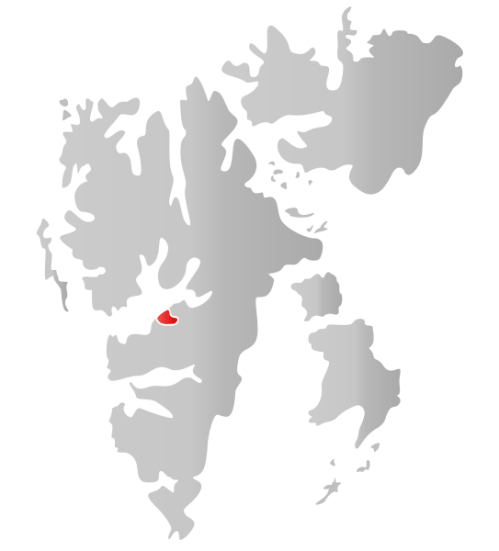
So, despite the marked lack of sea ice around Svalbard this winter, a female polar bear with two cubs were reported near the community of Longyearbyen (still enduring 24 hours of darkness) – on the west coast of the archipelago (see map above), where sea ice has been virtually non-existent for years (see map below).

Svalbard ice 2017 Jan 17_NIS.png

It appears these bears traveled overland from ice off the east coast. There is no mention in any of the reports that the bears were thin or in poor body condition, or had so far caused any of the problems for which desperately hungry polar bears are famous. However, one dog-sledding guide had a frightening encounter in the dark in this on-going saga that began over the weekend (details and photos below). Continue reading

No correlation between freeze-up dates for Hudson Bay & total Arctic ice cover

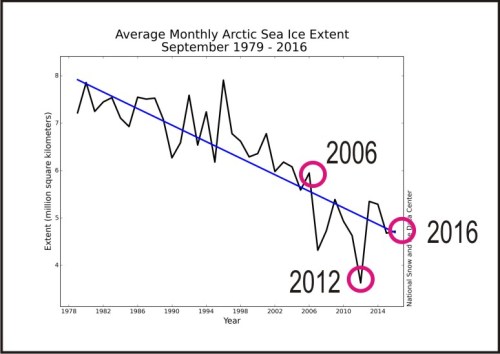
Guess which year between 2006 and 2016 had the latest start to freeze-up on Hudson Bay, given that 2012 had the lowest September average and 2007 and 2016 tied for second-lowest (see graph below, from NSIDC), and that sea ice in the Arctic right now is the lowest it’s been for this date since 1979?

sea-ice-sept-averages-graph-only-marked-for-2006-up

If you guessed anything other than 2010, you guessed wrong – in addition, 2006 (not 2016) was second latest.

There is no correlation between Arctic sea ice coverage and freeze-up dates for Western Hudson Bay.

Yet, Polar Bears International (“Save Our Sea Ice”) –  who were surely in and around Churchill in 2010 and 2006 watching polar bears – just posted an alarming statement about local conditions, implying that slow freeze-up of Hudson Bay this year is a reflection of the fact that “sea ice is at a record low across the Arctic.”

They also claim that “…the weather is the warmest we’ve ever seen at this time of year.” That may be true, but if so, it is also meaningless with respect to the progress of freeze-up.

Does no one at PBI remember the very late freeze-up of 2010 or 2006? Odd, that.

Continue reading

Polar Bear Alert report for 1st week of November 2016, Churchill Manitoba

Week 17 (I’ve been counting) for 31 October – 6 November (Week 1 was 11-17 July):

“Most bears are still out at Cape Churchill.” [see map below]

2016-oct-31-nov-6_week-17_week-11-missing

See previous reports here, and here. Ten-day sea ice animation, CIS.
Continue reading

EATEN the movie – what are the odds?

Could polar bears trump sharks at the theatre? Does the fact that unlike sharks, polar bears make house calls, give it better odds than most?

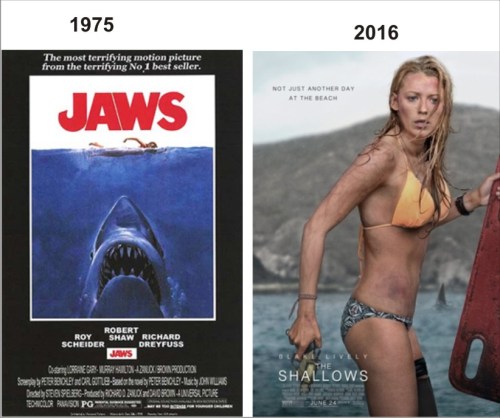
Take a walk down memory lane and give some thought to what has made films starring big animal predators a hit (or not), like JAWS, THE SHALLOWS, THE BIRDS, GRIZZLY, and a number of others, both classics and bombs. What do these predator attack films tell us (if anything) about the probability of EATEN becoming a terrifying motion picture?

jaws-1975-and-the_shallows_poster_aug-2016

Read the rest here.

Save

Kaktovik, AK has a polar bear problem but not because bears are desperate for food

PBS has published a bizarre poor-starving-polar-bears story that uses pictures of fat, healthy bears to illustrate the supposed desperation of malnourished bears of the Southern Beaufort Sea that is blamed on declining sea ice.
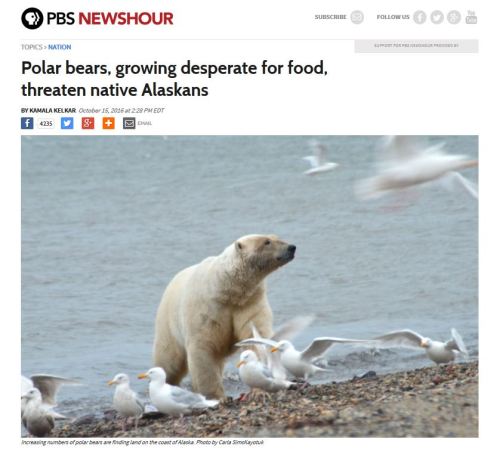
pbs-newshour-headline_15-october-2016

The photo of the fat bear above, taken by the Kaktovik resident quoted in the 15 October 2016 PBS story, Polar bears, growing desperate for food, threaten native Alaskans, accompanies this statement:

“While images of malnourished polar bears have become a national symbol of the effects of climate change, they are a front line reality for Native Alaskans, who face them on their own property and do not want them to get hurt.”

Except this is not a story about starving bears but too many fat bears hanging around one particular community looking for other kinds of food – after being lured in by the enticing smell of rotting whale meat left onshore by the residents.

If photos of starving Beaufort bears existed that PBS could have used to illustrate this story, I’m certain those photos would have been used. But virtually all of the pictures I’ve seen of Kaktovik bears are the epitome of health – fat and sassy – but none that could be described as starving.
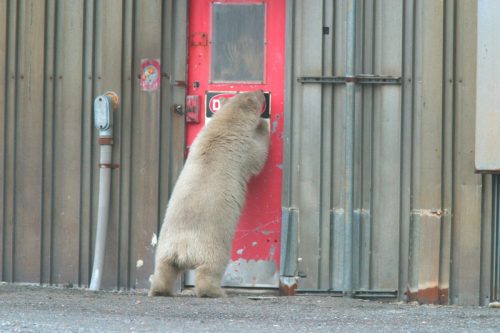
polar_bear-US FWS_young bear Alaska maybe Kaktovik no date.jpg

It turns out that while native Kaktovik residents have profited from tourists and journalist who have shown up in droves to view the large numbers of bears attracted to the bone piles left after butchering summer-caught bowhead whales, the bears have also put the community at risk of personal attack and loss of stored food. Who would have thought?

Residents of Kaktovik (see map below) have unwittingly enticed these polar bears ashore and now must deal with the consequences. As the residents of Churchill discovered decades ago, having polar bears close to your community comes with benefits, problems – and danger.
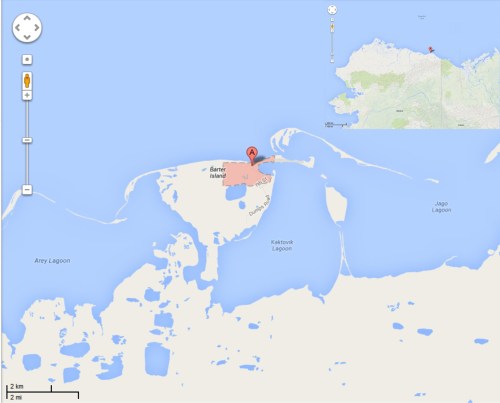
kaktovik-composite

There is no doubt that Kaktovik has a polar bear problem but it cannot plausibly be blamed on anthropogenic global warming, retreating sea ice, or starving bears – an irresistible attractant close to the community is the cause and solutions must be found to keep residents safe and their food secure. The PBS article discusses a few of those solutions. Some quotes and background below.

Continue reading

Arctic sea ice grows & Churchill polar bears into their 4th month of fasting

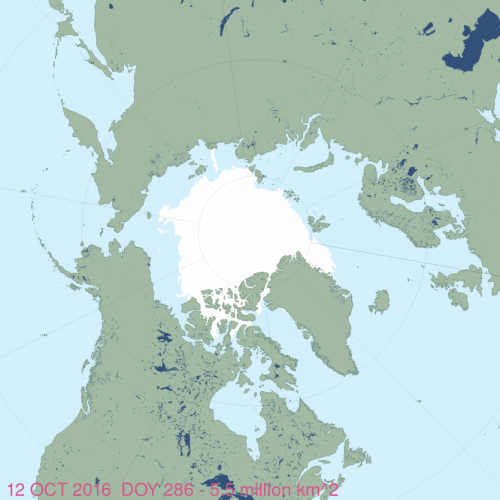
A quiet year for problems in the polar bear capital of the world (Churchill, Manitoba) so far – despite this year tying for the second-lowest minimum since 1979 – and the ice is growing fast. In fact, Arctic ice growth in the second half of September was rapid and there is now more ice than there was at this date in 2007 and 2012 (when polar bears in those regions considered most at risk did not die off in droves).

masie_all_zoom_4km-2016-oct-12

Pessimistic polar bear specialists are wrong  – polar bears are much more resilient to low sea ice levels in summer than they assume: their own data from low summer ice years proves it.  If you’ll recall from my previous post, polar bears seem to have barely survived the extensive sea ice coverage during the Last Glacial Maximum – in other words, too much ice (even over the short term) is their biggest threat. Polar bear numbers, as confirmed by the latest estimates in the 2015 IUCN Red List assessment, are higher now than they have been since the 1960s, despite almost 10 years of summer sea ice minimums below 5.0 mk2.

Churchill Polar Bear Alert reports and Arctic sea ice comparisons at this date, in detail below.

Continue reading

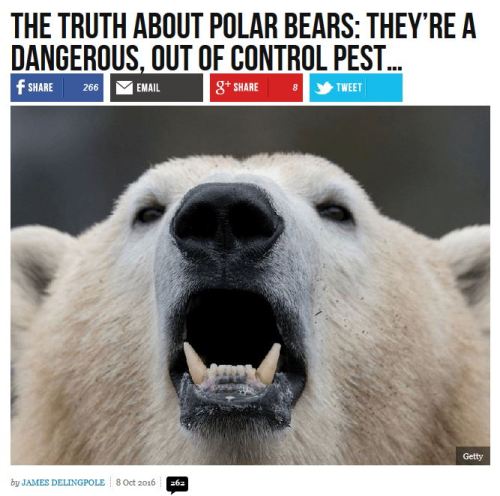
In case you missed it…writer James Delingpole puts my novel in context

From Saturday 8 October, English journalist, author and broadcaster James Delingpole (via his Breitbart column) writes about polar bears:

delingpole-8-oct-2016-headline

The Truth About Polar Bears: They’re a Dangerous, Out of Control Pest…

Crockford is the author of a Jaws-style thriller on ravenous polar bears killing humans called Eaten. At least one polar scientist who has read it considers its “science-based scenario” to be frighteningly plausible.

In field-level polar bear management circles, people don’t talk about the kind of scenario that forms the premise of this novel as an “if”. Instead, they describe it as a “when” and they are not looking forward to it.

Eek.

Eek is right! The book has been nightmare-inducing for many readers. Put EATEN on your Christmas shopping list (all purchase options here). It makes a great gift and supports the work I do here. Colleagues have said their young adult children really enjoyed it.

[I’m reminded of Christmas since we had turkey for Canadian Thanksgiving this weekend – a fabulous gathering of all the local family at my place, including the two (!!) grandbabies, both of whom are now walking. I’ll be sending Nico to Churchill before you know it]

[And FYI, I’ve updated the Svalbard “problem no one is talking about” post with statistics by year (1974-2015) for polar bears killed to protect life and property]

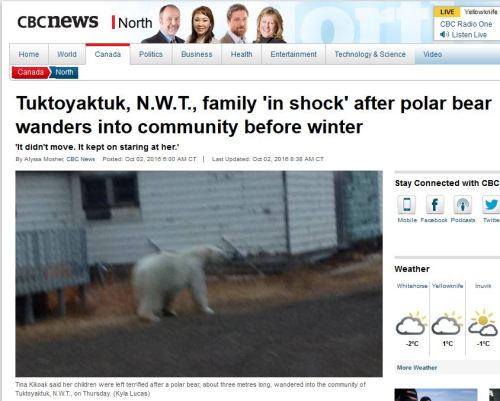
Polar bear onshore in Tuktoyaktuk got so close to kids they heard it breathing

A report from the CBC this morning (with video) of a large polar bear wandering about the village of Tuktoyaktuk on the (Canadian) shore of the Eastern Beaufort Sea on Thursday (29 September) that got very close to a group of children playing outside. Fortunately, no one was hurt.

tuk-polar-bear-sighting-sept-29_cbc-oct-1-2016-headline

That this was a rare event is evident in the awe and excitement in the voices of the residents as someone recorded the movements of the bear through town (picture quality is not the best, but clear enough).

As I’ve said before, with more bears we can expect more interactions with people and more sightings like this that haven’t happened in decades. Map and quotes below.
Continue reading

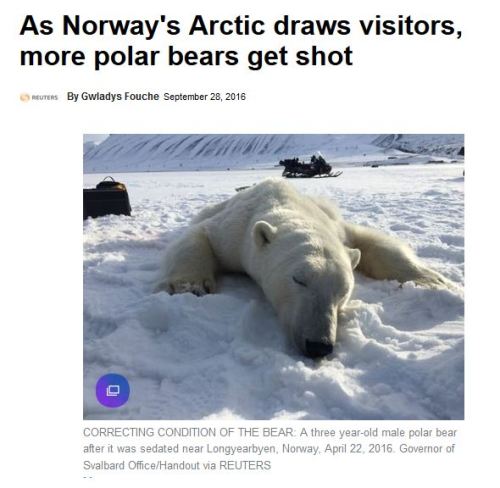
The polar bear problem no one will talk about – the downside to large populations

A large polar bear population with lots of adult males – due to bans on hunting – means more survival pressure on young bears, especially young males. To blame more problems with young male bears on lack of sea ice due to global warming ignores the downside to the reality Norway asked for when it banned hunting more than 40 years ago.

More hungry young males coming ashore looking for food is one of the potential consequences of living with a large, healthy population of polar bears. Biologist Ian Stirling warned of such problems back in 1974.

UPDATE: added below 6 Oct. 2016, statistics of defense of life shootings of polar bears in Svalbard since 1973.

svalbard-more-visitors-more-bears-shot_28-sept-2016-yahoo

Svalbard area polar bear numbers have increased 42% since 2004 and more hungry young polar bears almost certainly mean more polar bear problems, as folks in Svalbard (see map and quotes below) have experienced this year.
Continue reading