Category Archives: Polar bear attacks

Keeping track of problem bears in Churchill

The City of Churchill has recently taken to posting its problem bear reports on its Facebook page. This is something to keep an eye on, so let’s catch up so that future reports can be put into context.

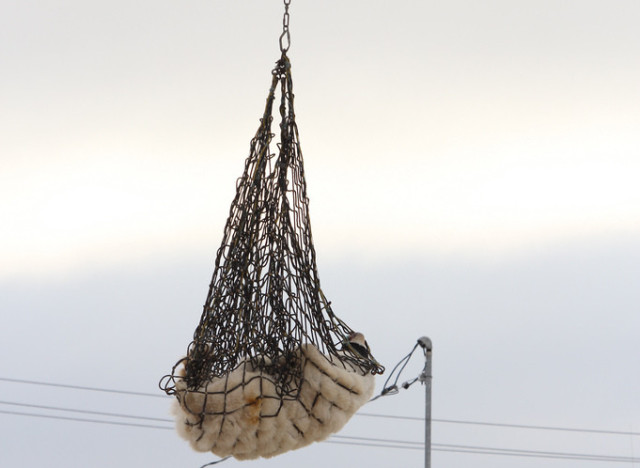
Figure 1. A bear is transported to Churchill’s polar bear holding facility, from a 2011 Huffington Post article “Polar Bear Prison.”

Photo above:  A bear is transported to Churchill’s polar bear holding facility (from a 2011 Huffington Post article, “Polar Bear Prison”).

Continue reading

Polar bear encounter in the Canadian High Arctic reminiscent of recent attacks

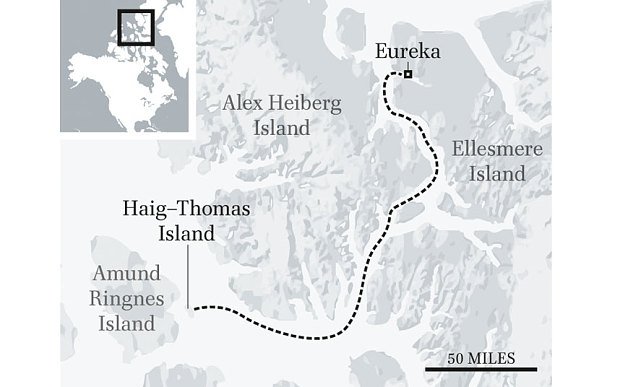
Men recreating the 1938 expedition of explorer David Haig-Thomas have a mid-April 2015 polar bear encounter reminiscent of two recent polar bear attacks (Labrador, 2013, Svalbard, 2011) but with a happier ending.

Haig-Thomas expedition map_Telegraph_April 18 2015

Continue reading

“A Harrowing Encounter”- my published review of “Meltdown”

Here’s an excerpt of my just-published review of “Meltdown: Terror at the Top of the World” (the story of the July 2013 polar bear attack in Labrador, Canada), adapted from my November 2014 blog post. The review is called “A Harrowing Encounter” and it’s just out in the Spring 2015 issue of RANGE Magazine.

Polarbear vs dogs_lger_Norbert Rosing photo 2008_Brian Ladoon dogs WHB
In the photo above, a polar bear approaches Brian Ladoon’s Canadian Eskimo Dogs in Churchill, Manitoba – in this case, unlike the hiker described in “Meltdown,” there was a happy ending. Norbert Rosing photo, from this Daily Mail article, 2008 (for more, see also “A priest of dogs and bears” from 2013 and cool video here).

Continue reading

Polar bears in winter – a seasonal review of insights and research

Here are summaries of my “Polar bears in winter” series. It’s an interesting recap of what polar bears do over the unimaginably cold and dark months of an Arctic winter.

Continue reading

“Meltdown: Terror at the Top of the World” — new book exploits polar bear attack to sell fear of sea ice decline

The polar bear attack that was all over the news last summer is now an ebook about global warming. The Maine lawyer who was mauled by a bear while on a hiking trip to Labrador (and lived to tell the tale) has allowed his story to be co-opted by an activist journalist to promote fears of sea ice decline, polar bear extinction, and man-made global warming.

Melt-down_Terror at the Top of the World_Nov 12 2014 press release book cover

The press release issued yesterday by the news group that published the book and employs author Sabrina Shankman (InsideClimateNews), described it this way:

“A riveting new e-book about the battle between man, beast and Nature in a warming world. Called Meltdown: Terror at the Top of the World, the e-book tells the story of the hikers’ harrowing encounter with a polar bear; of the plight of the polar bear in general, facing starvation and extinction as the sea ice melts and its habitat disappears; and of the Arctic meltdown, the leading edge of man-made climate change.”

I have little doubt the man mauled by the bear was indeed terrified and that his companions were as well. However, that horror is exploited shamelessly in this book as a means to promote anxiety over the future survival of polar bears and instill panic over a prophesied Arctic “meltdown.”
Continue reading

Churchill problem bears and early breakup dates in WHB: The 1983 & 2004 anomalies

In this part of my critique of Stirling and Parkinson (2006), regarding breakup dates in Western Hudson Bay (see Part I here), I will show that these authors also left out critical data.

Figure 1. A bear is transported to Churchill’s polar bear holding facility, from a 2011 Huffington Post article “Polar Bear Prison.”

Figure 1. A bear is transported to Churchill’s polar bear holding facility, from a 2011 Huffington Post article “Polar Bear Prison.”

Their correlation between number of problem bears in Churchill and breakup dates for WHB worked because some very inconvenient data were simply left out: problem bear data for 1983 and 2004.

Inclusion of that information would have shown 1983 and 2004 were two of the worst years for polar bear problems in recent history despite being late breakup years (1983 also had the last human fatality from a polar bear attack). They could have explained why they did not use the data but they did not — they simply left it out.

Amazingly, this work is being touted as “evidence” that global warming is harming Western Hudson Bay polar bears.
Continue reading

Polar bear attacks on humans – an evolutionary perspective

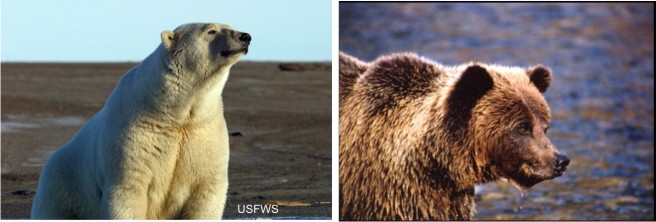
What with polar bear populations higher than they were 50 years ago and with many bears onshore during the ice-free season, a few polar bear attacks are to be expected – but how does the behaviour that drives those attacks compare with their closest evolutionary cousin, the grizzly?

Polar bear grizzly profiles_composite_Sept 15

I’ve done some summer reading on this topic, which I’ve summarized below. The results may surprise you.
Continue reading

Polar bears and melting ice: three facts that shouldn’t surprise you

If I was invited by USA TODAY to discuss how climate change is affecting polar bears now – summed up in three talking points – this is what I’d say. I’d use some meaningful images rather than cute pictures of cuddly bear cubs and I’d provide links to my work with references and details to back up my answers.

Compare my responses to those supplied by Steve Amstrup in his capacity as spokesperson for Polar Bears International (“Save our sea ice!”) to Jolie Lee at USA TODAY last week, who’s word is expected to be taken as gospel.

AK PB N Shore-USFWS Barrow_labeled

Continue reading

Earth to Newsweek: polar bear populations have not been on the decline since 2008

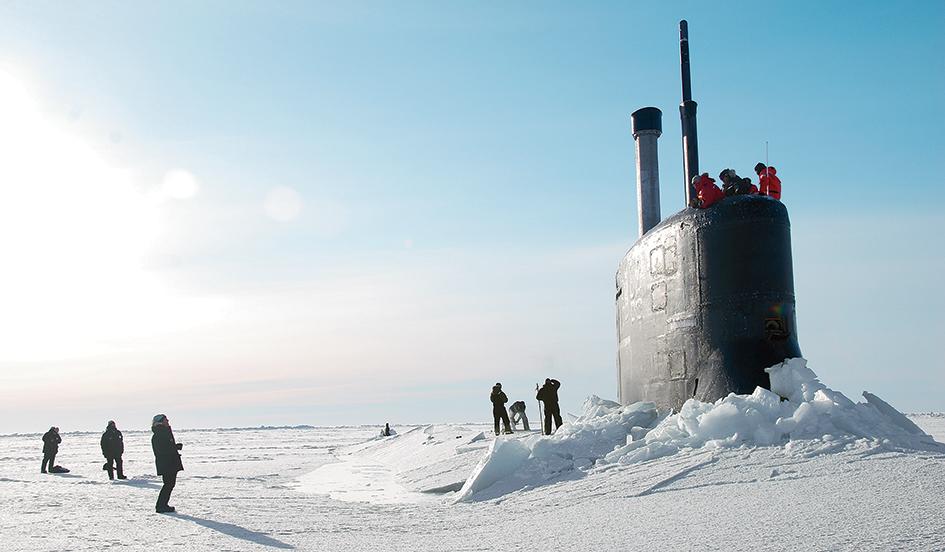
A recent Newsweek story about the US Navy having no “rules of engagement” to deal with polar bear encounters leads with alarmist misinformation.
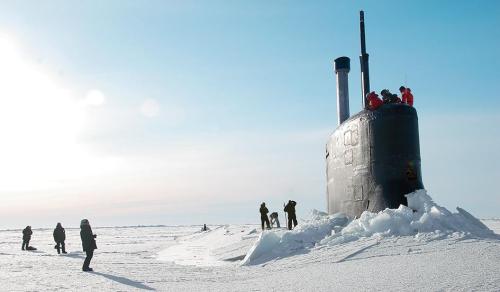
Photo credit Cmdr. Christy Hagen/U.S. Navy

Photo credit Cmdr. Christy Hagen/U.S. Navy

Author Max Strasser (April 30, 2013), in his recent article in Newsweek (As the World Warms, Navy Strategists Plan for an Arctic Rush”) [h/t D. V]

Approximately 25,000 polar bears live in and around the Arctic Circle. Climate change has put the majestic ursines, a longtime favorite of children’s books and Christmas cards, in peril. In 2008, the United States listed them as a “threatened species” under the Endangered Species Act, and populations have been on the decline since then.”

Sigh. Not so Max, totally not so.

Global polar bear numbers have been stable for the last 30 years, as the graphs below show. The proposed ‘threat’ to polar bears is a future decline in sea ice predicted by computer models. The future, Max, is not now.

Polar bear populations are currently doing very well (see my post on the most recent status update report here). On top of that, note that the bears are well distributed throughout available Arctic habitat — one of the accepted hallmarks of a healthy species.
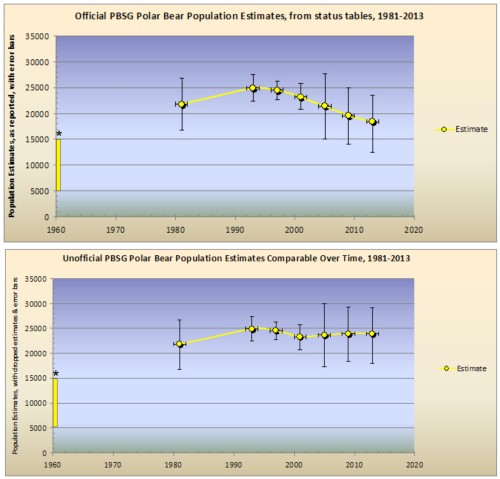
Figure 1. Upper graph uses totals reported in PBSG status tables, with min/max; Lower graph uses the same figures, but adds back in the so-called "inaccurate" estimates dropped 2005-2013. The 1960 figure * is a ballpark estimate. See previous post here.

Figure 1. Upper graph uses totals reported in PBSG status tables, with min/max; Lower graph uses the same figures, but adds back in the so-called “inaccurate” estimates dropped 2005-2013. The 1960 figure * is a ballpark estimate.
See previous post here.

OK, with that error corrected, back to the point of the Newsweek story…

Continue reading

Of Labrador polar bears and sea ice way above normal off Newfoundland

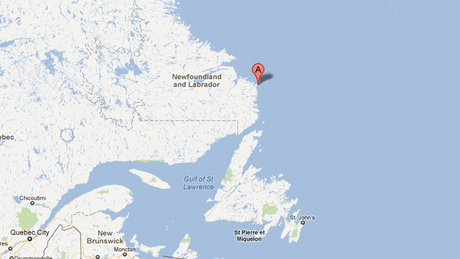
A report yesterday of polar bears making a nuisance of themselves in Black Tickle, southern Labrador is the inspiration for this post. Those bears are part of the Davis Strait subpopulation (discussed previously here and here). Black Tickle is marked on the map below.

Black-tickle-map-Labrador

Arctic sea ice is tracking just at the edge of two standard deviations for this time of year but while extent is low in the Barents Sea, it is way up around the east coast of Canada.
Continue reading