Shorefast ice formation and the fall feeding season for polar bears

What may seem like a silly question is actually fundamental to polar bear survival: in the fall, why do Western Hudson Bay bears correctly expect to find seals in the new ice that forms offshore? Why are seals attracted to that new ice – called ‘shorefast ice’ or ‘fast ice’ – when they would clearly be safer out in the open water where there is no ice and no bears?

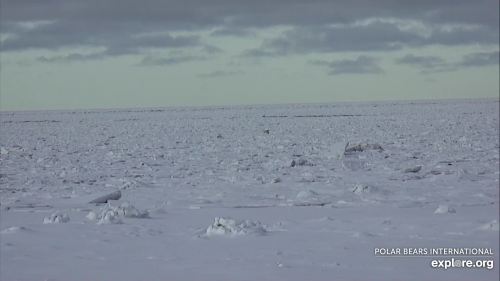
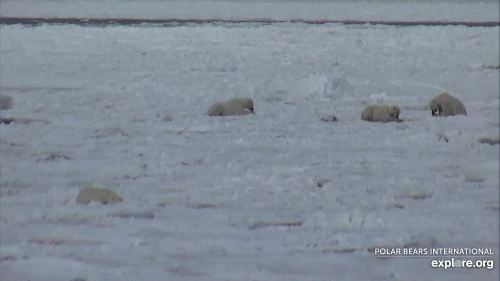
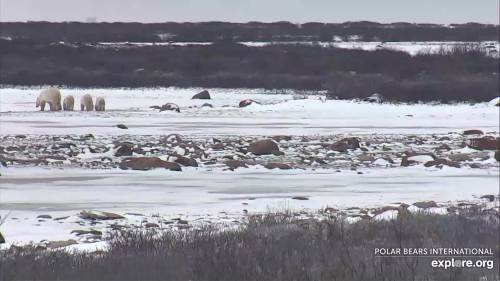
As the picture below attests, polar bears can and do kill ringed seals in the new ice that forms off the coast of Western Hudson Bay even when it is but a narrow strip of thin ice – and so close to shore their successes can be caught on camera.

Three adult male polar bears share a seal kill on the newly-formed ice off Wapusk National Park, Western Hudson Bay. 5 November 2020. Buggy cam, Explore.org

A different bear was also filmed killing another seal on 31 October. And these are only the kills we know about along a very short stretch of coast – the killing is almost certainly going on up and down the entire coast, into James Bay (see below), where there is just as much ice but no cameras.

As far as I am aware, this seal killing by polar bears goes on in newly-formed shorefast ice everywhere across the Arctic in early fall, not just in Hudson Bay. Although the timing varies, virtually everywhere in the peripheral seas of the Arctic Ocean (Barents, Kara, Laptev, Chukchi, Beaufort, as well as Baffin Bay and Davis Strait), shorefast ice forms before the mobile ice pack expands to meet the ice developing from shore.

This shorefast ice formation in fall provides a predictable but short-lived source of prey for polar bears as they strive to regain some of the weight lost over the summer.

Continue reading

Western & Southern Hudson Bay polar bears experience earliest freeze-up in decades

This is shaping up to be one of the shortest ice-free seasons in at least 20 years for both Western and Southern Hudson Bay polar bears.

Hudson Bay sea ice at 2 November 2020. NSIDC Masie chart.

Last week, sea ice started forming along the shore of Hudson Bay, from the north end all the way south into James Bay. So far, the shorefast ice that’s forming is only a narrow strip along the coast but is thickening and becoming broader each day, which means that unless something changes dramatically, the bears should all be on the ice at the end of the week, an exodus from shore that hasn’t happened this early in WH since 1993 (the earliest since 1979).

The last WH tagged polar bear didn’t leave the ice this year until 21 August, which means if it’s on the ice by the end of this week it will have spent only 11 weeks onshore – less than 3 months. Even the first bears that came ashore in mid-July will have only spent about 16 weeks on land – at least a month less than they did a decade ago (Stirling and Derocher 2012). Four months spent ashore was the historical average for Western Hudson Bay bears in the 1970s and 1980s (Stirling et al. 1977, 1999). This year, most polar bears will have spent only about 13-14 weeks on land because they did not come ashore until early August.

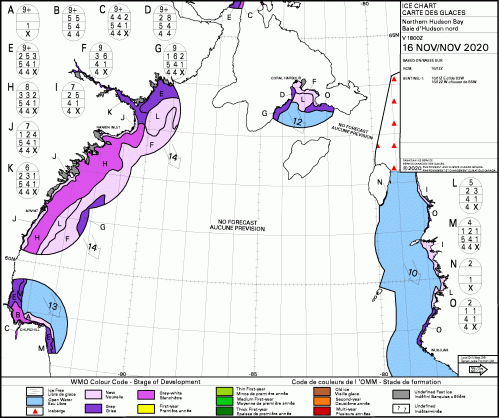
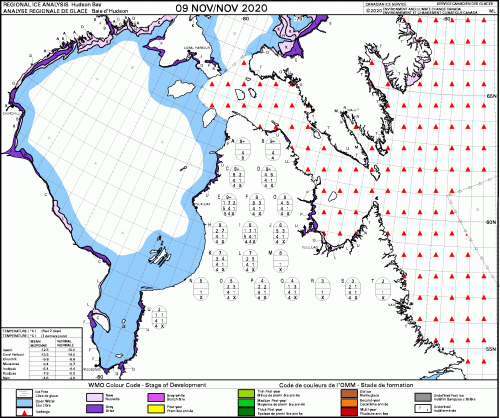
UPDATE 8 November 2020: Report from Churchill area polar bear guide Kelsey Eliasson, via Facebook Saturday 7 November: “Most bears have left on the ice – including peanut – but still some stragglers” [Peanut’ is a well-known female who has two cubs this year]. See below for sea ice chart for 8 November shows broadening band of grey ice clearly thick enough to support the weight of adult bears (and the same thing is happening in Southern Hudson Bay):

Hudson Bay North daily stage of development 2020 Nov 8_all grey ice

Continue reading

Polar bear research on hold in Western Hudson Bay due to COVID-19 restrictions

After spring polar bear research was cancelled in Western Hudson Bay (and pretty much everywhere else) this year because of Covid 19 concerns, it now transpires that fall research is out as well. Travel restrictions implemented by government departments and university administrations (not the health department) apparently mean fall programs to assess the health and status of polar bears in Western Hudson Bay have been put on hold.

Triplet litter of polar bear cubs spotted in Wakusp National Park, Western Hudson Bay. 23 October 2020. Courtesy Explore.org.

Continue reading

My new novel set in the Gulf of St. Lawrence has a surprising twist

My fictional story about sea ice, polar bears and upheaval in 2026 – a followup to EATEN – is coming soon. Prepare for the unexpected.

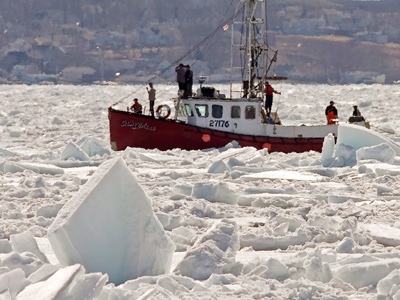
CTV news_Cathy Erlene sealer heavy ice off North Sydney_Saturday March 28 2009

A video to help set the mood…

Ten fat polar bears filmed raiding a stalled Russian garbage truck

From the Siberian Times today (20 October) is a story with few facts but a fabulous video of six fat adults and four fat cubs as they set siege to a stalled open garbage truck in the Russian Arctic. It may have been filmed on Novaya Zemlya but that has not been confirmed.

Of course, Novaya Zemlya has had previous problems with bears habituated to garbage, most famously an extended incident in 2019 that was perversely blamed on climate change.

Continue reading

Some surprises in polar bear sea ice habitat at mid-October 2020

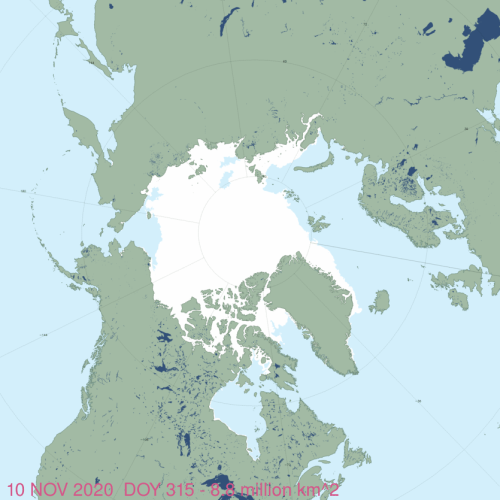
Arctic sea ice has been growing steadily since the minimum extent was reached a month ago, with shorefast ice now developing along the Russian and Alaskan coastlines as ice cover expands in the Central Canadian Arctic. So while it’s true that the main pack of Arctic ice is far from the Russian shoreline, rapidly developing shorefast ice will allow bears to begin hunting seals long before ice in the central Arctic Basin reaches the Siberian shore, as they do in Western and Southern Hudson Bay every fall.

Cropped sea ice extent at 15 October 2020 (Day 289), NSIDC Masie.

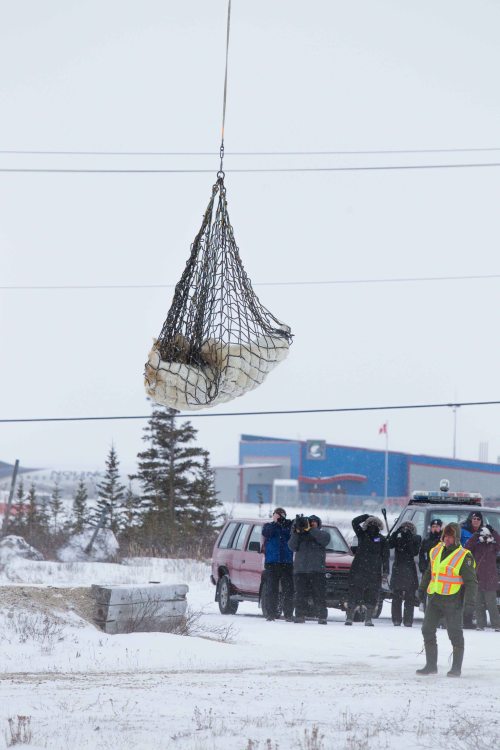
And speaking of Western Hudson Bay, it’s a very slow season around Churchill for problem polar bears (photo below) – the quietest mid-October for the Polar Bear Alert Program in the last five years and perhaps the quietest in decades (which I could say for sure if I had the records but I do not).

Continue reading

S. Beaufort polar bear population stable since 2010 not declining new report reveals

A just-released report on the latest count for the Alaska portion of the Southern Beaufort subpopulation reveals that numbers have been stable since 2010 despite claims the population has continued to decline. However, the study also has a very odd feature: 2012 had the highest population estimate over the decade of 2006-2015 yet also had the lowest survival of all age classes since 2001.

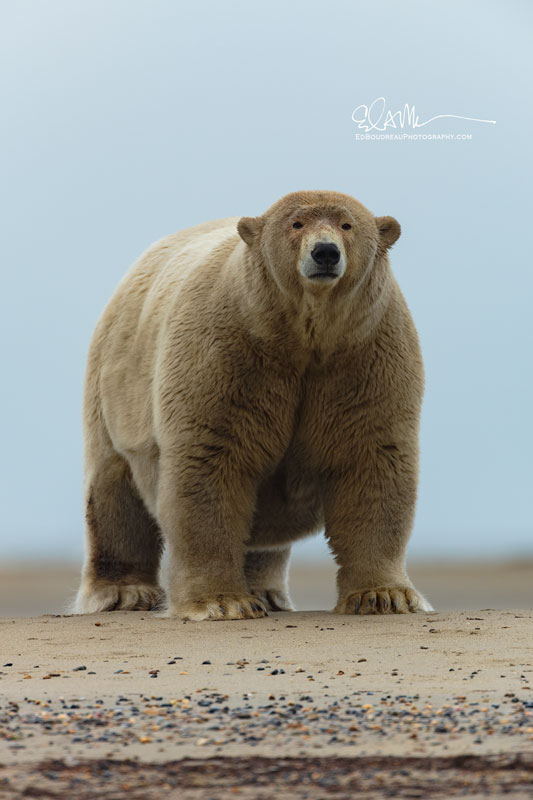
Healthy polar bear male at Kaktovik, Alaska on the Southern Beaufort Sea, September 2019, Ed Boudreau photo, with permission.

However, what is essentially good news about polar bear health and survival in the Southern Beaufort has so far been glossed over by the media because the report prominently includes estimates of polar bear dens on land in areas of potential oil exploration, a highly politicized topic. Accordingly, the Washington Post (picked up by other outlets) focused a statement in the paper that “long-term persistence of polar bears (Ursus maritimus) is threatened by sea-ice loss due to climate change” and on the denning issue rather than the new population count.  As far as I am aware, no other population estimate report has included such distracting information.

Recent claim of a polar bear expert [my bold]:

In 2015…the polar bear population in the Beaufort Sea had declined by 40% over the previous decade. “We can only anticipate that those declines have continued.” Steven Amstrup, 29 September 2019.

Continue reading

Polar bear damage to parked military helicopter shows their immense power

A polar bear punched out the window of a parked Royal Canadian Air Force search and rescue helicopter on 16 September in northern Labrador, which should be a reminder that these bears are extremely powerful and potentially dangerous.

If you ever thought you would be safe in a cabin or vehicle if a polar bear really wanted in, you might want to think again and remember that residents of the Arctic put up with this risk of polar bear attack, intrusion and damage all year long (Crockford 2019). And it’s not because the bears are simply ‘curious’.

Two photos below from Svalbard: of a bear that climbed onboard a boat moored offshore in 2019 while its occupants had lunch on the beach (damaging the hydraulic steering, vinyl seats, heating system, canopy, and an inflatable raft), and of a cabin ransacked by a polar bear in 2017 after it ripped the door off its hinges. Since it is my understanding that cabin owners in Svalbard are not permitted to leave stored food in unoccupied buildings, the attractants in these empty cabins must be other things that contain oil, like cleaning products, vinyl furniture, and candles.


Continue reading

Polar bear researchers try very hard to make good news in Kane Basin sound trivial

In an astonishing display of under-selling good news, the authors of a new paper announcing that Kane Basin polar bears are doing well have avoided mentioning that the population increased substantially since the 1990s and insist that any benefits will be short-lived.

Kane Basin population size at 2013 was 357 (range 221 – 493), up from 224 (range 145 – 303) in 1997. That’s an increase of 59% based on a 2016 recalculation of the 1997 population estimate of 164 (Crockford 2020) – it would have been a 118% increase otherwise.

Money quote: “We find that a small number of the world’s polar bears that live in multiyear ice regions are temporarily benefiting from climate change.” Kristen Laidre, lead author of Transient benefits of climate change for a high‐Arctic polar bear (Ursus maritimus) subpopulation

Both the paper and the press release also claim, despite acknowledging that there is no evidence for this conclusion (“the duration of these benefits is unknown“), that this good news will probably not last because computer models say beneficial conditions might not persist beyond the end of the century.

As always, if you’d like to see this paper, use the ‘contact me’ page to request a copy (it’s paywalled).

UPDATE 25 September 2020: News just out from Nunavut this morning, “New Nunavut polar bear surveys point to “currently healthy” populations in M’Clintock Channel and Boothia Bay.” The survey report for M’Clintock Channel (mentioned in the post below) and neighbouring Gulf of Bothia has still not been made public but this announcement suggests that population numbers in these subpopulations have also increased by some amount that will be similarly discounted as unimportant.

Continued reading

Potential impact of the second-lowest sea ice minimum since 1979 on polar bear survival

The annual summer sea ice minimum in the Arctic has been reached and while the precise extent has not yet been officially determined, it’s clear this will be the ‘second lowest’ minimum (after 2012) since 1979. However, as there is no evidence that polar bears were harmed by the 2012 ‘lowest’ summer sea ice this year’s ‘second-lowest’ is unlikely to have any negative effect.

This is not surprising since even 2nd lowest leaves summer ice coverage in the Arctic at the level sea ice experts wrongly predicted in 2005 wouldn’t be seen until 2050 (ACIA 2005; Amstrup et al. 2007; Wang and Overland 2012) and this is the same amount of summer sea ice that polar bear experts incorrectly predicted would cause 2/3 of all polar bears to disappear. My book explains how it all went wrong: The Polar Bear Catastrophe That Never Happened

In this summary of how polar bears have been doing since the the lowest sea ice minimum in 2012, I show that contrary to all predictions, polar bears have been thriving despite reduced summer ice in the Barents, Chukchi and Southern Beaufort Seas, and because of unexpectedly short ice-free seasons in Hudson Bay and less multiyear ice in the Canadian Arctic Archipelago.

UPDATE 21 September (10:20 PT): NSIDC has just announced the Arctic sea ice extent minimum (preliminary) for 2020 at 3.74 mkm2 reached on 15 September. See full report here.

Continue reading