Norwegian polar bears continue to thrive in 2019: Svalbard spring study results are in

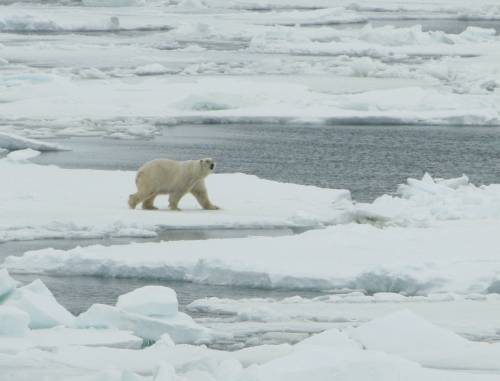
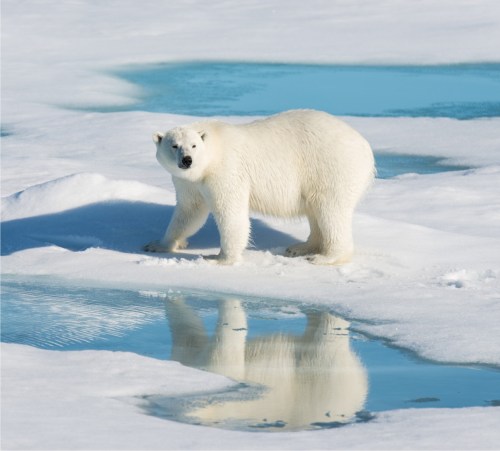
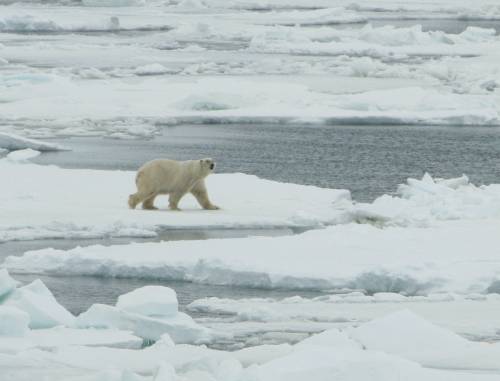
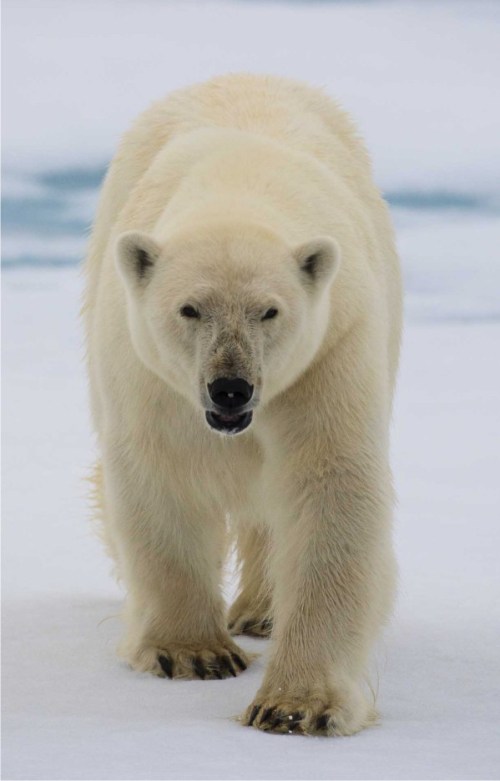
Results from spring Norwegian fieldwork in the Svalbard region of the Barents Sea are in and they show that despite having to deal with the most extreme loss of summer sea ice in the Arctic, polar bears in this region continue to thrive.
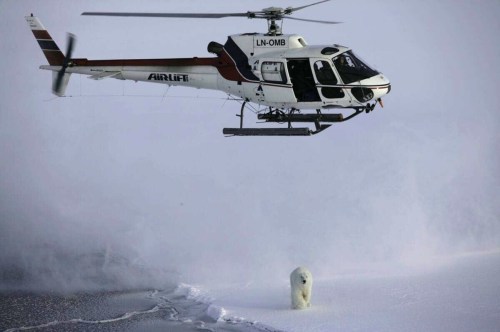
Svalbard polarbear-helicopter-npolar-framcentre

Svalbard polar bear territory (managed by Norway) includes sea ice to the Russian boarder to the east as well as the area around the Svalbard archipelago: the map below is from Aars et al. 2017.
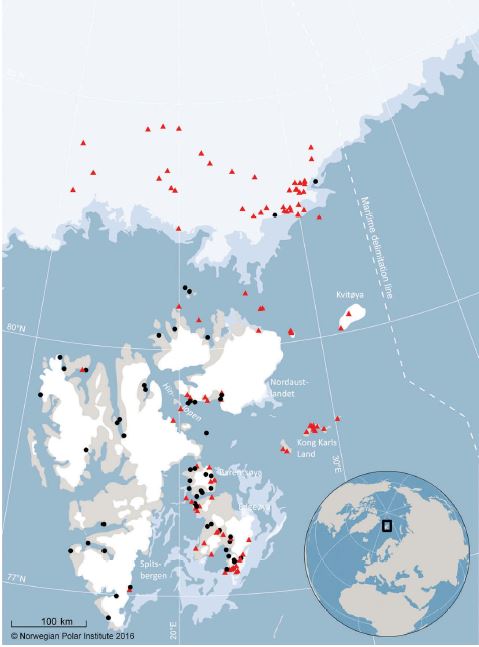
Aars et a. 2017 Figure 1

Observations were collected around Svalbard by a team lead by Jon Aars and Magnus Andersen of the Norwegian Polar Institute between March and May this year, and posted online 4 June 2019. Kudos to them for making their on-going observations and analysis available, in a timely manner for all to see.

Note that Svalbard is the western half of the ‘Barents Sea’ polar bear subpopulation: in recent years, most of the region’s polar bears have been living around Franz Josef Land in the eastern (Russian) sector where Norwegian researchers are not permitted to work.
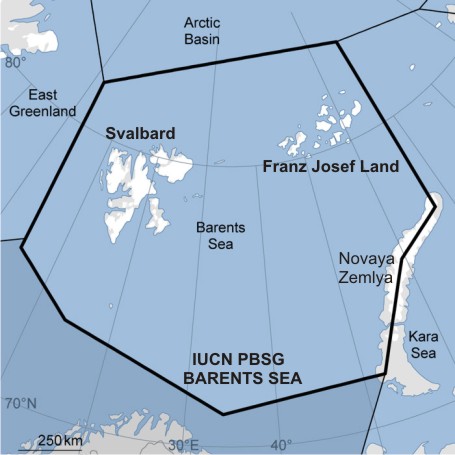
Barents Sea with Franz Josef Land

Continue reading

Historic hot spells in Churchill, Polar Bear Capital of the World, in late June/early July

Amid reports of a late June heat wave in Europe this year, I thought I would check out the temperature in Churchill, Manitoba – where sea ice off the coast has been rather slow to melt this year with no reports yet of polar bears onshore. It turns out that Churchill has fairly often seen very hot weather (around 900F/300C) for a few days at this time of year but 2019 has certainly not been one of them. Temperatures in Churchill on 28 June this year were about 40 degress F below previous highs (more than 15 degrees C) according to online Environment Canada weather comparison reports that go back to 1943 (although their records for Churchill go back to 1929).

Polar bear on ice_SARA registry webpage_gov Can

High for 28 June 2019: 44.4 F/7.1 C

Hottest year, late June: 90.0 F/32.2 C on 29 June 1984 [also 87.8 F/30.6 C on 26 June 1967]

Hottest year, early July:  93.0 F/33.9 C on 4 July, 1975 [also 91.0 F/32.8 C on 3 July 1976]

Bottom line: It is appropriate to scoff at anyone who claims it never got hot in the Arctic before sea ice declined markedly around the turn of the 21st century. For Churchill (self-proclaimed Polar Bear Capital of the World), there are plenty of records of brief spells of hot weather in late spring/early summer (as well as in other months) that go back to the decades when sea ice conditions were supposedly ideal for polar bears.

Continue reading

Now 20 years with no trend in ice breakup dates for Western Hudson Bay polar bears

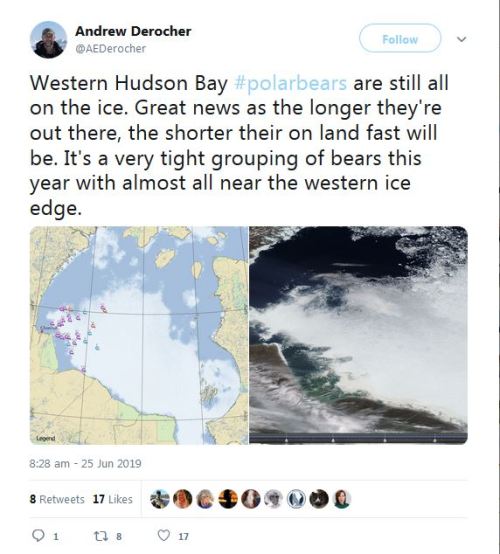
Straight from the horse’s mouth: all polar bear females tagged by researchers around Churchill in Western Hudson Bay last year were still on the ice as of 25 June. With plenty of ice still remaining over the bay, spring breakup will be no earlier this year than it has been since 1999. Contrary to predictions of ever-declining ice cover, the lack of a trend in sea ice breakup dates for Western Hudson Bay is now twenty years long (a hiatus, if you will) and yet these bears are repeatedly claimed to have been seriously harmed in recent years by a loss of sea ice.

Derocher 2019 WHB collared females 25 June all bears still on the ice

In fact, WH bears have faced relatively few ‘early’ years of sea ice breakup and breakup has never come before the 15th of June. The earliest recent spring breakup date did not come in 2012 – when sea ice hit a summer record low – but in 1999, when Hudson Bay sea ice suddenly began to melt by late June rather than mid-July (Cherry et al. 2013; Castro de la Guardia et al. 2017; Lunn et al. 2016). And this year, as has been the case since 1999, breakup looks to be about two weeks later (give or take a week or so, at around 1 July), than was the case in the 1980s and early 1990s.

In other words, there has been no escalation of breakup dates since 1999: there has been no declining trend in breakup dates for Western Hudson Bay polar bears for 20 years (and no trend in fall freeze-up dates either).

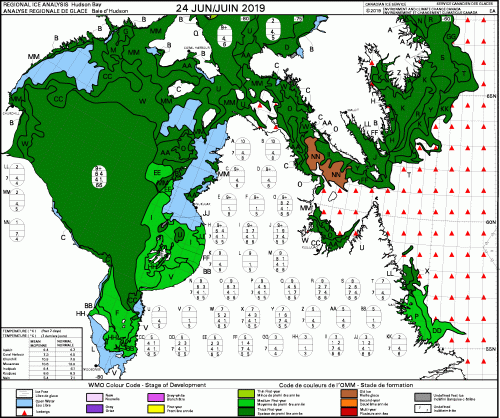
UPDATE 26 June 2019: Here is the latest sea ice chart for the week of 24 June 2019 from the Canadian Ice Service (all that dark green is thick first year ice >1 m thick):

Hudson Bay weekly stage of development 2019 June 24
Continue reading

Skinny polar bear far inland in Siberia not due to sea ice loss but a rare normal event

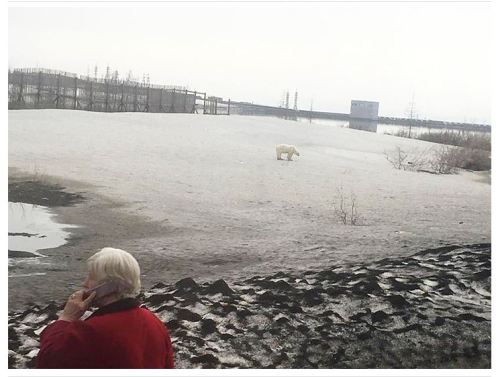
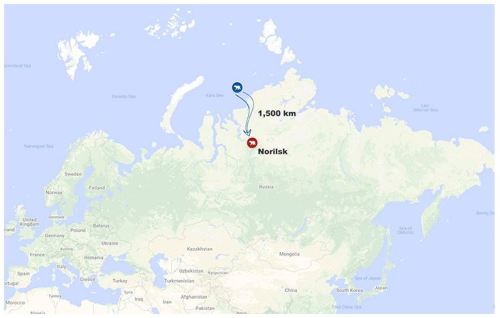
A thin polar bear has wandered more than 1000km south of the Kara Sea into the Siberian town of Norilsk, which has happened at least once before in the 1970s. It is reminiscent of a similar incident this past winter in Alaska and there is no reason to blame this on lack of sea ice.

Norilsk starving bear 17 June 2019 Siberian Times photo

From the Siberian Times earlier today (17 June 2019) comes the report that a bear that did not get enough to eat this spring (due to any number of reasons, including competition from larger, stronger bears) and went looking for easier food sources. No mention is made that this incident should be blamed on global warming.

Update 18 June 2019: Lack of any evidence that this incident was due to lack of sea ice didn’t stop Reuters from implying this was indeed the case, a theme picked up by the UK Telegraph, the BBC, and The Guardian.

Norilsk starving bear 17 June 2019 Siberian Times map

Quotes and video from the story below. Continue reading

Polar bear habitat update at mid-June: more than enough for survival

Here we are at the middle of June, when most polar bears are pretty much done with hunting seals for the season. And despite hand-wringing from some quarters, sea ice extent is down only marginally from average at this time of year and certainly not enough to impact polar bear survival.

Polar_bear Bering Sea 2007 USFWS lg

Given the large expanse of open water in the Southern Beaufort so early in the season, one resident pessimist insists those polar bears are “challenged” by the lack of ice. If he is right, there should be reports of dozens upon dozens of skinny and dying bears along the coast of Alaska this summer. If not, he will pretend he never suggested any such thing.

So far, despite the early loss of ice in some regions, there have been no reports of polar bears ashore unusually early. Hudson Bay still has lots of thick first year ice, so despite the overall reduced Arctic ice coverage, none of the three Hudson Bay polar bear populations are facing the earlier-than-usual sea ice breakup this year as we keep being promised will show up. In fact, there hasn’t been a significantly early breakup in Western Hudson Bay since 2010 (see previous posts here and here).

Continue reading

Today: Talking with Glenn Beck later this morning about the Netflix walrus fiasco

At 11:30 am ET, I will be talking to Glenn Beck on his radio program about the lies and misinformation that Netflix and WWF are spreading via their ‘Our Planet’ documentary sequence on Pacific walrus, aided and abetted by narrator Sir David Attenborough.

Beck interview blog post header 5 June 2019 Walrus fiasco

See my previous posts on this issue here and here. The video I produced with help from the Global Warming Policy Foundation last month is copied below:

I will post a link to the podcast as soon as I am able.

Activists who use polar bears as a symbol of climate change are out of touch with reality

Young activists like Ollie Nancarrow from the UK need to find another symbol for their messages of climate change. Polar bears are thriving despite recent dramatic declines in summer sea ice: they have not been devastated as predicted by declining summer sea ice blamed on climate change. Anyone who uses a polar bear image to further a message of climate change, as Ollie has done, is simply out of touch with reality.

Standing bear_shutterstock_751891378_cropped web sized

UPDATE 4 June 2019: Police instruct activist teen to remove ‘rude’ message from UK field. He turned the penis into a turtle but apparently, the polar bear remains.

Continue reading

Polar bear habitat update: open water primarily due to winds pushing pack ice

Here is a look at what polar bear habitat looks like this year at the end of May compared to previous years. It helps put any predictions of impending doom into perspective.

Polar_bear Bering Sea 2007 USFWS lg

This is the time year when declining sea ice gets some people all worked up. However, declining ice is normal at this time of year and there is always variation in where the most open water appears first. At this time of year, there isn’t much ice ‘melt’ going on. Rather, what we are seeing is the opening up of shore leads and polynyas by winds.

Continue reading

Photographer’s claims that Inuit hunting is unsustainable are not supported

A campaign by an anti-hunting Norwegian photographer to destroy the market for legally-hunted polar bears in Canada makes a few disturbingly false claims and an article at National Geographic in which he is quoted further distorts the picture of polar bear conservation. I understand that some people object to hunting and wish more people felt like they do – but this sort of argument is unlikely to sway any but the most gullible.

Cover photo Ole J Liodden small web

Norwegian photographer Ole Liodden apparently has a master’s degree in “nature management and environmental policy“. He takes fabulous polar bear pictures (I purchased one of them, above, for the cover of my novel, EATEN) but his crusade to ban hunting and trade in polar bear products world-wide has lead him to misrepresent essential facts, which is no way to win an argument. A National Geographic writer and several polar bear specialists have provided additional spin and used it as an excuse to promote their failed prophesies that polar bears are doomed: “Should polar bear hunting be legal? It’s complicated” (28 May 2019).

Continue reading

Zoos abrogate their position of trust by misleading the public about polar bears

Since at least 2007, zoos around the world have proudly partnered with climate change activist organization Polar Bears International to ‘educate’ the public about the plight of polar bears. Although contrary to all expectations, polar bear numbers have increased slightly since the abrupt decline of sea ice in 2007 yet zoos are still promoting the false message that polar bears have already been gravely harmed by lack of sea ice.

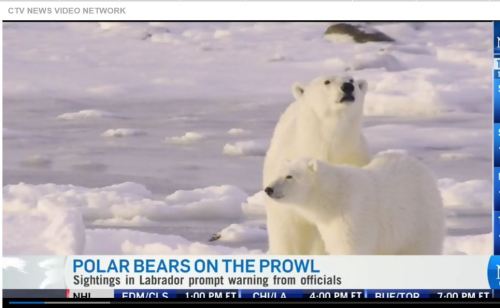
CTV News on pb sightings Labrador as climate change warning

A news clip that aired on Canadian television in April 2019 was ostensibly about recent sightings of polar bears in Labrador (which I discussed here). But it digressed rapidly into a baseless diatribe about polar bears as victims of climate change, delivered by an animal keeper from the Toronto Zoo presented as an ‘expert’ on this topic.

See it here (about 4 minutes long).

And while I have no doubt that Toronto Zoo curator Maria Frankie is indeed an expert in keeping mammals in captivity, she appears to have zero qualifications to speak with any critical scientific authority on climate change, sea ice variability, or polar bear survival in the wild.

Frankie is complicit in spreading misinformation about polar bears to an unwary public (including children) as a method of spurring political action on climate change as surely as David Attenborough is to blame for spreading misinformation about Pacific walrus. She is being used by PBI but is too naive to realize it.

Continue reading