Polar bears have been terrorizing a Russian town on the Barents Sea since December

Since early December, a group of 52 polar bears have terrorized the Russian village of Belushaya Guba on southern Novaya Zemlya. The aggressiveness of some of the bears, their boldness in entering local buildings and fearlessness in the face of the usual deterrents has caused the local government to call a state of emergency to help the town residents. Global warming is blamed for the problem but as is so often the case, that claim does not stand up to scrutiny.
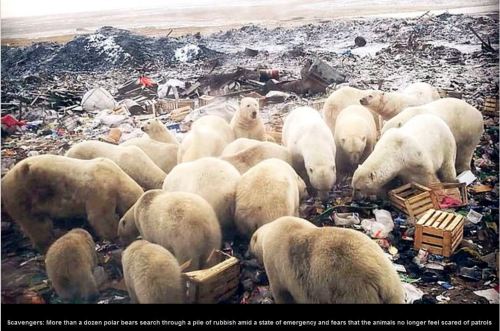
Belushaya Guba garbage dump_Daily Mail_11 Feb 2019

Large group of polar bears at the Belushya Guba town dump on Novaya Zemlya, Russia. From the 11 Feb. 2019 story at The Daily Mail.

Belushaya Guba is located on the southwest coast of Novaya Zemlya in the eastern Barents Sea. It is a town of mostly military personnel and their families:
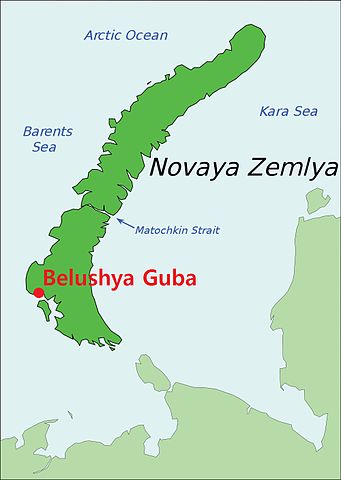
Belushya_Guba_on_map_of_Novaya_Zemlya_SM wikipedia

The predictable claims that this situation is due to global warming are confounded by the fact that the region has not had abundant sea ice by December in more than 30 years, yet this is the first time the town has had such a problem with polar bears. Polar bears in winter can be very dangerous, as they are often lean and desperately hungry. [except these ones are not, see update below]

UPDATE 11 February 2019: The international media have gone mad for this story and some photos are now available. Best series of photos and video is at The Daily Mail, UK (11 Feb 2019: State of emergency is declared after more than 50 polar bears invade Russian town and ‘chase terrified residents’). No new information is available on the story itself but plenty of hyperbole has been added. The photos show how fat and healthy these so-called ‘desperate’ bears are, which makes the claims that global warming is to blame for the crisis even more ludicrous (see the ice charts below). So far, the most over-the-top take on this goes to the Washington Post (11 Feb 2019: A ‘mass invasion’ of polar bears is terrorizing an island town. Climate change is to blame): they went to the most trouble to make the link to climate change and bring up the vilified ‘starving polar bear’ video that National Geographic was forced to apologize for last August and the debunked 2007 prediction that 2/3 of the world’s bears would be gone by 2050 (Crockford 2017). The Guardian‘s effort is weak by comparison, as is CNN‘s. The news outlet (not a blog) Daily Caller has some quotes from this page. Competition amongst bears for scarce natural resources in winter makes dump sites and stored food available around Arctic communities all the more attractive. When polar bear numbers are high, as they are now, this competition can get fierce. It’s no wonder the bears don’t want to leave.
Continue reading

Polar bear lecture in Calgary coming up in April – book Friends of Science event now

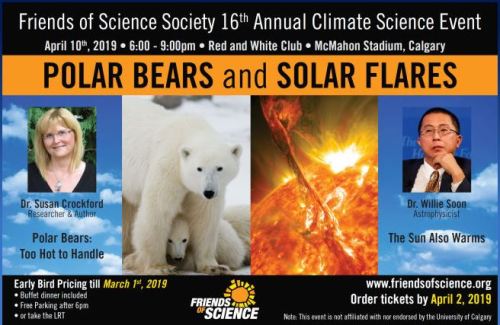
On 10 April 2019, I am giving a polar bear lecture for Friends of Science in Calgary (“Polar Bears: Too Hot to Handle”) alongside astrophysicist Willie Soon (“The Sun Also Warms”) at their annual climate science event. Early bird ticket discounts are available now until February 28 only (but full price tickets can be purchased until April 2).

2019 Friends of Science lecture announcement April 10

If you can, do join us. A buffet dinner is included in the ticket price.

The launch event for my new book, The Polar Bear Catastrophe that Never Happened will take place earlier in the day (noon-ish) and you are welcome to attend that as well. The book will be available for purchase at the evening lecture event and I will be more than happy to autograph your copies. Copies of my novel (EATEN) and my polar bear science book for kids (Polar Bear Facts & Myths) will also be available for purchase and signing. Details below.
Continue reading

Two polar bears onshore in coastal Labrador, one relocated for public safety

Just in (VOCM, 1 February 2019) from a community called Makkovik on the coast of Labrador: one of two bears sighted prowling the local dump has been relocated for public safety. The community is still on high alert until the other bear can be located.

Black Tickle polar-bear-7 March 2017 Kim Penney photo shared CBC

Polar bear spotted near Black Tickle Labrador on 7 March 2017.

Polar bears are extraordinarily dangerous at this time of year because they are usually at their leanest weight and can be desperate for food of any kind. See the most recent example here, others here and here (with references).

See below for a map showing the location of Makkovik, population about 360.
Continue reading

Abundant polar bear habitat across the Arctic at the start of winter

January is the first month of the Arctic winter, the season when most polar bears really struggle to find enough to eat.

Polar bears feeding_Shutterstock_sm

Here is what the sea ice looked like around the Arctic at the end of this month.

masie_all_zoom_4km 2019 Jan 31

Compare to last year:

Continue reading

Images from 2017 and 2018 show polar bears thriving in a warming world

Candid images of fat, healthy bears taken over the last two years by unbiased photographers across the Arctic are representative of the state of polar bears in a world that’s warmer than it was in 1980.

chukchi-sea-polar-bear-arctic_early-august-2018_a-khan-nsidc.jpg

Chukchi Sea polar bear on the sea ice, early August 2018. A Khan, NSIDC. Chukchi Sea bears are thriving, according to a new survey of the population.

It may seem counter-intuitive but it’s true: polar bears are thriving with less summer sea ice and there are more bears now than there were in 2005 (not a statistically significant amount more, but more nevertheless).

Continue reading

Southern Beaufort polar bear attack far from the Alaskan coast: another winter example

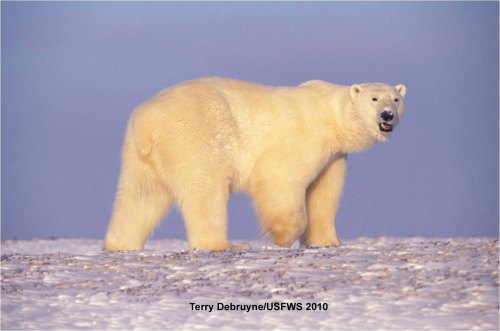
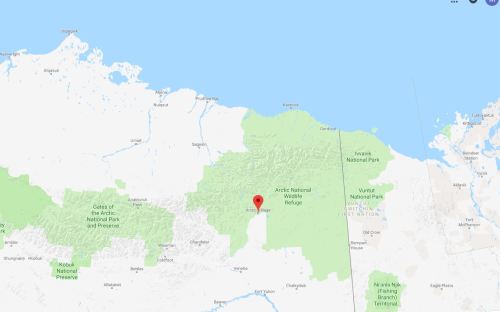
A man from Arctic Village (Alaska), out checking his trap-line, killed a polar bear at his cabin when it came after him: only odd things were it was the first week of January and the cabin was more than 100 miles south of the Beaufort Sea coast.

polar_bear_in fall terry debruyne_usfws nov 10 2010_w label_sm

Winter is hard for polar bears, as I’ve mentioned before: it’s cold, dark, and hard to find seals. Most bears are at their lightest weight at the end of winter (March). Looking for food in the dead of winter, the bears can be very destructive as well as dangerous. See previous posts here, here, here, and here.

The map below shows how far south Arctic Village is from the Beaufort coast. This hunter is lucky he had his wits about him and his gun handy, because he came awfully close to being a polar bear’s dinner.

arctic village ak map google

Here’s an excerpt of the story (my bold): “Polar bear encounter reported in Arctic Village, many miles south of normal range” (KTOO, Ravenna Koenig, 15 January 2019):

Continue reading

Svalbard polar bears doing fine with much less sea ice say Norwegian biologists

“…despite the loss of good denning areas and a shrinking habitat for hunting, Svalbard’s bears seem to be doing fine.…The sea ice season is now several months shorter, and the ice edge typically lies several degrees further north than what was normal 20-40 years ago….Polar bears can survive long periods without food, provided they have accumulated a good fat reserve during the few months in spring and summer when sea ice is present, and seals are abundant.” [Jon Aars, Norwegian Polar Institute, 2018]

lying bear shutterstock_244419640_cropped_web size

Jon Aars from the Norwegian Polar Institute has written an update on the status of Svalbard polar bears for the general public (The Barents Observer, 8 January 2019, republished from a story published by The Fram Centre in their newsletter: Population changes in polar bears: protected, but quickly losing habitat).

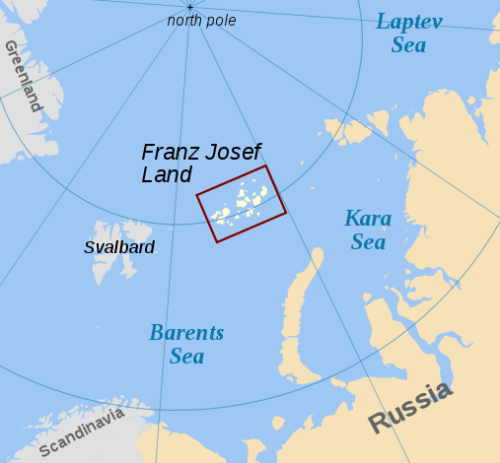
franz_josef_land_location_wikipedia

Read the whole thing below (original has awesome photos). It reports the truth of the current situation with the usual caveats about what might happen decades into the future. Continue reading

Polar bear voted newsmaker of the year in Nunavut: A climate change emblem becomes a symbol of bitter conflict

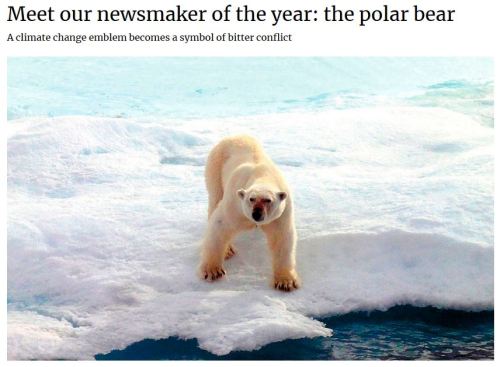
This Nunatsiaq News editorial is worth a read (2 January 2019): Meet our newsmaker of the year: the polar bear.

Polar bear newsmake of the year_2 Jan 2019 Nunatsiaq News

“But for this year, we’re not choosing a person. For 2018, our newsmaker of the year designation goes to an entire species: the polar bear.

To earn that, the humble polar bear didn’t have to do much of anything. All they had to do was what polar bears have always done: hunt, eat, mate and protect their young.

In doing so, they caused two heart-rending Nunavut tragedies: the death of an Arviat man in July, followed by the death of a Naujaat man in August. These events have aggravated a bitter regional controversy that’s unlikely to be resolved anytime soon, especially in the Kivalliq region.”

It continues (my bold):

“But in Nunavut, the damage that environmentalists have inflicted on their cause will likely last for generations. Growing numbers of people in Nunavut not only believe polar bears are a threat to public safety. Growing numbers also believe that scientists and government wildlife managers are their enemy.

On that last point, the condescending attitudes of some researchers and government officials has been rather less than helpful.

For example, the federal Department of Environment and Climate Change said last fall, in a submission to the wildlife management board, that the Inuit position is “inconsistent with the federal listing of the polar bear as a species of special concern in Canada.”

That tone-deaf response simply reinforces the Inuit belief that governments value the lives of polar bears more than they value the lives of human beings.”

Read the whole thing here.

Heads up Newfoundland & Labrador: polar bear season has begun

There is now enough sea ice off southern Labrador and the northern tip of Newfoundland for Davis Strait polar bears to come ashore looking for food. Baby seals won’t be available for months yet. And since winter is the lean season for these bears, some may seek food sources onshore. The bears come down from the area of Hudson Strait and southern Baffin Island: as the sea ice expands south, so do the bears.

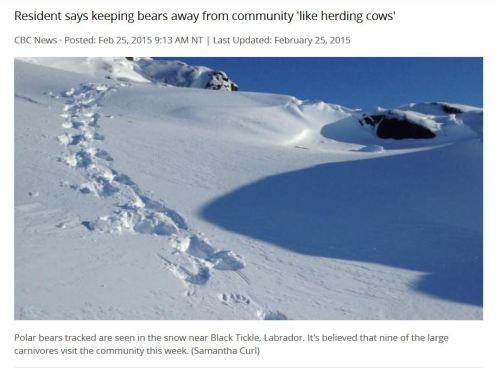
Polar bear tracks_25 Feb Labrador 2015 CBC

Continue reading

May a polar bear not be something you are faced with in 2019

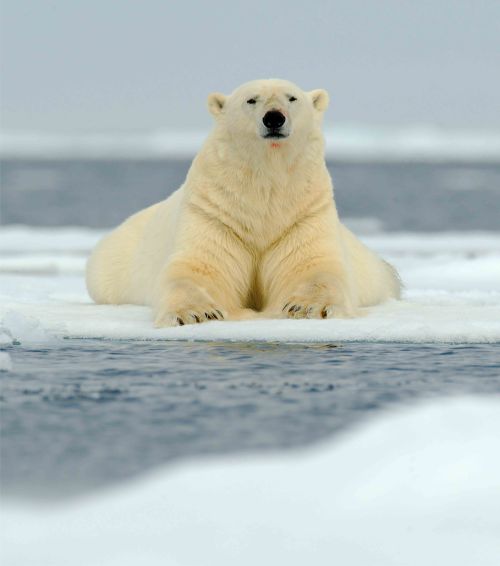
A polar bear can be too close: fat or thin, it can be deadly.

Walking bear_129029633_web size

Happy New Year.

And condolences to those whose lives were torn apart by a polar bear encounter in 2018.