Tag Archives: Amstrup

Faux polar bear figures – my editorial in the National Post

Published in the Business section (Financial Post “Comments”) of the National Post this morning:

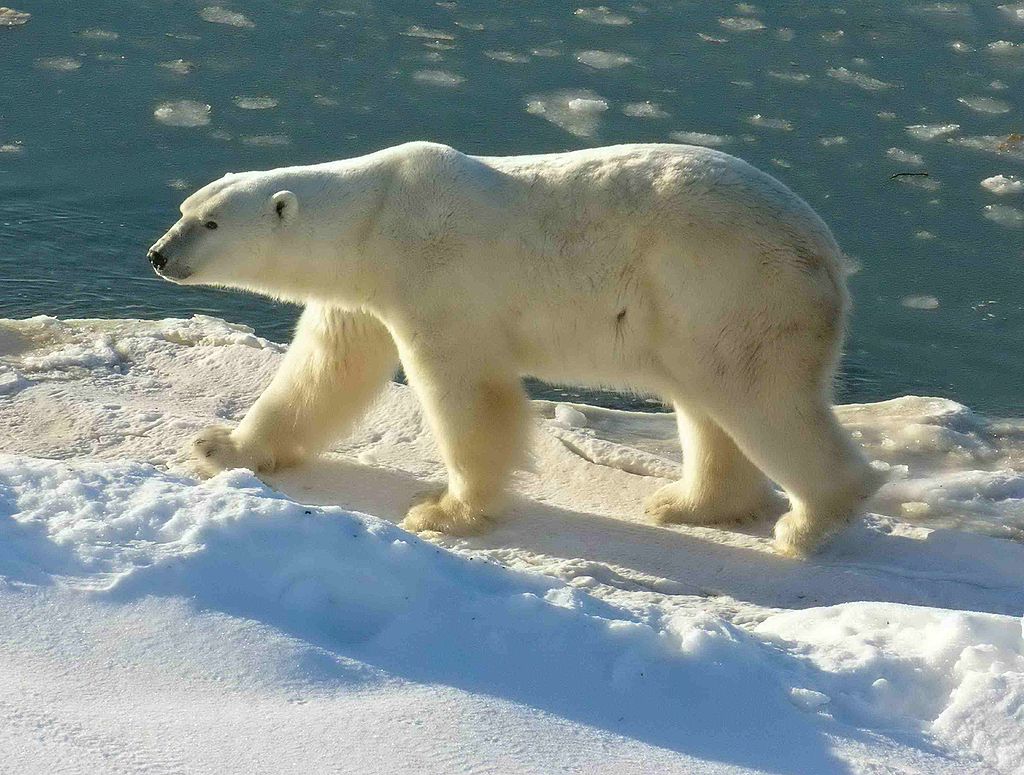
Paul J. Richards/AFP/Getty Images [NP story]

Paul J. Richards/AFP/Getty Images [from original NP essay]

“Faux polar bear figures” [not my choice of title, by the way]

In which I conclude:

We admire polar bear biologists for their professional dedication to this iconic species, and rightly so. However, while it’s understandable that polar bear biologists are conservation-minded, the public and policy makers need them to be scientists first and advocates for polar bear protection second. Polar bears are currently doing well – data shenanigans to keep them classified as “threatened” undermine the whole point of doing science.”

I have written extensively about the Southern Beaufort issue — below are links to some of these, which have links to the rest. References are included in these individual posts. Contact me if there is a reference you cannot find: Continue reading

If summer ice was critical for S. Beaufort polar bears, 2012 would have decimated them

Did we hear a huge hue and cry in 2013 about starving polar bears and low cub survival in the Southern Beaufort Sea? No, we did not. Despite the record-breaking low summer sea ice extent the year before (2012), and despite the fact that USGS biologists were putting collars on polar bear females there the spring of 2013 (Rode et al. 2014), we heard not a peep about a polar bear catastrophe in the Southern Beaufort. Odd, isn’t it?

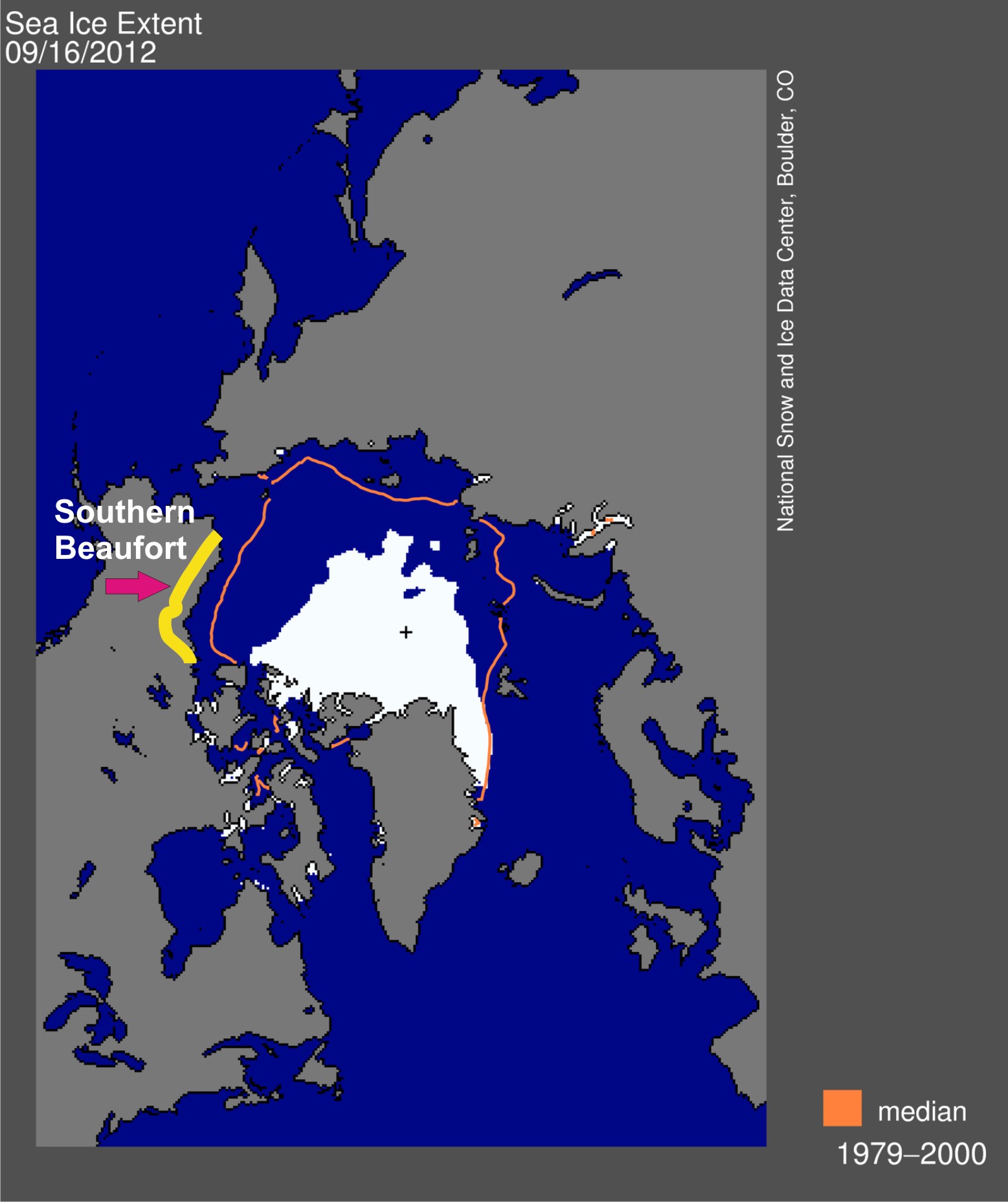
Sea ice extent 2012 Southern Beaufort_PolarBearScience

Several polar bear biologists and sea ice experts were busy late last fall suggesting to the media that a decline in polar bear numbers in the Southern Beaufort was due to declines in summer sea ice, which they blamed on global warming (see quotes below and earlier discussions here, here and here). However, they made no mention of the fact that the record-breaking September ice extent in 2012 did not seem to have any noticeable effect on polar bear health or survival in 2013.

Sea ice maps from the National Snow and Ice Data Center (NSIDC) tell most of the story about what the media were, and were not, told about summer sea ice in the Southern Beaufort between 2001 and 2013.  Continue reading

Polar bear biologists miss the mark in new study on invasive mark-recapture effects

Apparently, some biologists think that outputs from complex computer models will convince native Arctic residents that invasive mark-recapture work has no long-term effect on the health and well-being of polar bears.

 Photo by Jake Steven Arnatsiaq. Original here.


Photo by Jake Steven Arnatsiaq. Original here.

Continue reading

Recent S. Beaufort polar bear count was a cherry-picked result – new evidence

New evidence has come to light that mark-recapture field work used to calculate a new population estimate for Southern Beaufort polar bears did not conclude in 2010 as implied in a widely-publicized paper last month but continued until 2013.

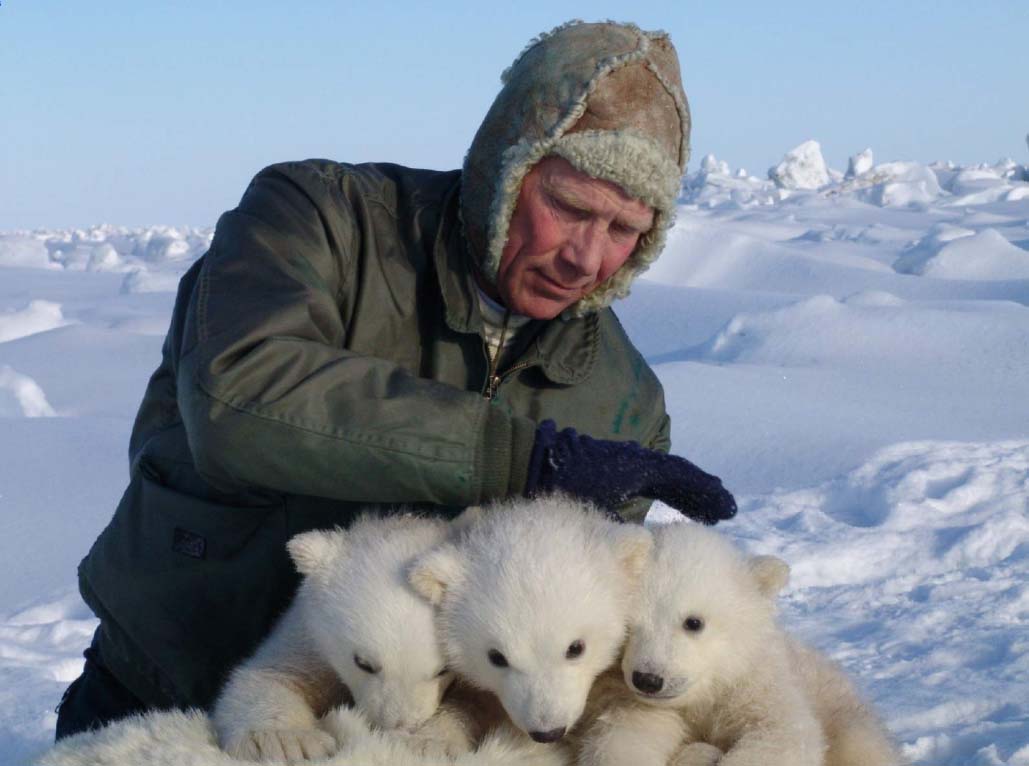
Amstrup w triplet_Prudhoe Bay 2005_USGS_sm

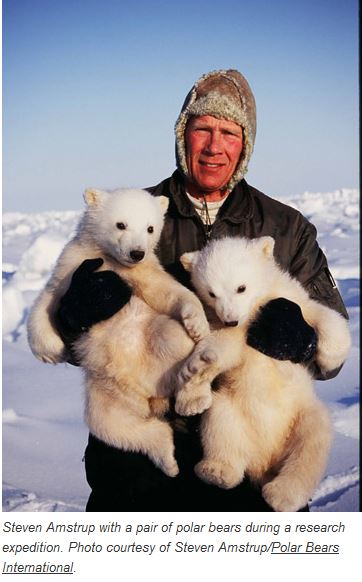
Steve Amstrup in S. Beaufort, 2005 (USGS photo), co-author of Rode et al. paper.

As I discussed previously, last month’s widely-hyped paper (Bromaghin et al. 2015 in press) – which reported a decline of ~40% between 2004 and 2010 (based on spring mark-recapture work) – was contradicted by fall survey counts that suggested strongly a population rebound would have been apparent if the mark-recapture work had continued another two years.

A new paper by Karyn Rode and colleagues (which includes Bromaghin and others (e.g. Amstrup) from the previous paper), summarized in a USGS press release issued on Monday and published online Tuesday, utilized comprehensive data collected during mark-recapture work carried out in spring from 1982 to 2013 in the Southern Beaufort Sea.

This new paper used the same kind of comprehensive data as Bromaghin and colleagues – from the same season, in the same region – to assess potentially negative effects of the mark-recapture research method itself, up to 2012 and beyond.

More on the Rode et al. conclusions later1 – for the moment, what is important is that the work described in the paper confirms that spring mark-recapture work on polar bears in the Southern Beaufort continued beyond 2010. Bromaghin and colleagues didn’t end their mark-recapture work prematurely — they actually left data collected in 2011 and 2012 out of their population estimate analysis when they had to have known the population had not finished rebounding from the 2004-2006 decline.
Continue reading

Public misled about W Hudson Bay bears since November 2013

Leading polar bear biologists knew by November 2013 that mark-recapture studies showed the Western Hudson Bay subpopulation had not changed appreciably since 2004 but none said so. This includes Steven Amstrup and Ian Stirling at Polar Bears International, Andrew Derocher (University of Alberta), and Nick Lunn (Canadian Wildlife Service), all of whom are (or have been) extensively involved in Western Hudson Bay polar bear research and have made recent statements to the media on this topic.

Polar_Bear_2004-11-15_Wapusk Nat Park_Wikipedia

More details have emerged about the status of Western Hudson Bay (WHB) polar bears (reported a few days ago here), reported this morning in NunatsiaqOnline, excerpts below.

The story reveals that there are two Canadian Wildlife Service (Environment Canada) reports containing population estimates of Western Hudson Bay polar bears – one produced in 2011 and another in November 2013 (reversing the 2011 conclusion) – that have not been made public.

[In contrast, Nunavut Government reports on their 2011 population estimate, based on aerial surveys, were made public in both draft and final report formats (and have since been peer-reviewed and published)]

The conclusion of the 2013 report, quoted in this mornings article, suggests that some of our most vocal polar bear specialists have been misleading the public about the status of the Western Hudson Bay population for the last year.
Continue reading

Amstrup knows his polar bear predictions are flawed – but continues to promote them

The largest conservation organization in the world says that predictive models developed by polar bear biologist Steven Amstrup are utterly unsuitable for scientifically estimating future populations. Earlier this year, mathematical modeling experts  at the International Union for the Conservation of Nature, who maintain the Red List of Threatened Species, made it clear that Amstrup’s models (used in 2008 to convince the US Fish and Wildlife Service to list polar bears as ‘threatened’ due to predicted global warming) do not meet IUCN standards.

I’d say this makes Amstrup’s polar bear projections (Amstrup et al. 2008, 2010) no more scientifically useful than a crystal ball prophesy, but you wouldn’t know it by his recent actions — or the silence of his fellows.

crystal ball_3c

Continue reading

S Beaufort polar bears largely recovered from known 2004-2006 decline, says new study

A bit more good news about polar bear populations, this time from an abundance study in the Southern Beaufort Sea. A paper released yesterday showed a 25-50% decline in population size took place between 2004 and 2006 (larger than previously calculated). However, by 2010 the population had rebounded substantially (although not to previous levels).

All the media headlines (e.g. The Guardian) have followed the press release lead and focused on the extent of the decline. However, it’s the recovery portion of the study that’s the real news, as it’s based on new data. Such a recovery is similar to one documented in the late 1970s after a significant decline occurred in 1974-1976 that was caused by thick spring ice conditions.
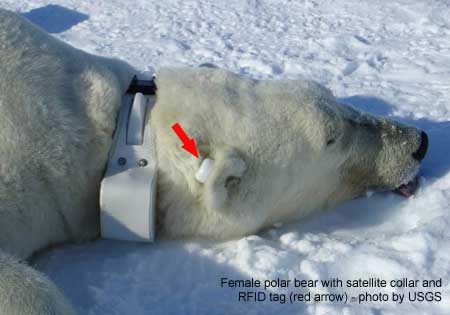
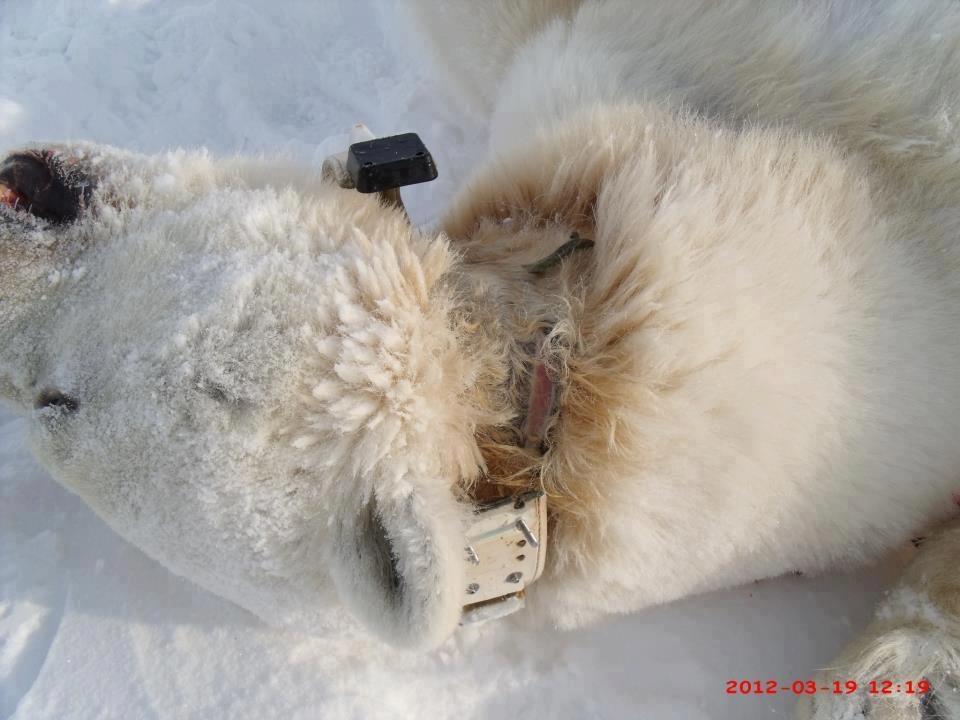
Polar bear with collar and tag_USGS_labeled

The title of the new paper by Jeffery Bromaghin and a string of polar bear biologists and modeling specialists (including all the big guns: Stirling, Derocher, Regehr, and Amstrup) is “Polar bear population dynamics in the southern Beaufort Sea during a period of sea ice decline.” However, the study did not find any correlation of population decline with ice conditions. They did not find any correlation with ice conditions because they did not include spring ice thickness in their models – they only considered summer ice conditions.

I find this very odd, since previous instances of this phenomenon, which have occurred every 10 years or so since the 1960s, have all been associated with thick spring ice conditions (the 1974-76 and 2004-2006 events were the worst). [Another incident may have occurred this spring (April 2014) but has not been confirmed].

Whoever wrote the press release for this paper tried hard to suggest the cause of the 2004-2006 event might have been “thin” winter ice caused by global warming that was later deformed into thick spring ice, an absurd excuse that has been tried before (discussed here). If so, what caused the 1974-1976 event?

It seems rather unscientific as well as implausible to even try to blame this recent phenomenon on global warming. However, neither the authors of the paper or the press release writers seemed to want to admit that 2-3 years of thick ice development in the Southern Beaufort could have been the cause of the population decline in 2004 (as for all of the previous events). No, that wouldn’t do, not in the age of global warming.

So, we are left with this equally absurd conclusion from the author:

The low survival may have been caused by a combination of factors that could be difficult to unravel,” said Bromaghin, “and why survival improved at the end of the study is unknown.

I’ve summarized the paper to the best of my understanding (there was a lot of model-speak to wade through), leaving out the prophesies of extinction, which in my opinion don’t add anything.

UPDATE November 19, 2014: Don’t miss my follow-up post, with some startling new information, Polar bear researchers knew S. Beaufort population continued to increase up to 2012
Continue reading

“Meltdown: Terror at the Top of the World” — new book exploits polar bear attack to sell fear of sea ice decline

The polar bear attack that was all over the news last summer is now an ebook about global warming. The Maine lawyer who was mauled by a bear while on a hiking trip to Labrador (and lived to tell the tale) has allowed his story to be co-opted by an activist journalist to promote fears of sea ice decline, polar bear extinction, and man-made global warming.

Melt-down_Terror at the Top of the World_Nov 12 2014 press release book cover

The press release issued yesterday by the news group that published the book and employs author Sabrina Shankman (InsideClimateNews), described it this way:

“A riveting new e-book about the battle between man, beast and Nature in a warming world. Called Meltdown: Terror at the Top of the World, the e-book tells the story of the hikers’ harrowing encounter with a polar bear; of the plight of the polar bear in general, facing starvation and extinction as the sea ice melts and its habitat disappears; and of the Arctic meltdown, the leading edge of man-made climate change.”

I have little doubt the man mauled by the bear was indeed terrified and that his companions were as well. However, that horror is exploited shamelessly in this book as a means to promote anxiety over the future survival of polar bears and instill panic over a prophesied Arctic “meltdown.”
Continue reading

A more optimistic view of Churchill polar bears and Hudson Bay freeze-up

Finally, an unbiased first-hand report about Churchill polar bears and freeze-up on Hudson Bay.

Over the last few weeks, biologists Andrew Derocher and Steve Amstrup have been repeating their tired old tales of doom and gloom about the polar bears around Churchill and I’ve done my best to refute the worst of their nonsense.

Figure 1. Polar bear female with cub, 2009, Churchill, Western Hudson Bay. Wikipedia.

Figure 1. Polar bear female with cub, 2009, Churchill, Western Hudson Bay. Wikipedia.

To that effort we can now add this report from PolarBearAlley, where Kelsey Eliasson has posted a good-news story about the bears of Cape Churchill and the progress of freeze-up, including sightings of a number of mothers with cubs.
Continue reading

BBC provides a forum for desperate biologists: “Will polar bears become extinct?”

Yesterday, the BBC published a story that gave the two most alarmist polar bear researchers on the planet a forum to market their ‘polar bears are doomed’ message. This time the desperation shows: watch how these biologists move the goal-posts, make claims so misleading they border on lies, and pretend they don’t have big, big trouble with their predictive models.

Amstrup_only solution_with 2 cubs_Oct 8 2014

Amstrup photo that accompanied an interview last month.

Continue reading