Tag Archives: body condition

Many polar bears cubs seen in Svalbard this year, says Norwegian biologist

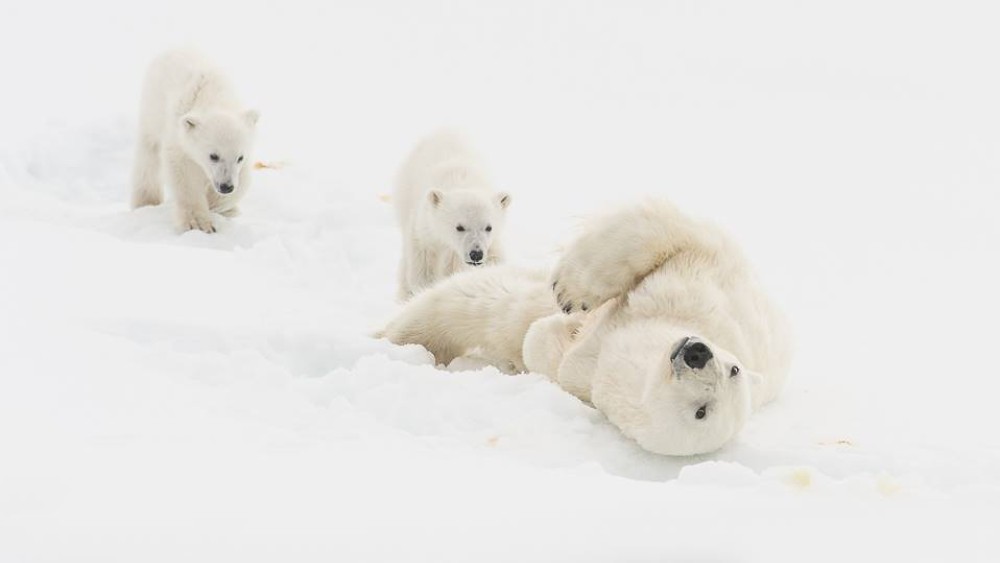
Good news from Norway: polar bears around Svalbard are in excellent condition this spring and many females with new cubs have been spotted. This is a marked turn around from conditions just last year.

 Roy Mangersnes / Wildphoto


Roy Mangersnes / Wildphoto

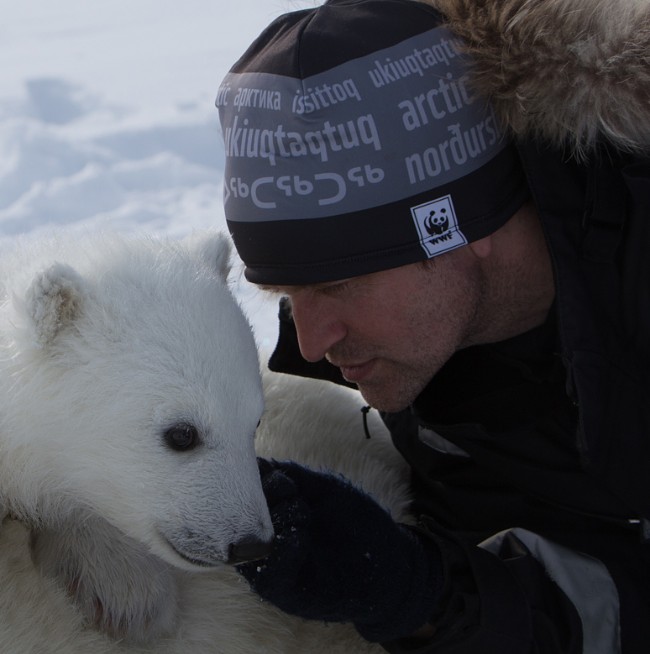
According to a Norwegian news outlet yesterday, Jon Aars (Fig. 1, below), from the Norwegian Polar Institute, confirms that this has been an excellent year for polar bear cubs around Svalbard because there has been abundant sea ice near denning areas on the east coast.

Figure 1. Biologist Jon Aars with a Svalbard cub.

Figure 1. Biologist Jon Aars with a Svalbard cub.

Continue reading

University newspaper misleads readers on status of Western Hudson Bay polar bears

Even though polar bear experts admit there has been no trend in sea ice breakup or freeze-up dates since 2001 – and both Canadian and International experts say this subpopulation is stable – the public is still being misled about the status and condition of polar bears in Western Hudson Bay.

WHB status 2015 IUCN PBSG_PolarBearScience

The latest example of misinformation about Western Hudson Bay polar bears appears in a feature story carried by the campus newspaper of York University (Ontario, Canada), meant to highlight the work of biology graduate student Luana Sciullo.1
Continue reading

Polar bears in winter – a seasonal review of insights and research

Here are summaries of my “Polar bears in winter” series. It’s an interesting recap of what polar bears do over the unimaginably cold and dark months of an Arctic winter.

Continue reading

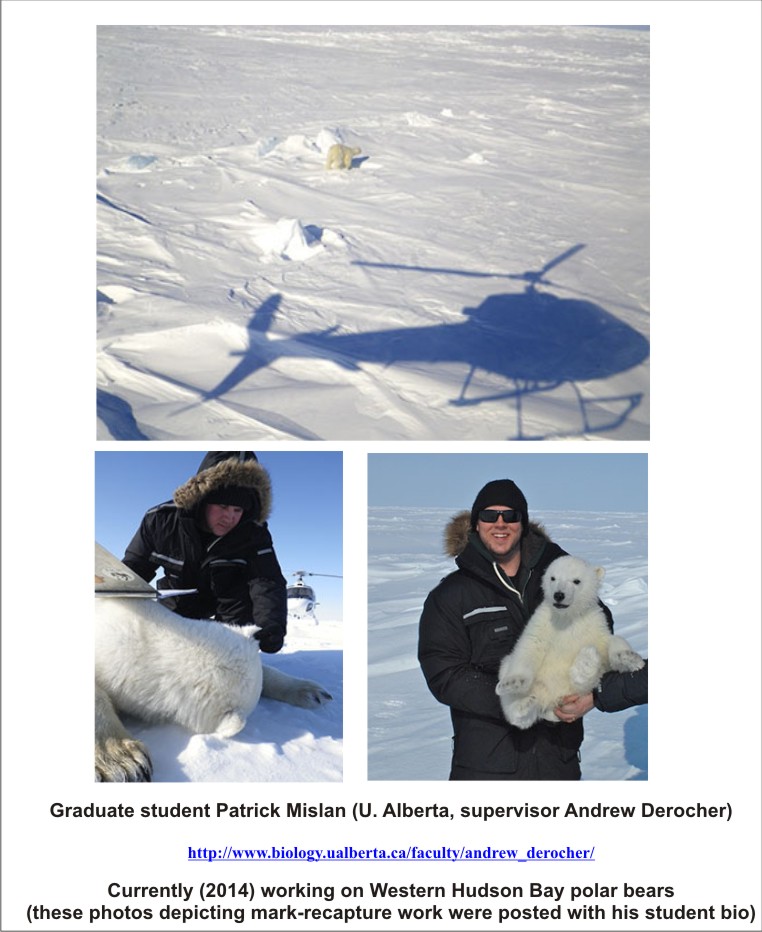
Polar bear biologists doing mark-recapture work in Hudson Bay may have misled the world

What exactly are Western Hudson Bay (WHB) polar bear researchers hiding? Since 2004, research on the body condition and cub production of Western Hudson Bay (WHB) polar bears has been carried out but none of the results of these mark-recapture studies have been made public.

U Alberta student Mislan bio photos_PolarBearScience

The researchers all claim that WHB polar bears are struggling to survive because of recent sea ice changes but won’t release the 10 years worth of updated information they possess on the bears or the sea ice.

Continue reading

Declining polar bear weights and early breakup dates in WHB, Part I: What’s a starving bear?

The oft-repeated claim that polar bears are starving in Western Hudson Bay (e.g., here, here, here, and here) comes primarily from a 10 year old study that documented a declining trend in polar bear body condition (a biology euphemism for relative fatness) between 1980 and 2004, which appeared to correlate with earlier and earlier breakup dates for Hudson Bay.

Figure 1. Polar bear female with cub, 2009, Churchill, Western Hudson Bay. Wikipedia.

Figure 1. Polar bear female with cub, 2009, Churchill, Western Hudson Bay. Wikipedia.

The authors of that study (polar bear specialist Ian Stirling and NASA sea ice researcher Claire Parkinson) reported the body weights of lone female bears captured in Western Hudson Bay between 1980 and 2004. The trend over time in those bear weights was then correlated with the overall change in dates of sea ice breakup on Hudson Bay for that period.

However, it turns out that while the trend of body condition and the trend in breakup dates indeed correlated over time, the actual year to year data did not. The question is, what does that mean for the claim that polar bears in WHB are starving?
Continue reading

Foxe Basin polar bear status – another stable population

Foxe Basin_PBSG

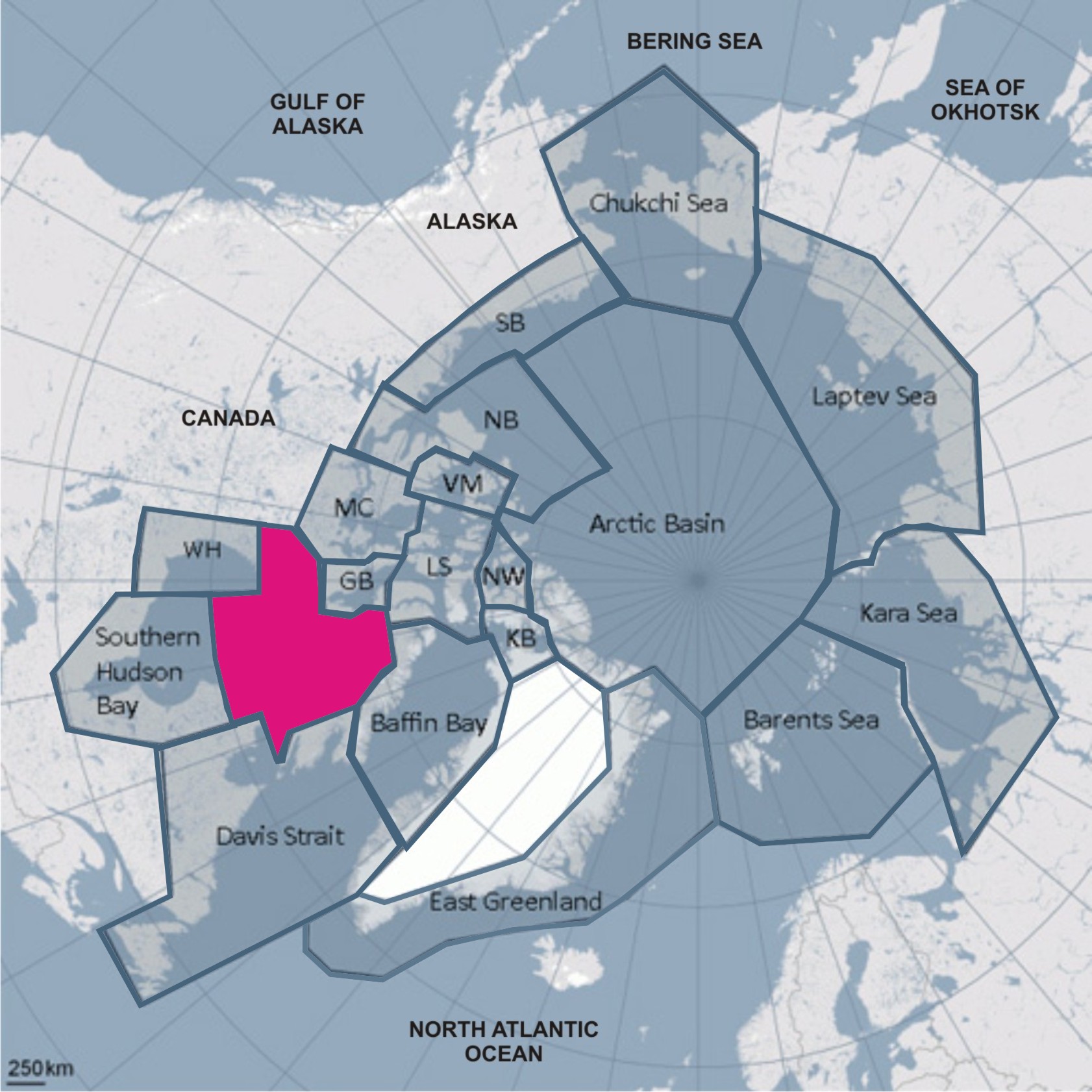
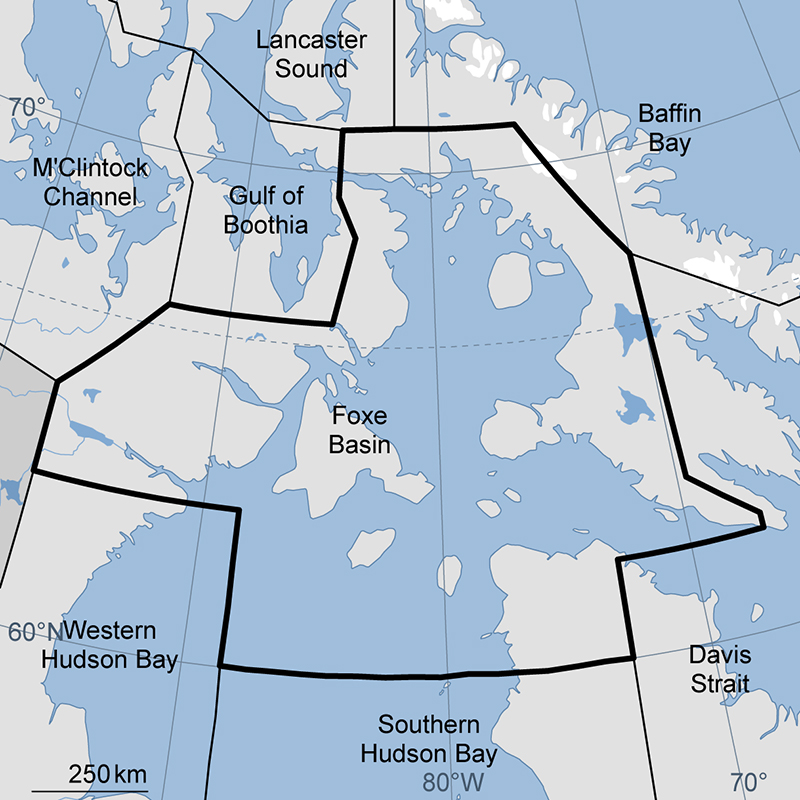
Figure 1. Polar bear subpopulation regions defined by the Polar Bear Specialist Group, Foxe Basin marked.

Foxe Basin is a large subpopulation region (Fig. 1), with a total area of 1.18 million square km (Vongraven and Peacock 2011). It comprises Northern Hudson Bay and western Hudson Strait, and the area between western Baffin Island and eastern Melville Peninsula, with a large island (Southampton Island) in the middle (Figs. 2 and 3).

Figure 1. Foxe Basin polar bears subpopulation region, courtesy IUCN PBSG

Figure 1. Foxe Basin polar bears subpopulation region, courtesy IUCN PBSG

Continue reading

Polar bears in winter: starving bears and attacks on humans

Winter in the Arctic can be a tough time for polar bears. Between the cold, darkness and ever-thickening sea ice with fewer open leads, polar bears often find that seals are hard to come by.

So it should not be surprising to find out that polar bears are at their lowest body weight at the end of winter (Ramsay and Stirling 1988:613; Stirling 2002:68).

In other words, polar bears lose weight over the winter – not just during the ice-free summer period. That’s why the spring and early summer feeding period is so critical: gorging on young seals rebuilds the polar bears’ fat reserves lost over the winter and packs on even more fat to tide them over the late summer/early fall ice-free period.

Last fall, a potentially serious attack by a polar bear on a Churchill, Manitoba resident on Hallowe’en night (early hours of November 1) got a lot of attention worldwide. Some media outlets suggested that the bear involved in this attack was either starving or so hungry that he was driven to attack. However, this assertion was not supported by any evidence — we simply don’t know whether he was in poor condition or not. While the bear was undoubtedly leaner at the end of October than he was in July, that doesn’t mean he was actually ‘starving.’

So, here’s the question: given that polar bears have a tough time finding seals to eat during the dark and cold Arctic winter and are presumably at their hungriest then, do serious polar bear attacks on humans also happen in winter?
Continue reading

Polar bear cannibalism and sea ice, the spring of 1976

Remember Ian Stirling’s claim that late freeze up in Western Hudson Bay in 2009 was forcing polar bears to resort to cannibalism (here and here), with gut-wrenching images and video provided for the media? Or Steve Amstrup’s claim for a similar phenomenon in the Southern Beaufort in 2004?

I pointed out that Stirling’s claim was way overblown and that Amstrup’s incidents were almost certainly the result of heavy ice in the spring (not low ice in summer), similar to the heavy ice conditions and polar bear starvation documented in the same region back in 1974-1976.

It turns out that the heavy ice conditions documented in the Eastern Beaufort in the mid-1970s had much broader effects on polar bears and ringed seals than has been appreciated.
Continue reading

Barents Sea polar bear status and sea ice declines

So far, I’ve not discussed the Barents Sea subpopulation in very much detail, except in comparison to other groups. For example, the Barents is considered to be the same type of sea ice “ecoregion” as the Chukchi Sea and the Southern Beaufort (discussed here). Previous studies on the Barents Sea polar bear population (Derocher 2005) indicate it may have recovered from extreme levels of overhunting (discussed here) and had stabilized, or was increasing very slowly, as early as 2002 (discussed here) — similar to what has happened in Davis Strait (discussed here).
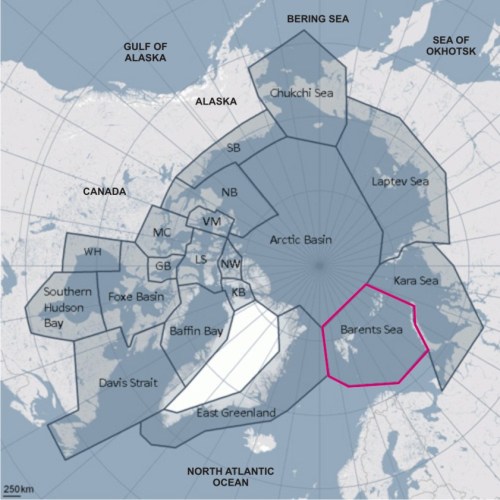
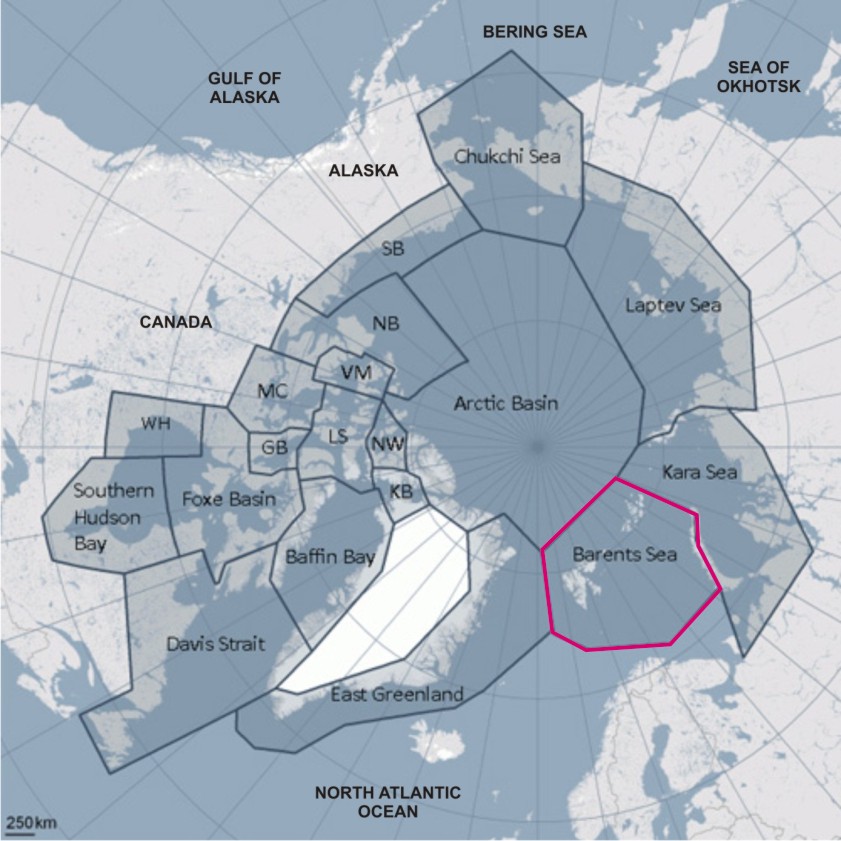
Figure 1. Polar bear subpopulations, with the Barents Sea region highlighted; map courtesy the IUCN Polar Bear Specialist Group (PBSG), extra labels added.

Figure 1. Polar bear subpopulations, with the Barents Sea region highlighted; map courtesy the IUCN Polar Bear Specialist Group (PBSG), extra labels added.

The most recent Barents Sea population estimate was done in 2004 (2,650; range ~1900-3600), based on an aerial survey (Aars et al. 2009). Aerial surveys are the only practical method of establishing population counts in regions like this where many bears never set foot on land. The previous estimate for the Barents (1982) was “2,000-5,000” but its accuracy was considered “poor” (discussed here).

The IUCN Polar Bear Specialist Group (PBSG), in their most recent report, lists the Barents Sea population as “data deficient” for status, current trend and estimated risk of decline within 10 years (Obbard et al. 2010:62, Table 1) and the “notes” for this entry say:

Population estimate is based on a new aerial survey. There was likely an increase in the subpopulation size after 1973 until recently. Current growth trend is unknown.

This 2004 estimate is now almost a decade old and potentially no longer an accurate representation of what’s happening in the Barents Sea. The most up-to-date information has not yet been published but it is available online. It’s eye-opening to say the least, if only that it appears to be yet another example of a polar bear population that is so far not showing signs of being harmed by sea ice declines, as I’ve discussed before (here).

[Update October 15, 2013: I’ve simplified the text discussion and figure regarding the Aars and Andersen denning study from the original posted]

Continue reading

Polar bears at Kaktovik, Alaska not stranded due to retreating ice

“I’ve lived here all my life and there are more bears every year. I read stories about polar bears being on the brink of extinction because of global warming, look out of my window and start to laugh.” Tori Sims, Kaktovik (Mail on Sunday, Sept. 28, 2013).

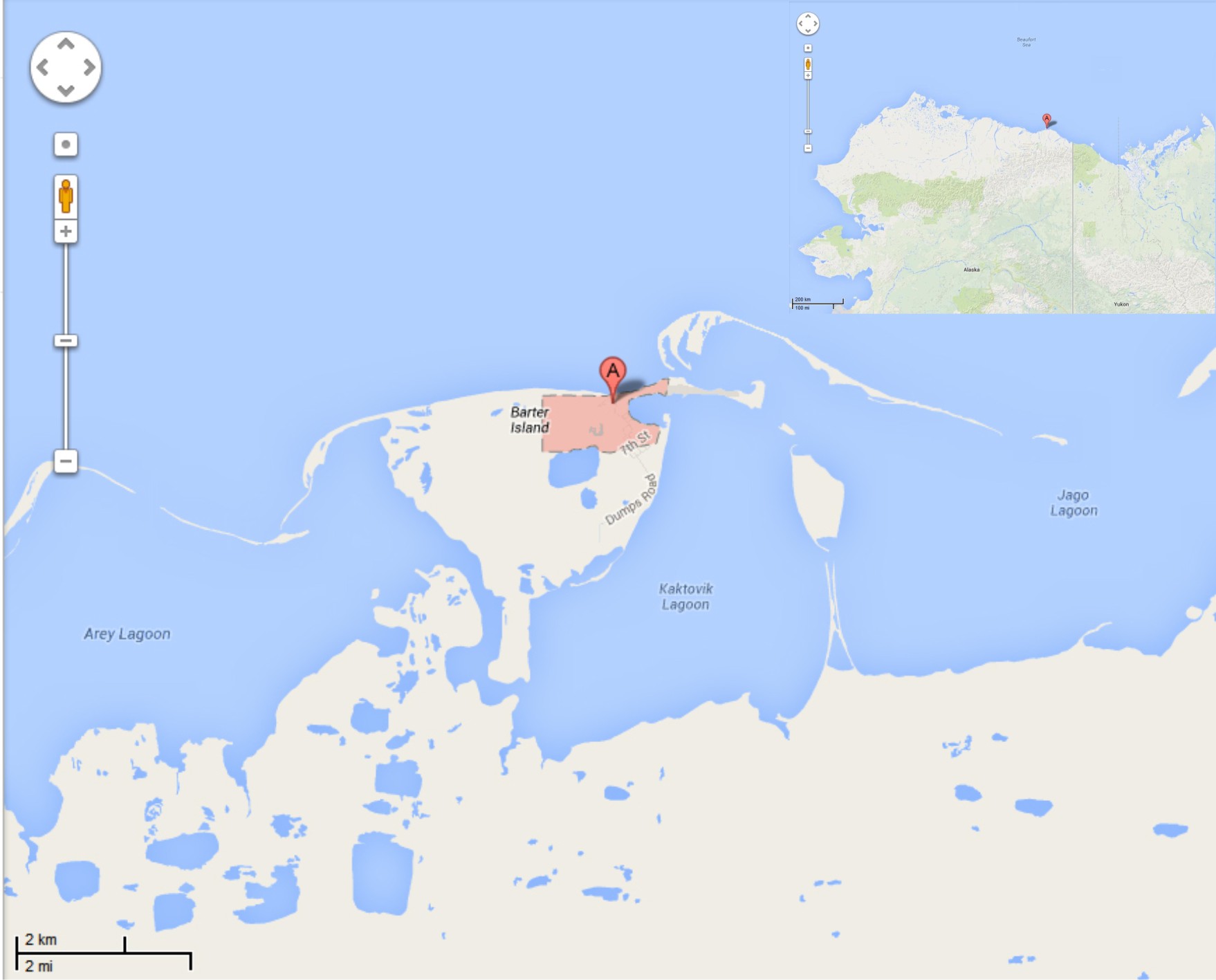
As you can see, Kaktovik is in the news again. This tiny community sits on the edge of the Beaufort Sea, on Barter Island on the North Slope of Alaska (Fig. 1). It lies within the Southern Beaufort polar bear subpopulation, which has been classified as “declining” by the IUCN Polar Bear Specialist Group (Obbard et al. 2010).

The determination of “declining” was based on a small dip in population numbers between 2001 and 2006 (not statistically significant), plus a decline in body size and condition, and smaller litter sizes documented between 1986 and 2006 (Rode et al. 2010). A new population survey is underway.

Figure 1. Kaktovik, Alaska, from Google maps.

Figure 1. Kaktovik, Alaska, from Google maps. Click to enlarge.

There have been suggestions that bears become “stranded” along the Alaska coast near Kaktovik because of retreating sea ice, and that more bears present in this area in recent years are an indication that they are in trouble due to global warming.

I’ve compiled some quotes, maps, and links to stories, photos and videos about Kaktovik polar bears to show that this claim is false.

Continue reading