Tag Archives: feeding

Polar bear survival: habitat 2013 vs. 2016 for 22 January

Using sea ice maps issued by the National Sea Ice Data Center (NSIDC), it’s interesting to compare these two years with respect to polar bear health and survival (keeping in mind that no polar bears live in what I like to call the armpits of the Arctic – the Sea of Okhotsk, the Baltic Sea or in the Gulf of St. Lawrence)1:

22 January 2016
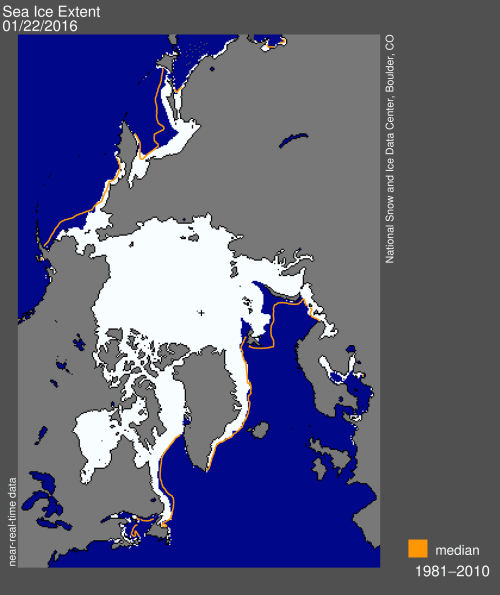
Sea ice extent 2016 Jan 22 NSIDC

Continue reading

Polar bear biologists try – again – to blame S. Beaufort thick spring ice on global warming

The trouble is, sea ice researchers and atmospheric scientists have not drawn that conclusion, despite what a new paper by Pilfold and colleagues imply. It shows just what lengths desperate IUCN Polar Bear Specialist Group  (PBSG) biologists will go to in order to link the recent decline of Southern Beaufort bear numbers to global warming while ignoring similar past declines.

Beaufort Sea pressure ridges_Spring 1949 wikipedia sm

Continue reading

Polar bears out on the sea ice eat few seals in summer and early fall

We hear endlessly about the polar bears ‘forced’ to go without food for months because of receding summer sea ice — what about all the bears that stay out on the ice over the summer? Presumably, those bears keep hunting for seals – but how many do they actually catch?

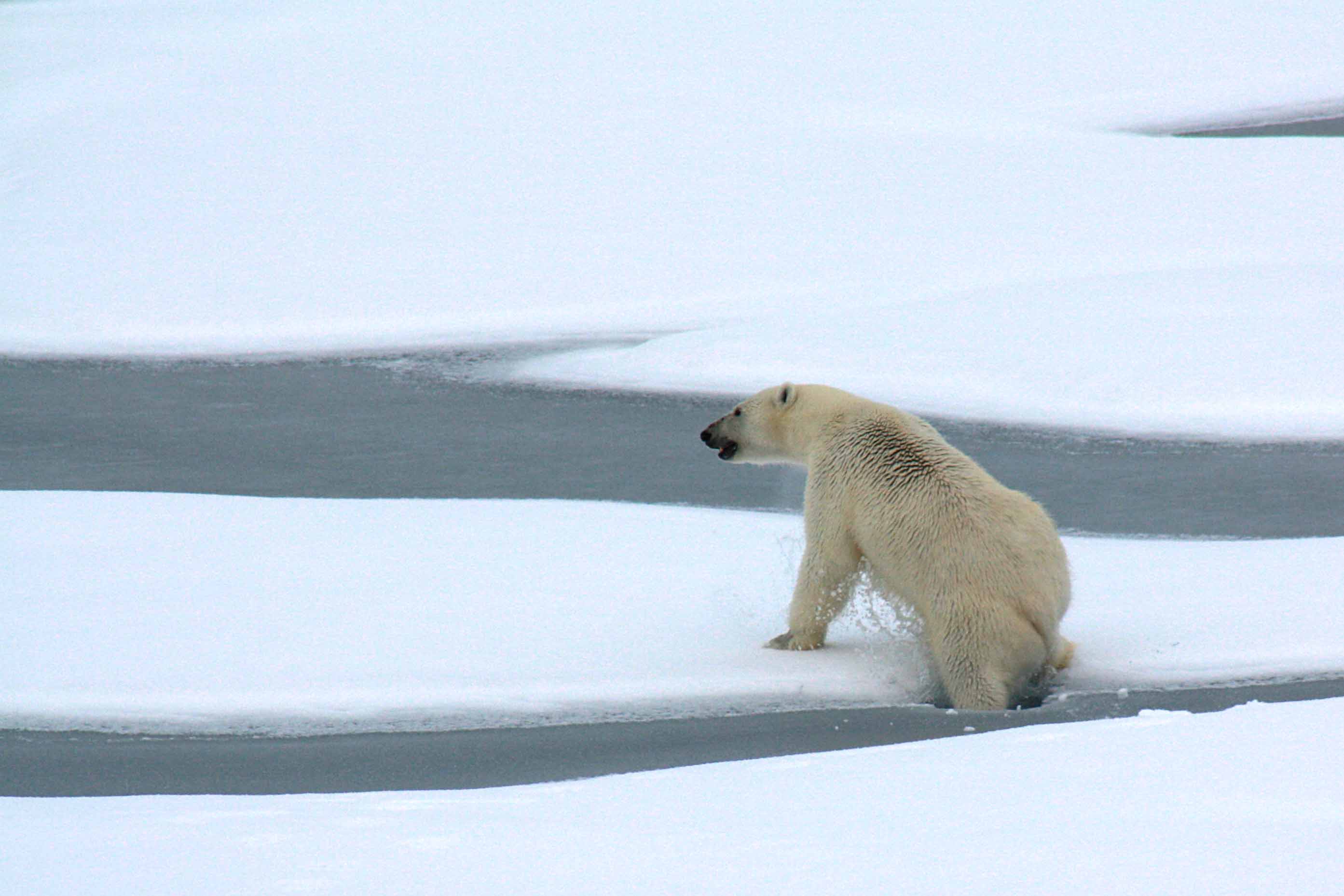
Polar Bear Breaks Ice

[Update 9 February 2015: Just to be clear, this post is based on the facts available in the peer reviewed literature — if you think I have missed something, let me know via the “Contact us” page above]
Continue reading

Russia the first to ban polar bear hunting in 1956, not a surprise why

Soviet soldier in a tank, feeding condensed milk to polar bears c. 1950 (i.imgur.com), via Redditt 16 November 2014.

Soviet soldier in a tank, feeding condensed milk to polar bears c. 1950 - Imgur

Sponsored by the Russian Dash Cams Association. Reminding you to drive your tank safely and avoid hitting polar bears.”

Apparently, polar bears are attracted to tanks as they are to ships and submarines, which made them easy targets for men with guns. This, along with the rather extensive use of so-called ‘set guns’ (a baited apparatus fixed with a loaded shotgun), led to a significant decline of polar bears in the U.S.S.R. and the Barents Sea area by the 1950s. See also, “The slaughter of polar bears that rarely gets mentioned (ca. 1890-1930)

This was the real threat to polar bears and it was successfully halted by international agreement in 1973. We should not forget that polar bears are a conservation success story.

Eat, wash up, repeat; eat, wash up, repeat…polar bears do it too!

Ah, that never-ending treadmill of meal preparation and cleanup. You might be surprised to find out that polar bears do it too.

Figure 1. How do polar bears look so clean most of the time when they get this bloody on a regular basis? They wash up! [This picture is not from Stirling’s paper].

Figure 1. How do polar bears look so clean most of the time when they get this bloody on a regular basis? They wash up!

I found an interesting description of polar bears washing during and after feeding, by a young Ian Stirling in one of his earliest published polar bear papers (Stirling 1974). At the time, he was observing polar bears on southwest Devon Island (74°43′ N; 91°10′ W, see Fig. 2 below) between 24 July and 8 August 1973. Even today, there’s ice for hunting seals in mid-to-late-summer in that part of Canada (Fig. 3).
Continue reading

Kaktovik polar bear photos, again no “starving” bears

A Southern Beaufort female with cubs, from the fall of 2007. Note how fat they all are.

A Southern Beaufort female with cubs, from the fall of 2007.
Note the non-starving condition.

Twenty-one amazing photos of polar bears feasting on the remains of a bowhead whale carcass outside of Kaktovik, Alaska, taken by wildlife photographer Michal Tyl, have been posted by the UK Daily Mail (December 12, 2013): Now that’s what you call a spare rib! Pack of bloody-faced polar bears spend day and night stripping a beached whale to its bones.”  Have a look and see if you can spot any “starving” bears! 

What you will see is the relative size of the bears: notice how much larger males are than females, how small cubs-of-the-year are relative to big males. Oh, and notice all the big fat polar bear butts. I can’t include any of the photos here because of copyright rules (the one above is from 2007) but I have included a map showing the location of Kaktovik, a quote from the article, and a link to my previous post on Kaktovik bears, which has a wealth of background information. Continue reading

Not much has changed in polar bear country since the sea ice maximum

I’ve been busy with work-related activities lately and will be for several more weeks. Until then…

Sea ice changes since March 15 [Update added May 10, see below]

Lots of ice everywhere – even in Hudson Bay. A bit less ice in the Barents Sea (north of Norway) than there was two months ago at the sea ice maximum March 15 (see Fig. 1 below compared to the extent at May 5 in Fig. 2: both from NSIDC). But there is still quite a bit around Svalbard – that group of islands between NE Greenland and NW Norway (see Fig. 3 below a MASIE image, where this situation is more apparent).

Polar bears are eating and mating at this time of year (early May being the tail-end of the season in most areas) – and right now, they have a huge, circumpolar ice platform for those activities.

Continue reading