Two years old today, this polar bear video is more relevant than ever:
“The polar bear as an icon for climate change is dead because the distorted predictions made by polar bear specialists were wrong.”

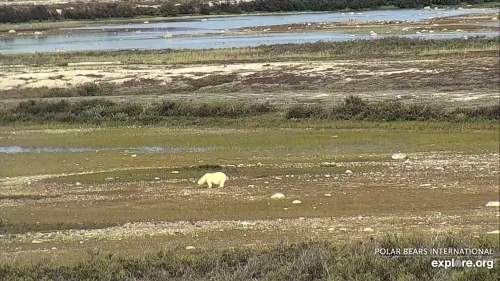
It’s week 7 of the Churchill polar bear season that began in early July and it’s been remarkably quiet: compared to 208 and 2016, there were half as many problem bear incidents in 2019. A few bears have come off the ice near the community and they’ve been in good shape, as are the bears to the east at Cape Churchill (see one captured on live cam 23 August shown below) and the north at Seal River.
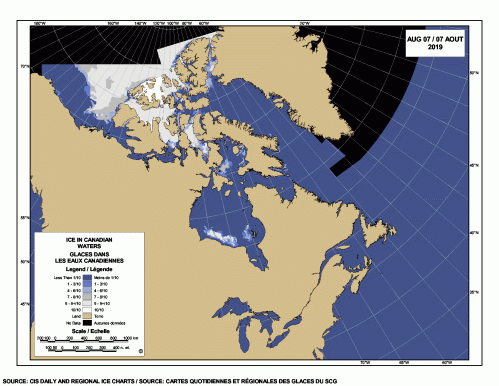
But it looks like many more bears than usual may have decided to ride out the slow-melting ice that lingered well past the first week of August and came ashore further south, towards the Manitoba/Ontario border.
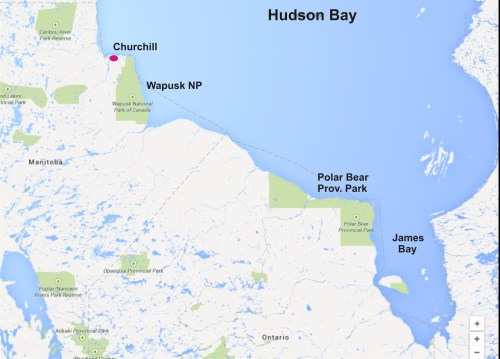
If so, these bears will have to make their way north over the summer so they can intercept the first ice forming along the northwest coast off Wapusk National Park near Churchill. That’s why Western Hudson Bay bears are said to undergo a migration: no matter where they leave the ice in summer, most bears head to areas around Churchill so that they can resume seal hunting on the early fall ice.
A paucity of bears around Churchill in late summer/early fall is not unprecedented, however. Stirling and colleagues pointed out that in 1972 and 1973, for reasons they could not explain, there had been fewer bears than usual around Churchill well before freeze-up and therefore, fewer problem bears (Stirling et al. 1977:17).
Below is a comparison of the Polar Bear Alert Program report for last week (Week 7, Aug 19-25) to previous years.
Comments Off on Churchill polar bear activity report for week 7 shows oddly few problems so far
Posted in Life History, Polar bear attacks, Sea ice habitat
Tagged attacks, Churchill, migration, polar bear, polar bear alert, problem bears, sea ice
Despite a demand by radical protest group Extinction Rebellion that governments “tell the truth” about climate change, it’s apparent that when it comes to walrus extinction risk they prefer the contrived walrus tragedy porn compiled by David Attenborough and his Netflix cronies over scientific evidence.
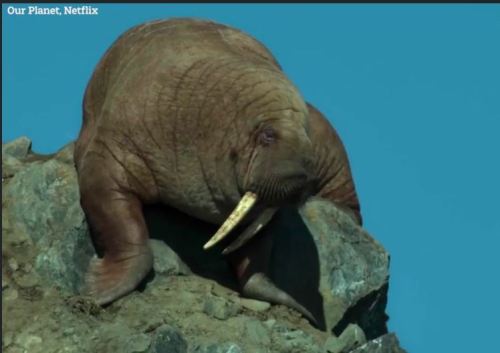
For this group of radical protesters, ‘the truth‘ is a narrative that serves their traffic-disrupting purposes. Since many gullible people – young and old – were horrified by the Netflix claim that hundreds of walruses in the western Arctic had hurled themselves off a cliff because of human-caused climate change, Extinction Rebellion plan to exploit this emotional connection during upcoming protests, apparently believing that what Attenborough told them was a fact. But in accepting docu-drama content without question, they are rejecting the best available science produced in 2017 by biologists who determined that Pacific walrus are not being harmed by the effects of climate change and are not threatened with extinction.
Comments Off on Fear promoted by young activists is based on false walrus & polar bear narratives
Posted in Advocacy, Conservation Status, Sea ice habitat, walrus
Tagged Attenborough, climate change, extinction, Greta Thunberg, lies, Netflix, polar bear, protest, rebellion, science, skeleton, tragedy porn, truth, walrus
It’s been a slow summer for polar bear news to hype, so we shouldn’t be surprised that a local report that polar bears this summer have descended on the town of Kaktovik, Alaska one week earlier than 2017 has morphed into an international story that makes a 2016 research report sound like this year’s news, with headlines trumpeting: “polar bear encounters are increasing” due to a longer open water period. Nevertheless, it was reported just two weeks ago that Alaska has not had a polar bear attack since 1993.
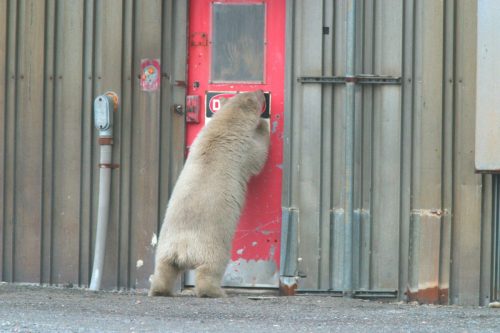
This is a particularly blatant example of how the media skew polar bear ‘news’ for public consumption, aided by scientists with a particular message to sell. Not surprisingly, a number of essential facts have been left out of this sensationized account, in part because the polar bear specialist the media consulted left those facts out of his statement. This is the sort of bias displayed by polar bear specialists that I discuss in my new book, The Polar Bear Catastrophe That Never Happened.
Comments Off on Media and USGS biologist sensationalize recent report of a polar bear encounter in Alaska
Posted in Advocacy, Life History, Polar bear attacks, Sea ice habitat
Tagged advocacy, Alaska, bone pile, encounter, facts, hype, ice-free period, Kaktovik, land-use, polar bear, sea ice, Southern Beaufort Sea, whaling
Polar bear habitat update for the first week of August 2019 shows there is still more sea ice than average in Hudson Bay, the southern-most area of continuous habitation for this species. That certainly wasn’t part of the predictions of doom, especially since freeze-up in that region for the last two years has also been earlier-than-average which means a shorter ice-free season than we’ve seen for decades.
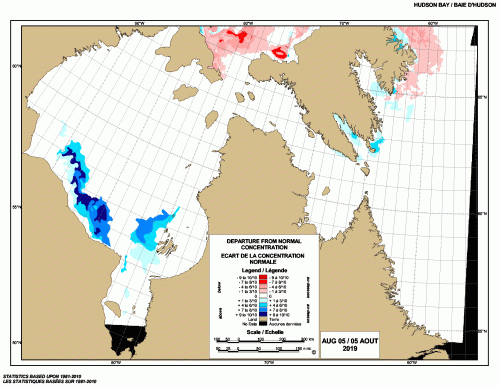
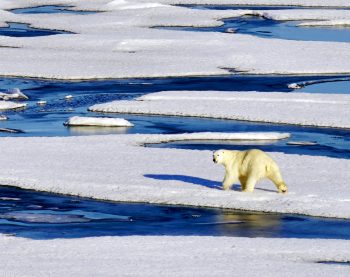
Despite ice coverage for the Arctic ice as a whole being marginally lower than it has been since 1979 for this time of year, sea ice for the first week of August was also above average around Svalbard in the Barents Sea and higher than the last few years in the Central Arctic, which is a critical summer refugium for polar bears that live in the peripheral seas of the Arctic Ocean, including the Chukchi (see photo below, taken in early August 2018).
Comments Off on Not predicted: more sea ice than average in southern-most Arctic first week of August
Posted in Polar bear attacks, Sea ice habitat
Tagged Central Arctic, Churchill, facts, Hudson Bay, polar bear, prediction, problem bear, range, sea ice, southern, Svalbard, tagged bears
One of two alarming headlines that caught my eye this week was the ‘news’ on Monday that the waters off Alaska were now ice-free because of climate change, courtesy a story in the online media outlet Mashable that was later picked up by The Weather Channel and the UK mainstream paper The Independent. In addition, a large number of mainstream news outlets, including the New York Times and Newsweek, have reported that walruses came ashore this year at Point Lay, Alaska two weeks earlier than any year since 2007.
No one claimed this late July onshore movement of walruses was the beginning of the end of walruses but it was still blamed on human-caused climate change because it was associated with the aforementioned ice loss in Alaska.
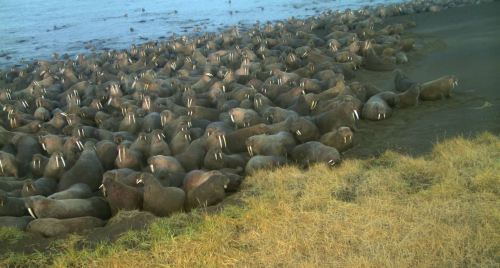
Neither event was truly ‘news’. Moreover, neither an ice-free Alaska in early August or walruses onshore two weeks earlier than 2017 will have any negative impact on local polar bear or walrus populations, whether due to human-caused climate change or natural variation. Well-fed polar bears everywhere are quite capable of going 4-5 months without food in the summer and a few thousand walruses at Point Lay will feed happily from this shore-based haulout for a few days to a few weeks as they have done many summers since 2007 before moving on to other Chukchi Sea beach locations – although the ‘leaving’ events never seem to get any media attention. Walruses will haul out on beaches in Alaska and Russia until the ice returns in October.
Comments Off on Alaska waters with no sea ice are not a problem for Pacific walrus or polar bears
Posted in Advocacy, Sea ice habitat, walrus
Tagged Alaska, Chuckchi Sea, climate change, decline, facts, ice loss, ice-free, Point Lay, polar bear, sea ice, walrus
For all the hand-wringing over sea ice extent this year and its supposed similarity to 2012, what is truly remarkable is that at the end of July ice remains adjacent to every single major terrestrial summer refugia known to be important for polar bears. Those refugia sites include (from west to east, starting in the Chukchi Sea): Wrangel Island, western Chukotka, Severnaya Zemlya, Franz Josef Land, East Greenland, virtually all the islands of the Canadian Arctic Archipelago (including Southampton Island in Foxe Basin and the southwest and eastern coasts of Baffin Island), and Western Hudson Bay.
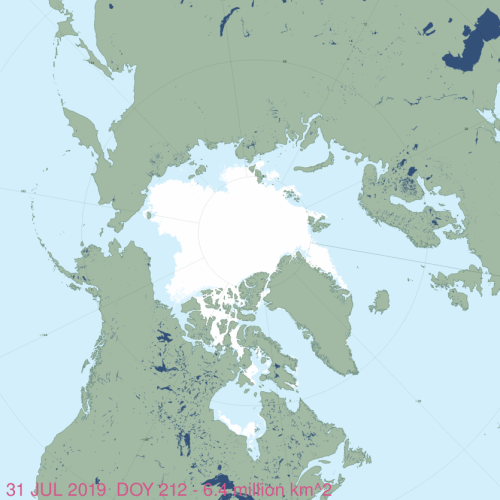
Few bears spend the entire summer onshore along the Alaska coast: most still spend the summer on the sea ice and move with it as it contracts toward the Arctic Basin, as do many bears in the Barents, Kara, East Siberian, and Chukchi Seas. Until a few weeks ago, however, there was enough ice present that Beaufort Sea bears could go ashore if they wanted to do so. Continue reading
Comments Off on Sea ice adjacent to all major polar bear onshore summer refugia at 31 July 2019
Posted in Advocacy, Conservation Status, Population, Sea ice habitat
Tagged 2012, Churchill, extent, facts, Hudson Bay, July, onshore, polar bear, problem bears, refugia, sea ice, summer, terrestrial
A polar bear was spotted this year on Bear Island (Bjørnøya) in the southern Barents Sea on 8 March by the crew at the Meteorological Station. The last time these workers had seen a polar bear was 2011 but this year extensive Barents Sea ice literally brought a bear to their doorstep, similar to the way that sea ice brings bears to southern Labrador and Newfoundland in late winter and spring.
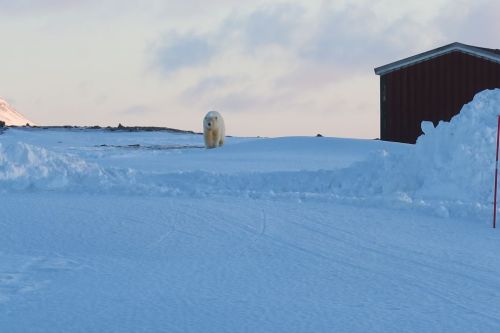
After below-average ice cover around Svalbard for most of the winter months of January and February, by early March the ice had expanded so far to the south it reached Bjørnøya. It was the kind of ice that hadn’t been seen in decades and almost immediately, a polar bear was spotted on shore. Given the length of time that the ice surrounding the island persisted, it is likely more bears came ashore but were not seen: the Meteorological Station at the north end of the island is the only place that people live over the winter (see maps below).
Comments Off on Polar bear spotted on Bear Island (Barents Sea) this winter for the first time in 8 years
Posted in Advocacy, Life History, Polar bear attacks, Sea ice habitat
Tagged Bear Island, Bjørnøya, extent, facts, icebreaker, polar bear, range, sea ice
In late June, one of the most powerful icebreakers in the world encountered such extraordinarily thick ice on-route to the North Pole (with a polar bear specialist and deep-pocketed, Attenborough-class tourists onboard) that it took a day and a half longer than expected to get there. A few weeks later, in mid-July, a Norwegian icebreaker also bound for the North Pole (with scientific researchers on board) was forced to turn back north of Svalbard when it unexpectedly encountered impenetrable pack ice.
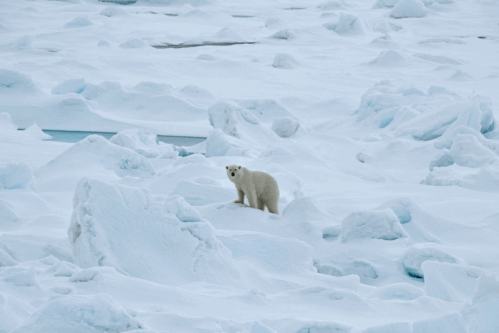
A polar bear on hummocked sea ice in Franz Josef Land. Photo by Michael Hambrey, date not specified but estimated based on tour dates to be 22 or 23 June 2019.
Apparently, the ice charts the Norwegian captain consulted showed ‘first year ice‘ – ice that formed the previous fall, defined as less than 2 m thick (6.6 ft) – which is often much broken up by early summer. However, what he and his Russian colleague came up against was consolidated first year pack ice up to 3 m thick (about 10 ft). Such thick first year ice was not just unexpected but by definition, should have been impossible.
Ice charts for the last few years that estimate actual ice thickness (rather than age) show ice >2 m thick east and/or just north of Svalbard and around the North Poie is not unusual at this time of year. This suggests that the propensity of navigational charts to use ice ‘age’ (e.g. first year vs. multi-year) to describe ice conditions could explain the Norwegian captain getting caught off-guard by exceptionally thick first year ice. It also provides an explanation for why the polar bear specialist onboard the Russian icebreaker later failed to explain that first year ice of such shocking thickness was truly extraordinary, not just a bit thicker than usual.
Comments Off on Shockingly thick first year ice between Barents Sea and the North Pole in mid-July
Posted in Advocacy, Sea ice habitat
Tagged Barents Sea, extent, first year ice, Franz Josef Land, ice age, icebreaker, North Pole, polar bear, sea ice, Svalbard, thick ice, thin ice
In the course of a manhunt for two murder suspects wanted in British Columbia, Royal Canadian Mounted Police posted a photo of a fat polar bear they spotted about 200 km north of Gillam, Manitoba.
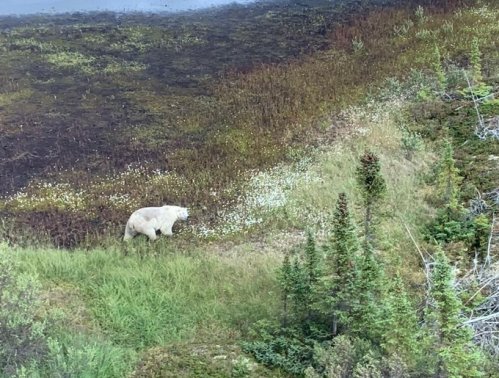
This fat bear – as would any others that might be spotted in the area – is a pregnant female from the Western Hudson Bay subpopulation intent on finding a secure place to dig a den in the permafrost where she can stay cool over the summer and give birth this winter.
However, true to form, The Guardian (28 July 2019) ludicrously suggests those on the hunt for the murder suspects are now at risk of a polar bear attack:
The threat of a polar bear attack has become a reality for the huge Canadian police and military contingent searching for the teenage duo suspected of shooting dead Australian tourist Lucas Fowler, his US girlfriend and a university botanist.
Comments Off on RCMP on manhunt spot a fat polar bear far from the coast of Western Hudson Bay
Posted in Life History, Polar bear attacks
Tagged denning, dens, fat bears, Gillam, Hudson Bay, manhunt, Manitoba, maternity den, polar bear, pregnant, Wapusk National Park





 polarbearscience
You must be logged in to post a comment.