Tag Archives: snow depth

New Hudson Bay sea ice modelling paper is more utterly useless fearmongering about polar bears

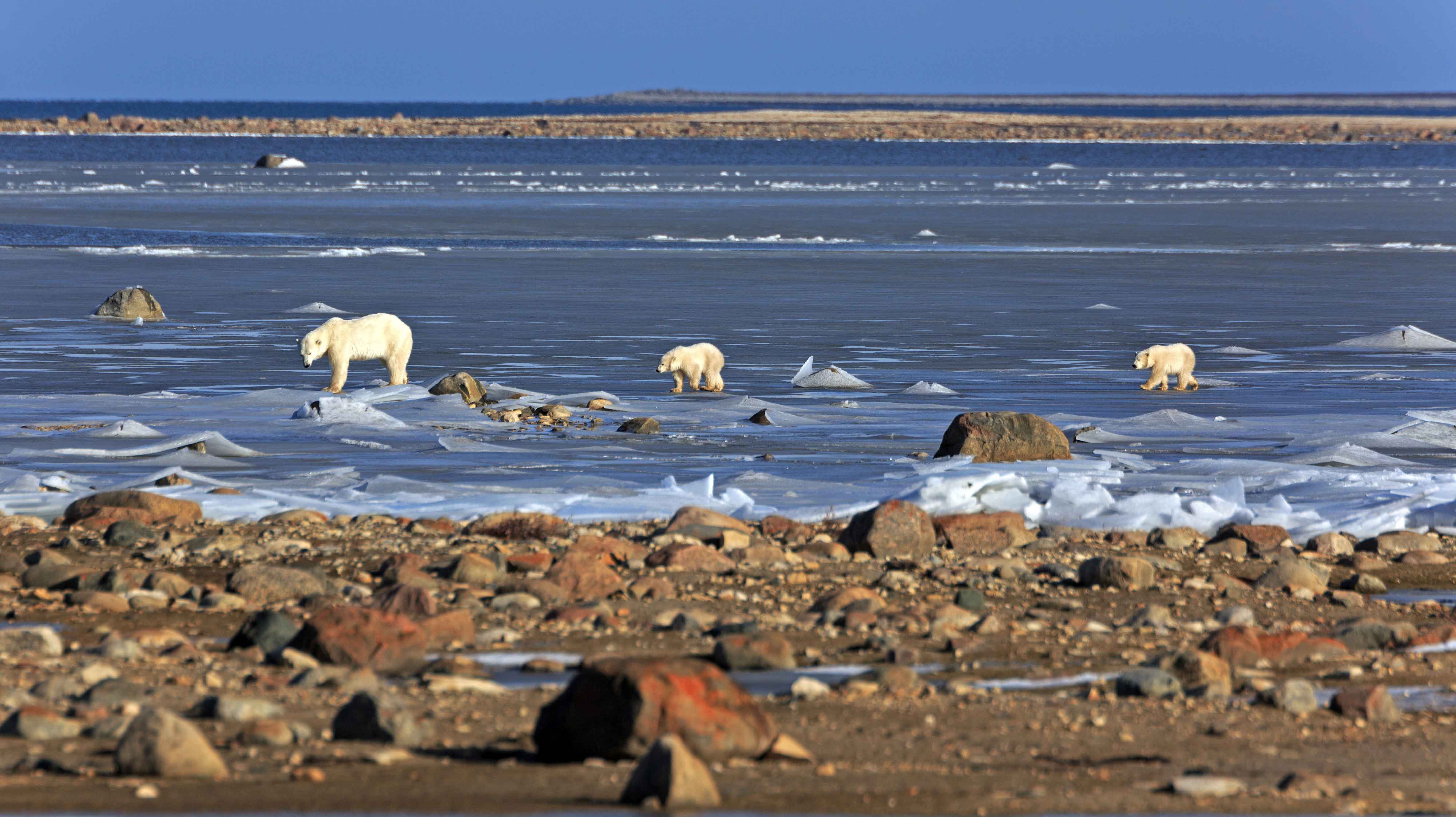
A new collaboration by sea ice and polar bear specialists that predicts a catastrophic future for polar bears in Hudson Bay (Stroeve et al. 2024) can be dismissed as yet another bit of utterly useless fearmongering for two reasons: 1) it’s a model projection that uses widely discredited SSP5-8.5 “business as usual” climate scenarios for its predictions; and 2) it’s based on the false premise that Western and Southern Hudson Bay polar bears have already suffered harm from reduced sea ice blamed on fossil fuel-caused global warming.
The fact that recently-deceased Ian Stirling was a prominent co-author should come as no surprise: his irrational promotion of the idea that future “climate warming” could doom polar bears to near-extinction – even after recording and publishing evidence to the contrary – will go down in history as an appalling violation of scientific principles.

Adding to the dubious validity of the paper: lead author Julienne Stroeve’s 2007 paper predicting summer sea ice decline by 2050 was proven wrong by actual data by the time it was published (Stroeve et al. 2007, 2014) and a more recent update failed to foresee the recent 17-year stall in decline. And co-author Steve Ferguson, a seal biologists, rashly stated in 2016 that Hudson Bay could be ice-free in winter as early as 2021 [which, needless to say, never came close to fruition].

I’d say if Southern Hudson Bay polar bears might be extirpated as soon as 2030, as the paper’s co-author Alex Crawford suggests, the global temperature and ice melt had better get a move on: a survey showed the SH population was thriving in 2021 and Hudson Bay sea ice hasn’t hit any kind of death spiral in the three years since.

Continue reading
Polar bear mating season winds down with lots of sea ice habitat available

Habitat for polar bears is abundant worldwide as the prime feeding season passes its peak and mating season for sexually mature bears winds down.

JR1_1266.tif

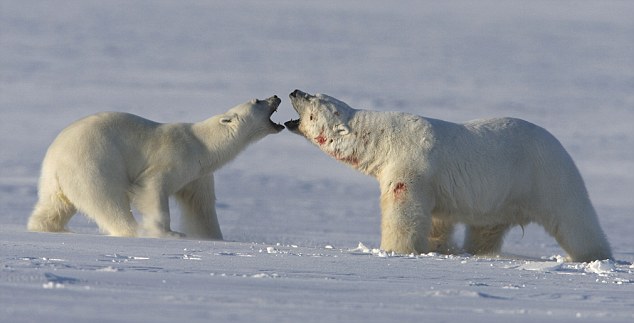
Battle among polar bear males for the right to mate, from this 2011 DailyMail story here.

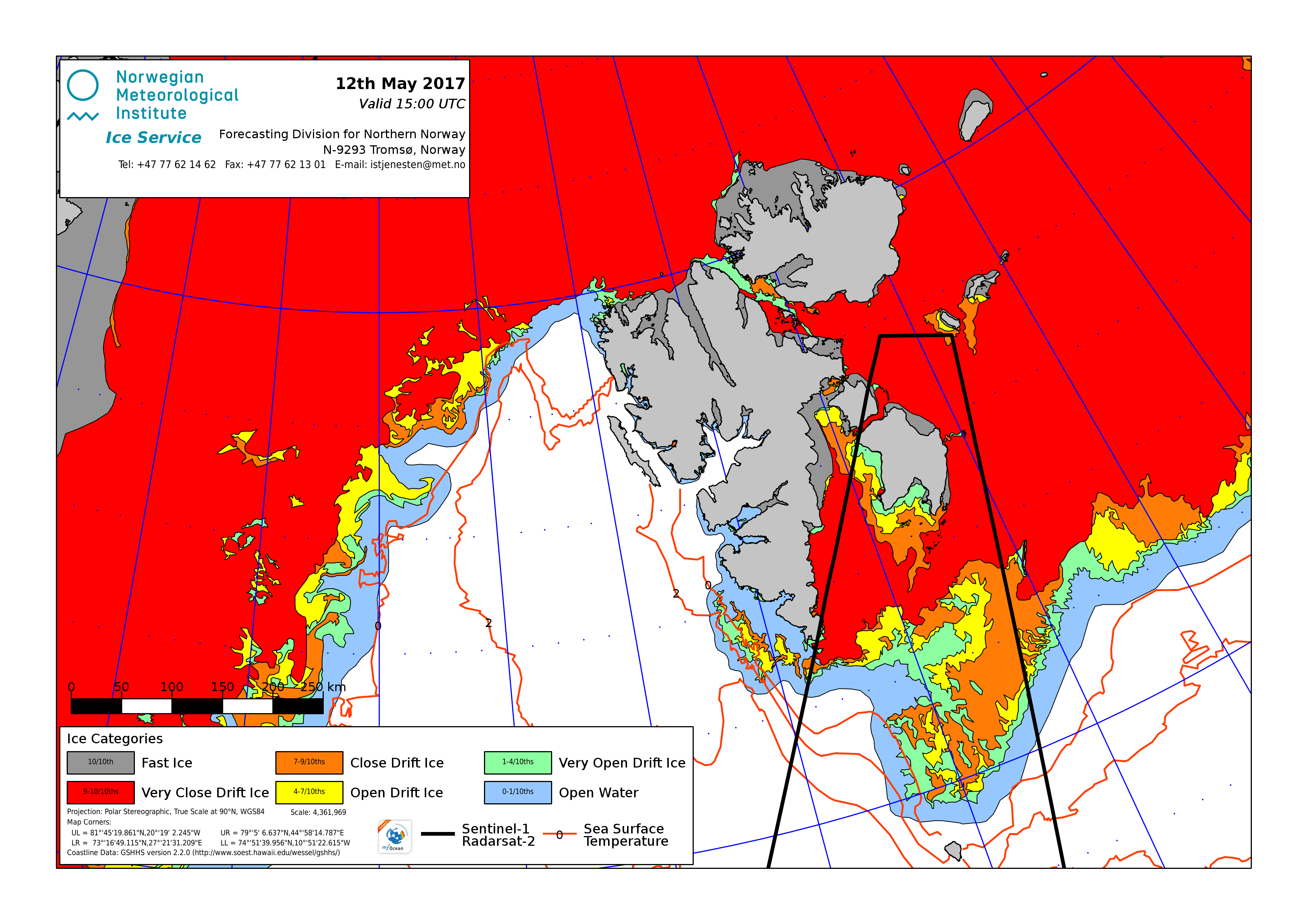
There is much more ice than usual around Svalbard in the Barents Sea and off Newfoundland and southern Labrador, home to ‘Davis Strait’ bears. There have been no media reports of polar bears onshore anywhere (since the third week of April in Newfoundland and late January in Svalbard).

Sea ice map below for 12 May 2017:

Svalbard ice extent 2017 May 12_NIS

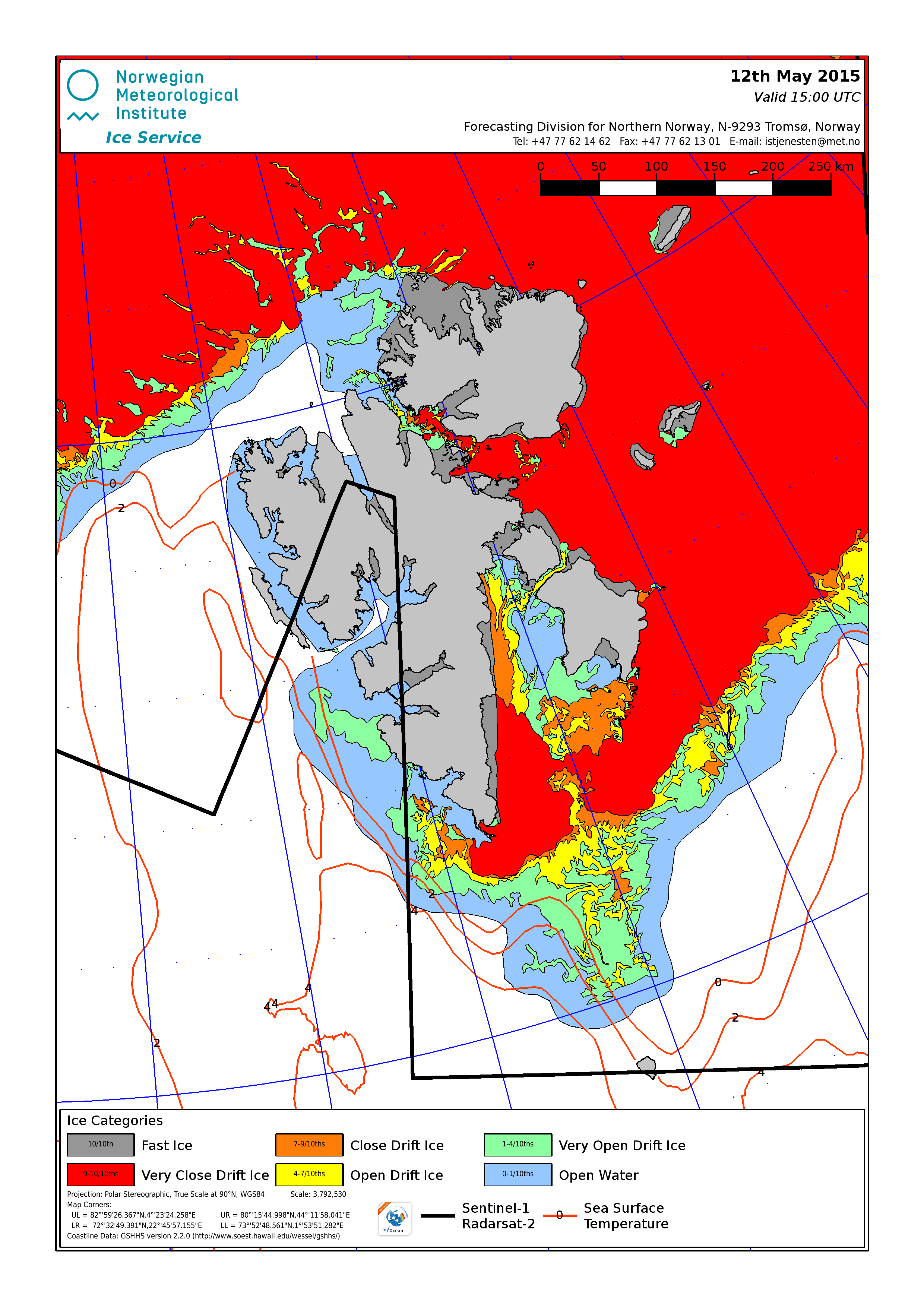
Compare the extent and concentration of ice around Svalbard above (at 12 May 2017) to conditions that prevailed on the same date in 2015 (below), considered a “good ice” year for local polar bears (and the year of the last population size count which registered an increase over the 2004 count):

Svalbard ice extent 2015 May 12_NIS

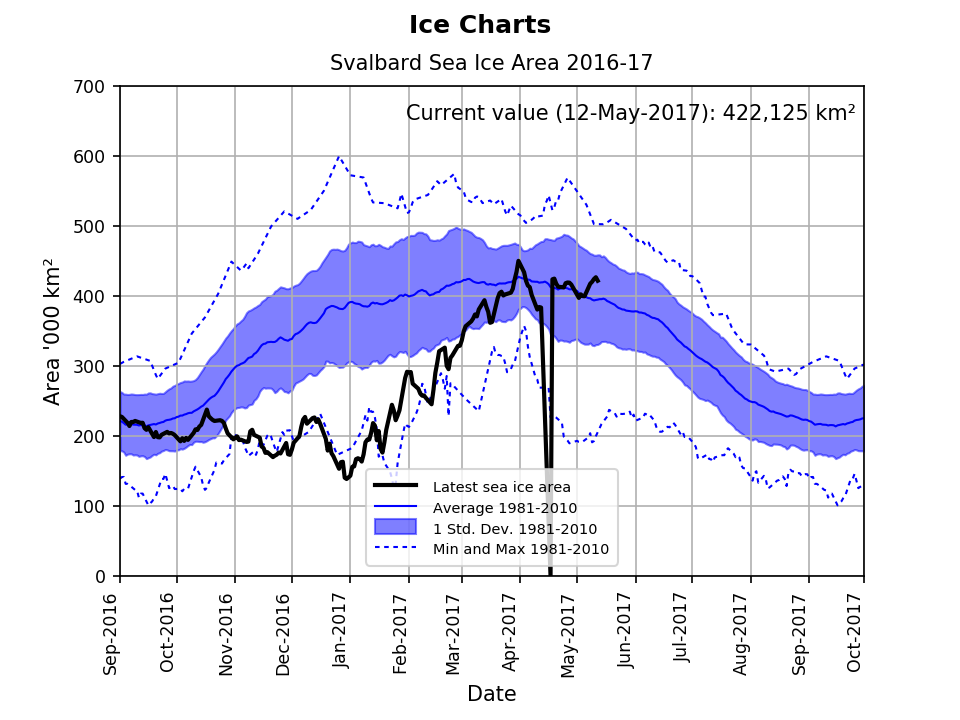
There hasn’t been this much ice in the area at this point in the season for many years, especially to the north of Svalbard, and levels since late April have been above even the long-term average (disregard the huge downward blip, which is clearly a sensor malfunction of some kind):

Svalbard ice extent 2017 May 12 graph_NIS

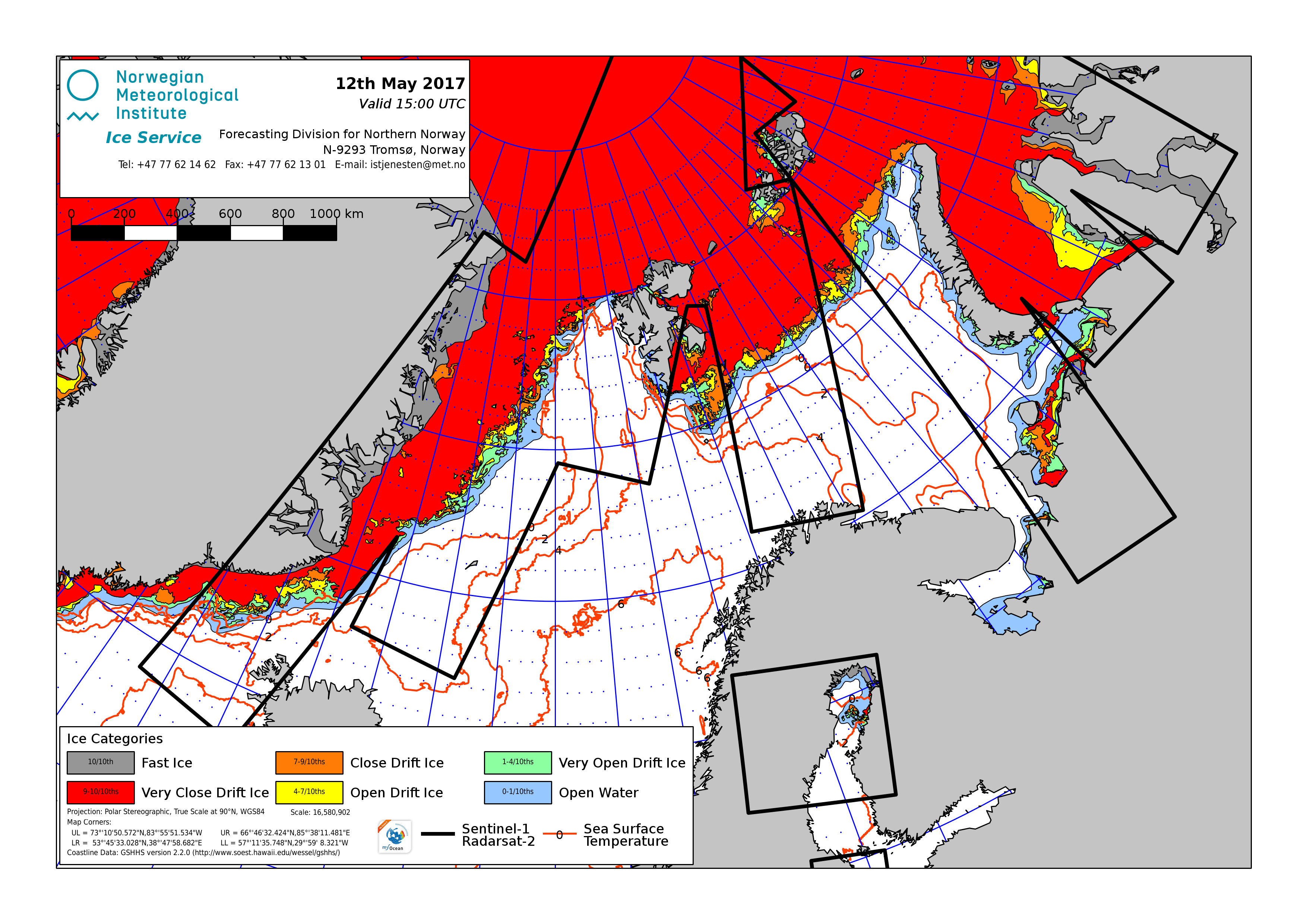
In fact, ice is pretty solid throughout the Barents Sea and East Greenland at this time:

Barents Sea ice extent 2017 May 12_NIS

Across the Atlantic, the situation is similar, with unseasonably heavy sea ice off eastern North America and the Southern Beaufort Sea.

Continue reading

W. Hudson Bay polar bear numbers declined then stabilized, says new paper

Polarbear_Parks Canada Wapusk in August

Western Hudson Bay bear, Wakusp National Park, August 2011.

In the just-published version of their Western Hudson Bay (WHB) population survey conducted in 2011, Nick Lunn and colleagues highlighted in the abstract:

“Our analysis suggested a long-term decline in the number of bears from 1,185 (993-1411) in 1987 to 806 (653-984) in 2011…” 

But they didn’t mention that the 806 estimate for 2011 was based on only a portion of the WHB region (Fig. 1) and has not been accepted by their peers as a valid estimate of the population size. They also failed to mention that the decline occurred due to thick spring ice and/or unsuitable snow conditions for ringed seals between 1989 and 1992 (Fig. 2), which resulted in reduced availability of polar bear prey (as I discussed in detail in Crockford 2015).

They know the “long-term” population decline is what the media will grab onto and run with – rather than the next sentence, which says “In the last 10 years of the study, the number of bears appeared stable due to temporary stability in sea ice conditions.

In other words, their study shows there has been no decline in the population since 2004, which had been predicted to occur (see previous post, Prediction #1), and there has been no trend in either breakup or freeze-up dates between 2001 and 2010 (or since). See previous post on the government report on which this paper is based here.

The bottom line is this: no one is buying this population estimate of 806 bears for the Western Hudson Bay population – both the IUCN Polar Bear Specialist Group and Environment Canada are using Seth Stapleton and colleagues (2014) estimate from their aerial survey done the same year and that official population size number is 1030 bears. Continue reading

Paris climate change deal will not stop polar bears dying due to thick ice in spring

Thick spring ice due to natural causes is currently the single biggest threat to polar bears. Not declining summer sea ice – thick spring ice. That could change in the future but right now, the evidence supports that statement.

polar_bear with collar_USGS

Polar bear deaths due to cyclical changes in Arctic sea ice thickness in the spring have continued despite rising CO2 emissions and declining summer sea ice extent (last major incident, 2004-2006): there is no reason to expect this will not continue. Unwarranted attention on summer ice extent has deflected attention from this major cause of local polar bear population decline.

Sea ice models do not address past or future changes in spring ice thickness and predictive models of polar bear survival blame all population declines on summer sea ice declines despite strong evidence to the contrary (Crockford 2015: The Arctic Fallacy). Continue reading

My new Arctic Fallacy paper- Sea ice stability and the polar bear

I have a new paper out that explains a fundamental problem with polar bear conservation.

Chukchi June 15 2014_USGS_Brian Battaile_after swim_sm

I’m convinced that a flawed and out-dated ecological concept — that sea ice, under natural conditions, provides a stable, predictable habitat — is what has allowed the present doom and gloom attitude of most polar bear specialists to develop.

Sea ice changes, of course, from season to season. However, the concept that sea ice is a stable habitat assumes that these seasonal changes are predictable and virtually the same from one year to the next – at least, similar enough that the differences are not responsible for causing marked declines in population size.

The assumption is that under natural, stable conditions populations of Arctic animals will either stay the same over time or increase. Biologists were taught at university that sea ice should be a stable habitat and as a result, they’ve glossed over evidence they collected to the contrary. [see recent posts here and here, for example]

Negative effects on populations of short-term natural variations in spring sea ice or spring snow cover on sea ice have been entirely ignored in modeled predictions of future conditions. The focus has been on summer ice extent.

I have summarized this evidence in a fully referenced, peer-reviewed essay that explores how the acceptance of this fallacy (“sea ice is a stable habitat”) has so skewed the conservation biology of polar bears that to outsiders it may look like a scientific integrity issue.

The summary and the essay are below (with embedded links and references). The Global Warming Policy Foundation (GWPF) has published the essay in their “Briefing Paper” series (#16, The Arctic Fallacy: Sea Ice Stability and the Polar Bear), which includes a must-read foreword by Dr. Matthew Cronin, Professor of Animal Genetics at the University of Alaska Fairbanks. Press release here, pdf here.

I think you’ll find it timely and thought-provoking.

Continue reading