Tag Archives: Svalbard

Less Svalbard polar bear habitat during the early Holocene than now

Svalbard in the western Barents Sea has recently had less sea ice extent than it had in the 1980s, especially in the west and north, but this is not unprecedented.
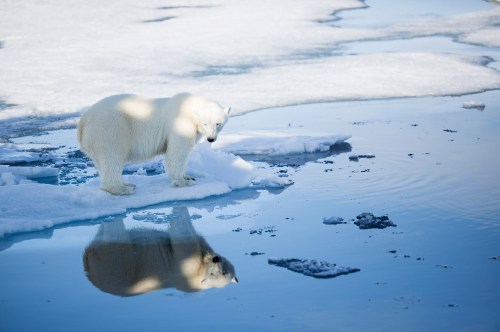
Svalbard polar bear_Aars August 2015-NP058930_press release

New evidence from clams and mussels with temperature-sensitive habitat requirements confirm that warmer temperatures and less sea ice than today existed during the early Holocene period about 10.2–9.2 thousand years ago and between 8.2 and 6.0 thousand years ago (based on radio carbon dates) around Svalbard. Barents Sea polar bears almost certainly survived those previous low-ice periods, as they are doing today, by staying close to the Franz Josef Land Archipelago in the eastern half of the region where sea ice is more persistent.

As this sea ice chart for 18 April 2018 shows, ice this month has been virtually absent from the west and north coasts of the Svalbard Archipelago, while Franz Josef Land to the east is surrounded by highly concentrated pack and land-fast ice.
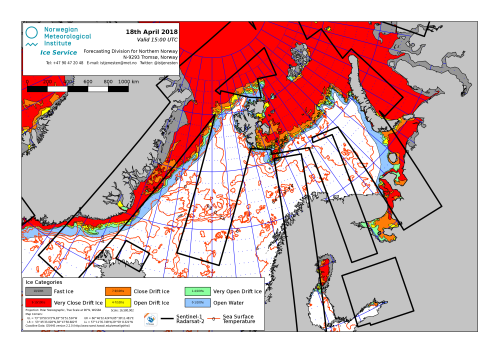
Barents Sea ice 2018 April 18 NIS

From a new paper by Jan Mangerud and John Svendsen (2018) [my bold]:

Svalbard, located between 74° and 81°N, is the warmest place on Earth at this latitude (Drange et al., 2013). This is because of the North Atlantic Current and large-scale atmospheric circulation which transport warm water and air masses from lower latitudes northwards across the Atlantic and along the coast of Norway to Svalbard (Figure 1). Yet, during the Holocene Thermal Maximum, the climate of Svalbard was considerably warmer than at present.

The transition from Younger Dryas cold to Holocene Thermal Maximum warm conditions took place very rapidly, according to records from nearby Greenland (Taylor et al. 1997), warming in “steps” of about five years each over a period of about 40 years. This was at least as fast, if not faster than, recent Arctic warming between the 1980s and 2015. And since polar bears of the Barents Sea and adjacent Arctic areas appear to have survived this change to Holocence Thermal Maximum conditions, it challenges the notion that recent warming has been (or will be) too fast to allow polar bears to survive without huge changes in their present distribution (Amstrup et al. 2007).
Continue reading
Histrionics over Arctic temperatures & sea ice extent: implications for polar bears

Panic over Arctic temperatures got smeared across news networks last week, so I think a bit of perspective is in order, including an assessment of what this means for polar bears and their prey (because some of the hysteria is being amplified from that corner).

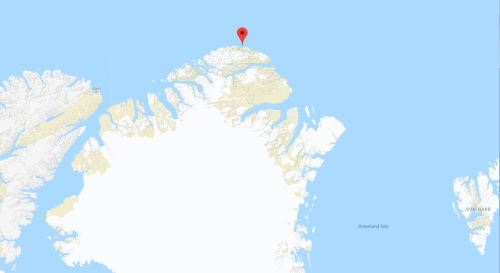
The region causing all the kerfuffle is at the northernmost tip of Greenland (see map below), where there is a weather station at Cape Morris Jesup. Next-nearest stations are at Alert, Canada (to the west) and Longyearbyen, Svalbard (Norway, to the east).

Cape Morris Jesup location Greenland_Google map

Arctic temps spike over 30 degrees in the midst of winter (The Weathern Network, Friday, February 23, 2018) included the tweet below, showing a fracture of sea ice north of Greenland so transient that it does not show up on daily sea ice maps:

“Along with those spikes in temperature, Lars Kaleschke’s tweet, above, also shows the large rift in the sea ice that opened up just north of Cape Morris Jesup, at the same time. Kaleschke is a professor of sea ice remote sensing at the Center for Earth System Research and Sustainability, at the University of Hamburg, in Germany.

Summary: Temperature and sea ice “abberations” in northern Greenland are transient phenomena that have clearly happened before (e.g. 2011) without major consequences except perhaps through impacts on eastern Arctic and subArctic weather conditions (including the UK).

Lack of sea ice north of Svalbard in the Barents Sea occuried last year and in 2012 in Februrary. But by mid-to-late March, when seal are beginning to give birth on the ice and polar bears are busy hunting them, ice had again covered the region. This year is likely to be the same. However, we won’t know until the end of March or ealry April if a recovery will or won’t happen, so any alarm-ringing about impacts on Arctic fauna surival have no foundation in fact until then.

East Greenland Scorsby Sound March 2011 on Kap Tobin_Rune Dietz_press photo

Scorsby Sound, East Greenland bear in March 2011. Rune Dietz, press photo.

In the Bering Sea, ice extent is well below average for this time of year but studies show the one consistent feature of Bering Sea ice is its variability. Low ice levels have distressing impacts for St. Lawrence island seal and whale hunters. However, there is certainly enough ice in the Bering Sea/Chukchi Sea region for polar bears and Arctic seals to do what they do this time of year (which is try to survive until early April, at which time seals start giving birth to their pups and polar bears start to eat them, with gusto). And the ice season isn’t over: maximum extent of ice in the Bering sea doesn’t usually come until late April or May, and the dramatic decline of mid-February already shows signs of reversing.

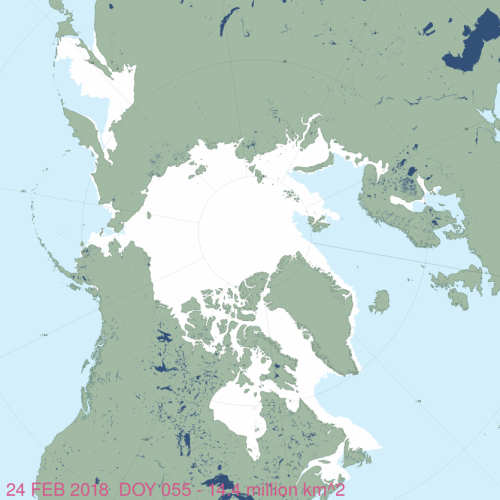
Details below this ice map for 24 February 2018, courtesy NSIDC Masie:

masie_all_zoom_4km 2018 Feb 24

PS. I’m off within hours to Toronto for the launch of my State of the Polar Bear Report in honour of International Polar Bear Day, 27 February. Watch for reports in the news and for my op-ed 27 February at the Financial Post.

Continue reading

Franz Josef Land is a sea ice refugium for most pregnant Barents Sea polar bears

Consensus polar bear expert Andrew Derocher has been busy over the last few weeks, expounding a story of doom regarding Svalbard area polar bears (e.g. here and here), ridiculing the suggestion that Franz Josef Land is viable alternate habitat for Barents Sea bears, especially pregnant females looking for a place to den and give birth. But the facts say otherwise.

Svalbard polar bear_Aars August 2015-NP058930_press release

Below are the long answers, with references and ice maps, to the questions Derocher asked in his 21 December 2017 tweet (above), a refreshing change from the ‘take my word for it, I’m the official expert’ answer one gets from him, along with derogatory slurs directed at those who don’t share his pessimism.

UPDATED 1 February 2019. Two references added.

Continue reading

Svalbard polar bear habitat higher than average – here’s what that looks like

Polar bear habitat around Svalbard in the Barents Sea is currently slightly above average for 23 June 2017: this short post records what that amount of ice looks like according to the Norwegian Ice Service (NIS).

Svalbard ice extent 2017 June 23_NIS from archive

Compare to 2015 at the same date, the year that the last polar bear count was conducted for the Svalbard region, when many cubs were seen and the bears were reported in excellent condition:

Svalbard ice extent 2015 June 23_NIS from archive

Continue reading

Polar bear mating season winds down with lots of sea ice habitat available

Habitat for polar bears is abundant worldwide as the prime feeding season passes its peak and mating season for sexually mature bears winds down.

JR1_1266.tif

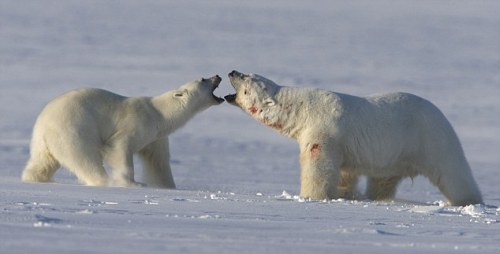
Battle among polar bear males for the right to mate, from this 2011 DailyMail story here.

There is much more ice than usual around Svalbard in the Barents Sea and off Newfoundland and southern Labrador, home to ‘Davis Strait’ bears. There have been no media reports of polar bears onshore anywhere (since the third week of April in Newfoundland and late January in Svalbard).

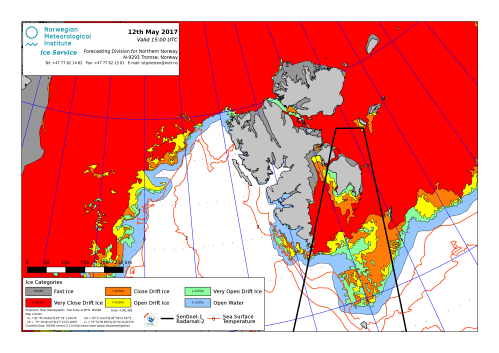
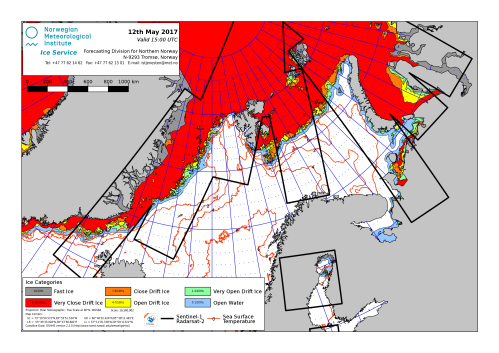
Sea ice map below for 12 May 2017:

Svalbard ice extent 2017 May 12_NIS

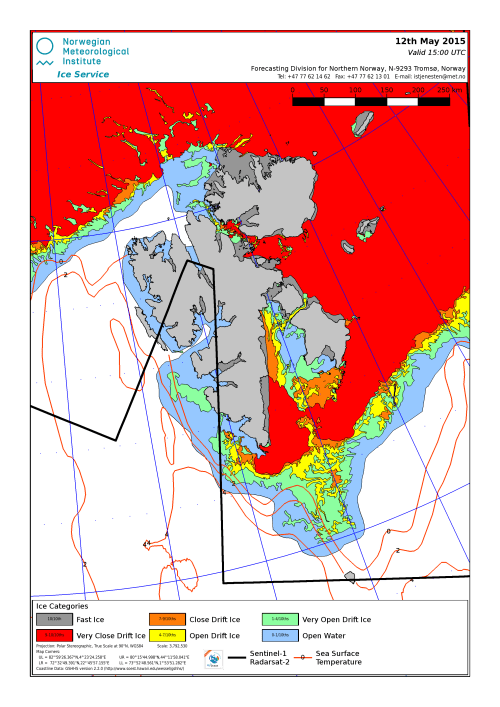
Compare the extent and concentration of ice around Svalbard above (at 12 May 2017) to conditions that prevailed on the same date in 2015 (below), considered a “good ice” year for local polar bears (and the year of the last population size count which registered an increase over the 2004 count):

Svalbard ice extent 2015 May 12_NIS

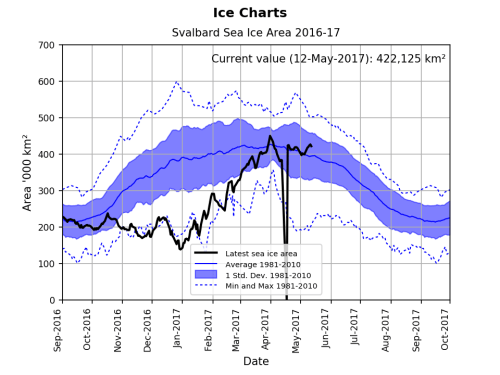
There hasn’t been this much ice in the area at this point in the season for many years, especially to the north of Svalbard, and levels since late April have been above even the long-term average (disregard the huge downward blip, which is clearly a sensor malfunction of some kind):

Svalbard ice extent 2017 May 12 graph_NIS

In fact, ice is pretty solid throughout the Barents Sea and East Greenland at this time:

Barents Sea ice extent 2017 May 12_NIS

Across the Atlantic, the situation is similar, with unseasonably heavy sea ice off eastern North America and the Southern Beaufort Sea.

Continue reading

IUCN PBSG insists the 2015 Barents Sea polar bear count was not an increase

Similar to the spin on the 2013 Baffin Bay/Kane Basin polar bear population survey, the IUCN Polar Bear Specialist Group now insists the latest count of the Barents Sea subpopulation is not evidence of an increase in numbers since 2004, as the leader of the study announced in 2015.

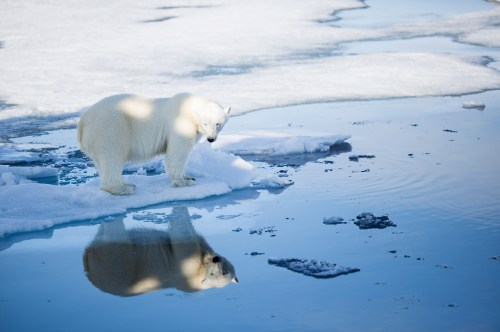
Svalbard polar bear_Aars August 2015-NP058930_press release

This is Part 2 of the big surprises in the latest version of the polar bear status table published by the IUCN Polar Bear Specialist Group (PBSG) on 30 March 2017. See last post here regarding the PBSG population size estimates that no longer concur with the 2015 Red List assessment, including the global total — even though PBSG members wrote the report (Wiig et al. 2015, and its Supplement).

Here I want to focus on the results of subpopulation surveys that were made public after the 2015 Red List assessment was published, particularly the Barents Sea estimate.

While the 2013 Baffin Bay and Kane Basin estimates (SWG 2016) have been added to the new PBSG table, any suggestion that these might indicate population increases are strong discounted. Similarly, contrary to initial reports by the principal investigators of the survey, the PBSG insist that the Barents Sea population has not actually increased since 2004, which you may or many not find convincing.

Continue reading

Polar bears onshore in Svalbard update: bears again run out of Longyearbyen

Update to 18 Jan 2017 post: For at least 10 days, officials in Longyearbyen, Svalbard have been trying to keep a particularly persistent female polar bear and her two cubs away from the community. After being chased away last week, Sunday night (22 Jan) the trio appeared again at dog kennels at the edge of town but this time, but this time officials drove them even further south.

svalbard-female-2-cubs-23-jan-2017_icepeople-news

Continue reading

Polar bear habitat message for the year end: 2016 Arctic ice extent same as 2010

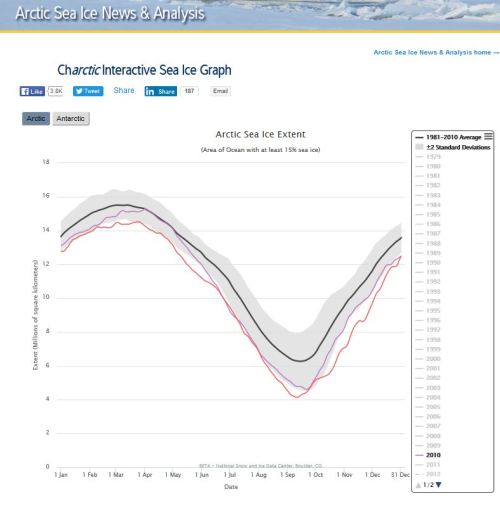
According to NSIDC daily sea ice interactive graph,  there was ever so slightly more ice on 31 Dec 2016 than on that date in 2010. However, the corresponding ice maps show just how differently that ice was distributed.

sea-ice-at-31-dec-2016_vs-2010_nsidc-interactive

Recall that in 2010, there was no huge die-off of polar bears attributed to reduced amounts of sea ice in the fall (or to reduced ice in summer, for that matter) because there was no catastrophic die-off at all.

Continue reading

As polar bear populations fail to decline with sea ice, message of doom intensifies

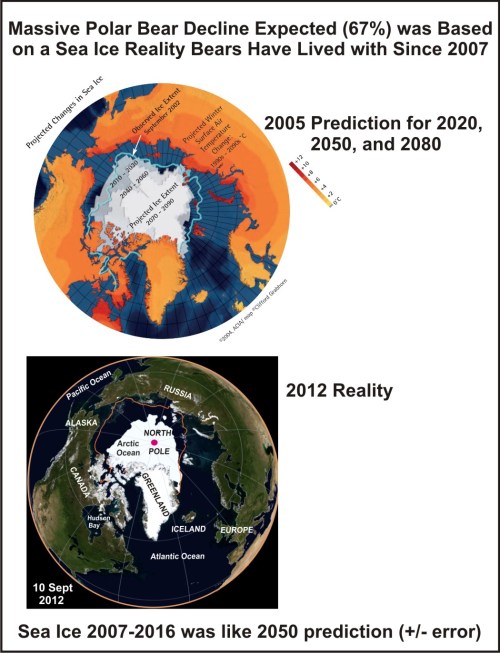
If 10 years of summer sea ice levels expected to kill 2/3 of the world’s polar bears by 2050 hasn’t had an impact, why would anyone expect a bit less summer ice will do the job?

sea-ice-prediction-vs-reality-2012_polarbearscience

The more the polar bears fail to die in droves, the shriller the message from activist polar bear researchers – via willing media megaphones – that the great death of the bears will soon be upon us, just you wait and see!

Some big media guns were out this past week spreading the prophesy of doom fed to them by the polar bear researchers most committed to the “threatened with extinction” narrative: The New York Times, The Atlantic, The Guardian. The desperation is becoming palpable as the public catches on to their epic failure.

In 2007, the sea ice dropped to a level the experts said wouldn’t be reached until mid-century, and since then, it has remained at that low level (about 3-5mkm2, give or take some measuring error). And in 2007, US Geological Survey (USGS) biologists said with absolute confidence that when sea ice levels reached that point, 2/3 of the world’s polar bears would be gone.

No bears at all would remain, they said, in Western Hudson Bay (the Churchill bears), Southern Hudson Bay, Foxe Basin, Davis Strait, Baffin Bay, Southern Beaufort, Chukchi Sea, Barents Sea, Kara Sea, and the Laptev Sea:  ten out of 19 subpopulations would be extirpated if sea ice levels in most years dropped to the summer lows in the 3-5 mkm2 range.

On the basis of that prediction, polar bears were declared ‘threatened’ with extinction by the US Fish & Wildlife Service (USFWS) under the Endangered Species Act (ESA).

But nothing of the kind happened. There are still lots of polar bears – and not even struggling-to-survive bears but lots of fat healthy bears everywhere across the Arctic, in what were considered by USGS biologists to be the most vulnerable regions of all: Western Hudson Bay (i.e., Churchill), Chukchi Sea and Southern Beaufort (Alaska) and the Barents Sea (Norway).

This is the truth the world needs to hear: the experts were wrong. Polar bears have not been driven to the brink of extinction by climate change, they are thriving. This is the message of each of my two new books (one of which is appropriate for kids of all ages, see the sidebar).

In turns out that polar bears are much more resilient to changing levels of sea ice than data collectors assume and the proof is in the current healthy populations everywhere. Continue reading

The polar bear problem no one will talk about – the downside to large populations

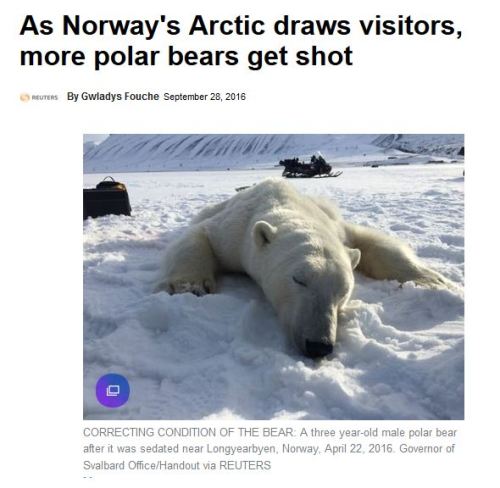
A large polar bear population with lots of adult males – due to bans on hunting – means more survival pressure on young bears, especially young males. To blame more problems with young male bears on lack of sea ice due to global warming ignores the downside to the reality Norway asked for when it banned hunting more than 40 years ago.

More hungry young males coming ashore looking for food is one of the potential consequences of living with a large, healthy population of polar bears. Biologist Ian Stirling warned of such problems back in 1974.

UPDATE: added below 6 Oct. 2016, statistics of defense of life shootings of polar bears in Svalbard since 1973.

svalbard-more-visitors-more-bears-shot_28-sept-2016-yahoo

Svalbard area polar bear numbers have increased 42% since 2004 and more hungry young polar bears almost certainly mean more polar bear problems, as folks in Svalbard (see map and quotes below) have experienced this year.
Continue reading