Category Archives: Advocacy

Media and USGS biologist sensationalize recent report of a polar bear encounter in Alaska

It’s been a slow summer for polar bear news to hype, so we shouldn’t be surprised that a local report that polar bears this summer have descended on the town of Kaktovik, Alaska one week earlier than 2017 has morphed into an international story that makes a 2016 research report sound like this year’s news, with headlines trumpeting: “polar bear encounters are increasing” due to a longer open water period. Nevertheless, it was reported just two weeks ago that Alaska has not had a polar bear attack since 1993.
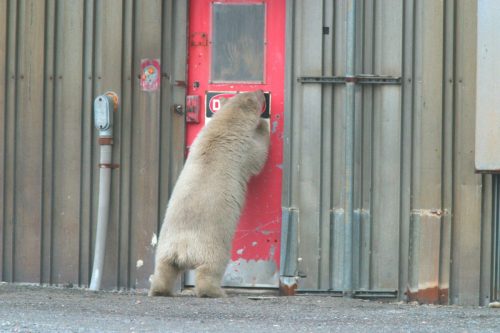
polar_bear-US FWS_young bear Alaska maybe Kaktovik no date

This is a particularly blatant example of how the media skew polar bear ‘news’ for public consumption, aided by scientists with a particular message to sell. Not surprisingly, a number of essential facts have been left out of this sensationized account, in part because the polar bear specialist the media consulted left those facts out of his statement.  This is the sort of bias displayed by polar bear specialists that I discuss in my new book, The Polar Bear Catastrophe That Never Happened.
Continue reading

Alaska waters with no sea ice are not a problem for Pacific walrus or polar bears

One of two alarming headlines that caught my eye this week was the ‘news’ on Monday that the waters off Alaska were now ice-free because of climate change, courtesy a story in the online media outlet Mashable that was later picked up by The Weather Channel and the UK mainstream paper The Independent. In addition, a large number of mainstream news outlets, including the New York Times and Newsweek, have reported that walruses came ashore this year at Point Lay, Alaska two weeks earlier than any year since 2007.

No one claimed this late July onshore movement of walruses was the beginning of the end of walruses but it was still blamed on human-caused climate change because it was associated with the  aforementioned ice loss in Alaska.

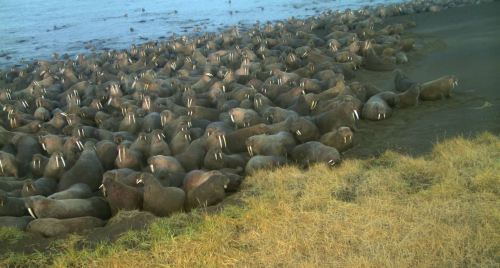
Walrus at Point Lay from trail camera in 2015 USFWS

Neither event was truly ‘news’. Moreover, neither an ice-free Alaska in early August or walruses onshore two weeks earlier than 2017 will have any negative impact on local polar bear or walrus populations, whether due to human-caused climate change or natural variation. Well-fed polar bears everywhere are quite capable of going 4-5 months without food in the summer and a few thousand walruses at Point Lay will feed happily from this shore-based haulout for a few days to a few weeks as they have done many summers since 2007 before moving on to other Chukchi Sea beach locations – although the ‘leaving’ events never seem to get any media attention. Walruses will haul out on beaches in Alaska and Russia until the ice returns in October.

Continue reading

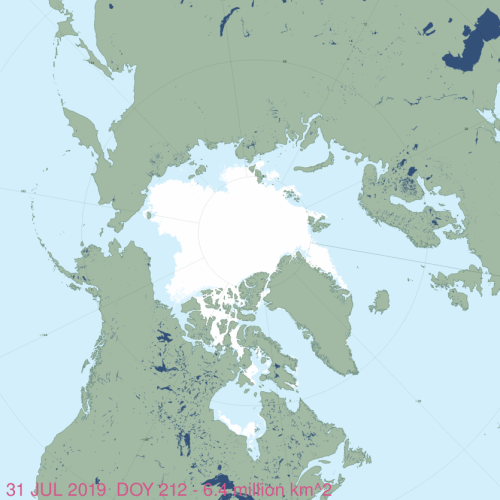
Sea ice adjacent to all major polar bear onshore summer refugia at 31 July 2019

For all the hand-wringing over sea ice extent this year and its supposed similarity to 2012, what is truly remarkable is that at the end of July ice remains adjacent to every single major terrestrial summer refugia known to be important for polar bears. Those refugia sites include (from west to east, starting in the Chukchi Sea): Wrangel Island, western Chukotka, Severnaya Zemlya, Franz Josef Land, East Greenland, virtually all the islands of the Canadian Arctic Archipelago (including Southampton Island in Foxe Basin and the southwest and eastern coasts of Baffin Island), and Western Hudson Bay.

masie_all_zoom_4km 2019 July 31

Few bears spend the entire summer onshore along the Alaska coast: most still spend the summer on the sea ice and move with it as it contracts toward the Arctic Basin, as do many bears in the Barents, Kara, East Siberian, and Chukchi Seas. Until a few weeks ago, however, there was enough ice present that Beaufort Sea bears could go ashore if they wanted to do so. Continue reading

Polar bear spotted on Bear Island (Barents Sea) this winter for the first time in 8 years

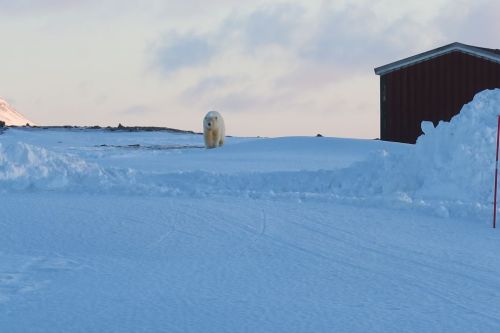
A polar bear was spotted this year on Bear Island (Bjørnøya) in the southern Barents Sea on 8 March by the crew at the Meteorological Station. The last time these workers had seen a polar bear was 2011 but this year extensive Barents Sea ice literally brought a bear to their doorstep, similar to the way that sea ice brings bears to southern Labrador and Newfoundland in late winter and spring.

Bear island 8 March 2019_first bear seen by Meteorological Institute station crews since 2011_Bjørnøya Meteorological Station photo

After below-average ice cover around Svalbard for most of the winter months of January and February, by early March the ice had expanded so far to the south it reached Bjørnøya. It was the kind of ice that hadn’t been seen in decades and almost immediately, a polar bear was spotted on shore. Given the length of time that the ice surrounding the island persisted, it is likely more bears came ashore but were not seen: the Meteorological Station at the north end of the island is the only place that people live over the winter (see maps below).

Continue reading

Shockingly thick first year ice between Barents Sea and the North Pole in mid-July

In late June, one of the most powerful icebreakers in the world encountered such extraordinarily thick ice on-route to the North Pole (with a polar bear specialist and deep-pocketed, Attenborough-class tourists onboard) that it took a day and a half longer than expected to get there. A few weeks later, in mid-July, a Norwegian icebreaker also bound for the North Pole (with scientific researchers on board) was forced to turn back north of Svalbard when it unexpectedly encountered impenetrable pack ice.

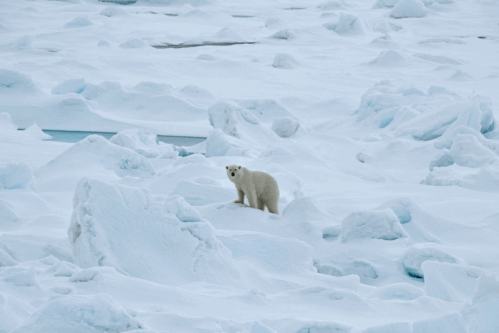
Franz Josef Land polar bear 2019 no date_Photo by Michael Hambrey_sm

A polar bear on hummocked sea ice in Franz Josef Land. Photo by Michael Hambrey, date not specified but estimated based on tour dates to be 22 or 23 June 2019.

Apparently, the ice charts the Norwegian captain consulted showed first year ice – ice that formed the previous fall, defined as less than 2 m thick (6.6 ft) – which is often much broken up by early summer. However, what he and his Russian colleague came up against was consolidated first year pack ice up to 3 m thick (about 10 ft). Such thick first year ice was not just unexpected but by definition, should have been impossible.

Ice charts for the last few years that estimate actual ice thickness (rather than age) show ice >2 m thick east and/or just north of Svalbard and around the North Poie is not unusual at this time of year.  This suggests that the propensity of navigational charts to use ice ‘age’ (e.g. first year vs. multi-year) to describe ice conditions could explain the Norwegian captain getting caught off-guard by exceptionally thick first year ice. It also provides an explanation for why the polar bear specialist onboard the Russian icebreaker later failed to explain that first year ice of such shocking thickness was truly extraordinary, not just a bit thicker than usual.

Continue reading

First Churchill problem polar bear report of the season: its only incident caught on film

We are constantly told things are getting worse for polar bears, especially those in Western Hudson Bay, because the ice-free season there was predicted to decline earlier than other regions. It hasn’t turned out that way but that does not stop the public rhetoric of doom or NGOs pleading for funds.

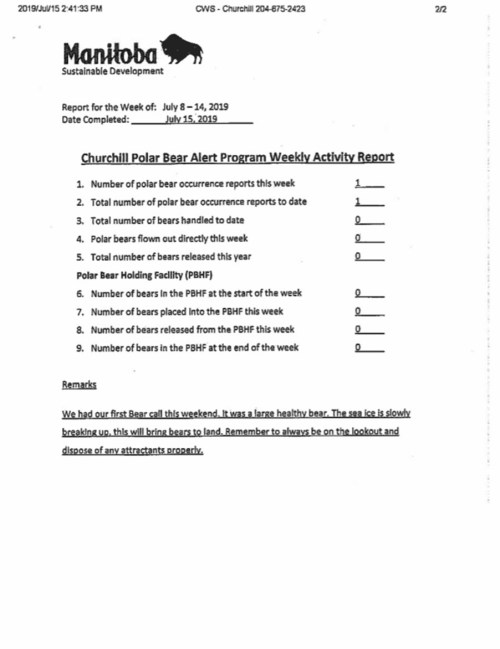
Last week, the Town of Churchill made public its first problem polar bear report of the year but oddly, it has only one entry.  This is the first time I’ve seen such a sparse first report:  since 2015, the first few incidents of the season have been subsumed into a first week report (issued no earlier than the first week of July) that announces the arrival of many bears on land.

Churchill problem bears_week 1_2019 July 8-14

Is this report of an isolated incident an attempt by Polar Bear Alert officials to make sure the first report of the season was not issued weeks later than usual? Or was it posted in isolation because the official response to the incident was caught on video and shared on social media (see below)?

UPDATE 22 July 2019: Published early this afternoon by the Town of Churchill, the problem polar bear report for the 2nd week of the season claims an error in last week’s report that they only just noticed when preparing this week’s report (but a full 24 hours after this blog post was published – but that’s probably a coincidence). Below is the report for week 2 (15-21 July 2019), showing that three incidents occurred last week.

Churchill problem bears_week 2_2019 July 15-21

Continue reading

Today: Talking with Glenn Beck later this morning about the Netflix walrus fiasco

At 11:30 am ET, I will be talking to Glenn Beck on his radio program about the lies and misinformation that Netflix and WWF are spreading via their ‘Our Planet’ documentary sequence on Pacific walrus, aided and abetted by narrator Sir David Attenborough.

Beck interview blog post header 5 June 2019 Walrus fiasco

See my previous posts on this issue here and here. The video I produced with help from the Global Warming Policy Foundation last month is copied below:

I will post a link to the podcast as soon as I am able.

Activists who use polar bears as a symbol of climate change are out of touch with reality

Young activists like Ollie Nancarrow from the UK need to find another symbol for their messages of climate change. Polar bears are thriving despite recent dramatic declines in summer sea ice: they have not been devastated as predicted by declining summer sea ice blamed on climate change. Anyone who uses a polar bear image to further a message of climate change, as Ollie has done, is simply out of touch with reality.

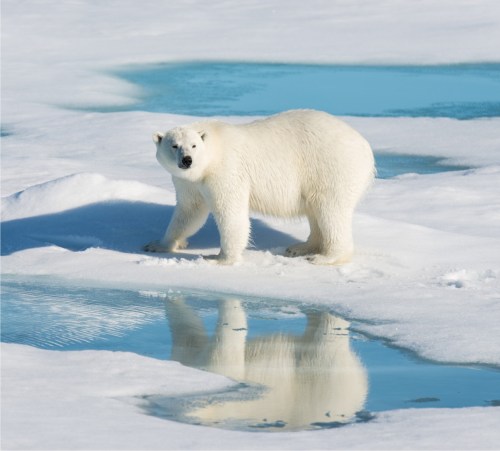
Standing bear_shutterstock_751891378_cropped web sized

UPDATE 4 June 2019: Police instruct activist teen to remove ‘rude’ message from UK field. He turned the penis into a turtle but apparently, the polar bear remains.

Continue reading

Photographer’s claims that Inuit hunting is unsustainable are not supported

A campaign by an anti-hunting Norwegian photographer to destroy the market for legally-hunted polar bears in Canada makes a few disturbingly false claims and an article at National Geographic in which he is quoted further distorts the picture of polar bear conservation. I understand that some people object to hunting and wish more people felt like they do – but this sort of argument is unlikely to sway any but the most gullible.

Cover photo Ole J Liodden small web

Norwegian photographer Ole Liodden apparently has a master’s degree in “nature management and environmental policy“. He takes fabulous polar bear pictures (I purchased one of them, above, for the cover of my novel, EATEN) but his crusade to ban hunting and trade in polar bear products world-wide has lead him to misrepresent essential facts, which is no way to win an argument. A National Geographic writer and several polar bear specialists have provided additional spin and used it as an excuse to promote their failed prophesies that polar bears are doomed: “Should polar bear hunting be legal? It’s complicated” (28 May 2019).

Continue reading

Zoos abrogate their position of trust by misleading the public about polar bears

Since at least 2007, zoos around the world have proudly partnered with climate change activist organization Polar Bears International to ‘educate’ the public about the plight of polar bears. Although contrary to all expectations, polar bear numbers have increased slightly since the abrupt decline of sea ice in 2007 yet zoos are still promoting the false message that polar bears have already been gravely harmed by lack of sea ice.

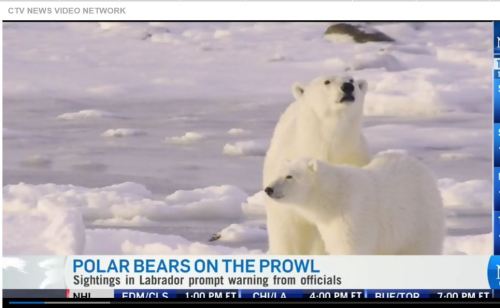
CTV News on pb sightings Labrador as climate change warning

A news clip that aired on Canadian television in April 2019 was ostensibly about recent sightings of polar bears in Labrador (which I discussed here). But it digressed rapidly into a baseless diatribe about polar bears as victims of climate change, delivered by an animal keeper from the Toronto Zoo presented as an ‘expert’ on this topic.

See it here (about 4 minutes long).

And while I have no doubt that Toronto Zoo curator Maria Frankie is indeed an expert in keeping mammals in captivity, she appears to have zero qualifications to speak with any critical scientific authority on climate change, sea ice variability, or polar bear survival in the wild.

Frankie is complicit in spreading misinformation about polar bears to an unwary public (including children) as a method of spurring political action on climate change as surely as David Attenborough is to blame for spreading misinformation about Pacific walrus. She is being used by PBI but is too naive to realize it.

Continue reading