Category Archives: Life History

Polar bear habitat update and attempts to spoil the good news for kids

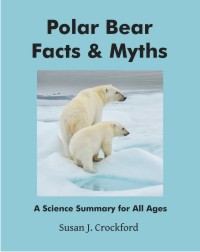
The trolls are out in force at Amazon, posting negative reviews of my new book, Polar Bear Facts & Myths – they just hate it when credible scientists won’t promote a message of doom. It seems folks of this ilk truly want children to have nightmares about drowning, starving polar bears; they encourage kids to frantically turn out lights in a vain attempt to “Save The Sea Ice” while unbeknownst to them, the polar bears and seals prosper.

I expect those same fear-mongers will really hate my next book, due to be released early next week, because it presents the evidence in a way all readers will understand with the references to back it up. Polar bears and ringed seals are thriving despite recent losses of summer sea ice and there is seemingly a huge body of activists and scientists who don’t want people to know that simple fact.

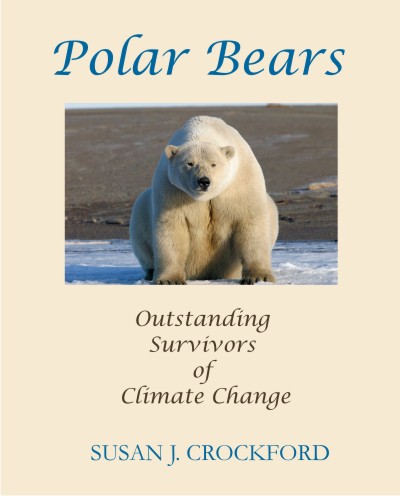
Coming soon    Polar Bears: Outstanding Survivors of Climate Change

Back to polar bear habitat news, here is the sea ice map for 30 December 2016: Hudson Bay iced-over and lots of ice moving down southern Davis Strait:
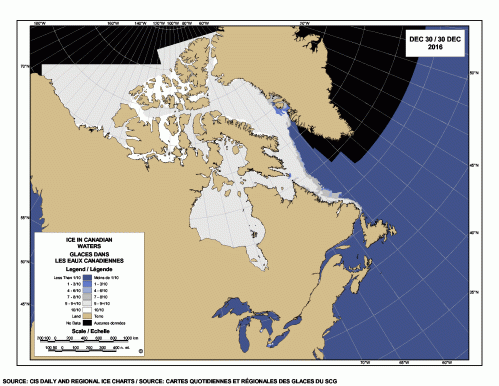
Sea ice extent Canada 2016 Dec30_CIS.gif

Compare to last year at this time, when polar bears did not die off in droves anywhere in Canada (or we would have heard about it) – remember that 2/3 of the word’s polar bears live in Canada:
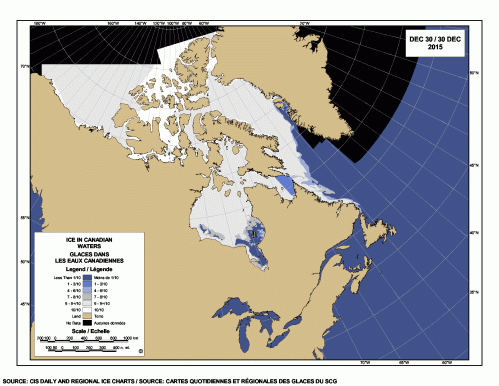
canadian-arctic-dec-30-2015_cis

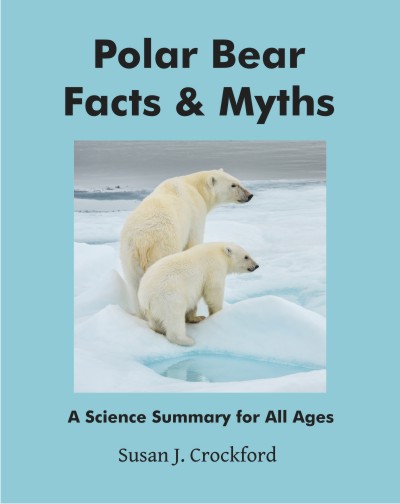
Polar Bear Facts & Myths now available and may arrive in time for Christmas

The first science book suitable for kids that tells the whole truth about polar bears and climate change is now for sale at Amazon.

fm_small

This beautiful, full color summary (44 pages, 8 x 10 inches) explains in simple terms why polar bears are thriving despite the recent loss of Arctic sea ice. It’s written in a question and answer format, in language that readers of all ages can understand (age 7 and up). The book takes a sensible, big-picture approach that many readers will appreciate and is based on the most up-to-date information available.

This is the perfect gift for some of the polar bear lovers on your gift list and if you act quickly (order here), your book may arrive before the 25th. At this time, only the paperback is available but some ebook versions should be out shortly. 

For purchasers for which a pre-Christmas delivery isn’t going to work (publication will be later in Europe; shipping is faster to eastern Canada and the US than to the west), I have provided a gift card you can download to print off and give in lieu of the physical book (kind of a placeholder until it arrives).

UPDATE: 18 Dec. 2016 Now listed at Amazon Canada and Amazon UK

Download gift card PDF HERE for Polar Bear Facts & Myths

Download gift card PDF HERE for Polar Bears: Outstanding Survivors of Climate Change  (coming soon, see below).

[Download Christmas gift cards, one per page, for both books here]

Check my book website for updates.

For adults & high school students (coming soon Now available)

os_small

This color, fully-referenced polar bear science book is aimed at adults and high school students. Polar Bears: Outstanding Survivors of Climate Change is fashioned after the popular lecture with the same title I have given since 2009, which has been enthusiastically received by audiences with diverse backgrounds.

My book website now has full details of these new non-fiction books (along with a revised author biography) and will be updated regularly regarding formats and venues as they become available. Details for EATEN on that site has moved to its own fiction page.

Hudson Bay could be ice-free in winter within 5-10 years, says seal researcher

Ringed seal biologist Steven Ferguson, in a statement to a reporter from the Winnipeg Free Press, made one of the boldest predictions I’ve ever heard:

crystalball_468x317_predictions_sq


“Hudson Bay could experience its first ice-free winter within 5-10 years.”

You heard it here, folks. It appears Ferguson thinks Hudson Bay was never ice-free in winter even during the Eemian Interglacial, when the Bering Sea was ice-free in winter – something that has not come close happening in recent years (Polyak et al. 2010:1769).

Sounds like a bit of ill-advised grandstanding to me.

Continue reading

An El Niño year late start to freeze-up on Hudson Bay: bears gearing up to hunt

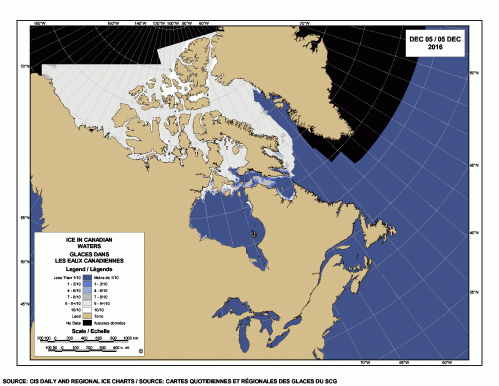
There is no serious ice on the west shore of Hudson Bay yet (as the map below shows) but the winds have just shifted – instead of coming from the south, they are now blowing in from the north.

Freeze-up and a resumption of seal hunting for Western and Southern Hudson Bay polar bears looks imminent. The bears get out on the ice as soon as they are physically able, when the ice is about 3-4 inches thick (about 10 cm).

sea-ice-extent-canada-2016-dec-5_cis

I’m going to let Kelsey Eliasson from PolarBearAlley, on shore at Churchill, convey the gist of the freeze-up situation on the Bay.

Recall that freeze-up was late in both 1998 and 1999 – during the height of that strong El Niño warmth as well as the year following. Continue reading

No correlation between freeze-up dates for Hudson Bay & total Arctic ice cover

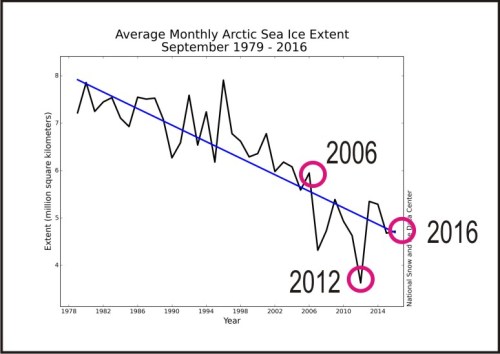
Guess which year between 2006 and 2016 had the latest start to freeze-up on Hudson Bay, given that 2012 had the lowest September average and 2007 and 2016 tied for second-lowest (see graph below, from NSIDC), and that sea ice in the Arctic right now is the lowest it’s been for this date since 1979?

sea-ice-sept-averages-graph-only-marked-for-2006-up

If you guessed anything other than 2010, you guessed wrong – in addition, 2006 (not 2016) was second latest.

There is no correlation between Arctic sea ice coverage and freeze-up dates for Western Hudson Bay.

Yet, Polar Bears International (“Save Our Sea Ice”) –  who were surely in and around Churchill in 2010 and 2006 watching polar bears – just posted an alarming statement about local conditions, implying that slow freeze-up of Hudson Bay this year is a reflection of the fact that “sea ice is at a record low across the Arctic.”

They also claim that “…the weather is the warmest we’ve ever seen at this time of year.” That may be true, but if so, it is also meaningless with respect to the progress of freeze-up.

Does no one at PBI remember the very late freeze-up of 2010 or 2006? Odd, that.

Continue reading

Polar Bear Alert report for 1st week of November 2016, Churchill Manitoba

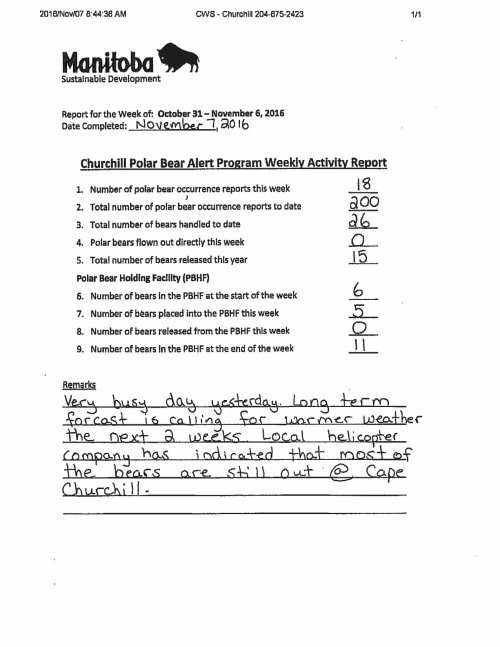
Week 17 (I’ve been counting) for 31 October – 6 November (Week 1 was 11-17 July):

“Most bears are still out at Cape Churchill.” [see map below]

2016-oct-31-nov-6_week-17_week-11-missing

See previous reports here, and here. Ten-day sea ice animation, CIS.
Continue reading

Ice formation in W Hudson Bay slower than 2015 but not likely as slow as 1983

After a great start this year for Churchill-area polar bears of Western Hudson Bay – who came off the ice in better than usual condition after what must have been a good spring hunting season – ice maps suggest that freeze-up will be later than last year, an impression confirmed by on-the-ground observers.

Ice coverage this year at 7 November (2016):

sea-ice-extent-canada-2016-nov-7_cis

Ice coverage last year at this date (7 November 2015), see this post for details:

UPDATED 23 November 2021: see below.
Continue reading

Tracking west Alaskan polar bears in the Beaufort in October – all at Banks Is., CAN

polar-bear-habitat_usgs-from-cbc-story-sept-19-2015

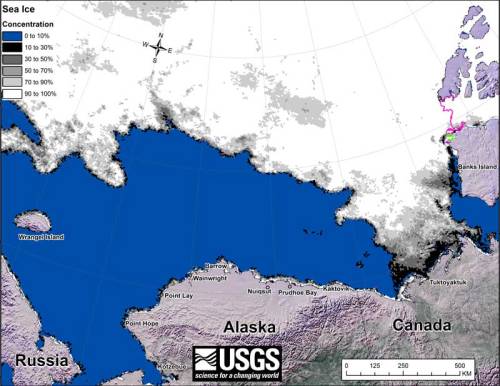
Two out of three polar bear females that were collared by USGS researchers near Barrow, Alaska last spring are hanging out on the northwest coast of Banks Island, Canada. The other bear (bright green icon) appears to have been collared on the ice off Prudoe Bay in April. And as I discussed last month, it’s unusual for bears from the western end of the Southern Beaufort subpopulation (or even the central region) to end up in the Northern Beaufort subpopulation territory.

beaufort-tracking-usgs-bear-movements-october-2016-sm

Original caption: “Movements of 3 satellite-tagged polar bears for the month of October, 2016. Polar bears were tagged in 2016 on the spring-time sea ice of the southern Beaufort Sea. All 3 of these bears have satellite collar transmitters. Polar bear satellite telemetry data are shown with AMSR2 remotely-sensed ice coverage from 29 October, 2016.” See full resolution image here and close-up below.

Continue reading

Fall Arctic ice growth often differs regionally: 2016 compared to other years

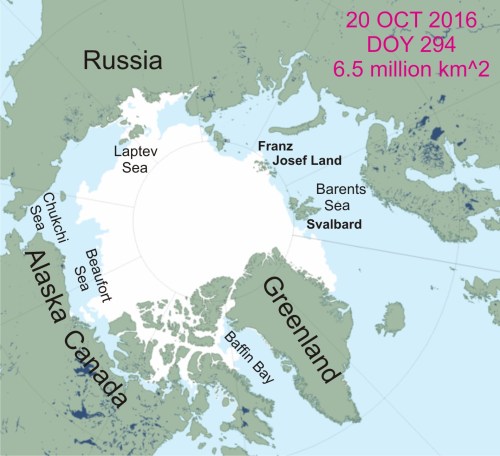
Arctic sea ice is spreading out quickly from its central basin summer refuge – according to this NSIDC Masie ice chart, it has already grown more than 2 mkm2 beyond the annual minimum reached in early September. Ice is already pushing south into the eastern Beaufort and the archipelago of Franz Josef Land in the Barents Sea.

masie-sea-ice-2016-oct-20-cropped-and-marked_polarbearscience

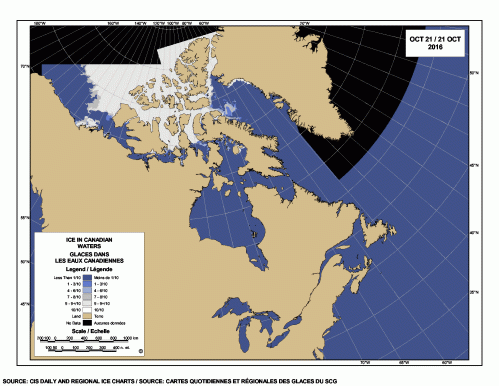
Over the next couple of weeks, shorefast ice will start forming along the coasts of North America and Eurasia (see the first bits off Alaska in the 21 October CIS map below), which will eventually meet the expanding Arctic Basin pack to fill the Basin and Canadian Arctic Archipelago with ice – as it has done for eons.

sea-ice-extent-canada-2016-oct-21_cis

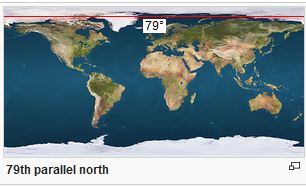
The evidence from the last decade or so suggests that by the end of October, most of the Arctic north of the 79th parallel (see map below) will be filled with ice – although the Chukchi Sea (north of the Bering Strait) may not fill until sometime in November:

79-th-parallel-north_wikipedia

Polar bears usually resume hunting as soon as sea ice conditions permit in the fall, since it’s their last chance to top up their fat reserves before the dark and cold of winter when hunting may become next to impossible.

I’ve copied ice charts from the Masie archives for some previous years at 31 October below.

Continue reading

Kaktovik, AK has a polar bear problem but not because bears are desperate for food

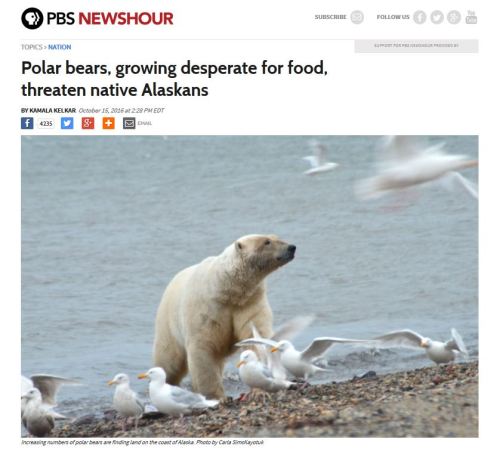
PBS has published a bizarre poor-starving-polar-bears story that uses pictures of fat, healthy bears to illustrate the supposed desperation of malnourished bears of the Southern Beaufort Sea that is blamed on declining sea ice.

pbs-newshour-headline_15-october-2016

The photo of the fat bear above, taken by the Kaktovik resident quoted in the 15 October 2016 PBS story, Polar bears, growing desperate for food, threaten native Alaskans, accompanies this statement:

“While images of malnourished polar bears have become a national symbol of the effects of climate change, they are a front line reality for Native Alaskans, who face them on their own property and do not want them to get hurt.”

Except this is not a story about starving bears but too many fat bears hanging around one particular community looking for other kinds of food – after being lured in by the enticing smell of rotting whale meat left onshore by the residents.

If photos of starving Beaufort bears existed that PBS could have used to illustrate this story, I’m certain those photos would have been used. But virtually all of the pictures I’ve seen of Kaktovik bears are the epitome of health – fat and sassy – but none that could be described as starving.

polar_bear-US FWS_young bear Alaska maybe Kaktovik no date.jpg

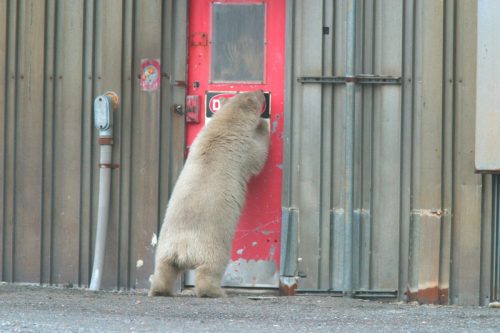
It turns out that while native Kaktovik residents have profited from tourists and journalist who have shown up in droves to view the large numbers of bears attracted to the bone piles left after butchering summer-caught bowhead whales, the bears have also put the community at risk of personal attack and loss of stored food. Who would have thought?

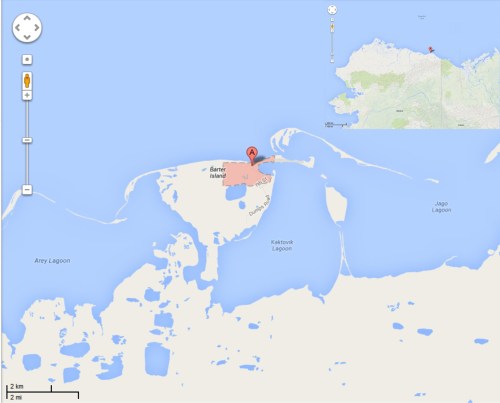
Residents of Kaktovik (see map below) have unwittingly enticed these polar bears ashore and now must deal with the consequences. As the residents of Churchill discovered decades ago, having polar bears close to your community comes with benefits, problems – and danger.

kaktovik-composite

There is no doubt that Kaktovik has a polar bear problem but it cannot plausibly be blamed on anthropogenic global warming, retreating sea ice, or starving bears – an irresistible attractant close to the community is the cause and solutions must be found to keep residents safe and their food secure. The PBS article discusses a few of those solutions. Some quotes and background below.

Continue reading