Category Archives: Life History

Polar bear watching in high gear near Churchill as everyone waits for the sea ice to form

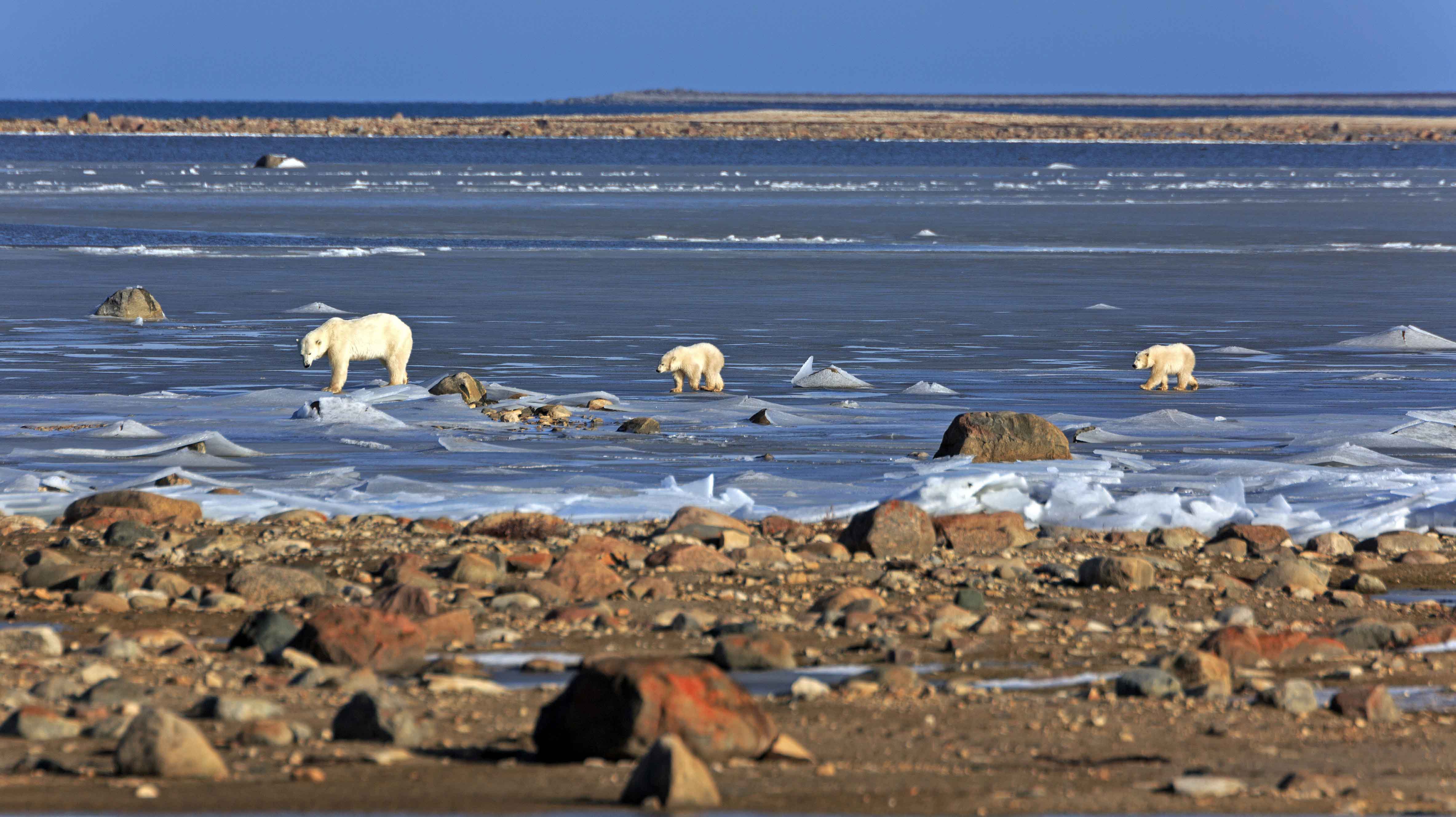
All of the bears within view of the coastal web cams on the shore of Wapusk National Park near Churchill on Western Hudson Bay seem to be in very good shape this year, despite having come off the ice a few weeks earlier than they have over the last few years. Despite this, problems with bears in Churchill seem to have been below average this year. Some great action can be seen via several Explore dot org live web cams that are streaming from shore right now.

A sow with yearling cub; 1 November 2021

No ice forming yet along the west coast of Hudson Bay as of today, which is a bit later than it has been for the last few years. That means some of these bears will likely have spent almost 5 months onshore by the time they get back on the newly-formed ice and resume hunting seals.
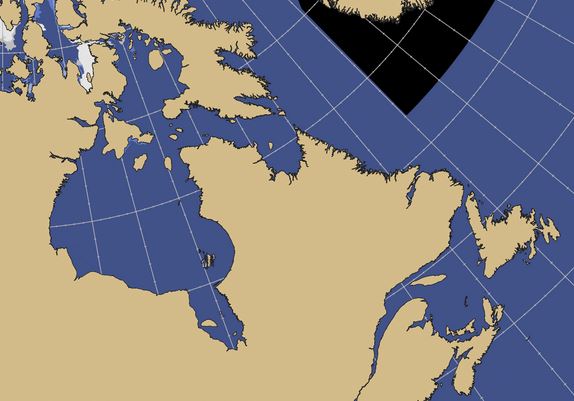
Hudson Bay shows no ice forming along the west coast, closeup at 2 November 2021
Continue reading

Caught on film: polar bear stalks, kills and eats a Svalbard reindeer but climate change is hardly to blame

The possibility that a polar bear somewhere in the Arctic might occassionally be successful at stalking and killing a reindeer (aka caribou) shouldn’t surprise anyone, let alone a biologist on Svalbard. But having video footage of the event makes it immediately newsworthy, especially when the researchers vaguely suggest that global warming might be to blame.

The title of the scientific paper that has generated the latest polar bear hype is called ‘Yes, they can: polar bears Ursus maritimus successfully hunt Svalbard reindeer Rangifer tarandus platyrhynchus’ (Stempnlewicz et al. 2021).

Would any serious scientist really think they couldn’t?

Continue reading

No signs of a climate emergency for W. Hudson Bay polar bears this year ahead of UN climate meeting

I’ve been told that another complete aerial survey of the Western Hudson Bay polar bear subpopulation (from the Nunavut to Ontario boundaries) was conducted in August this year and that the bears have been hanging out further south than usual. It will be years before the results of the population count are published, of course (especially if it’s good news) but my contacts also say virtually all of the bears are in great condition again this year.

This is significant because W. Hudson Bay bears are one of the most southern subpopulations in the Arctic (only Southern HB bears live further south) and older data from this region is being used to predict the future for the entire global population based on implausible model projections (Molnar et al. 2020). And scary predictions of future polar bear survival are often taken to be proxies for future human disasters (see ‘Polar bears live on the edge of the climate change crisis‘), a point that some activists will no doubt make in the coming weeks, as the long-awaited UN climate change bash #26 (COP26) gets underway in Glasgow, Scotland on October 31.

Continue reading

Churchill problem polar bear reports finally completed and posted online

Although since 2015 at least the Polar Bear Alert Program in Churchill Manitoba usually issued and published its problem bear reports weekly during the ice-free season, this year has been an odd exception. Two reports in early July, then nothing. Yesterday, there was a dump of reports that had been compiled on 1 September and 7 October, according to their metadata.

There are still a few weeks missing, including the two most recent weeks but at least now we have a more complete picture of what’s been going on with problem bears in The Polar Bear Capital of the World that can be compared to previous years. Such reports in various forms go back to the late 1960s, although only those from recent years have been publicly available (Kearney 1989; Towns et al. 2009).

Continue reading

Alaska polar bear researchers claim poor sea ice limited spring field work in 2021 more than 2019

According to an Inside Climate News report, polar bear researchers at the US Geological Survey had trouble darting bears in the Southern Beaufort Sea in March-May of 2019 and 2021. They claim their research program was hampered by thinner-than-necessary ice for safely landing the nearly 4,000 lb. outfitted helicopter (with crew and gear) in 2019 but that conditions in 2021 were even worse (it is implied work proceeded in 2020 despite pandemic restrictions but no data for that year are discussed).

However, this claim of worse conditions in 2021 is not corroborated by reports from sea ice experts and ice charts for the Southern Beaufort this spring, where thick first year and multiyear ice was present from March through June. Ice didn’t begin to pull away from landfast ice to form patches of open water near the Canadian border until late April 2021 compared to early May in 2019 (as it did in 2016), as shown in the video and charts below. Moreover, the researchers oddly fail to mention that the presence of thin ice and open water in spring is essential for polar bear survival in the Southern Beaufort, a fact which has been documented and discussed in the scientific literature by their colleagues.

Continue reading

Sea ice growth after the summer minimum begins in the Canadian Arctic Archipelago

The Arctic sea ice minimum was declared to have been reached on 16 September this year (4.72 mkm2), breaking no records.

Ice extent can only go up from this point forward but at this time of year, it happens slowly and isn’t noticeable in the Arctic Basin as much as it is in the Canadian Arctic Archipelago. As I wrote about last year, new ice development in the fall next to shore creates upwelling conditions that attract fish and seals, and therefore provides feeding opportunities for polar bears.

The same process likely happens when new ice forms next to old ice. These few weeks of developing sea ice, wherever they occur, are the last chance polar bears have to replace weight lost over the summer before the cold and darkness of winter reduces hunting opportunities to virtually nil.

Continue reading

Fat polar bear of late summer in Arctic Canada

Retired Mountie and bird photographer Clare Kines captured on film one of those ‘canaries of in the coal mine’ of the Canadian Arctic we hear so much about. Kines is from Arctic Bay and took the photo a few weeks ago, on 9 September, on the north end of Baffin Island (just east of where the famous National Geographic ‘starving’ bear was filmed in 2017). His photo was published 14 September by Nunatsiaq News.

Continue reading

Polar Bear Facts & Myths for young readers in Portugal and Brazil

Due to the efforts of Thiago Maia and his team of assistants (Igor Vaz Maquieira and Márcio Calixto), I can now offer a Portuguese translation of my popular Polar Bear Facts & Myths science book for young readers in Brazil and Portugal.

Urso Polar Fatos E Mitos agora disponível em Português!

Continue reading

Western Hudson Bay fat polar bear video from the shore of Wakusp National Park

Here is a short video from last week on the shore of Wapusk National Park of a fat sow and her fat cub. At this time of year, the Cape Churchill caribou herd (population ca. 3,000) is wandering by with their new calves. Unlike deer, both male and female caribou have antlers. The bears and the caribou simply ignore each other most of the time. Very rarely, a bear will chase one and even more rarely, catch one. However, the bears will scavenge caribou kills made by wolves, which are their primary predator.

Polar Bears and Caribou Explore org 18 August 2021

Continue reading

Polar bear habitat update for end July 2021 compared to previous years

Here’s a trip down memory lane for Arctic sea ice at the end of July, which as far as I can see provides no evidence that a very low sea ice disaster is in the cards for polar bears this year.

Continue reading