Category Archives: Polar bear attacks

Climate change not forcing polar bears to hunt humans but lack of baby seals might

At least a dozen polar bears that besieged a remote Russian weather station on an island in the Kara Sea during the first two weeks of September prompted a few media pundits to suggest that loss of summer sea ice due to global warming may be forcing polar bears to hunt humans for food. Headlines like the one below, from the IB Times, fueled such notions:
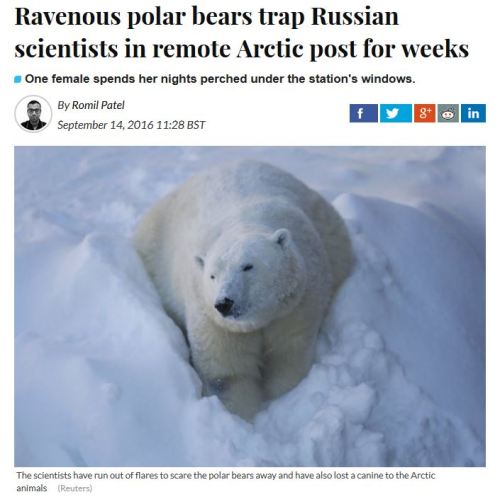
russian-scientists-trapped-by-polar-bears-14-sept-2016_ib-times

Eye-catching though such headlines might be, this is more sensationalism than reality.  These particular bears have been onshore since early July this year (about the time some Western Hudson Bay bears come ashore) and sea ice conditions have been similar this time of year since 2007. In other words, despite what some writers are claiming, sea ice conditions this year are nothing new.

A few bears usually visit this station each summer when the sea ice leaves – but this year there were more than a dozen bears rather than a few. My opinion as a scientist is that more bearsmore bears that are increasingly unafraid of people – are likely the cause of the sudden increase in numbers of bears being a problem at this location. Note that of the 14 bears, four were cubs, which is a good crop of youngsters.

In addition, hunting polar bears is banned in Russia and this incident shows to what lengths people must go to avoid killing them – the population must be booming and may be higher yet than the last population count (in 2013) of about 3,200 bears. More bears means more competition for food, which means more assertive bears get the goods. None of these bears were described as thin or starving – see more photos, like the one below, from the Russian weather station (Daily Mail, 18 September 2016).
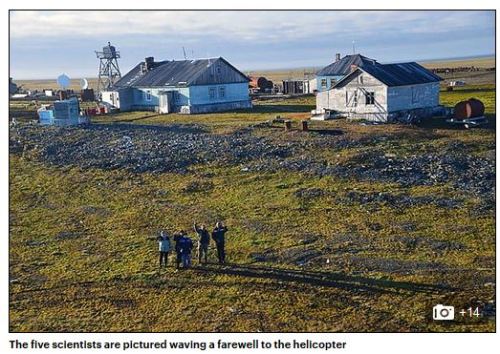
russian-weather-station-troynoy-island_mailonline-18-sept-2016

While polar bears are always on the look-out for food (and thus always a potential threat to humans), they are most apt to be truly dangerous in winter (when they are at their lowest body weight)  and in spring if seals are in short supply.

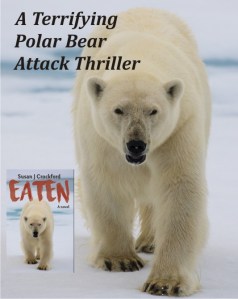
That’s why my new polar bear attack thriller EATEN is set in early spring, in a year when seals happen to be scarce. Imagine the damage those Russian polar bears could have done if they’d been truly desperate for food – a mere door or window would not have stopped them.

Imagine if dozens of truly ravenous polar bears stalk and ambush people across a great frozen landscape, taking them by complete surprise because no one considers a bear attack in spring to be a real possibility. What if dozens of people have been killed and eaten by hungry polar bears and there is no end in sight? That is the premise of EATEN – a science-based novel set in Newfoundland that will scare your pants off.

This is a great read for fall, when polar bear encounter stories abound. Hopefully the reports this year won’t include the kind of serious mauling that happened in 2003.
sept-reading-promo_eaten
Continue reading

Add human graves to the list of things that attract polar bears to communities

A report last week that a polar bear dug a human cadaver out of a coffin buried in the cemetery on the west coast of Hudson Bay did not get the media attention it perhaps deserved: it takes the term ‘grisly’ to a new level.

Early arrival of polar bears at Nunavut hamlet prompts early monitoring: One bear digs into burial plot at Arviat cemetery (NunatsiaqOnline, 29 August 2016).

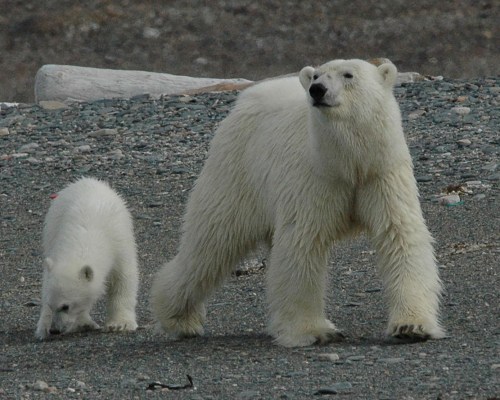
mother-and-cub-on-beach_Stirling

Quotes from the story, a map, and comments on problem bears below.
Continue reading

Most polar bears easily deterred this time of year, lucky Labrador boaters discover

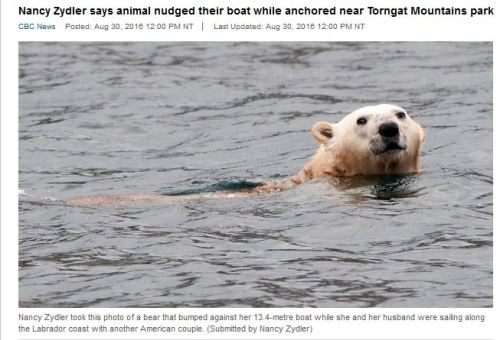
A polar bear female accompanied by a cub recently attempted to board a small sailboat anchored in a remote harbour off central Labrador – giving the two American boaters below deck a mighty big surprise.

Labrador polar bear encounter Torngat boat_CBC 30 Aug 2016

‘He said ‘it’s a bear, it’s right on the boat, make some noise.'” – Nancy Zydler

The encounter occurred south of the same national park where a much-publicized attack occurred in July 2013 (see previous posts here and here) but had a happier ending. See more below from a CBC report released this morning (based on a radio interview) and some ecological context for the sighting not mentioned by the reporter.
Continue reading

Canadian Prime Minister risked being EATEN by polar bears on Fogo this year

This week (Tuesday 9 August), British Columbia’s Knowledge Network is re-running the 2015 documentary about the revitalization of Fogo Island, the Newfoundland location featured in my polar bear attack thriller, EATEN. It’s called Strange and Familiar: Architecture on Fogo Island and highlights the Fogo Island Inn, where our recently elected Prime Minister Justin Trudeau apparently spent a weekend earlier this year – gambling he could avoid a lethal encounter with a hungry polar bear when fictional others haven’t been so lucky.

Fogo Island special on Knowledge Network_9 Aug 2016

The Prime Minister and his family stayed at the Fogo Island Inn over Easter (25-28 March 2016). Did Justin Trudeau know they could have been EATEN by a polar bear at that time of year? Were members of his security detail actually prepared for a polar bear attack?

Did Trudeau’s advisors do any preparatory reading? I mean, seriously: aside from reading my terrifying science-based novel (where polar bear attacks take place right outside the Fogo Island Inn where the Trudeaus were staying), Fogo (see maps below) has a recent history of polar bear visits.

Most bears come ashore on Newfoundland in late March-early April, although this year one came ashore on Fogo in late January. Another was shot in early May this year as it advanced on an RCMP officer near one of the artist’s studios on Fogo. I guess I’ll have to send a complimentary copy to Ottawa…because next time, what with polar bear numbers increasing in that region, this high-profile family might not be so lucky.

“What-if” indeed…the risks they took are mind-boggling. Continue reading

Four years of PolarBearScience and polar bear habitat for ‘Christmas in July’

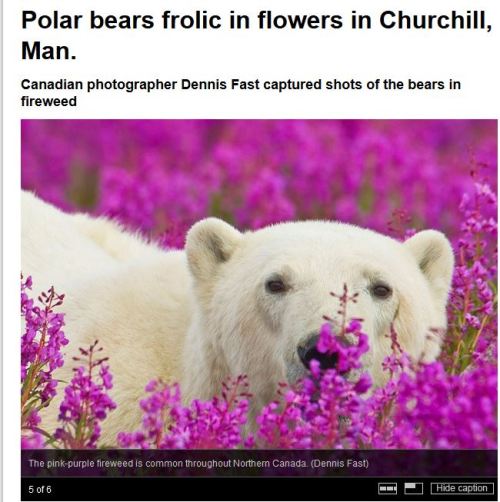
The traditional gift for a 4th anniversary is flowers, so to celebrate 4 years of blogging at PolarBearScience, I’m highlighting a CBC article from last year that featured the work of photographer Dennis Fast, who captured some fantastic images of polar bears cavorting in a field of fireweed near Churchill (see screencap below from the 2015 CBC feature, more at the DailyMail for 21 August 2015). Great photography – it deserves another look.

Churchill pbs in wildflowers_CBC feature_August 2015

Hard to imagine that four years have passed! Cheers to Hilary Ostrov (who blogs at The view from here) for getting me over my initial frustrations with WordPress – without which I’d never have made it this far – and for her much-appreciated typo alerts [Hilary is still dealing with on-going health issues but we talk on the phone from time to time.]

And thanks of course to my readers, who’ve made it all worthwhile. I truly appreciate all your tips and feedback. The word is getting out, via tweets and retweets, reblogging, personal blog and Facebook discussions, as well as links back to particular posts in the comments of news articles and other internet content, and straight up media mentions. The sum of it all has brought us to this point: 495 posts, over 764,000 views, and more than 411,000 visitors. Not too shabby for a single issue science blog, eh?

I thought of adding a Tip Jar button for next year, but decided against it – instead, if you’d like to support my efforts here, you can buy my polar bear attack novel (give it as a gift if you’re not keen on this type of fiction). I’d be just as grateful. See the sidebar for the link.

But back to business – below find sea ice maps of polar bear habitat at 25 July (‘Christmas in July’), this year as well as some previous years.
Continue reading

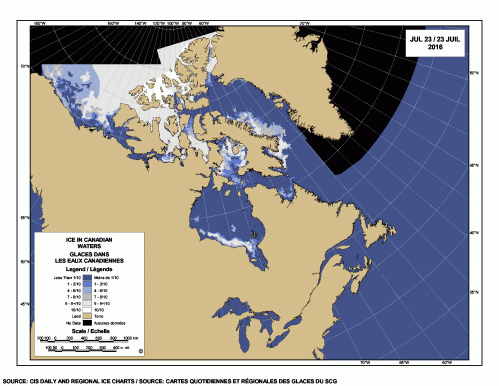
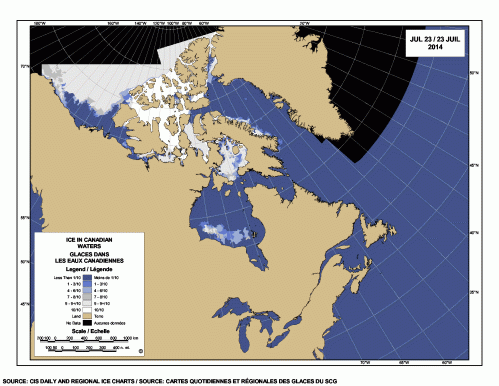
Sea ice habitat Canada update for 23 July 2016 vs. 2014 & the start of bear problems

Sea ice breakup is always a little bit different year to year but since I have the maps archived, take a look at the differences and similarities at this date for this year compared to 2014…

Sea ice extent Canada 2016 July 23_CIS

Sea ice extent Canada 2014 July 23 CIS

Is there evidence that any polar bears – say Western Hudson Bay bears, for example – were negatively affected by sea ice levels in 2014? Not that I’ve heard. In fact, quite the opposite.

Polar bear guide and blogger Kelsey Eliasson, writing from Churchill, Manitoba, had this to say about the condition of bears and freeze-up that year (16 Nov. 2014):

“With these families appearing [heading out to the ice], it really sums up at just what a productive season this has been for the western Hudson Bay population. Any guide who knows their stuff will tell you this was a banner year for cubs, one we haven’t seen in a long time.”

Meanwhile, bears are starting to come ashore and cause a bit of grief:

Southern Hudson Bay (two days ago): “Polar bear shot after wandering through Kashechewan” [see map below for location: the bear shot was a cub that appears to have been separated from its mother and sibling, who were spotted several km away not causing any trouble]

Iqaliut, Baffin Island (this morning): “Polar bear rips 6 tents pitched in Iqaluit park”

Continue reading

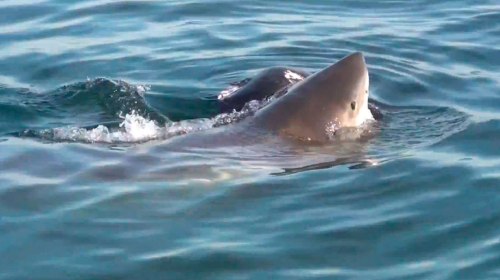
Sharks off Cape Cod vs. my polar bear attack thriller – an unnerving parallel

I watched an episode of Discovery Channel’s Shark Week last Friday and I have to admit, it gave me a terrifying déjà vu moment.

SharkAttacks seal cape cod 2012 video capture

Specifically, it was the episode called “Shark Bait” (1 July 2016) – about the potentially explosive problem of booming populations of grey seals around Cape Cod (NE US, Massachusetts), the increasing numbers of great white sharks that are moving in to hunt them (see trailers here and here), and the thousands of relatively blasé humans that play and surf in the shallows nearby. UPDATE: video now available on Youtube, see below:

What could possibly go wrong?

I’ve already imagined what could go wrong – in my polar bear attack thriller, EATEN.

The parallels of EATEN with this developing shark situation are more than a little unnerving and makes it clear that my piece of speculative fiction may apply to more than polar bears. [ebooks still on sale for 99 cents – see direct links at bottom of this post]

See the details on the great white shark/seal conundrum below and decide for yourself.
Continue reading

Polar bears are not bloodthirsty killers, says biologist [just don’t forget your gun]

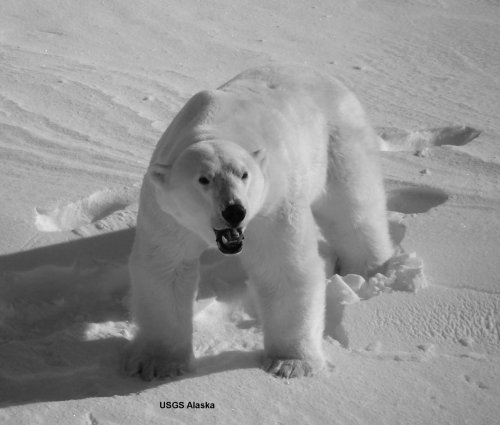
According to records compiled by James Wilder, a US Forest Service biologist, there were only 20 fatal polar bear attacks (out of 73 total attacks) between 1870 and 2014.

That’s what the 14 June 2016 account in the Anchorage Daily News says (“Sea ice has been keeping polar bears and humans apart — until now”). But I think it’s kind of delusional to suggest that a list of recorded attacks, spanning 145 years throughout the Arctic (including Russia), have captured more than a fraction of all actual polar bear attacks – given that many Arctic communities didn’t have reliable communications in the 1970s (let alone the 1870s). How about all the Inuit and Siberian hunters over the years who failed to return home because they were killed and eaten by a polar bear – unbeknownst to anyone?

Alaska PB USGS_marked

Wilder presents these numbers as a basis for saying how concerned he is that a longer open-water season in the Arctic could increase the number of attacks by polar bears – and he’s right, that’s a valid concern now that the global population of bears is so high. Many polar bears plus people in a confined area is never a comfortable situation, as the people of Churchill, Manitoba have learned.

But declining sea ice is not the only scenario that could lead to an onslaught of hungry bears and a slew of fatal attacks, as my new science-based novel EATEN highlights. The truth is that if polar bears don’t get enough food in the spring – for any reason – the ice off the beaches of Arctic communities gives polar bears easy access to human prey. If that happens, people had better be prepared – because doors and windows won’t necessarily stop a determined polar bear.

EATEN ebook sale 2016 susancrockford_dot_com

Continue reading

Colleague says EATEN possibly a real service to polar bear conservation

My last post, on the up-coming International Bear Conference in Anchorage, presents the perfect backdrop for highlighting a wonderfully unbiased review of my polar bear attack thriller, EATEN, penned by a prominent Canadian polar bear researcher who is utterly convinced that future sea ice loss is the biggest threat to the species (and a former student of the grand-daddy of all polar bear researchers, Ian Stirling).

June summer reading sale image3

Here is what polar bear-human interaction specialist Douglas Clark had to say about my novel in his Amazon review (note I did not send Doug a review copy because he did not request one – he bought it himself – so I had no idea this was coming):

Thought-provoking, and possibly a real service to polar bear conservation

His detailed thoughts on the book below.
Continue reading

RCMP shot fearless polar bear that came ashore on Fogo Island, Newfoundland

Just look at the polar bear on the cover of my new novel (right sidebar) and image that bear coming towards you with no intention of stopping. That’s what a Newfoundland RCMP officer faced yesterday – and he did what he had to do.

Fogo polar bear shot_CTV May 2 2016

This is the usual time for polar bear visits to northern Newfoundland but this one had a sad ending. The bear that came ashore at Deep Cove (where some of the action in my novel EATEN takes place, near the artist studio pictured in the photo shown above) on Fogo Island (map below) was killed by RCMP due to fears for public safety when it kept approaching officers even after warning shots were fired.

Maps and quotes from the 2 May CTV report below:

UPDATE 4 May 2016: more detailed (and accurate) information added below from a new CBC report – apparently, the bear was a large juvenile male, not an adult as originally reported, and was larger than initial reports indicated.

Continue reading