Category Archives: Population

Retraction request to Bioscience: FOIA emails document another harsh criticism of Amstrup’s 2007 polar bear model

Today I sent a letter to the editors of the journal Bioscience requesting retraction of the shoddy and malicious paper by Harvey et al. (Internet blogs, polar bears, and climate-change denial by proxy) published online last week.

The letter reveals information about the workings of the polar bear expert inner circle not known before now, so grab your popcorn.
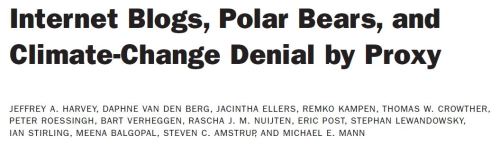
Harvey et al. 2018 in press climate denial by proxy using polar bears_Title

I have copied the letter below, which contains emails obtained via FOIA requests to the US Geological Survey and the US Fish and Wildlife Service by the Energy and Environment Legal Institute, E&E Legal, and the Free Market Environmental Law Clinic (USFWS request; USGS request) and sent to me by lawyer Chris Horner in 2014, unsolicited. I reveal some of them now, with his permission (most of the emails are boring, involving mostly technical topics not relevant to anything, as might be expected).

The emails in question, sent in 2014, pertain to preparations by three members of the Polar Bear Specialist Group for the IUCN Red List assessment due in 2015 (Kristin Laidre, University of Washington, Eric Regehr, US Fish and Wildlife Service, and Østein Wiig, Museum of Natural History, University of Olso), and Steven Amstrup (formerly head of the polar bear research at the US Geological Survey, now “head scientist” for conservation organization Polar Bears International.

They include frank discussions about a harsh critique of Amstrup et al.’s 2007 report and 2008 paper used to support listing polar bears as ‘threatened’ on the US Endangered Species List. The criticisms come from modeling expert and chair of the IUCN Red List Standards and Petitions Subcommittee (which develops guidelines for threatened and endangered species assessments, and evaluates petitions against the red-listing of these species), H. Resit Akçakaya. The IUCN is the world’s leading conservation organization, of which the PBSG is a part.

These records are a damning indictment that the “best available science” was not used to assess conservation status of polar bears under the ESA in 2008 and 2014 and show that I am not the only scientist who thinks Amstrup’s model is fatally flawed. The letter is copied in full below, the emails are copied at the end. A file of all of the entire pertinent email thread is available as a pdf below. Here’s a sample:
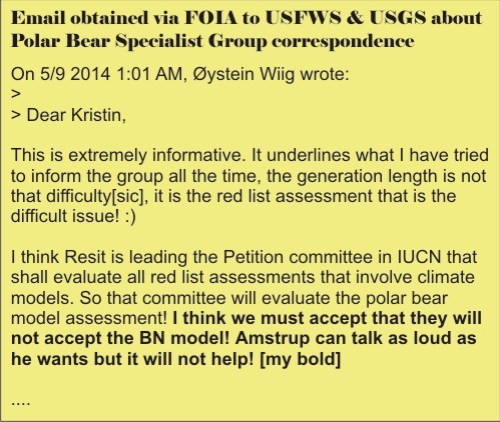
Wiig to Laidre_9 May 2014 follow up to Lunches with Resit_first part_redacted highlighted

Continue reading

Bioscience article is academic rape: an assertion of power and intimidation

Characterizing a professional, respected scientist as an unqualified vengeful opinion writer is the same kind of power attack as rape. It’s meant to humiliate and intimidate.

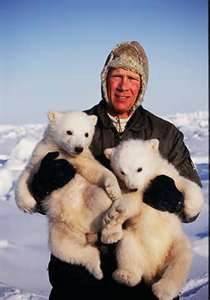
Amstup

I said this as part of a response to a comment at WUWT late yesterday (copied in full below). The picture above shows Steven Amstrup holding polar bear cubs against their will — not for any scientific purpose, just for a photo that shows he can.

Also yesterday, Tom Fuller at ClimateScepticism wrote a hard-hitting critique of the Bioscience article that similarly noted the sexist nature of this harassment and the fact that this is the way Michael Mann and his colleagues behave toward female scientists who cross them or their supporters. He concludes:

“The purpose of these papers is not to communicate.

It is to excommunicate.”

As I said when this paper first came out, this response is all about my reasoned and fully referenced criticisms of Steve Amstrup’s work in particular (although I have taken issue with some of Stirling’s recent work as well).

The evidence that Steve Amstrup is willing to lie in order to publicly degrade me and my work in retribution for not taking everything he says as the gospel truth comes from an article at Motherboard yesterday. In it, Amstrup was quoted as saying:

 “You don’t have to read far in her material to see that it is full of unsubstantiated statements and personal attacks on scientists, using names like eco-terrorists, fraudsters, green terrorists and scammers,” Amstrup said.

I wrote Motherboard and asked for clarification that this was indeed what Amstrup said because I know it to be a lie. Check for yourself using the search function on my blog, it’s easy to do. I have never used any of those terms to refer to anyone, let alone a fellow scientist.

Late in the day, I got this response from the writer of the piece:

“Thank you for your note. A clarification has been added to the article. (my emphasis)

“You don’t have to read far in her material to see that it is full of unsubstantiated statements and personal attacks on scientists, using names like eco-terrorists, fraudsters, green terrorists and scammers,” Amstrup said. In a follow-up email on Friday, Amstrup clarified that these statements to Motherboard were meant to reflect the climate denier community as a whole, rather than Crockford in particular.

Except Amstrup specificially referred to my work. I insisted further clarification was necessary but rather than noting that I had, in fact, never used those terms on my blog, the author added this statement:

“In an email to Motherboard, Crockford denied using those terms on her blog.”

So, the author of the Motherboard piece was willing to take Amstrup’s word for an egregious accusation and when Amstrup was caught in a lie, was unwilling to make that clear. And the media wonder why they have lost the public’s trust.

However, this is all a day late and a dollar short. The cat’s out of the bag regarding Amstrup’s failed predictions. My critique (Crockford 2017) is a thorough scientific exposé of his unsuccessful model (which used assumptions based on Amstrup’s expert opinion) and people in power are taking it seriously. The Bioscience paper says more about its authors than it says about me.

References

Crockford, S.J. 2017. Testing the hypothesis that routine sea ice coverage of 3-5 mkm2 results in a greater than 30% decline in population size of polar bears (Ursus maritimus). PeerJ Preprints 2 March 2017. Doi: 10.7287/peerj.preprints.2737v3 Open access. https://doi.org/10.7287/peerj.preprints.2737v3

Continue reading

Scientists and media continue to spread misinformation about polar bears & walrus

“Lies” might be a better word to characterize the misinformation that scientists and the media have been busy spreading to the public over the last few weeks. The information is either known to be false (by scientists whose job it is to relay facts honestly) or is easily shown to be false (by journalists whose job it is to fact-check their stories).

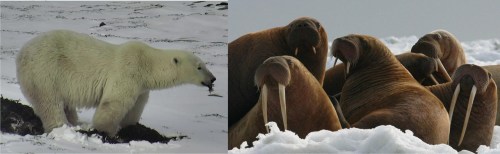
Churchill polar bear and walrus 2017

Continue reading

Breaking: 2016 W. Hudson Bay polar bear survey shows the population is still stable

A just-released report on the most recent (2016) survey shows Western Hudson Bay polar bear numbers were still stable despite predictions that this subpopulation would be wiped out completely (reduced to zero) due to low Arctic sea ice.

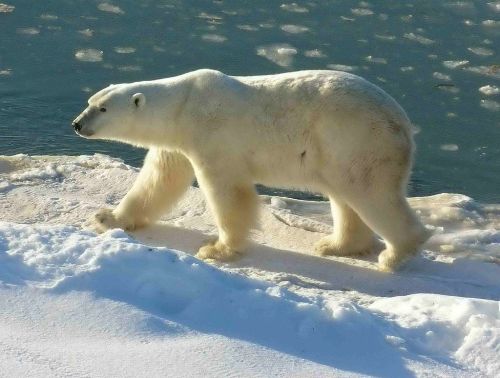
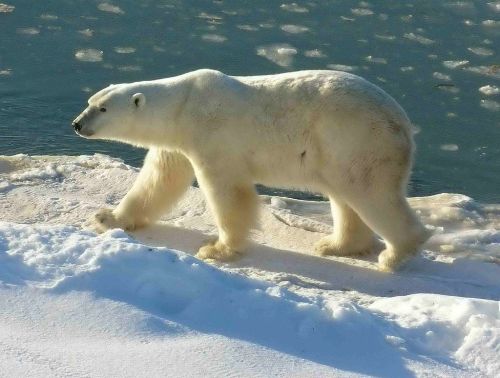
Churchill_Polar_Bear_2004-11-15 Wikipedia

The authors of the report on the August 2016 aerial survey of the Western Hudson Bay polar bear subpopulation (Dyck et al. 2017) state clearly that the only trends they could find were that the number of adult males increased somewhat over 2011 estimates and the number of females either declined or remained stable. The overall population estimate was a bit lower (11% less) compared to the 2011 survey but the difference is not statistically significant. Therefore, the population status must be stable.

2011 estimate: 949 bears (using comparable data, range 618-1280), litter size 1.43

2016 estimate: 842 bears (using comparable data, range 562-1121), litter size 1.63

[cf. Foxe Basin [stable], from 2009-2010 survey (Stapleton et al. 2016) litter size was 1.54]

An 11% decline in WH numbers since 2011 is most definitely NOT the decline to ZERO (extirpation) we were told to expect with Arctic sea ice as low as it has been since 2007 (Crockford 2017, see list of annual minimum extents 2007-2017 here).

Note: The percentage decline from 2011 to 2016 for Western Hudson Bay polar bears is 11%, NOT 18% as claimed recently by Andrew Derocher on twitter: it is not appropriate to compare the official 2011 estimate of 1030 (Stapleton 2014) to the 2016 estimate of 842 because the methods used to generate the estimates were different (Dyck et al. 2017). The authors of the report state that the estimate for 2011 that’s comparable to 2016 is 949.

An 11% decline from 1030 would be 917 bears, a statistically insignificant decline that is also biologically insignificant and therefore, so slight as to indicate a stable population.

https://twitter.com/AEDerocher/status/908423171967139840

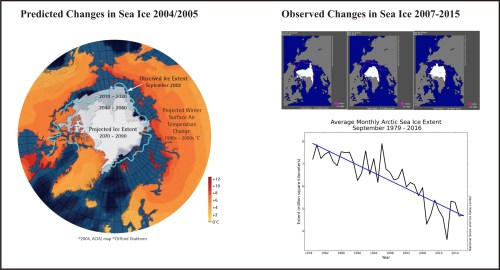
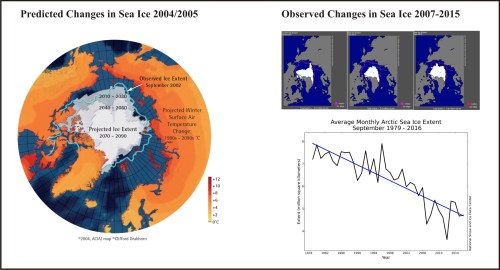
Predicted sea ice at 2050 and 2080 shown below (see Crockford 2017 for details):

Crockford 2017 sea ice graphic

Quotes, map, and table from the Dyck et al. 2017 report (pdf here) are copied below.

Continue reading

Video: Death of a Climate Icon, the polar bear’s demise as a useful poster child

Last week I asked: “What’s causing the death of the polar bear as a climate change icon?”

I was echoing the conclusion of a commentator at the Arctic Institute (22 August 2017) who lamented: “The polar bear is dead, long live the polar bear” and climate scientist Michael Mann, who told a lecture audience a few months ago that polar bears are no longer useful for generating “action” on climate change.

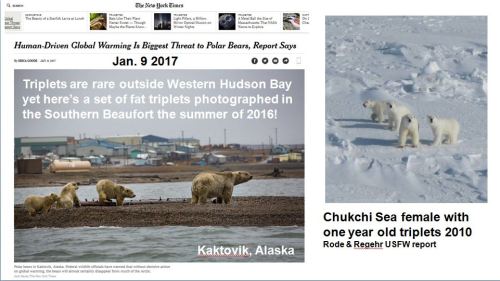
Crockford 2017_Slide 15 screencap

This is slide 15 from my presentation at ICCC-12 in Washington, D.C. in March 2017.

Now here’s the video. Watch “The Death of a Climate Icon” (31 August 2017):

The video was made possible with the assistance of the Global Warming Policy Foundation.

Kind of makes you wonder: is Al Gore’s recent climate change movie, An Inconvenient Sequel: Truth to Power, tanking at the box office because he couldn’t include polar bears as an example of the effects of human-caused global warming as he did in his award-winning 2007 effort? Did too many polar bears doom Gore’s 2017 movie?

Conclusions in the video about the predictions of polar bear decline vs. the current status of polar bears and sea ice are documented in my 2017 published paper:

Crockford, S.J. 2017. Testing the hypothesis that routine sea ice coverage of 3-5 mkm2 results in a greater than 30% decline in population size of polar bears (Ursus maritimus). PeerJ Preprints 19 January 2017. Doi: 10.7287/peerj.preprints.2737v1 Open access. https://peerj.com/preprints/2737/

Crockford 2017 sea ice graphic

Abrupt summer sea ice decline has not affected polar bear numbers as predicted

Yes, Arctic sea ice has declined since satellite records began in 1979 but polar bears have adjusted well to this change, especially to the abrupt decline to low summer sea ice levels that have been the norm since 2007.

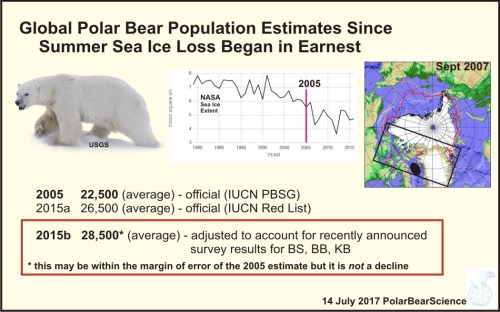
Global pb population size sea ice 2017 July PolarBearScience

Some polar bear subpopulations have indeed spent more time on land in summer than in previous decades but this had little negative impact on health or survival and while polar bear attacks on humans appear to have increased in recent years (Wilder et al. 2017), the reasons for this are not clear: reduced summer sea ice is almost certainly not the causal factor (see previous post here).

Ultimately, there is little reason to accept as plausible the computer models (e.g. Atwood et al. 2016; Regehr et al. 2016) that suggest polar bear numbers will decline by 30% or more within a few decades: even the IUCN Red List assessment (Wiig et al. 2015) determined the probability of that happening was only 70%.

Arctic sea ice has never been a stable living platform (Crockford 2015): it shifts from season to season, year to year, and millennia to millennia. Without the ability to adapt to changing conditions, Arctic species like polar bears and their prey species (seals, walrus, beluga, narwhal) would not have survived the unimaginably extreme changes in ice extent and thickness that have occurred over the last 30,000 years, let alone the extremes of sea ice they endured in the last 200,000 years or so.

Some biologists continue to hawk doomsday scenarios for polar bears due to summer sea ice loss but the truth is that their previous predictions based on sea ice declines failed so miserably (e.g. Amstrup et al. 2007) that it’s impossible to take the new ones seriously — especially since the basic assumptions that caused the first predictions to fail have not been corrected, as I’ve stated in print (Crockford 2017:27):

In summary, recent research has shown that most bears are capable of surviving a summer fast of five months or so as long as they have fed sufficiently from late winter through spring, which appears to have taken place since 2007 despite marked declines in summer sea ice extent.

The assumption that summer sea ice is critical feeding habitat for polar bears is not supported.

Recent research shows that changes in summer ice extent generally matter much less than assumed in predictive polar bear survival models of the early 2000s as well as in recent models devised to replace them (Amstrup et al. 2010; Atwood et al. 2016a; Regehr et al. 2015; Regeher et al. 2016; Wiig et al. 2015), while variations in spring ice conditions matter more.

As a consequence, the evidence to date suggests that even if an ‘ice-free’ summer occurs sometime in the future ­ defined as sea ice extent of 1 million km2 or less (Jahn et al. 2016) ­ it is unlikely to have a devastating impact on polar bears or their prey. [my bold]

The abrupt drop in summer sea ice that occurred in 2007 was not predicted by experts to occur until mid-century yet the predicted decimation of polar bears worldwide expected under those conditions (a loss of 2/3 of the global total, to only about 6660-8325 bears) not only did not happen, it did not come even close to happening (Crockford 2017; see also my recent books, Polar Bear Facts & Myths, and Polar Bears: Outstanding Survivors of Climate Change, sidebar).

Instead, the global population grew from about 22,550 bears in 2005 to about 28,500 bears in 2015. And while this might not be a statistically significant increase (due to the very wide margins of error for polar bear estimates), it is absolutely not a decline.

The present reality is that low summer sea ice cover since 2007 has not caused polar bear numbers to decline and therefore, polar bears are not a species in trouble. This suggests that even if the Arctic should become briefly ice-free in summer in the future, polar bears are likely to be only minimally affected and not become threatened with extinction. Polar bears are outstanding survivors of climate change: recent research and their evolutionary history confirm this to be true.

Continue reading

Polar bear counts for W Hudson Bay: ‘core’ area numbers are not comparable

Polar bear population estimates for Western Hudson Bay have recently become contentious because one specialist has been making statements that confuse the issue. As we all wait for the release of the report on the WHB aerial survey of 2016, it’s worth going over the recent history of these counts and what they have revealed.

Churchill_Polar_Bear_2004-11-15 Wikipedia

The official count for bears in WHB (used by the IUCN Polar Bear Specialist Group, the IUCN Red List, and Environment Canada) is 1030, based on an aerial survey of the entire region conducted in 2011 (Stapleton et al. 2014).

Since last year, Andrew Derocher (University of Alberta) has been telling any media pundit who will listen that WHB polar bears have declined from about 1200 bears in the 1980s to only 800 or so bears today (one example here) — a statement that is clearly not true.  In recent months, however, whether due to complaints from the public or from his colleagues, he’s qualified that statement by saying it’s the number of bears in the “core” area of WHB that has declined.

But is Derocher’s revised statement a clear scientific interpretation of the facts? Have a look at the details below and see if you come to the same decision I have: that it’s not possible to compare WHB ‘core’ area polar bear population estimates over time.

Continue reading

Southern Beaufort sea ice melt in May: good news for polar bears or catastrophe?

Last week biologist Andrew Derocher recently implied via twitter that less sea ice in the eastern portion of the Southern Beaufort (SB) this year at mid-May is harmful to polar bears (calling it “a hole in the ice where polar bears used to live“), but both long-term and short-term data don’t support such a glass-half-empty interpretation.

Not only does spring breakup of sea ice in the SB normally begin with such open patches of water (see the video above from last year) — driven by the powerful currents of the Beaufort Gyre, not ice melt (explained in detail here) — it may actually be necessary for the survival of local seals, polar bears and whales in spring and early summer (Citta et al. 2015; Crawford et al. 2015; Harwood et al. 2015; Stirling et al. 1981).

As I’ve pointed out before, the biggest threat to SB bears is thick sea ice in spring and its associated late breakup, a 2-3 year-long phenomenon unique to this region known to have occurred about every 10 years since the early 1960s (well documented in the scientific literature) but which has not (as far as I know) happened since 2004-2006.

In other words, a considerable patch of open water and less concentrated ice in the eastern SB around Cape Bathurst is almost certainly a good thing for this particular subpopulation (see previous post here for an in-depth discussion) because historically, when a polynya of some extent has not formed by April or May it has been devastating for local marine mammals.

The fact that an extensive patch of open water existed at mid-May in this region last year and the year before (2015 and 2016) — with no public hue-and-cry about a great dying of SB bears from Derocher or anyone else — suggests that open water in the eastern SB this year is likely to be beneficial for SB polar bears, or at least benign. Continue reading

IUCN PBSG insists the 2015 Barents Sea polar bear count was not an increase

Similar to the spin on the 2013 Baffin Bay/Kane Basin polar bear population survey, the IUCN Polar Bear Specialist Group now insists the latest count of the Barents Sea subpopulation is not evidence of an increase in numbers since 2004, as the leader of the study announced in 2015.

Svalbard polar bear_Aars August 2015-NP058930_press release

This is Part 2 of the big surprises in the latest version of the polar bear status table published by the IUCN Polar Bear Specialist Group (PBSG) on 30 March 2017. See last post here regarding the PBSG population size estimates that no longer concur with the 2015 Red List assessment, including the global total — even though PBSG members wrote the report (Wiig et al. 2015, and its Supplement).

Here I want to focus on the results of subpopulation surveys that were made public after the 2015 Red List assessment was published, particularly the Barents Sea estimate.

While the 2013 Baffin Bay and Kane Basin estimates (SWG 2016) have been added to the new PBSG table, any suggestion that these might indicate population increases are strong discounted. Similarly, contrary to initial reports by the principal investigators of the survey, the PBSG insist that the Barents Sea population has not actually increased since 2004, which you may or many not find convincing.

Continue reading

IUCN Specialist Group now rejects polar bear numbers it used for 2015 IUCN Red List review

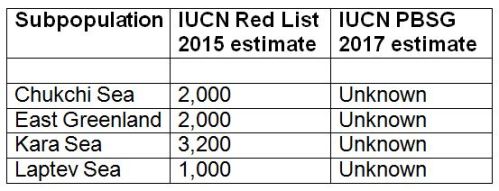
Is there a mutiny in the works between the IUCN Red List and the IUCN Polar Bear Specialist Group (PBSG) over polar bear population estimates or has there simply been a breach of ethics? What else explains the fact that some of the subpopulation estimates used by the PBSG to support the status of ‘vulnerable’ for the IUCN Red List in 2015 are unacceptable to them in 2017? And why are the PBSG refusing to embrace the Red List global estimate of 22,000-31,000?

2015 IUCN Red List estimates vs IUCN PBSG 2017

The latest version of the IUCN PBSG status table was posted online 30 March 2017 without fanfare or even a note on their home page. It seems the result came from much discussion at their official meeting last summer (June 2016) that they say continued into early March 2017.

2017 population status update early March headline

PBGS members voted to reject four subpopulation estimates used in the 2015 Red List polar bear status review  — even though the inclusion of those numbers was required in order for the Red List status of ‘vulnerable’ to be upheld. The group has also chosen not to update their global population page with the Red List estimate of 22,000-31,000.

And surprise, surprise — now that only one subpopulation out of nineteen worldwide has shown a recent decline, the PBSG have removed the “trend” columns from their summary table for subpopulations.

Welcome to conservation ‘science’ practiced by IUCN polar bear specialists.
Continue reading