Category Archives: Sea ice habitat

Even with Inuit lives at stake, polar bear specialists make unsupported claims

The standoff between Inuit and polar bear specialists regarding the status of polar bears in Canada is not going to end until someone in authority demands to see the data scientists insist contradict Inuit knowledge.
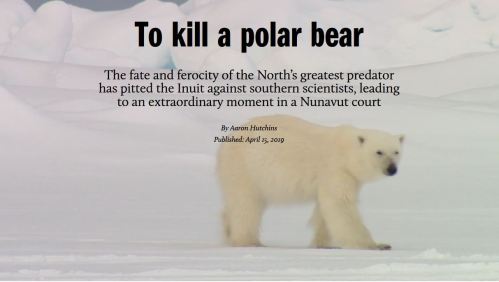
Macleans to kill a polar bear headline 21 April 2019

An article in Maclean’s Magazine (15 April 2019), entitled “To Kill a Polar Bear”, explores some of the feelings and opinions of folks involved but fails to ask whether the data support the rhetoric advanced by scientists. Author Aaron Hutchins takes the scientists at their word, that seeing more bears than 20 years ago is all because of lack of sea ice. However, from what I’ve seen, he might as well trust a fox in a hen house.

Ian Stirling is quoted by Hutchins insisting that polar bears in Western Hudson Bay continue to suffer from the effects of declining sea ice, without mentioning that ice cover has been essentially static on Hudson Bay since at least 2001 (Castro de la Guardia et al. 2017; Lunn et al. 2016) and fall freeze up dates for the last two years were earlier than most years in the 1980s:

“This year saw the seventh-lowest Arctic sea ice levels since the National Snow and Ice Data Center first started gathering satellite data 40 years ago, with the long-term trend clearly downwards. And the negative effects on polar bears can be clearly seen in the science, says Stirling, pointing to the closely studied subpopulation along western Hudson Bay: “They’re losing body condition. Reproductive rates have dropped. Survival rates of young have plummeted. Every indication you would expect from a declining population is there.”

However, as I’ve pointed out previously (last year and in 2012), there are no recent data published that support these claims: the only information that exists is at least 25 years old. And the fact that no such data have been published suggests strongly that it either does not exist or does not show what Stirling claims it shows.

Yet, the government of Canada is willing to bet the lives of Inuit on their belief that polar bear specialists would never stretch the truth to qualify for government grants.
Continue reading

‘Our Planet’ film crew is still lying about walrus cliff deaths: UPDATE

I had an opportunity last night to watch the original Netflix ‘Frozen Worlds’ walrus episode and have some addition thoughts.

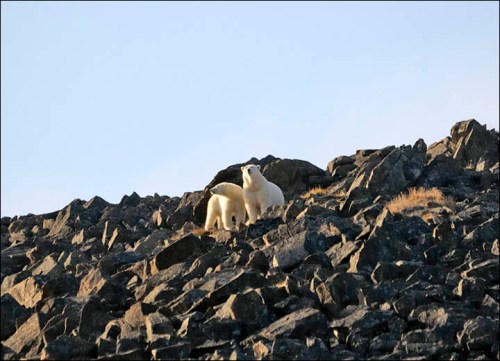
Polar bears on the cliff at Cape Kozhevnikov Maxim Deminov WWF from Siberian Times 2017

One big eye-opener was the final shot of the walrus sequence: a polar bear approaching from the water to feed on the carcasses below the cliff at Cape Kozhevnikov. This is additional proof that polar bears were in the area while the crew were filming. Yet the narrative in the film was silent on the risk to walruses on the cliff from polar bears and not a word was spoken of the hundreds of walruses that had fallen off that very cliff just days before after being spooked by approaching bears.

Oddly, I have also discovered that the Russian scientific advisor to the film, Anatoli Kochnev, wrote a scientific report in 2002 (translated into English) on walrus deaths at two regularly used beach haulouts on Wrangel Island from 1989-1996, when walrus population numbers were much lower than today and summer sea ice extent was higher (Kochnev 2002). He concluded that stampedes initiated by polar bears were responsible for most of the walruses found trampled to death.

This means Kochnev knew that polar bears nearby were a huge risk factor for walrus stampedes over the cliff but went along with the official ‘Our Planet’ narrative that no polar bears were involved and only lack of sea ice and poor eyesight were to blame for the carnage presented in the Netflix film.

Continue reading

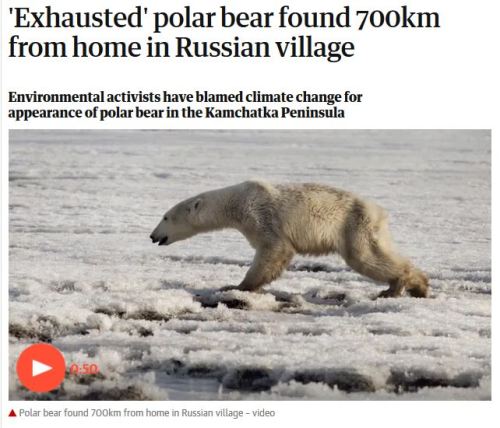
Bogus Greenpeace claim that lost Russian polar bear is evidence of climate change

Another day, another bogus starving polar bear claim from an environmental organization. Polar bear starvation is virtually never caused by climate change but apparently, Greenpeace thinks there are still some gullible folks out there who will believe anything they are told. A young male polar bear in poor condition found far south on the Russian coast of the Bering Sea a few days ago is an isolated incident: it is not evidence of anything except the sad fact that the life of a polar bear can sometimes be brutal. In contrast to these reports, Chukchi Sea polar bears are doing extremely well overall.

Exhausted polar bear Kamchatka_Guardian headline_18 April 2019

Headline from The Guardian 18 April 2019

Continue reading

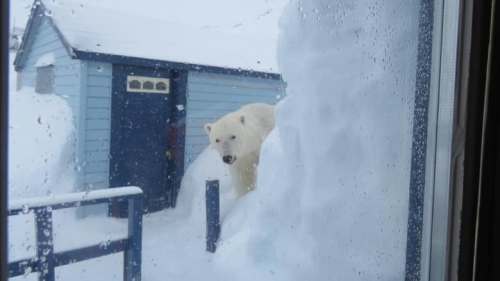
Fat polar bears causing trouble onshore in Labrador plus sightings in Newfoundland

What sounds like a mother and half-grown cub paid a visit to a cabin outside Black Tickle, Labrador and frightened the residents trapped inside. The aggressive female was part of at least 10 bears seen around the community on 14 April 2019 and photos of one of them show a bear in excellent condition. A bear in good condition was also spotted on the north coast of Newfoundland over the weekend, delivered to land by sea ice that’s moving back into the area after winds blew it offshore last month.

Batteau-labrador Carrie Dyson photo 17 April 2019

Near Black Tickle Labrador, mid-April 2019. Carrie Dyson photo.

Continue reading

Attenborough’s tragedy porn of walruses plunging to their deaths because of climate change is contrived nonsense

A recent Netflix ‘Our Planet’ program with David Attenborough delivering a disturbing message of doom about walruses falling off a cliff to their deaths because of climate change is contrived nonsense on par with the bogus National Geographic starving polar bear video of 2017.  The walruses shown in this Netflix film were almost certainly driven over the cliff by polar bears during a well-publicized incident in 2017, not because they were “confused by a combination of shrinking ice cover and their own poor eyesight“.

Walrus plunging cliff_The Sun headline 5 April 2019

Apologies for neglecting to add, h/t to Charles the Moderator from WUWT!

UPDATE 8 April 2019: Falling off cliffs is not a new phenomenon. Here is video of US Fish and Wildlife officials in 1994 trying to explain a situation where walruses are falling even without the impetus from polar bears, at Cape Pierce in the southern Bering Sea (a haulout for adult males during the ice-free season). Explanation? Overcrowding (too many walruses)! h/t to Mark Sullivan.

Also, see this 8 April 2019 piece from The Atlantic that confirms the ‘Our Planet’ footage was filmed in 2017, and that “the sequence includes footage from two separate beaches—one with the 100,000-strong congregation and one with the falls.”

UPDATE 9 April 2019: For the details on why the two events described below (the one filmed by Attenborough’s ‘Our Planet’ crew and the event reported by the Siberian Times in 2017) are almost certainly one and the same, see Andrew Montford’s post at The Spectator. The Global Warming Policy Foundation has issued a press release.

UPDATE 14 April 2019: New details show that the film crew are still lying about the walrus death event in the Netflix ‘Our Planet’ episode, summarized by me here.

Continue reading

OK in the 80s but not now: ‘seeing more polar bears means there are more bears’

Wait for it, it will come: backlash from polar bear scientists for a statement by an Inuk bear safety guide in Labrador, reported by the CBC yesterday. The guide said there are more polar bears now than there were 25 years ago based on the fact that he is seeing more bears and that more bears mean more trouble with bears, including attacks on people. As I point out in my new book, The Polar Bear Catastrophe That Never Happened, only in the 1980s did biologists admit that seeing more bears meant there were actually more bears.

polar-bear-black-tickle_Edwin Clark submitted to CBC no date

This bear visited Black Tickle in Labrador a few years back. Edwin Clark photo.

It has not been OK anywhere else in the world over the last few years to suggest that seeing more bears meant more bears, whether you were Inuk or not – whether describing a subpopulation that’s officially ‘increasing’ or not.

According to biologist Andrew Derocher (University of Alberta), who famously said last year that ‘you can’t equate seeing more bears with there being more bears,’ all of the increased sightings and problems with bears in Labrador and Newfoundland are due to poor ice conditions. His colleague Ian Stirling (also University of Alberta) similarly puts the blame for increased polar bear/human conflicts and fatal attacks in Nunavut on a ‘shortage of ice‘. For polar bear specialists, it’s always ‘less ice‘, never ‘more bears.’

Continue reading

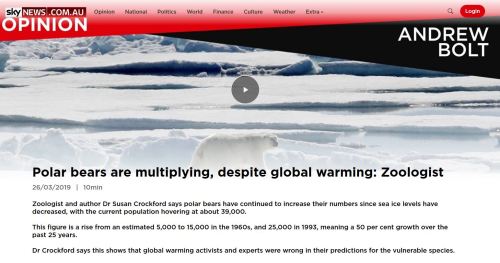
Full podcast of TV interview with Andrew Bolt in Australia talking about polar bears

This 10 minute television interview aired a few hours ago on The Bolt Report (Sky News Australia, 26 March 2019). A short excerpt was made available as a tweet but a link to the full length podcast is below.

Bolt report interview intro_26 March 2019

Ironically, despite the huge effort made by polar bear specialists and climate change activists to silence and discredit me over the last year or so, all it’s done is made more people willing to listen to what I have to say. My new book is selling phenomenally well and getting great reviews: if you haven’t ordered your ebook or paperback copy, you can do so here.

Continuereading

Podcast of interview with Glenn Beck talking about polar bear numbers

Yesterday (19 March 2019) I joined talk show host Glenn Beck to discuss polar bear numbers and my new book, The Polar Bear Catastrophe That Never Happened.

Here is their edited podcast of it that was posted on YouTube (about 4:30 minutes):

You can also just listen to the whole thing here.


The Polar Bear Catastrophe That Never Happened is now for sale

On sale at Amazon today, my new full-length science book, The Polar Bear Catastrophe That Never Happened, published by the Global Warming Policy Foundation.

Paperback and ebook versions are available. See the GWPF press release here.

The official book launch is 10 April in Calgary, details below.

About the book

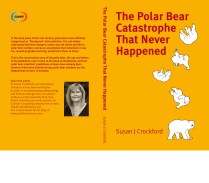
Final cover 15 March 2019 imageThe Polar Bear Catastrophe That Never Happened explains why the catastrophic decline in polar bear numbers we were promised in 2007 failed to materialize. It’s the layman’s story of how and why the polar bear came to be considered `Threatened’ with extinction and tracks the species rise and fall as an icon of the global warming movement. The book also tells the story of my role in bringing that failure to public attention – and the backlash against me that ensued.
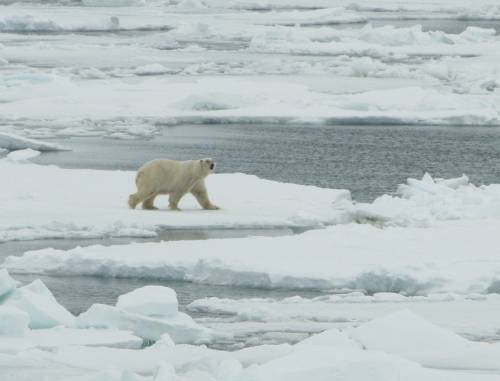

For the first time, you’ll see a frank and detailed account of attempts by scientists to conceal population growth as numbers rose from an historical low in the 1960s to the astonishing highs that surely must exist after almost 50 years of protection from overhunting. There is also a discussion of what thriving populations of bears mean for the millions of people who live and work in areas of the Arctic inhabited by polar bears.

Title: The Polar Bear Catastrophe That Never Happened
Author: Susan J. Crockford
Publisher: Global Warming Policy Foundation
Publication date: 17 March 2019
Distrbutor: Amazon
Formats: Papberback and Ebook
Number of pages: 209

Order it here.
Continue reading

It’s back: Bering Sea polar bear habitat has recovered from a low earlier this month

Fancy that! After a load of handwringing earlier this month, mobile pack ice in the Bering Sea has returned. Just like ice in the Barents Sea, Bering Sea ice is highly variable (Brown et al. 2011): it moves with winds and currents, so a ‘decline’ during the winter usually indicates redistribution, not melting.

Polar_bear Bering Sea 2007 USFWS lg

Polar bear on Bering Sea ice 2007 USFWS

According to researcher Rick Thoman from the University of Alaska Fairbanks, quoted by the Canadian Press:

“Wind blew ice to Russian beaches in the west and to the south side of Norton Sound south of Nome but left open water all the way to Chukchi Sea north of the Bering Strait.”

Polar bears that venture into the Bering Sea are part of the Chukchi Sea subpopulation, which is known to be thriving (Crockford 2019; AC SWG 2018; Regehr et al. 2018; Rode and Regehr 2010; Rode et al. 2013, 2014, 2015, 2018).

Continue reading