Category Archives: Sea ice habitat

BBC perspective on Arviat polar bears – those not included in the last mark-recapture study

In a polite but misleading article today in a BBC magazine (The polar bears are coming to town) about the relationship of polar bears and Inuit in Arviat, Western Hudson Bay, there is no mention of the on-going feud between Nunavut Inuit and Canadian polar bear scientists regarding invasive research.

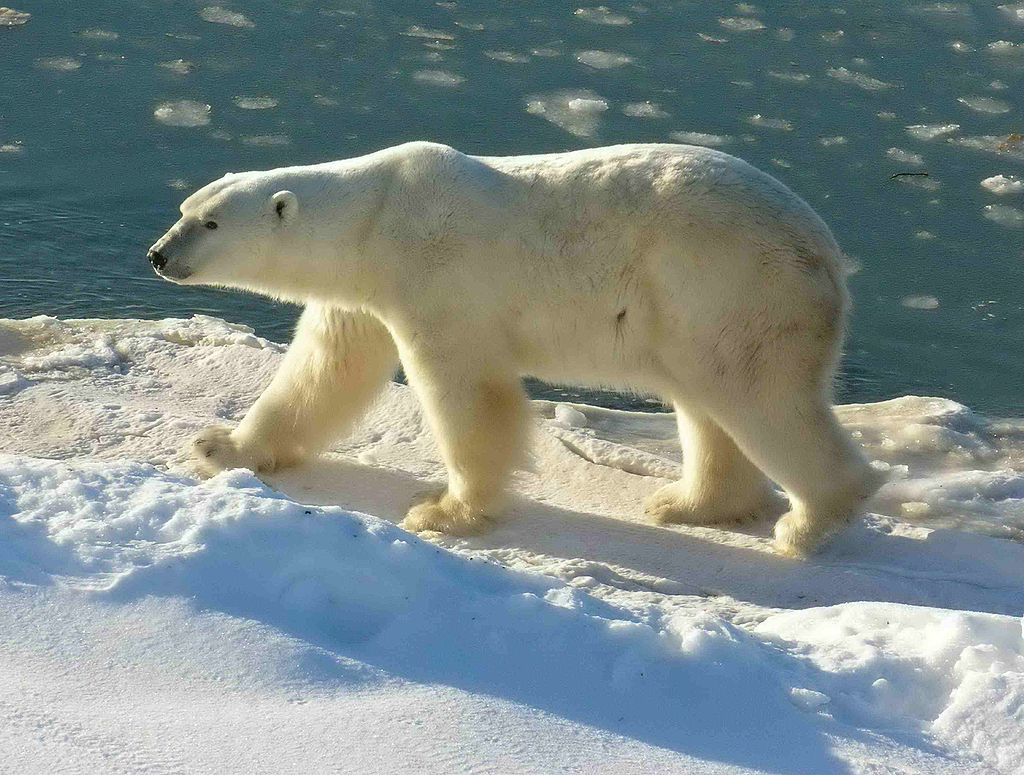
Churchill_Polar_Bear_2004-11-15 Wikipedia

Nor is there a mention of the fact that according to the most recent research, there has been no trend in sea ice conditions since 2001.
Continue reading

Sea ice is not a stable habitat for polar bears – summarized today in The Arctic Journal

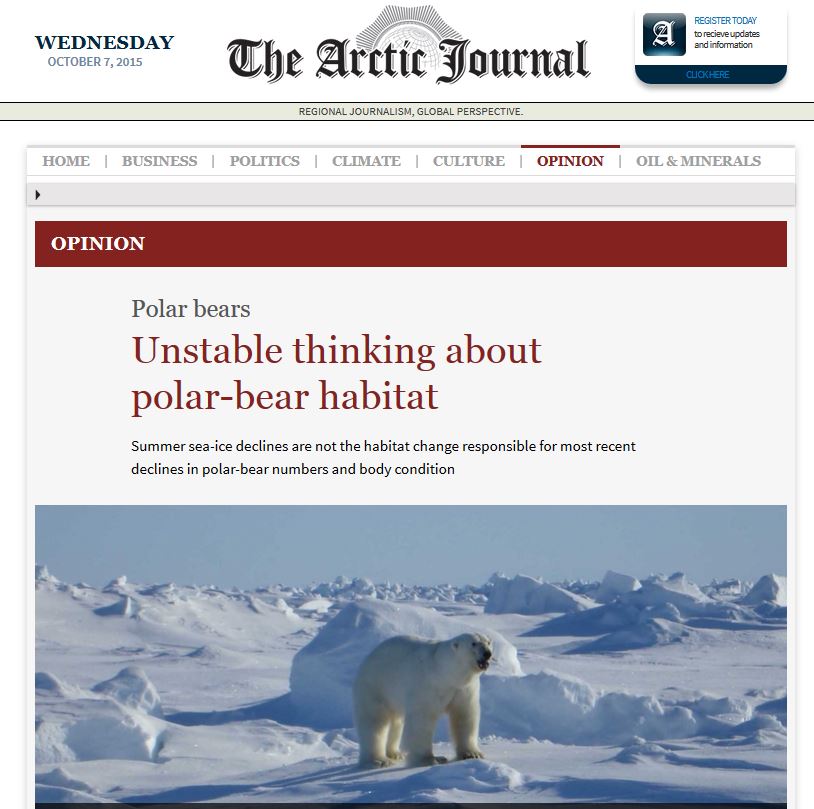
In The Arctic Journal, 7 October 2015: Unstable thinking about polar bear habitat [not my title choice]

Unstable thinking about polar bear habitat_Oct 7 2015 title page

This is a previously unpublished summary, written exclusively for The Arctic Journal, of my peer-reviewed, fully referenced essay on this topic that was published earlier this year by the Global Warming Policy Foundation in their “Briefing Paper” series (#16, June 8, 2015: The Arctic Fallacy: Sea Ice Stability and the Polar Bear), which includes a foreword by Dr. Matthew Cronin, Professor of Animal Genetics at the University of Alaska Fairbanks. Pdf here.

Here are the essential points, one by one:
Continue reading

Tracking polar bears – 3 out of 4 S. Beaufort bears on the ice during September 2015

The shore of Alaska is not very important to Southern Beaufort polar bears – most of them stay on the sea ice during the summer and early fall, where they may or may not continue eating. These results of on-going satellite tracking studies by USGS1 confirm results of previous studies.

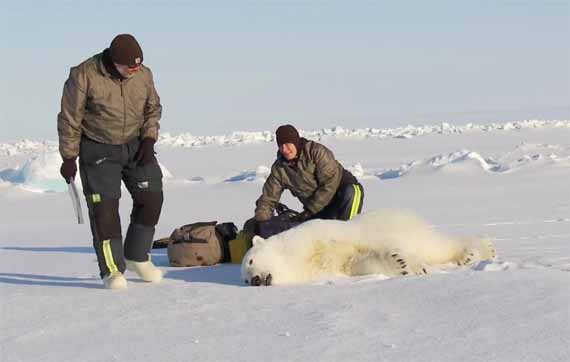
Tranquilized_pb570_S Beaufort March 2014_USGS

Continue reading

Beaufort Sea swimming polar bears far from land but not very far from sea ice

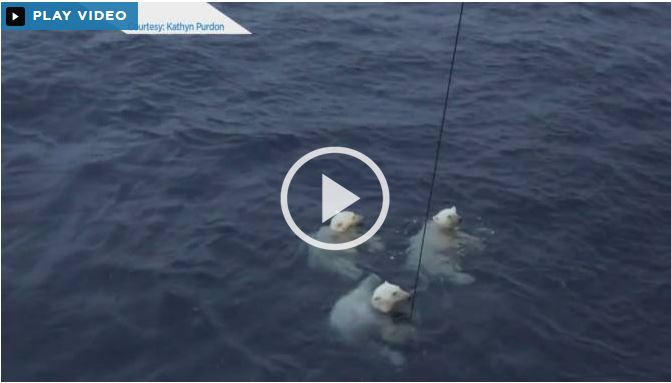
Recent accounts of an encounter with a curious polar bear female and her two older cubs in the Beaufort Sea on 16 September give contradictory details about the position of sea ice at the time. The same researcher told one reporter that the ship was 240 km from land, another that it was 240 km from the sea ice, and in another account (that he wrote himself), said the ship had been far from land and sea ice.

Beaufort swimming polar bears_Sept 30 2015_Global news

University of Victoria (Canada) chemical oceanographer Jay Cullen said on the expedition web site:

“After arriving on station and beginning work the crew noticed three polar bears in the water together which swam around to the ship when our water sampling system was nearly 3500 meters below the surface. The ship was located far from sea ice and land. Indeed, Arctic sea ice extent was the fourth lowest on record this year and there has been speculation that this imposes stress on polar bears which rely on the ice to hunt.”  [my bold]

But the maps below show that at the time of the incident (taken from the expedition web site) and the NSIDC Masie sea ice map for 16 September 2015, the ship [the CCGS Amundsen, acting as a research vessel] was actually quite close to an isolated large patch of sea ice, although further from the edge of the main pack. A patch of sea ice plenty big enough for a polar bear to rest upon – no wonder the bears did not appear stressed.

And the polar bear biologist Cullen consulted (Dr. Andrew Derocher) implied by his response that the bear was indeed far from sea ice. Reminds me of the swimming polar bear off the Hibernia oil platform off Newfoundland March 2015, which turned out to be not far from ice at all. See what you think.
Continue reading

Activist explorer blames more polar bear encounters since 1985 on reduced sea ice

Activist polar explorer Børge Ousland’s told National Geographic that more polar bear encounters on land are due to reduced sea ice –  without any reference to population changes over that time or revealing when or where these observations were made.

IceLegacy_NG video Sept 30 2015

More vague anecdotal observations and opinions posing as scientific evidence.
Continue reading

Summer refuge for polar bears in Arctic Basin only 0.3 mkm2 below its possible maximum

At the seasonal minimum 2015, the Arctic Basin was still almost full of sea ice, down only 0.3 mkm2 below the maximum it could ever be.

Healy Aug 24 2015 Polar-Bear III Tim Kenna

Remember that spending the summer in the Arctic Basin for most polar bears is just like sitting on the western shore of Hudson Bay – they are all waiting for the refreeze. In either location, they might find something to eat, they might not.

Below are NSIDC MASIE sea ice maps for 10 April 2015 (as big as it gets, basin filled) vs. 17 September 2015: Continue reading

Barents Sea polar bears in excellent condition say Norwegian biologists

Conditions this year (2015) in the Barents Sea were excellent according to the polar bear researchers who work there (“Polar bears were as fat as pigs”).

Barents Sea bear 2015 August Cobbing_NPI
A new survey just completed for a population count showed the bears were are in excellent condition – except the injured ones, of course, which some news organizations are promoting as evidence of harm from global warming-induced sea ice changes because an activist photographer  – not scientists – said so.

Continue reading

Churchill problem polar bear report for 7-13 September 2015

Latest report on problem bears in Churchill, Manitoba, from the town’s Facebook page. See previous post here for map and background.

19 polar bears handled to date this year; 12 bears in the holding facility.

Polar bear-TRANSPORTED-TO-POLAR-PRISON_w Huff Post 2011

Photo above: A bear is transported to Churchill’s polar bear holding facility (from a 2011 Huffington Post article, “Polar Bear Prison”).

Activity report for 7-14 September 2015 copied below (click to enlarge):

2015 Sept 7-13_at Sept 14

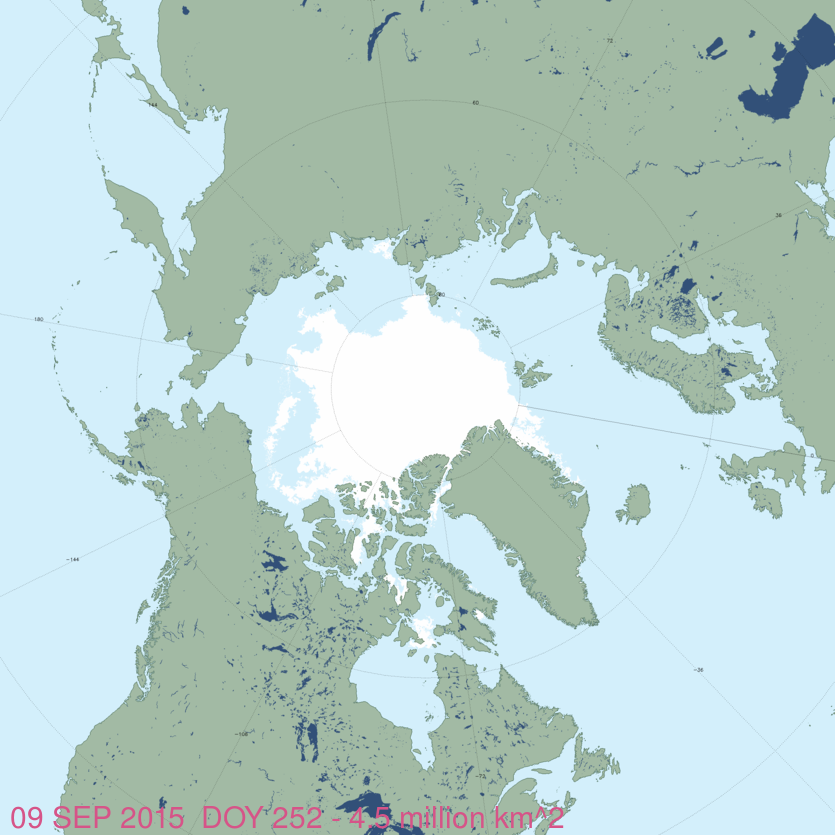
September minimum 2015 looks like the earliest end of Arctic melt season since 2007

Polar bear habitat in the Arctic Basin this year appears to have reached its apex days earlier than average. As of 12 September, freeze-up of Arctic sea ice had begun. Unless something dramatic happens over the next few days, this will make 2015 the earliest September minimum since at least 2007, using NSIDC data.1

masie_all_zoom_v01_2015252_4km

The two lowest September ice extents (2007 and 2012) were also both later than average; this year’s minimum is the fourth lowest (see chart below).

Of course, all this fuss about how low the September minimum gets is irrelevant to polar bears: they are either on land or in the Arctic Basin, and virtually all are living off stored fat no matter where they are (see Arctic Basin bear here). What matters is when the refrozen ice reaches pregnant females that have preferred denning spots onshore (like in Svalbard) or for bears onshore waiting to return to the ice to hunt (like Davis Strait, and Western and Southern Hudson Bay bears). We won’t know that until October (for Svalbard) or November (for E. Canada).

Again, no sea ice death spiral or polar bears in peril because of it.

UPDATE 15 September 2015, 11:00 am PDT: Just published at the NSIDC website, 2015 minimum has been (tentatively) called at 4.41 mkm2, confirming my figure taken from their interactive graph (see below). However, despite the fact that their own data show that sea ice extent stayed at that value for three days, NSIDC has chosen the last day of that 3-day period rather than the first to represent the 2015 minimum. Go figure. That makes 2015 tied with 2011 for the earliest date for their official records, which seems more than a little self-serving and means I’m not changing the title of my post. NSIDC have also modified slightly some of the official extent figures for past minimums (added below) but it doesn’t really change anything.
Continue reading

Last year’s dead Svalbard polar bear used for this year’s propaganda

Via Mashable yesterday: “Global warming may have led to the death of this polar bear, researcher says”  Note this is about a death that occurred last year (2014), but Mashable author Andrew Freedman implies it happened this year.

Stirlings other pb that died of climate change_Sept 8 2015

The polar bear death occurred last year in Svalbard in the Barents Sea after a fall (2013) and winter (2014) of poor ice conditions due to well-known cyclical sea ice and weather patterns (not global warming). There is no doubt that 2014 was an unusually bad year for sea ice around Svalbard during the fall and winter. This year, however, conditions improved markedly: Norwegian researchers earlier this year reported a good crop of females with cubs this spring, many more than last year (see previous post Many polar bears cubs seen in Svalbard this year, says Norwegian biologist).

The photo above was taken by National Geographic photographer Paul Nicklan, who sent the instagram on 6 September 2015, with a photo and comments about a trip he’d taken to Svalbard in 2014.

Yet the Mashable article says the photo was taken “in recent days” and includes some quotes from Ian Stirling suggesting that the death relates to low summer sea ice and makes no mention of the fact that condition this year were excellent from fall 2014 through at least early July 2015 (see sea ice map below).

I guess if sea ice won’t cooperate and cause polar bears to die this year, it’s OK to use last years’ deaths instead and imply this year was just as bad. Oh, and none of them mention that starvation is the leading cause of death for all polar bears and always has been.

UPDATE 9 September 2015:Mashable’s Andrew Freedman has amended his article:

UPDATED 9:10 a.m. ET: This story was updated to indicate that Micklen’s photo was taken in 2014, not 2015. As Ian Stirling told Mashable, 2015 was also a year that featured extensive sea ice loss in parts of the Svalbard archipelago.”

Freedman’s update, especially the second sentence, is clearly a response to this post. The implication is that any amount of late summer sea ice that’s below average around Svalbard is a threat to polar bear survival. However, there is no published scientific evidence to support that. The evidence that links sea ice levels with polar bear body condition for Svalbard area bears is for spring and early summer ice, and for denning success, fall ice arrival dates. Many Barents Sea bears never come to land, they travel with the sea ice as it expands and contracts, and females den on the ice.

As I tweeted last month, with two maps (3 August 2015)

“Svalbard #polarbears den in the EAST, critical #seaice levels in fall, vary by yr; lots of hunting habitat N & E”

Low ice levels in western Svalbard in late summer are of little consequence for the polar bear population there. Sea ice in the Barents Sea varies with the state of the Atlantic Multidecadal Oscillation (AMO) — even the US National Snow and Ice Data Center says so.  Those changes are not evidence of global warming. And I reiterate: starvation is the leading cause of death for polar bears.

Continue reading