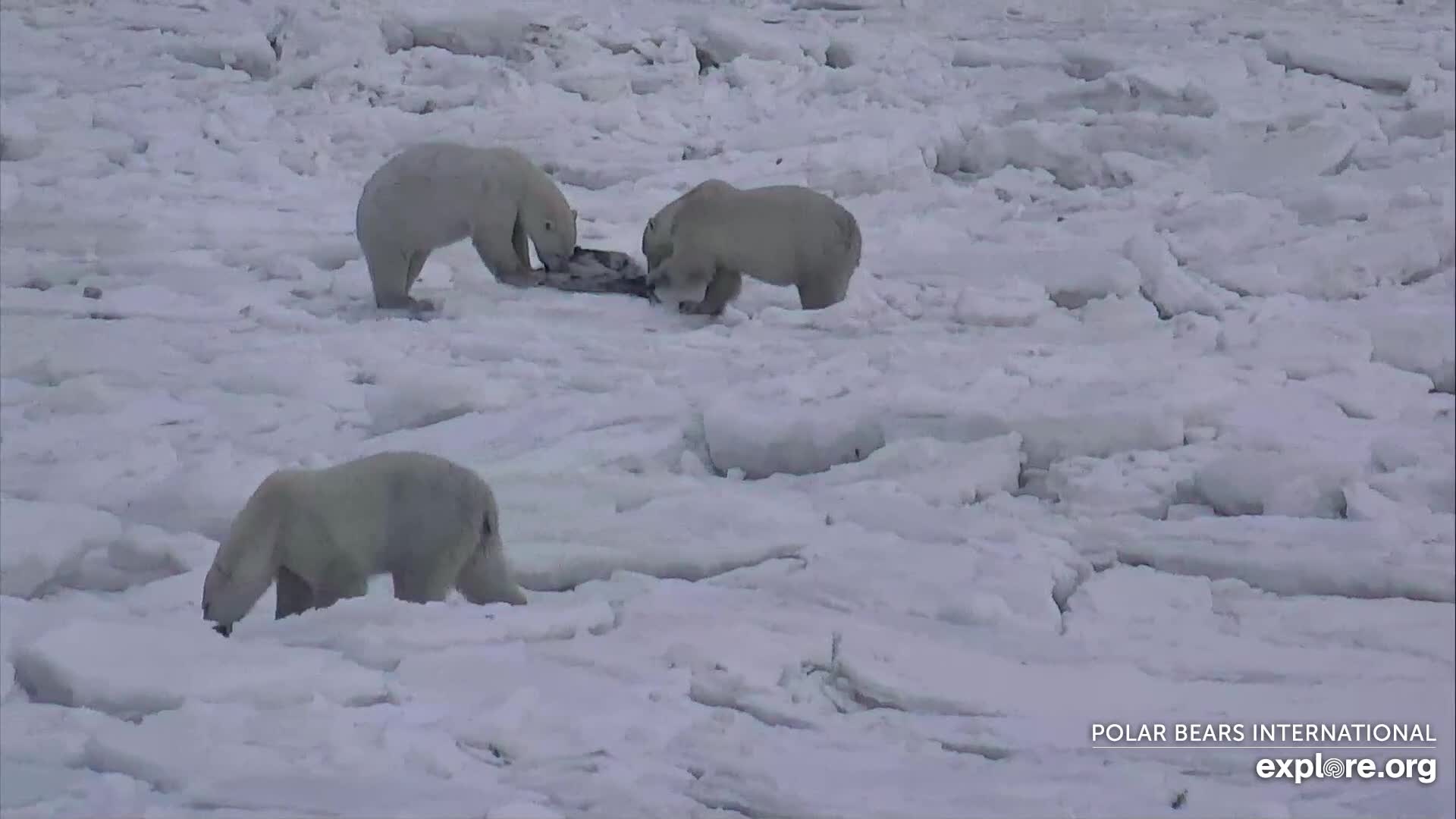
Western Hudson Bay polar bears waiting for the sea ice to freeze as tourists flock to watch

Should only be a few weeks more until the ice forms along the western shore of Hudson Bay, it’s already been snowing. But for the tourist outfitters around Churchill, this is their time to profit from those willing and able to spend big money to see polar bears up close.

from the Explore.org web cam, 18 October 2022

Those tourists are captive audiences for the global warming propaganda provided by activist organization Polar Bears International: it’s virtually impossible for anyone to escape the climate change doom-mongering in Churchill and that’s a real pity.

Continue reading

New polar bear hunting habitat forming already along the coast of the Laptev Sea: A new trend?

Not even three weeks after the yearly minimum of sea ice extent was reached this year, new shorefast ice is already forming off the coast of Siberia, which is critical fall hunting habitat for polar bears.

Polar bears on a seal kill in new ice, 31 October 2020 in W. Hudson Bay via webcam.

So, not only was this year’s sea ice extent for September at the very lowest extreme of predicted levels for late summer, given ever-increasing CO2 concentrations in the atmosphere, new ice seems to be forming earlier in the fall as well, which bodes well for winter ice formation. It’s looking to me like the decade-long increasing trend of September ice extent since 2012 (see below) may indicate a change more biologically relevant to ice-dependent Arctic animals than the zero trend since 2007.

Continue reading

Good news update out of W Hudson Bay: fat polar bears are behaving themselves

Despite continued dire predictions of catastrophy, polar bears in Western Hudson Bay are behaving like the well-fed predators on holiday they are: bears are causing few problems in Churchill and poking around Arviat, seemingly out of curiousity rather than actively stalking prey.

Bears are chased out of Western Hudson Bay communities due to an abundance of caution but so far, no frightening encounters have been reported that I’ve heard about. That’s true elsewhere as well: an uneventful summer for polar bear attacks is good news indeed.

Continue reading

Map of Eastern Canada battered by Fiona’s hurricane-force winds and storm surges

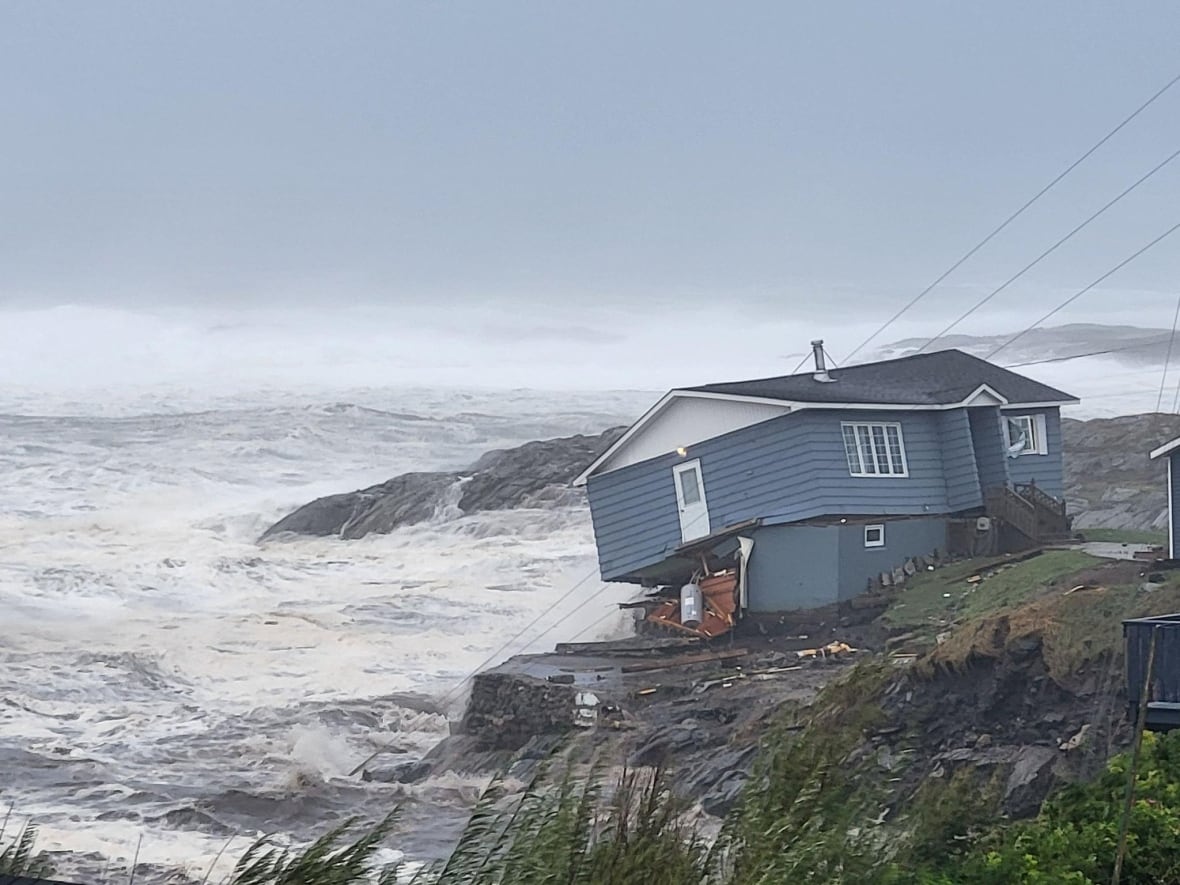
Port aux Basques in SW Newfoundland has been particularly badly hit by Fiona, called ‘total devastation’. I know this region well from researching my latest science-based novel, UPHEAVAL, about a sea ice tsunami that hits Cape Breton Island and the Port aux Basques region in 2026 causing similar but more extensive damage. I discovered that many coastal areas in the Gulf of St. Lawrence are only 10m or so above sea level and since houses are often built close to shore, they are extremely vulnerable to high wave heights and storm surges.

Port aux Basques house falling into the sea, 24 September 2022. Rene Roy photo/Wreckhouse Press.

Some waves along Nova Scotia’s Eastern Shore could build to be more than 10 metres, with waves along southern Newfoundland on Saturday morning reaching higher heights. “Waves over eastern portions of the Gulf of St. Lawrence and Cabot Strait could be higher than 12 metres,” Environment Canada said. CBC News 24 September 2022.

I may post updates as more information comes in. See the map below to orient yourself regarding news reports.

Continue reading

Polar bear no closer to extinction than it was 18 years ago as Arctic sea ice resists ‘tipping point’

All predictions of disaster aside, in fact the polar bear is no closer to extinction than it was in 2005 as Arctic sea ice again steadfastly resists slipping past a catastrophic ‘tipping point’ — or the ‘death spiral’, as some chicken-littles continue to call it.

In fact, the summer sea ice trend has been pretty much flat since 2007, with ice covering about 42% less area than it had done in 1979, yet polar bears in many regions are doing better now than they were in 2005, especially in Davis Strait, the Barents and Chukchi Seas and the Canadian Arctic Archipelago.

Continue reading

Frozen Planet II repeats Attenborough’s climate change scaremongering that began in 2015

A new Sir David Attenborough-narrated BBC six-part documentary, Frozen Planet II, has just hit TV audiences in the UK with a fresh litany of sob stories about Arctic and Antarctic animals designed to amplify the ‘save the planet’ rhetoric that Attenborough has been pushing for years, which I described in detail my book published earlier this year, Fallen Icon: Sir David Attenborough and the Falling Walrus Deception. h/t Toby Young.

Filming of Frozen Planet II series began in 2018, which suggests it was part of Attenborough’s relentless ‘climate change’ and ‘tipping point’ messaging agenda that started in 2015 with the inception of the WWF/Netflix ‘Our Planet‘ blockbuster series and the infamous Russian ‘falling walrus’. I’m sure it’s no coincidence that the second episode of this new series (Frozen Ocean) is set to air next week, around the time that Arctic sea ice will reach its lowest extent for the year.

Frozen Planet II: Sunday [11 September], 8pm, BBC One

Penguins! Gerbils! Seals! The fluffiest (and grumpiest) cats in the world! David Attenborough returns with another epic exploration of the world’s frozen regions. One minute you’re screaming at a grizzly bear chasing a muskox calf that’s lost its parents, the next you’re weirdly sad that a polar bear can’t hunt seals because of the melting ice – and this image nails the urgent message in this incredible six-episode series. The frozen wilderness is disappearing at a faster rate than ever before, with the Arctic predicted to see ice-free summers by 2035. Each closeup shot of these amazing animals is a reminder of what the world will lose without taking immediate action. [my bold] Hollie Richardson, The Guardian, 11 September 2022

Continue reading

Where were you in ’72? On this day 50 years ago I began my Zoology degree

A CBC News report last week on the 1972 historic Canada/USSR hockey series made me think about where I was in early September that year: starting my degree in Zoology at the University of British Columbia in Vancouver.

The Stanley Park Zoo in Vancouver housed a polar bear exhibit consisting of four, formerly ‘orphaned’ cubs from Churchill. The zoo was located near the West Vancouver bus exchange that I went through every day on my way home from university. I visited the zoo often just to watch the bears.
Continue reading

Fact check: Polar bears breaking through thin ice is not evidence of climate change, it’s a drone chase

This morning, self-professed ‘climate campaigner’ Mike Hudema posted a short video of two polar bears seemingly struggling to survive as they repeatedly break through newly-formed ice, with the message “Polar bears are up against a huge problem. They are losing their habitat. As the Arctic becomes increasingly warm & sea ice disappears its harder to find a mate & food.

This was clearly designed to elicit an emotional response from viewers but it’s every bit as manipulative and false as the video of the emaciated polar bear shamelessly promoted by National Geographic as ‘what climate change looks like’, which I describe in detail in my new book, Fallen Icon (Crockford 2022a).

Continue reading

Polar bears became global warming icons because biologists promoted a narrative of doom since 1999: it didn’t happen ‘by accident’

The polar bear became an ‘accidental icon’ of climate change“, claims a recent CBC Radio interview with ardent global warming promoter and polar bear catastrophist Andrew Derocher. Derocher’s insistence that the polar bear became a climate change icon “by accident” is historical revisionism. While such a statement may be attractive now that polar bears are not dying in droves as he and his colleagues predicted in 2007, that doesn’t make it true.

In the summer of 1999, polar bear biologist Ian Stirling helped produce a short doomsday film spectacular for the biggest news outlet in Canada at the time, in which he hyped his ‘climate warming’ fears about Hudson Bay polar bears, yet we are expected to believe Derocher that on September 4, 2000, Time Magazine put polar bears on its “Arctic Meltdown” cover because they ‘just happened’ to hear about an academic paper Stirling had written the year before.

Continue reading

Video: Fat polar bears on the shore of Hudson Bay near Churchill, one catches a goose

This little snack won’t make much difference to the bear’s survival but rare film footage of an already-fat bear (estimated at 1,000lbs) catching and eating a Canada goose on Friday last week (26 August 2022) just outside of Churchill on the western shore of Hudson Bay is not a bear motivated by starvation to eat something other than seals.

Newsreel of the goose hunt is below; photo of another fat bear, also near Churchill, taken the day before (25 August 2022) is shown above, see more from that day here.

Continue reading