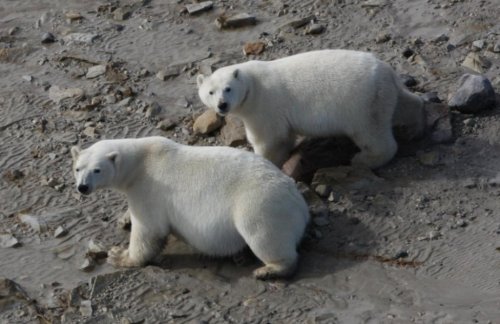
Hudson Bay update – lots of sea ice well positioned for polar bears to get ashore

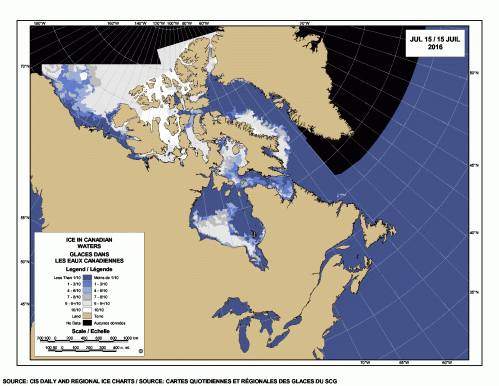
There is slightly less ice this year in Hudson Bay than last year but it is hugging tight against the western shore, which means polar bears in Western and Southern Hudson Bay will be able to stay out on the ice (if they want to) until August.

Sea ice extent Canada 2016 July 15_CIS

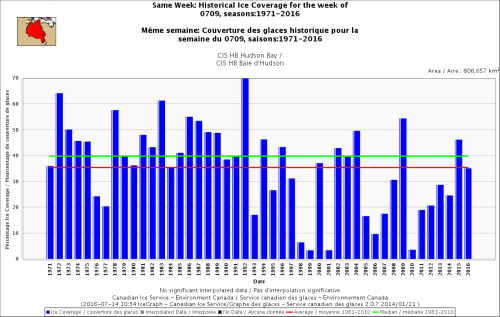
The latest weekly ice graph from the Canadian Ice Service (for 9 July) below shows average ice coverage this year (and more than there was in 1976 and 1977):

Hudson Bay same week 9 July 1971-2016

[By the way, the IUCN Polar Bear Specialist Group website is still “under construction” allowing them to avoid mentioning the less-than-dire conclusions contained in the 2015 IUCN Red List assessment]

More ice maps below, comparing previous years.

Continue reading

New paper: U of A put collars on subadult SB polar bear males since 2007

Even though it is well known that subadult male polar bears (≤ 4 years old) continue to grow in mass and bulk as they mature – so that their thick necks get even larger – in recent years Andrew Derocher and his students at the University of Alberta potentially endangered the lives of many subadult males in the Southern Beaufort in the process of learning relatively little they didn’t already know.

polar-bear-radio-collar_CBC Oct 28 2015

Money quote from a just-accepted paper by Master’s student Jody Pongracz and supervisor Derocher (“Summer refugia of polar bears (Ursus maritimus) in the southern Beaufort Sea” Polar Biology, in press 2016):

“The number of bears tracked varied over time due to collar design, deployment, and both planned and unplanned collar retention.”

So, how much “unplanned collar retention” issues [collars that did not fall off as expected] went on during this 2007-2010 study? They don’t say.

Is this paper saying U of A researchers knew they had ‘collar retention’ issues as far back as 2010 but continued to deploy them on subadult males after that study was over? It seems so, because they had an issue with just such a bear last year.

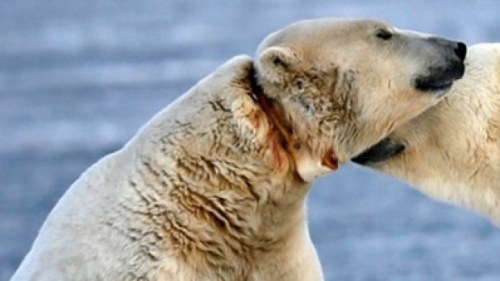
The bear with an apparently tight collar that was photographed last fall (see photo above) went out onto the ice and no one knows what happened – there has been no more information on him since, although researchers have apparently been watching for him, updated just yesterday). The University of Alberta statement says (under the June 2 update):

“Ongoing research at the University of Alberta is shifting to ear tag radios as required”

So now they realize that putting collars on subadult males is not such a good idea. Brilliant!

CBC News (28 October 2015): “Photo shows polar bear injured by tight radio collar“. See previous posts here and here. In a Global News interview (23 November 2015), Derocher admitted his team had “likely” put the collar on that bear, prompting the University of Alberta to issue a “Q & A” statement on the incident – which continues to insist that failure of collars to release is “rarely seen.”

Continue reading

Tracking polar bears in the Beaufort Sea – all bears on the ice in June

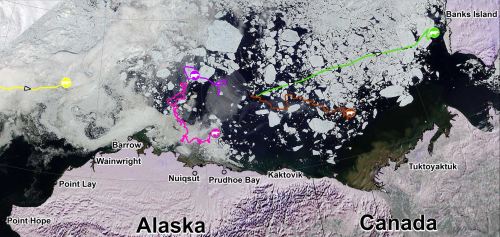
The recent open water in the Southern Beaufort didn’t seem to change what polar bears were doing – bears tracked by USGS show them on the ice, likely trying to hunt. More ice edge means more hunting habitat at this time of year.

Beaufort tracking USGS bear-movements-June 2016 lg closeup

However, few hunts are likely successful at this time of year – because only older seals are on the ice and the broken ice makes escape so much easier for the seals (see previous post here). Fat bears on shore this summer (like the ones seen at Kaktovik in September) will tell us that they got enough to eat earlier in the season. Note that bears in good condition that appear at the whaling bone piles in September are there by choice (not stranding) and they got fat by feeding in the spring (March-May), not by picking at leftover whale scraps. Calories from terrestrial sources (for most bears) just reduce the amount of weight they lose over the summer.

More maps below. Continue reading

Sharks off Cape Cod vs. my polar bear attack thriller – an unnerving parallel

I watched an episode of Discovery Channel’s Shark Week last Friday and I have to admit, it gave me a terrifying déjà vu moment.

SharkAttacks seal cape cod 2012 video capture

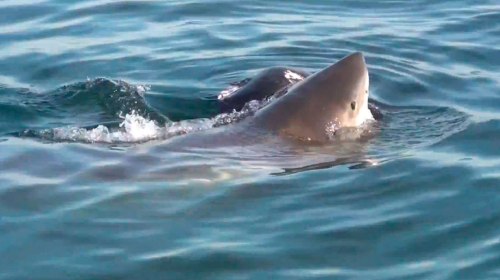
Specifically, it was the episode called “Shark Bait” (1 July 2016) – about the potentially explosive problem of booming populations of grey seals around Cape Cod (NE US, Massachusetts), the increasing numbers of great white sharks that are moving in to hunt them (see trailers here and here), and the thousands of relatively blasé humans that play and surf in the shallows nearby. UPDATE: video now available on Youtube, see below:

What could possibly go wrong?

I’ve already imagined what could go wrong – in my polar bear attack thriller, EATEN.

The parallels of EATEN with this developing shark situation are more than a little unnerving and makes it clear that my piece of speculative fiction may apply to more than polar bears. [ebooks still on sale for 99 cents – see direct links at bottom of this post]

See the details on the great white shark/seal conundrum below and decide for yourself.
Continue reading

Critical spring feeding for polar bears is over – sea ice levels are now irrelevant

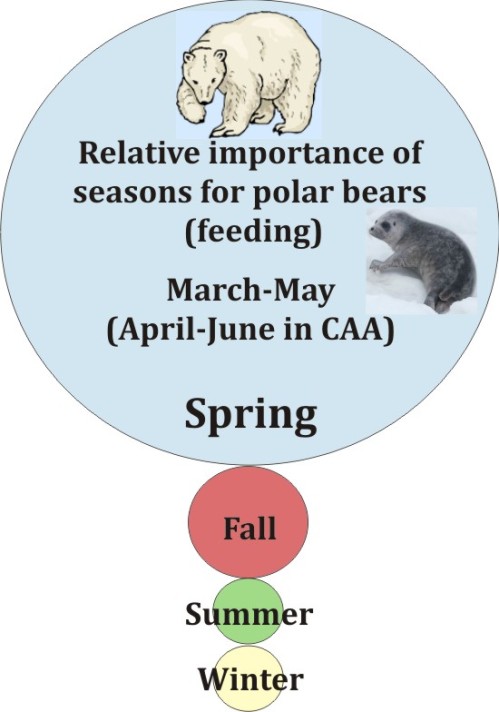
Polar bears in virtually all regions will now have finished their intensive spring feeding, which means sea ice levels are no longer an issue. A few additional seals won’t make much difference to a bear’s condition at this point.

Relative importance of seasons polar bear graphic_PolarBearScience_June2016

The only seals available on the ice for polar bears to hunt in early July are predator-savvy adults and subadults but since the condition of the sea ice makes escape so much easier for the seals, most bears that continue to hunt are unsuccessful – and that’s been true since the 1970s. So much for the public hand-wringing over the loss of summer sea ice on behalf of polar bear survival! Continue reading

USGS polar bear researchers publish their rebuttal to 2015 IUCN Red List assessment

Surprise! US Geological Survey polar bear specialists have just published another opinion-based model that concludes – yet again – that there is no hope for polar bears of the future unless the world drastically reduces fossil fuel use. This appears to be the Amstrup-led rebuttal to the hated 2015 IUCN Red List polar bear assessment I have been expecting, written in tandem with the Red List document by two of the same co-authors (Steve Amstrup and Todd Atwood).

Kaktovik female w cub_21 September 2015 USDA_med

Really, no surprises here – just more of the same overwrought fear-mongering about polar bears that we’ve been hearing from USGS since 2007. I saw Atwood and Amstrup last week in a British-made TV film that expressed the same sentiments (The Great Polar Bear Feast – it oddly featured dozens of fat/very fat Kaktovik polar bears while mostly USGS ‘experts’ talked about impending starvation). On camera, Atwood and Amstrup were almost indistinguishable in their statements of doom, and even though the film aired 6 months ago in the UK, it has so far not garnered the angst it seems to have intended.

Some folks may be even more convinced than ever by this new PR strategy [TV movie plus a published paper] that the polar bears are all going to die unless we (not they) change our wicked ways and stop using fossil fuels, but chances are that many more will detect the desperation in their escalated pitch and continue to refuse to buy what they are so frantically trying to sell.

Continue reading

Polar bears and W. Hudson Bay sea ice breakup 2016

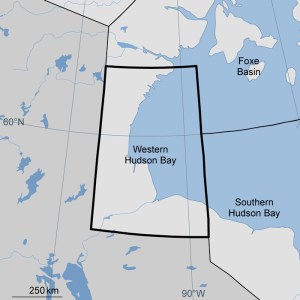
Breakup for Western Hudson Bay (WHB) is looking to be later than usual this year, given that the average breakup date since 1991 has been July 1 (using a 30% threshold) – only a few days from now – and the ice in WHB is nowhere near 50% coverage, let alone 30%.

Churchill_Polar_Bear_2004-11-15 Wikipedia

Note that few WHB bears come off the ice around Churchill – most come ashore along the southwest coast of Hudson Bay (almost into SHB) and make their way north over the course of the summer to meet the ice as it reforms in the fall north around Churchill – that’s why it’s called a “migration.”

map-WesternHudsonBay

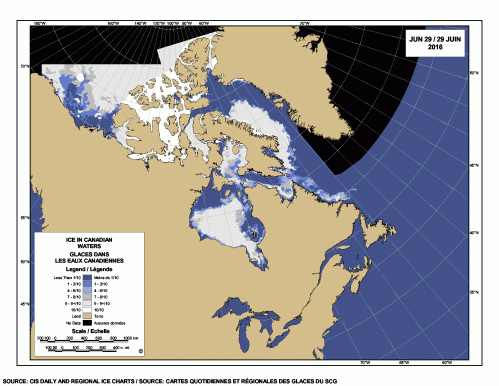
There’s still a lot of ice left in Hudson Bay, as the Canadian Ice Service map for 29 June 2016 (below) shows: Sea ice extent Canada 2016 June 29 CIS

It seems to me that breakup for WHB this year is looking rather like 2014, which was something like a week later than the average since 1991, but time will tell. See below for comparison to 2009 (a late breakup year), 2015, and 2013 (lots of variability!), as well as a discussion of when bears come ashore in relation to this sea ice breakup benchmark.

Continue reading

BREAKING: DNA results prove so-called polar bear hybrid was a blonde grizzly

All the hubris last month about polar bear x grizzly hybrids, based on an unusual-looking bear killed near Arviat, has turned out to be wishful thinking by those who’d like to blame everything to do with polar bears on climate change. An awful lot of “experts” now have egg on their faces. That “hybrid” was just a blonde grizzly, as I warned it might.
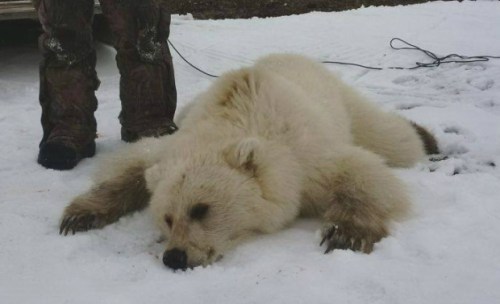
grizzly-polar-bear-hybrid_Arviat 2016 Didji Ishalook

According to one report, Nunavut wildlife manager Mathieu Dumond said:

“Some otherwise pretty renown bear biologists jumped on the hybrid bear story without even knowing what they were talking about,” Dumond said.

“I think it was something blown out of proportion, with the wrong information to start.”

Gee, ya think? CBC ran a story too. But the CBC don’t really admit (see below) that they were the first out of the gate on this story and started the media madness. It was the CBC that relied on the opinion of a black bear expert from Minnesota (who likely only saw a picture) – but since he was willing to say it was a hybrid and that its presence was a sign of climate change, they went with it.  See “Grolar or pizzly? Experts say rare grizzly-polar bear hybrid shot in Nunavut: Expert says interbreeding may be happening more frequently due to climate change” (CBC 18 May 2016).

For background, see these recent posts on this putative hybrid and the issues on hybridization it spawned:
Another alleged grizzly-polar bear hybrid shot but it’s not a sign of climate change

Polar bear hybrid update: samples sent for DNA testing to rule out blonde grizzly

Five facts that challenge polar bear hybridization nonsense

Most polar bear hybrids said to exist have not been confirmed by DNA testing

Blonde grizzlies, like the one pictured below (which I posted the day the story broke), are actually a proven sign of natural variation within species – a critical lesson in biology that should be the take-home message here. [ADDED: 2007 Alaska Fish & Wildlife Service Newsletter article on colour variation in black and brown/grizzly bears. h/t Wayne D]

“Paging Professor Derocher”: PBSG biologist and University of Alberta professor Andrew Derocher gave so many interviews to the media on this issue I lost count – he fed the media frenzy almost single-handedly. Well, except for granddaddy of polar bear experts Ian Stirling, who said (via the Toronto Star)[update: Toronto Star published correction]:

“I think it’s 99 per cent sure that it’s going to turn out to be a hybrid,” said Ian Stirling, an emeritus research scientist with Environment Canada and adjunct professor at the University of Alberta.”
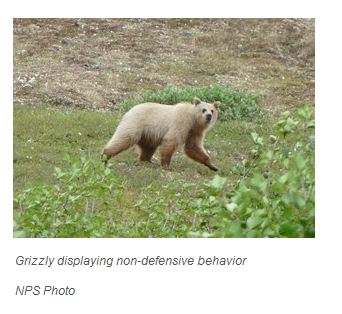
 

Grizzly light_NPS photo

Quotes from today’s story below.
Continue reading

Five years of polar bear habitat at June 20 around the Arctic

Five years worth of sea ice maps for the same date is hard to come by in this country, since the Canadian Ice Service does not archive their daily sea ice maps. However, due to some forethought, I have at hand ice maps going back to 2012 for the longest day of the year for Canada and archives for other regions provide similar perspective at the solstice.

Polar_Bear_male on sea ice_Regehr photo_March 21 2010_lg

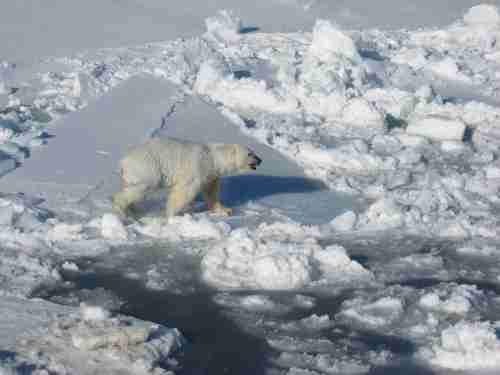
Few photos of polar bears in June likely exist – too early for most bears to come ashore and the ice too unstable for humans to be offshore [photo above is dated March].

Compare the five maps for Canada and eastern Alaska below. Notice the differences for Hudson Bay: it may seem ironic, but 2012 (which had the lowest September minimum since 1979 due to an August storm) had the most typical Hudson Bay breakup/melt pattern compared to previous years. [Keep in mind this recent post about how much ice can remain even when almost none is visible on the ice maps]

In many regions, polar bear hunting efforts are seldom successful after early June because young-of-the-year seal pups have taken to the water to feed, which means the only prey still on the ice are predator-savvy adults and subadults that have an easy time escaping in the rapidly breaking up ice fields. Bears that come ashore in June likely are not missing much – a little less ice than usual at this time of year is not going to make much difference.

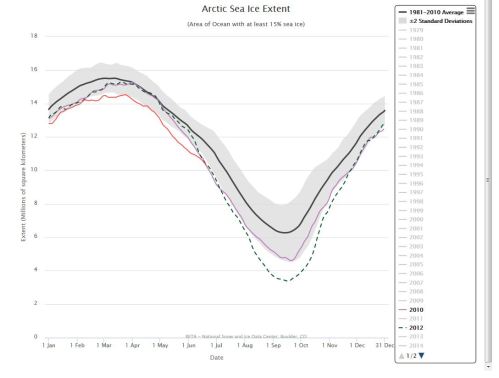
Overall, despite doom and gloom predictions we heard in March 2016 (“wintertime extent hits another record low”), sea ice extent (courtesy NSIDC) at 20 June 2016 was the same at this date as it was in 2010 and 2012 at this time of year – which essentially marks the end of the primary feeding period for polar bears (except for those that live in the Canadian Arctic Archipelago, where seals give birth a bit later in the spring).

Sea ice at 20 June_2016 vs 2012 and 2010_NSIDC interactive

And did polar bears die in droves due to conditions in 2010 or 2012, in any subpopulation around the Arctic affected by low sea ice levels? No, they did not. In fact, the subpopulation that had the most recent survey done (Svalbard portion of the Barents Sea – 2015) was not only found to be thriving but numbers had increased markedly (42%) over 2004 levels. Now that’s resilience!

Continue reading

Terrestrial food fight amongst polar bear researchers reflects political differences

With a few big guns on one side and some fringe folk on the other, a dichotomy of opinion has developed amongst polar bear researchers regarding whether or not consumption of land-based foods is making a difference to polar bear survival (or is likely to in the future).

Polar bears eating terrest foods WHB_Rockwell press release

It’s been going on for a while now. Last year, two US Geological Survey members of the IUCN Polar Bear Specialist Group (PBSG) apparently got fed up with the scatter-shot of papers promoting terrestrial foods as a possible salvation for polar bears (e.g. Iles et al. 2013;  Iverson et al. 2014; Rockwell and Gormezano 2013a, 2013b). In April, they published a canon volley of a paper meant to blow all that ‘polar-bears-might-survive’ talk out of the water once and for all (Rode et al. 2015).

Note that although the PBSG didn’t bother to update their website with the IUCN Red List assessment when it came out last November, they had a link up to the USGS terrestrial feeding paper within 16 days (with an editorial summary in the “NEWS” section as well as a listing of the paper in the “RECOMMENDED READING” section). As I suggest below, this difference in treatment may not be a coincidence.

However, another group of non-PBSG researchers  haven’t given up just yet, as shown by the title chosen for the most recent news report (Alaska Dispatch News, 16 June 2016) on the just-finished International Bear Conference:

Want to know how a changing climate is affecting polar bears? Look at what they’re eating.

Apparently, Jeff Welker, a University of Alaska Anchorage researcher who is co-author on two recent papers on the subject of polar bear consumption of terrestrial foods (Tartu et al. 2016 and Rogers et al. 2015), gave a presentation at the conference that raised this topic yet again. His talk came on the heels of an earlier presentation by Todd Atwood, who suggested Southern Beaufort polar bears might benefit from staying onshore to eat left-over whale scraps instead of staying on the sea ice during the summer (even though he had no data to support that opinion – as I discussed in this post).

Here’s the question: is this dispute really about what polar bears eat or don’t eat when they’re on land – or is it symptomatic of the underlying politics of polar bears? [CBC documentary video by that name here]
Continue reading