
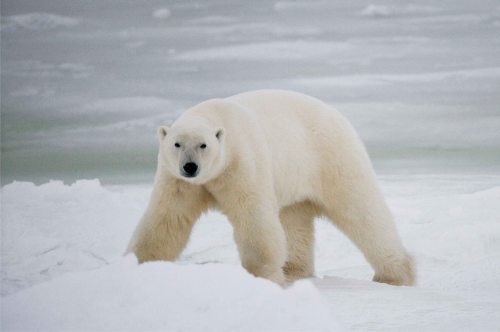
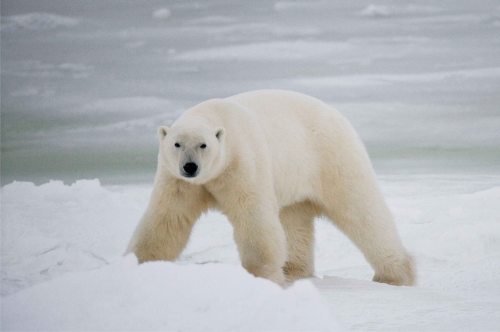
The primary feeding period for polar bears is rapidly drawing to a close in much of the Arctic, although it may continue for another few weeks in the farthest north. Mating is pretty much over as well, which means the polar bears’ need for abundant sea ice is declining even more rapidly than the ice does itself at this time of year.
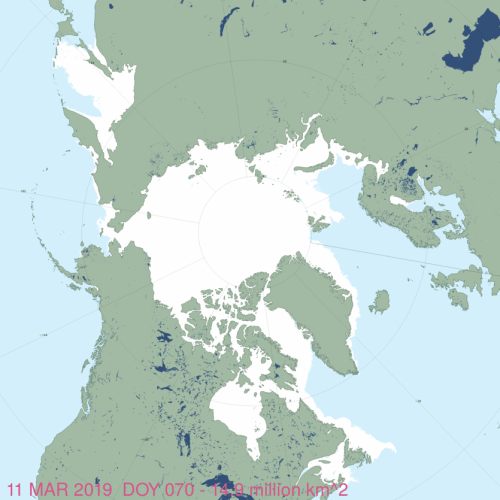
Despite the fact that CO2 levels have now reached 415 ppm (see tweet below), sea ice is still pretty much as it was in 2006 when CO2 was about 385 ppm. In other words, the state of sea ice at this time of year – just over 12 million kilometres squared in 2006 and in 2019 – shows no correlation with rising CO2 levels. There is also not a hint of imminent catastrophe for polar bears anywhere within their range, despite the hand-wringing messages from conservation fear-mongers and their polar bear specialist supporters.
As I’ve argued previously (with references), sea ice is a seasonal requirement for polar bears, not a year-round necessity (Crockford 2019).

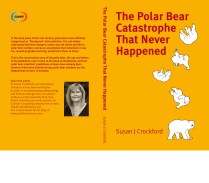 The Polar Bear Catastrophe That Never Happened explains why the catastrophic decline in polar bear numbers we were promised in 2007 failed to materialize. It’s the layman’s story of how and why the polar bear came to be considered `Threatened’ with extinction and tracks the species rise and fall as an icon of the global warming movement. The book also tells the story of my role in bringing that failure to public attention – and the backlash against me that ensued.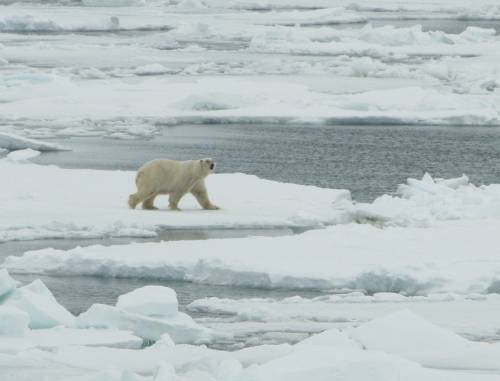






 polarbearscience
You must be logged in to post a comment.