Tag Archives: polar bear

BBC perspective on Arviat polar bears – those not included in the last mark-recapture study

In a polite but misleading article today in a BBC magazine (The polar bears are coming to town) about the relationship of polar bears and Inuit in Arviat, Western Hudson Bay, there is no mention of the on-going feud between Nunavut Inuit and Canadian polar bear scientists regarding invasive research.

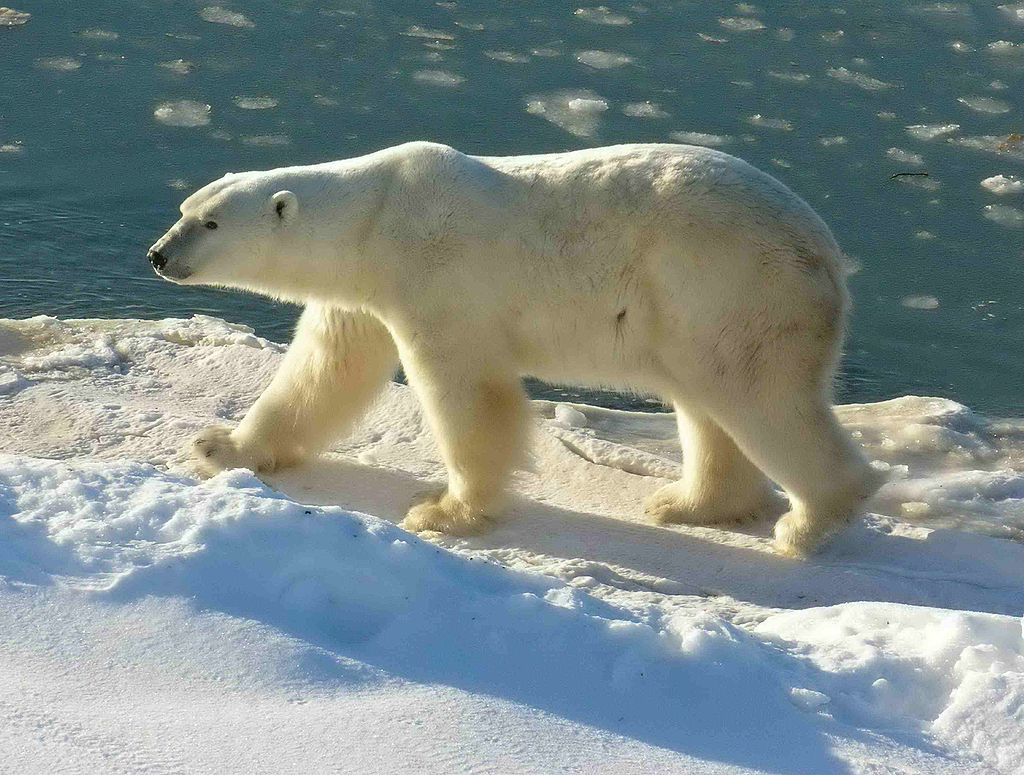
Churchill_Polar_Bear_2004-11-15 Wikipedia

Nor is there a mention of the fact that according to the most recent research, there has been no trend in sea ice conditions since 2001.
Continue reading

Western Hudson Bay polar bear numbers are stable, no trend in ice breakup or freeze-up

This needs saying again: the latest study on Western Hudson Bay polar bears reveal the population has been stable since 2004 and there has been no significant trend in either breakup or freeze-up dates since 2001.

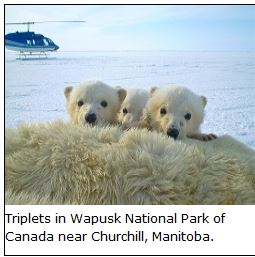
Triplets in Wapusk NP from McCall webpage 2013

Environment Canada and the IUCN Polar Bear Specialist Group concur that the current size of the WHB subpopulation is about 1030 bears. Documents found online indicate a new version of the 2013 WHB mark-recapture report (Lunn et al. 2013) is now available (Lunn et al. 2014) and that a new population survey is planned for 2016. A 2013 story based on false information produced by The Guardian that is still in circulation should be retracted.
Continue reading

Sea ice is not a stable habitat for polar bears – summarized today in The Arctic Journal

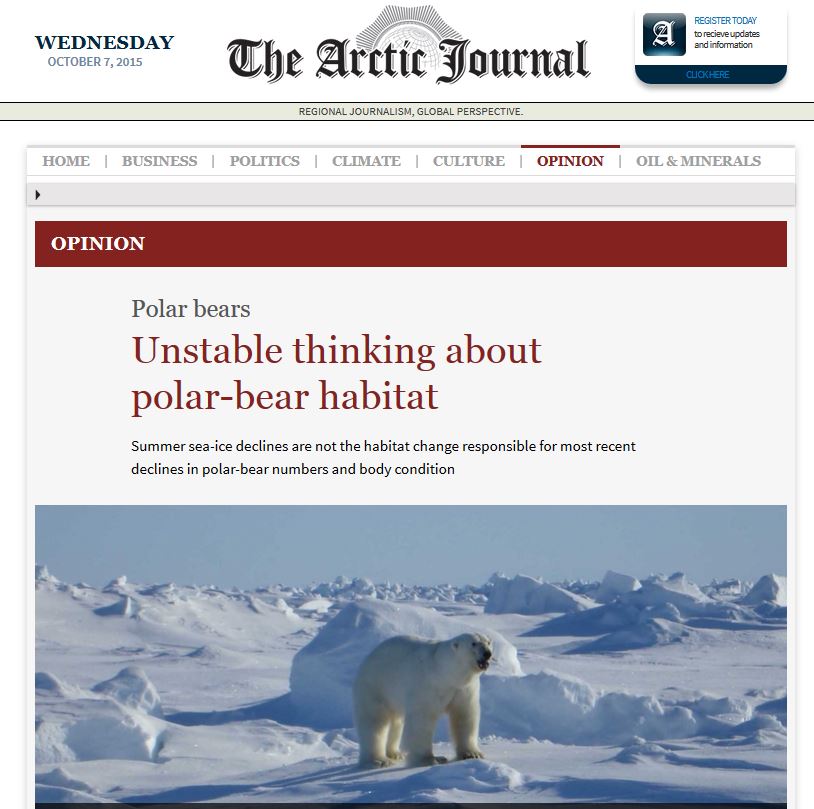
In The Arctic Journal, 7 October 2015: Unstable thinking about polar bear habitat [not my title choice]

Unstable thinking about polar bear habitat_Oct 7 2015 title page

This is a previously unpublished summary, written exclusively for The Arctic Journal, of my peer-reviewed, fully referenced essay on this topic that was published earlier this year by the Global Warming Policy Foundation in their “Briefing Paper” series (#16, June 8, 2015: The Arctic Fallacy: Sea Ice Stability and the Polar Bear), which includes a foreword by Dr. Matthew Cronin, Professor of Animal Genetics at the University of Alaska Fairbanks. Pdf here.

Here are the essential points, one by one:
Continue reading

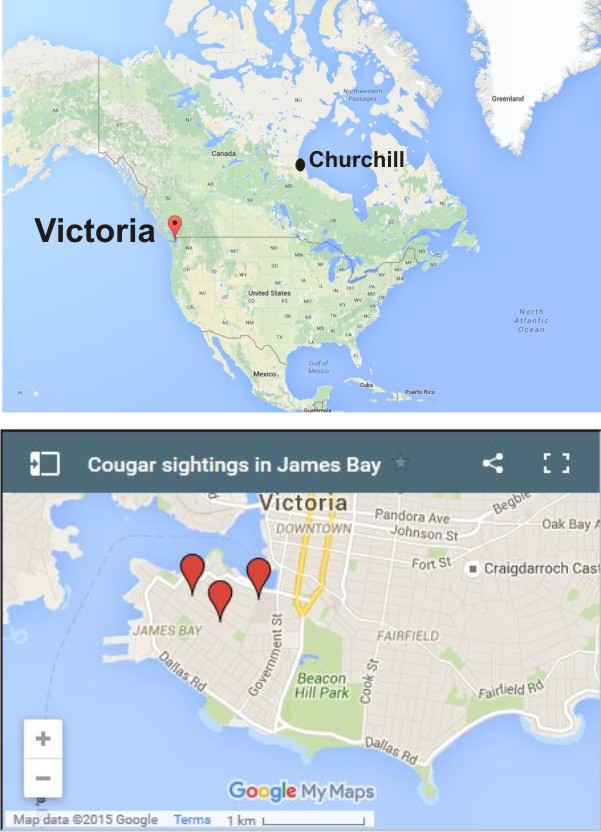
Churchill has polar bears, Victoria has cougars

cougar (aka puma/mountain lion) was captured in downtown Victoria yesterday (my home town), with all the drama given a polar bear attack. No polar bear alert program here, just cougar tracking hounds on standby and officers with guns and tranquilizer darts.

The Globe and Mail has video here.

Victoria cougar location Oct 5 2015

Details and quotes below. CBC story was the only one to include a map, which I have put into polar bear perspective.
Continue reading

Tracking polar bears – 3 out of 4 S. Beaufort bears on the ice during September 2015

The shore of Alaska is not very important to Southern Beaufort polar bears – most of them stay on the sea ice during the summer and early fall, where they may or may not continue eating. These results of on-going satellite tracking studies by USGS1 confirm results of previous studies.

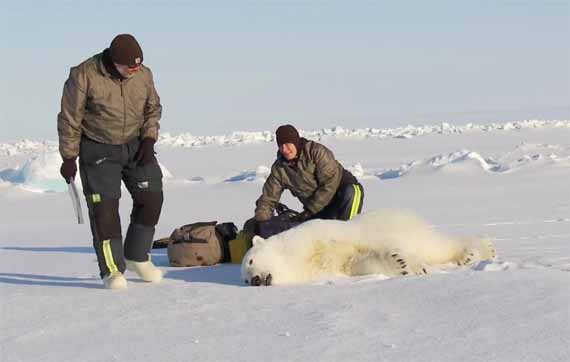
Tranquilized_pb570_S Beaufort March 2014_USGS

Continue reading

Beaufort Sea swimming polar bears far from land but not very far from sea ice

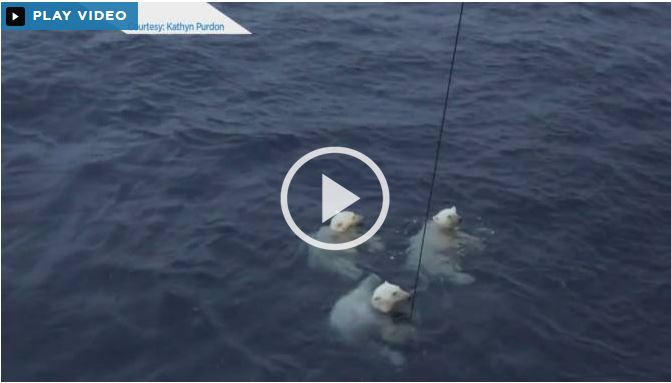
Recent accounts of an encounter with a curious polar bear female and her two older cubs in the Beaufort Sea on 16 September give contradictory details about the position of sea ice at the time. The same researcher told one reporter that the ship was 240 km from land, another that it was 240 km from the sea ice, and in another account (that he wrote himself), said the ship had been far from land and sea ice.
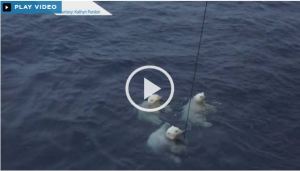
Beaufort swimming polar bears_Sept 30 2015_Global news

University of Victoria (Canada) chemical oceanographer Jay Cullen said on the expedition web site:

“After arriving on station and beginning work the crew noticed three polar bears in the water together which swam around to the ship when our water sampling system was nearly 3500 meters below the surface. The ship was located far from sea ice and land. Indeed, Arctic sea ice extent was the fourth lowest on record this year and there has been speculation that this imposes stress on polar bears which rely on the ice to hunt.”  [my bold]

But the maps below show that at the time of the incident (taken from the expedition web site) and the NSIDC Masie sea ice map for 16 September 2015, the ship [the CCGS Amundsen, acting as a research vessel] was actually quite close to an isolated large patch of sea ice, although further from the edge of the main pack. A patch of sea ice plenty big enough for a polar bear to rest upon – no wonder the bears did not appear stressed.

And the polar bear biologist Cullen consulted (Dr. Andrew Derocher) implied by his response that the bear was indeed far from sea ice. Reminds me of the swimming polar bear off the Hibernia oil platform off Newfoundland March 2015, which turned out to be not far from ice at all. See what you think.
Continue reading

Activist explorer blames more polar bear encounters since 1985 on reduced sea ice

Activist polar explorer Børge Ousland’s told National Geographic that more polar bear encounters on land are due to reduced sea ice –  without any reference to population changes over that time or revealing when or where these observations were made.

IceLegacy_NG video Sept 30 2015

More vague anecdotal observations and opinions posing as scientific evidence.
Continue reading

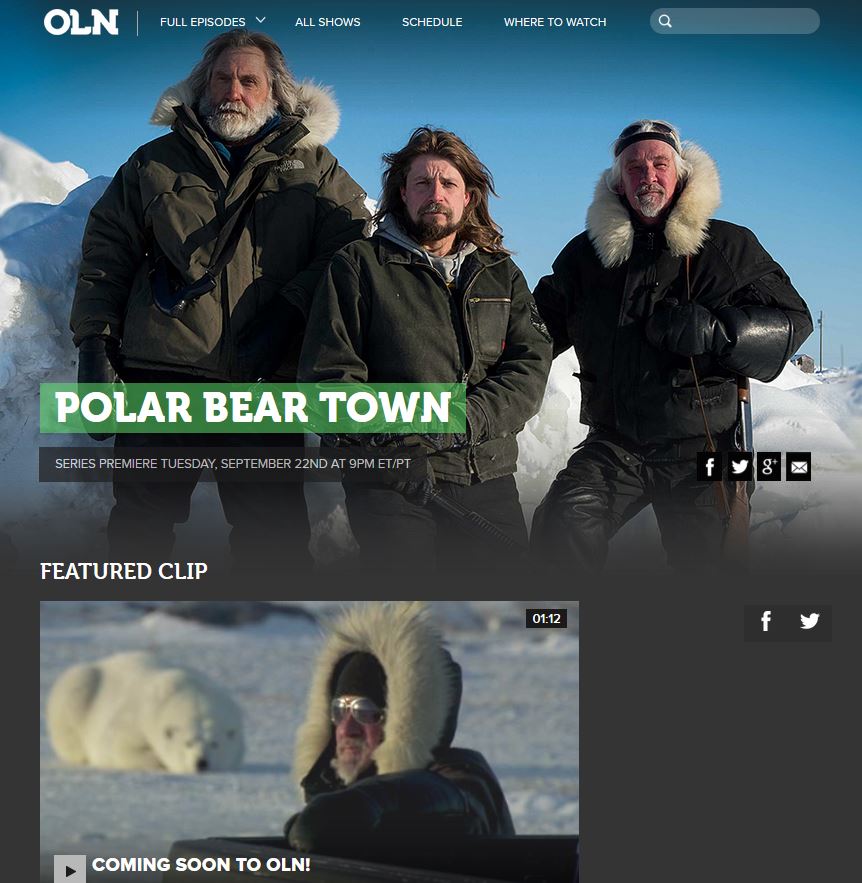
Polar Bear Town – Churchill bear stories on TV without gloom and doom propaganda

This was kind of fun – featuring the Churchill polar bear guiding trials and tribulations of PolarBearAlleys Kelsey Eliasson, Dennis Compayre, Brian Ladoon, which premiered Tuesday 22 September in Canada and the US. Supposedly, you can watch online episodes that have aired already (wouldn’t work for me).

Polar Bear Town premiere Sept 22 2015

This is a ‘reality’ TV series, not a documentary. It won’t be to everyone’s taste. But by focusing on independent polar bear guides, you see the bears in their element (and the goings-on in the town) without the constant lectures about global warming and predictions that the bears are all going to die that are, I understand, a feature of Tundra Buggy tours operated by the largest outfit, Frontiers North, due to its partnership with Polar Bears International, a strongly activist organization that many polar bear biologists belong (including Steven Amstrup, Ian Stirling, Andrew Derocher, former WWF employee Geoff York).

So far, anyway – perhaps the lectures are to come? YouTube Trailer below.

UPDATED 29 September 2015: OLN has posted the first episode on Youtube, copied below.
Continue reading

Summer refuge for polar bears in Arctic Basin only 0.3 mkm2 below its possible maximum

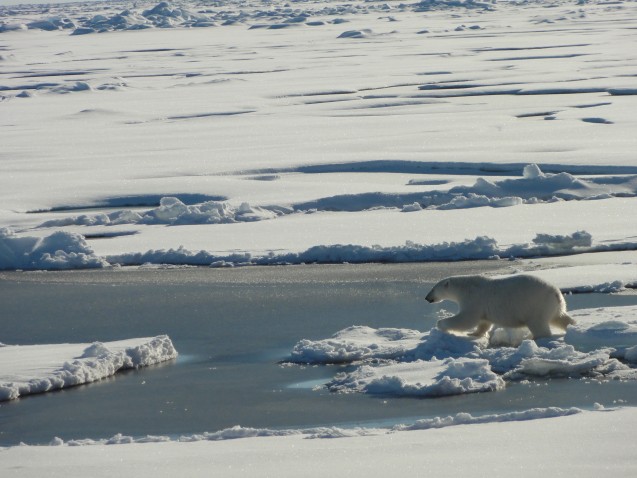
At the seasonal minimum 2015, the Arctic Basin was still almost full of sea ice, down only 0.3 mkm2 below the maximum it could ever be.

Healy Aug 24 2015 Polar-Bear III Tim Kenna

Remember that spending the summer in the Arctic Basin for most polar bears is just like sitting on the western shore of Hudson Bay – they are all waiting for the refreeze. In either location, they might find something to eat, they might not.

Below are NSIDC MASIE sea ice maps for 10 April 2015 (as big as it gets, basin filled) vs. 17 September 2015: Continue reading

Barents Sea polar bears in excellent condition say Norwegian biologists

Conditions this year (2015) in the Barents Sea were excellent according to the polar bear researchers who work there (“Polar bears were as fat as pigs”).

Barents Sea bear 2015 August Cobbing_NPI
A new survey just completed for a population count showed the bears were are in excellent condition – except the injured ones, of course, which some news organizations are promoting as evidence of harm from global warming-induced sea ice changes because an activist photographer  – not scientists – said so.

Continue reading