Men recreating the 1938 expedition of explorer David Haig-Thomas have a mid-April 2015 polar bear encounter reminiscent of two recent polar bear attacks (Labrador, 2013, Svalbard, 2011) but with a happier ending.
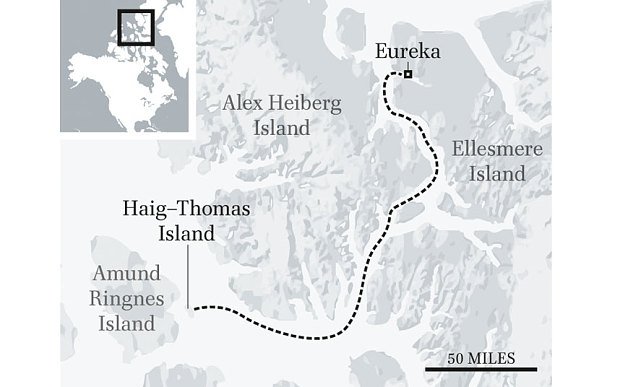

Men recreating the 1938 expedition of explorer David Haig-Thomas have a mid-April 2015 polar bear encounter reminiscent of two recent polar bear attacks (Labrador, 2013, Svalbard, 2011) but with a happier ending.
Comments Off on Polar bear encounter in the Canadian High Arctic reminiscent of recent attacks
Posted in Polar bear attacks
Tagged Arctic, attack, Labrador, polar bear, Svalbard, trip-wire, warning
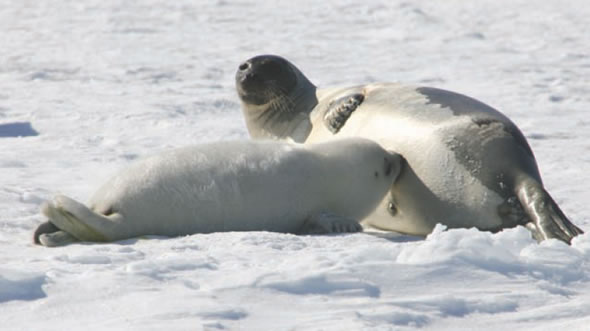
Arctic ice extent (at 14.1mkm2) on 15 April, was virtually identical to 2014 on that date, and higher than 2006. But the record goes to Davis Strait, which recorded the highest ice extent since 1971 for the week of April 16, while the waters of Eastern Newfoundland to the south (where most harp seals have their pups) had the third highest ice extent since 1969. Lots of fat baby seals are just what polar bears need at this time of year.
Comments Off on Spring ice alarm deflated – 2015 ice now as high as 2014 & Davis Strait highest since 1971
Posted in Life History, Sea ice habitat
Tagged Barents Sea, Canadian Ice Service, Davis Strait, harp seal, Newfoundland, NSIDC, polar bear, sea ice, seals, spring sea ice
Here are some facts to counter the misinformation and fearmongering being spread via twitter by a polar bear biologist who is getting carried away with his conservation activism.
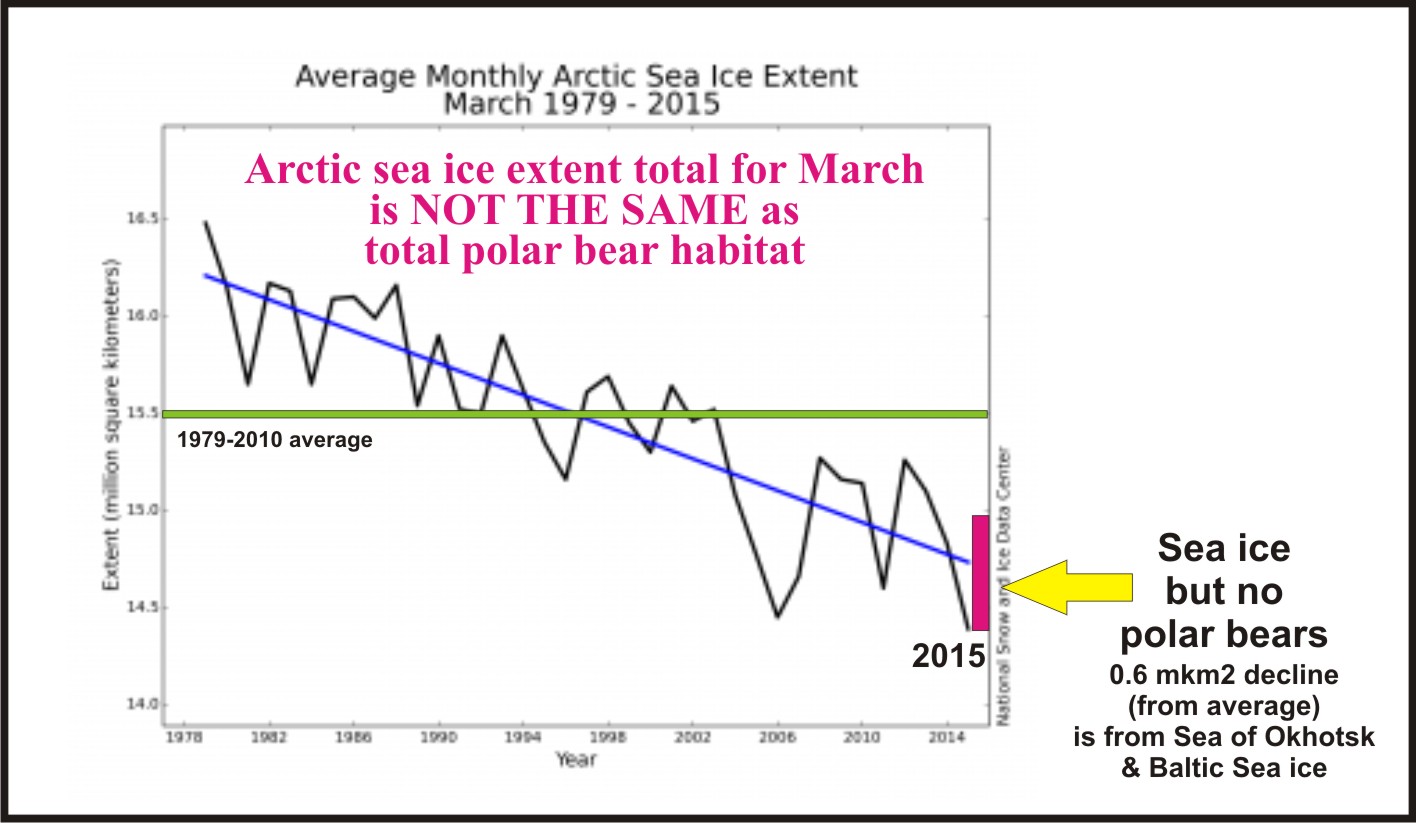
Following up on my last post, I note that Arctic regions with sea ice but not polar bears were about 0.32 mkm2 below last year’s March average extent – which means the total ice decline from 2014 (0.4 mkm2) represents only a slight decline in polar bear habitat, most of which is in the Barents Sea (and due primarily to the state of the AMO, not global warming).
Sea ice extent for the Sea of Okhotsk and Baltic Sea combined (both areas without polar bears)1 were about 0.6 mkm2 below average this year for March. Average extent for March (according to NSIDC) is 15.5 mkm2, which means this year’s extent (14.4 mkm2) was 1.1 mkm2 below average, of which less than half (0.5 mkm2) was “lost” polar bear habitat.
IUCN Polar Bear Specialist Group biologist Andrew Derocher has been saying this is a “huge loss for polar bears” (see below): rational analysis of the facts show it is not. Continue reading
Comments Off on Challenging polar bear fearmongering about Arctic sea ice extent for March 2015
Posted in Advocacy, Sea ice habitat
Tagged activism, Baltic Sea, Barents Sea, Derocher, fearmongering, loss, maximum extent, misinformation, NSIDC, polar bear, record low, sea ice, Sea of Okhotsk, spring, spring ice
Only half or less of the estimated 2.6% loss per decade of March sea ice extent since 1979 (Fig. 1, below) represents a decline in polar habitat. That’s because several regions with sea ice that are not home to polar bears, like the Sea of Okhotsk, are included in Arctic sea ice totals.
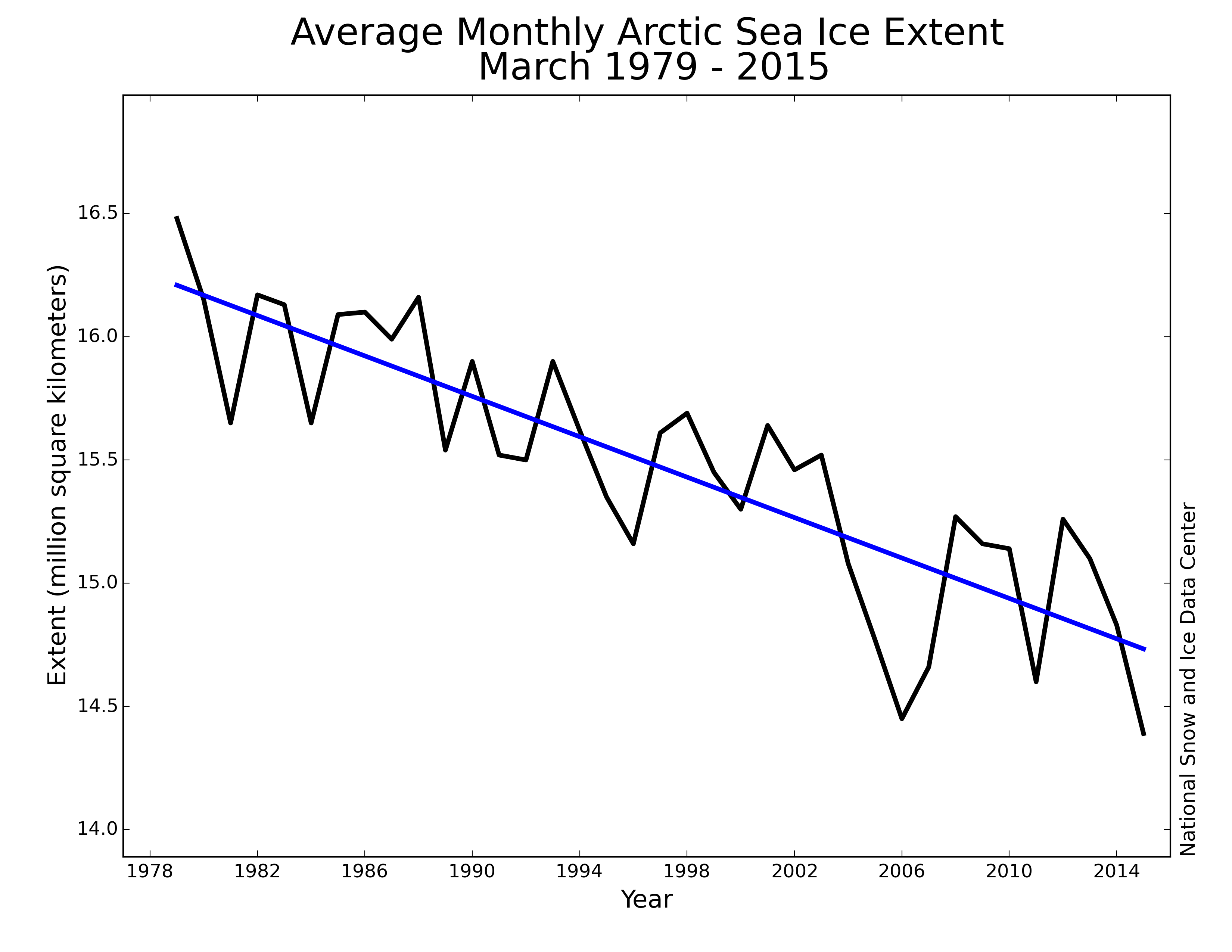
Figure 1. Average monthly Arctic sea ice extent for March 1979-2015 (which includes ice in the Sea of Okhotsk, the Sea of Japan, and the Baltic, where polar bears do not live), shows a decline of 2.6% per decade. NSIDC, March summary 2015.
Both the Sea of Okhotsk and northern Sea of Japan (Fig. 2) have sea ice in winter (which is included in total Arctic sea ice records) but they are not truly “Arctic” – neither is connected to the Arctic by continuous ice, even when the ice is at its maximum extent (nor is the Baltic Sea — in contrast to Hudson Bay and the east coast of North America, which are connected to the Arctic by continuous ice).
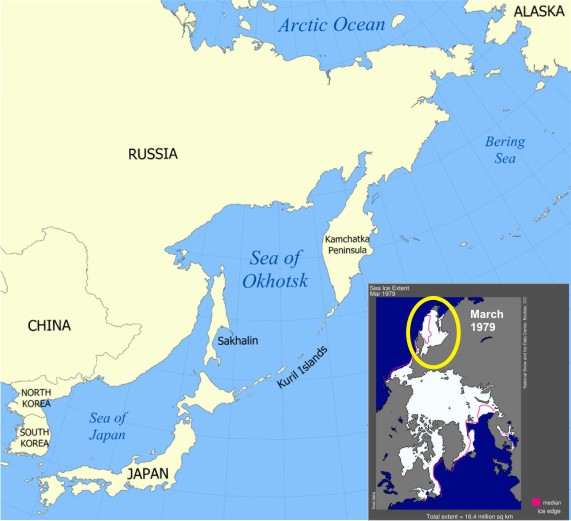
Figure 2. Location of the Sea of Okhotsk and Sea of Japan. Insert ice map for March 1979 from NSIDC shows it’s position relative to the Arctic proper.
That lack of connection to Arctic pack ice is probably the main reason that polar bears never colonized the Sea of Okhotsk, even though western Arctic seal species (ringed, bearded, spotted, and ribbon) and Arctic whales (bowhead and beluga) live there. Polar bears don’t currently live in the Sea of Okhotsk and all evidence suggests they never have.
Sea ice maps show that about half of the total ice extent difference between March 1979 and March 2015 was due to a relatively large decline in sea ice cover for Sea of Okhotsk and northern Sea of Japan — regions without polar bears. Surely no reputable scientist or journalist would suggest that the “record low” maximum ice extent for 2015 has any relevance for polar bear health and survival? [or for Northwest Passage travel, for that matter] Sadly, they would.
Comments Off on Arctic sea ice extent total for March does not equal global polar bear habitat
Posted in Conservation Status, Sea ice habitat
Tagged Arctic, declining sea ice, Derocher, habitat, lost ice, lowest maximum extent, March, misinformation, NSIDC, polar bear, record low, sea ice, sea ice extent, sea ice maximum, Sea of Okhotsk, spring, variation
A new paper by polar bear biologists (Rode et al. 2015) argues that terrestrial (land-based) foods are not important to polar bears now and will not be in the future – a conclusion I totally agree with – but they miss the point entirely regarding the importance of this issue.
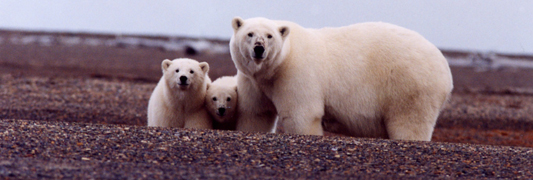
Whatever food polar bears consume in the summer – whether they are on land or on the ice – doesn’t really matter. What matters is how many fat-rich seals they can consume between March and June each year. The fat put on in late winter/spring from gorging on baby seals carries polar bears over the summer, no matter where they spend it.
USGS polar bear biologist Karyn Rode and colleagues (press release here) have tried to frame this issue as one about future survival of polar bears in the face of declining sea ice. However, the fact that polar bears in the Chukchi Sea and Southern Davis Strait are thriving despite dramatic declines in summer sea ice (aka an extended open-water season), proves my point and disproves their premise. Bears in these regions are doing extremely well – contrary to all predictions – because they have had abundant baby seals to eat during the spring (see here and here).
Comments Off on Polar bear consumption of terrestrial foods – new paper misses the point
Posted in Advocacy, Conservation Status, Life History
Tagged Amstrup, Arctic, bird colonies, caribou, Chukchi Sea, climate change, Davis Strait, East Greenland, geese, global warming, goose eggs, habitat, InsideScience, polar bear, red herring, Rode, sea ice, sea ice loss, seabird eggs, Svalbard, terrestrial foods, us geological survey, USGS
More bad science: US biologists successfully used a scientifically flawed model to get polar bears listed as ‘threatened’ and thus emboldened, went on to do the same for walrus.

The intricate US Geological Survey model of ‘expert opinion’ that was used to support the listing of polar bears as ‘threatened’ under the US Endangered Species Act (ESA) has been soundly rejected by the world’s leading conservation organization, the IUCN,1 which has has tightened its rules for using “future conditions” (e.g., effects of global warming) in generating Red List assessments. That IUCN condemnation means the USGS model was never “the best available science” for evaluating the status of polar bears ̶ it was (and still is) substandard, inadequate science that makes a mockery of serious conservation efforts.
However, not only has this flawed model continued to be used by the USGS for polar bears, it has also been used to assess the conservation status of Pacific walrus, which are now officially “candidates” for being listed as ‘threatened’ (US Fish and Wildlife Service 2011).2
Comments Off on US biologists used same flawed models for listing walrus and polar bears as ‘threatened’
Posted in Advocacy, Conservation Status, Sea ice habitat, walrus
Tagged Amstrup, Bayesian Networks, best available science, conservation, endangered, ESA, IUCN, model, polar bear, threatened, US Fish and Wildlife Service, USGS, walrus
Perhaps the folks on the platform couldn’t see it, but sea ice wasn’t far off on Monday when a polar bear came to visit the Hibernia oil platform southeast of St. John’s, Newfoundland. See the map below (composite from Heritage Newfoundland and Canadian Ice Service):
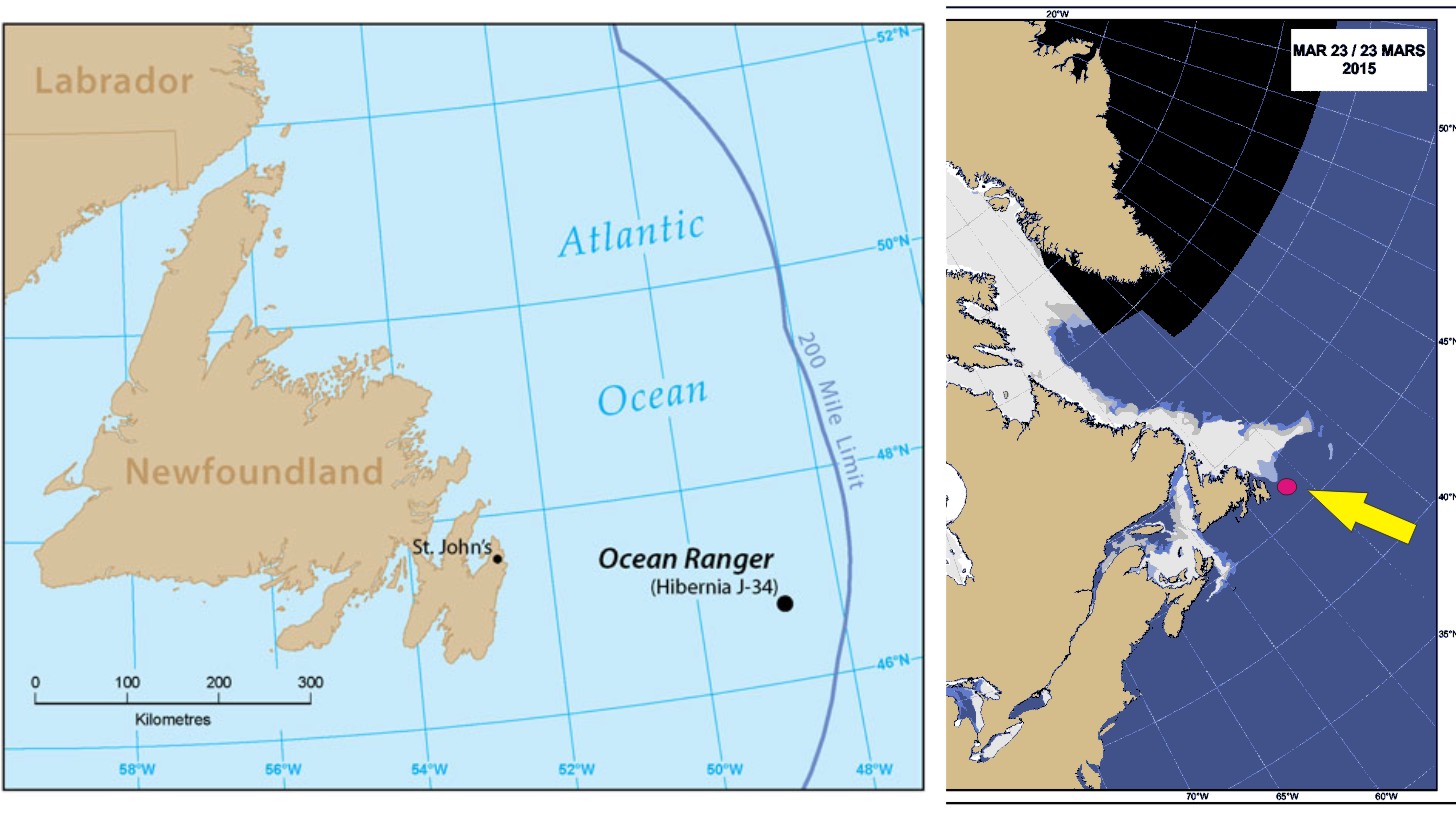
UPDATE 26 March 2015: Ian Stirling has added his expert comment on this incident, see below.
UPDATE 28 March 2015: Newfoundland’s Director of Wildlife has commented on this incident, see below.
Continue reading
Comments Off on Polar bear visiting Hibernia oil platform off Newfoundland was not far from sea ice
Posted in Life History, Sea ice habitat
Tagged Davis Strait, Hibernia, Newfoundland, oil platform, Pagano, polar bear, sea ice, sea ice maximum, swimming
Polar bear habitat for the last week of March is well above average in eastern Canada for the second year in a row. The very low extent of ice in the Sea of Okhotsk – which has contributed strongly to the low maximum extent this year – is irrelevant to our discussion, since no polar bears live there.
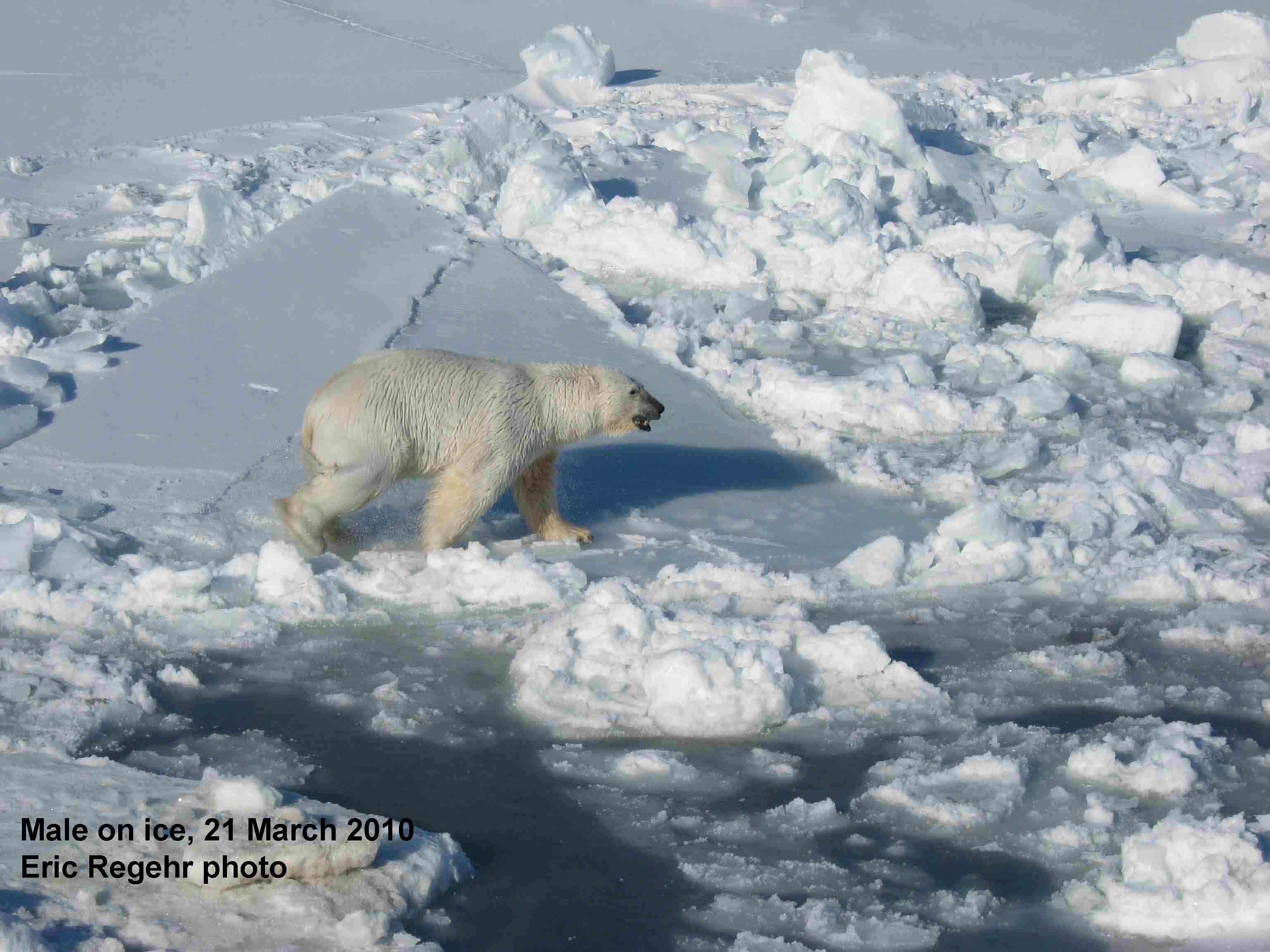
There is a bit more concentrated ice around Svalbard than last year (or in 2012), although ice in the Barents Sea in general is still below average due to the state of the Atlantic Multidecadal Oscillation (AMO). The state of the AMO and its effects on Barents Sea polar bear sea ice habitat has nothing to do with global warming: it’s a cycle that has been documented for centuries (Miles et al. 2014).
Still, there is plenty enough sea ice for polar bear hunting: this is the beginning of the critical feeding time for all polar bears (see here and here), but especially for the survival of new cubs-of-the-year, so I have a few words about Western Hudson Bay cubs below.
Have a look for yourself.
Update: Added 20 March 2015, comparison maps from Cryosphere Today for 2006 vs. 2015.
Continue reading
Comments Off on Polar bear habitat update – more spring sea ice around Svalbard than 2014 & 2012
Posted in Life History, Sea ice habitat
Tagged AMO, Barents Sea, Churchill, cubs of the year, Davis Strait, Norwegian Ice Service, polar bear, sea ice, spring ice conditions, spring ice maximum, Svalbard, western hudson bay
My request to Environment Canada in early December 2014 for the documents supporting their polar bear status maps has finally generated results.
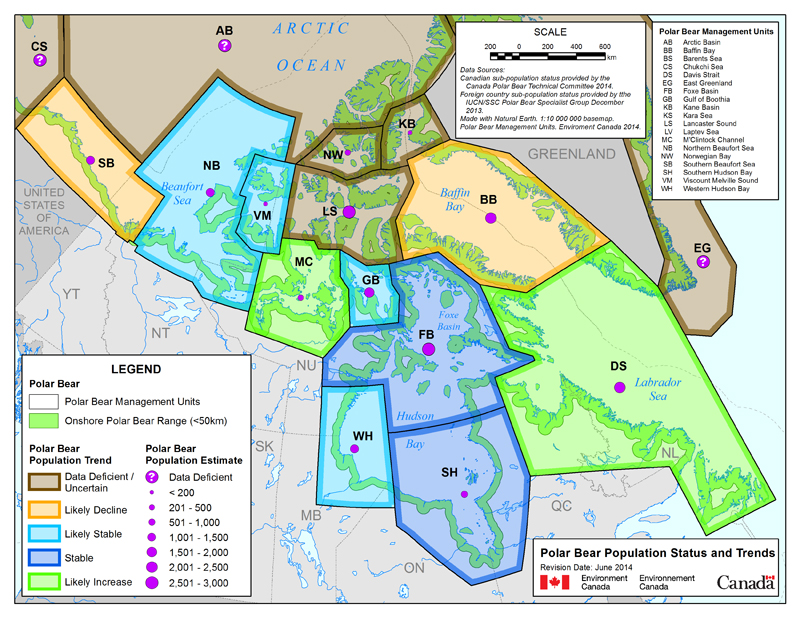
In an email dated 2 March 2015, I received the document produced by the EC Polar Bear Technical Committee (PBTC). I waited to see if it would be appended to the webpage where the maps were posted last year (reported here and here). However, as of today, that has not happened, so I am posting it here. There are some rather striking differences that may surprise you.
UPDATE 22 March 2015: A copy of the letter from the Director General of the Canadian Wildlife Service that accompanied the document below, which I forgot to include, is here. It states that the once a new status table has been compiled (provided below), “it is reviewed by the Polar Bear Administrative Committee and then becomes a public document.” The implication is that the reviewed document has not yet been produced.
Continue reading
Comments Off on Supporting document for Canada’s polar bear status maps reveal surprises
Posted in Conservation Status, Population
Tagged baffin bay, Canada, declining population, Environment Canada, IUCN Polar Bear Specialist Group, Northern Beaufort Sea, PBTC, polar bear, Polar Bear Technical Committee, population estimates, sea ice, Southern Beaufort Sea, USGS
Earlier this year we had polar bear penis bones supposedly breaking due to environmental toxins; this week we have their brains damaged.
The March 15 ScienceNordic story (“Chemical pollution is causing brain damage in polar bears”) came complete with a photo of a bear (copied below, provided by research co-author Rune Dietz) that is presumably meant to convey what a “brain damaged” polar bear might look like — if not, perhaps another photo would have been a better choice?

Except, the research only showed there theoretically might be damage but the researchers didn’t bother looking for it before shouting out their findings. All about the scary message, these folks: the very large uncertainties and speculation in their research be damned.
Continue reading
Comments Off on No evidence of actual damage to polar bear brains from environmental contaminants
Posted in Advocacy, Pollution, Sea ice habitat
Tagged brain damage, Canada, chemicals, climate change, Derocher, environmental contaminants, global warming, Hamilton, last refuge, media hype, Pederson, polar bear, predictions, sea ice decline, Sonne, threatened, toxins, worst-case scenario






 polarbearscience
You must be logged in to post a comment.