Tag Archives: sea ice

Science behind the video Polar Bear Scare Unmasked – updated paper now available

Announcing the publication today of Version 3 2 of my paper that tests the hypothesis that polar bear population declines result from rapid declines in summer sea ice, updated with recently available data. Version 2 provides the scientific support for the information presented in the GWPF video published yesterday, “Polar Bear Scare Unmasked: The Sage of a Toppled Global Warming Icon” (copied below).
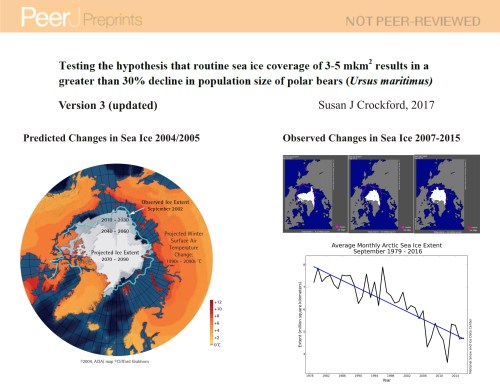
Crockford 2017 V3 title page graphic 3

[The graphic above was created by me from the title page and two figures from the paper]

Updated 1 March 2017: I added an important reference to the paper below that got overlooked in previous versions (the work of Armstrong et al. 2008, see this post), making Version 3 the latest and most up-to-date.

Crockford, S.J. 2017 V3. Testing the hypothesis that routine sea ice coverage of 3-5 mkm2 results in a greater than 30% decline in population size of polar bears (Ursus maritimus). PeerJ Preprints 2 March 2017. Doi: 10.7287/peerj.preprints.2737v3 Open access. https://doi.org/10.7287/peerj.preprints.2737v3

Version 3, published 2 March 2017, adds an important reference; Version 2, published 28 February, incorporates additional reviewer comments and suggestions received on Version 1, as well as the updates noted above.
Continue reading

Polar Bear Scare Unmasked: The Saga of a Toppled Global Warming Icon [video]

For more than ten years, we’ve endured the shrill media headlines, the hyperbole from conservation organizations, and the simplistic platitudes from scientists as summer sea ice declined dramatically while polar bear numbers rose.

Now, just in time for International Polar Bear Day, there’s a video that deconstructs the scare. It runs about 8 minutes, written and narrated by me, produced by the Global Warming Policy Foundation.

Polar Bear Scare Unmasked: The Saga of a Toppled Global Warming Icon

Update 28 February 2017 See my follow-up post for the science behind the video, featuring a new version of my sea ice/polar bear hypothesis paper, just published (and updated with new data).

Crockford, S.J. 2017 V3. Testing the hypothesis that routine sea ice coverage of 3-5 mkm2 results in a greater than 30% decline in population size of polar bears (Ursus maritimus). PeerJ Preprints 2 March 2017. Doi: 10.7287/peerj.preprints.2737v3 Open access. https://doi.org/10.7287/peerj.preprints.2737v3

Global polar bear population larger than previous thought – almost 30,000

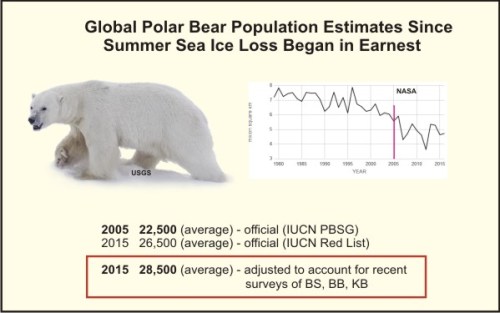
The results of three recently-released studies that were not included in the last IUCN Red List assessment add more than 2,050 bears (on average)1 to the official 2015 global polar bear estimate, a point you won’t likely hear next Monday (27 February) from most polar bear specialists, conservation organizations, their cheerleaders and corporate sponsors on International Polar Bear Day.

global-pb-population-size-graphic2_2017-feb-polarbearscience-corrected

This means the adjusted 2015 global estimate for polar bears should be about 28,500 (average), a marked increase over the official estimate of 26,500 (average) for 2015 — and an even larger increase over the 2005 estimate of about 22,500 (average)2, despite the dramatic loss of summer sea ice since 2007 that we hear about endlessly.

It is increasingly obvious that polar bears are thriving despite having lived through summer sea ice levels not predicted to occur until 2050 – levels of sea ice that experts said would wipe out 2/3 of the world’s polar bears (Amstrup et al. 2007; Crockford 2017 v3).

Update 26 March 2019: see “Latest global polar bear abundance ‘best guess’ estimate is 39,000 (26,000-58,000)

Updated 1 June 2017:  see addition to Footnote 2.
Continue reading

Polar bear habitat update: Masie charts show more ice in 2017 than 2006

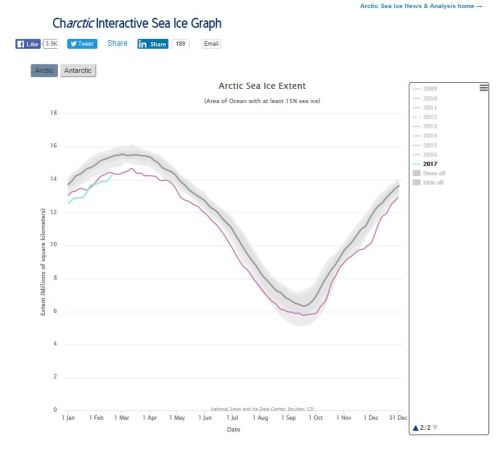
It’s just an observation but NSIDC Masie ice charts show 14.7 mkm2 of sea ice for 2017 at 19 February (Day 50) but only 14.3 mkm2 for 2006 (see them copied below).

In contrast, the NSIDC interactive graph shows almost the opposite: 14.3 mkm2 for 2017 and 14.4 mkm2 for 2006 (but with both below 2 standard deviations of average).

sea-ice-at-19-feb-2017_vs-2006_nsidc-interactive

Continue reading

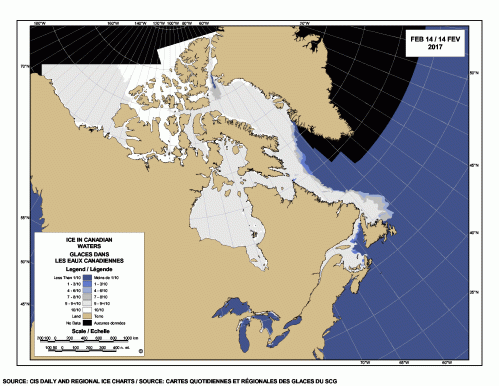
Polar bear habitat update for Canada at mid-February

Mid-February is the tail end of the winter fast for polar bears. Sea ice is approaching it’s maximum global extent but local maximum extents may vary. Most of the sea ice in Canada is locked in already but two regions still vary at this time of year: the Labrador Sea off Labrador and Newfoundland – where polar bears come to feed on an abundance of newborn harp seals – and the Gulf of St. Lawrence, where polar bears have not been spotted in more than 60 years. sea-ice-extent-canada-2017-feb-14_cis

There is almost certainly enough ice for harp seals to give birth in the Gulf this year, if the ice holds (despite some premature hand-wringing by seal biologists). There is more ice in the Gulf and off Newfoundland this year than there was in 2013 (see map below). Continue reading

New paper updates lack of trend in W Hudson Bay breakup/freeze-up dates to 2015

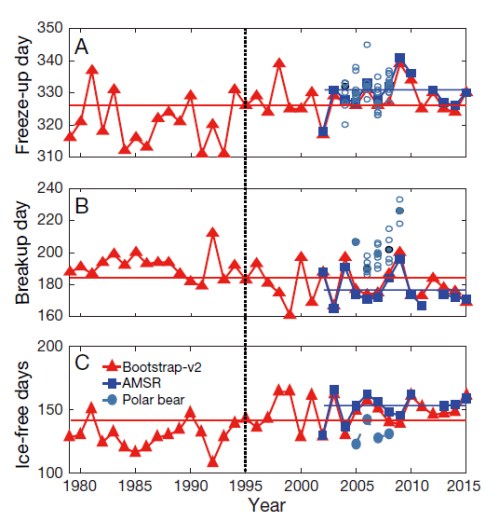
A newly-published paper shows that there has been no trend in the time Western Hudson Bay polar bears spent onshore between 2001-2015 due to sea ice conditions at breakup or freeze-up (previously available to 2010 only), despite the marked decline of global sea ice since 2007.

castro-de-la-guardia-et-al-derocher-2017-fig-3-no-caption

Figure 3 from Castro de la Guardia and colleagues (2017) showing freeze-up and breakup dates and ice-free days 1979-2015 for Western Hudson Bay. Figure with caption, copied below, explains symbols.

Previously, a 2007 paper by Eric Regehr and colleagues for WHB bears up to 2004, which was used to support the US bid to list polar bears as ‘threatened’ with extinction, concluded that between 1984 and 2003, bears were spending 3 weeks longer onshore than they did in the 1980s.

The big news from Castro de la Guardia et al. (2017) is that polar bears spent longer onshore from 1979-2015 by … 3 weeks. That is, no change from the situation in 2004. Wow!

Note the population size of the entire WHB subpopulation has also not declined since 2004 and is currently estimated at about 1030, based on a 2011 aerial survey (Stapleton et al. 2014).

Thanks to Andrew Derocher for the heads-up tweet.

From the abstract (my bold):

We found that the ice-free period in this region lengthened by 3 ± 0.8 wk over the period 1979−2015. Polar bears migrated onshore 2 wk earlier and offshore 1 wk later in the period 2005−2015 than in 1980−1989.

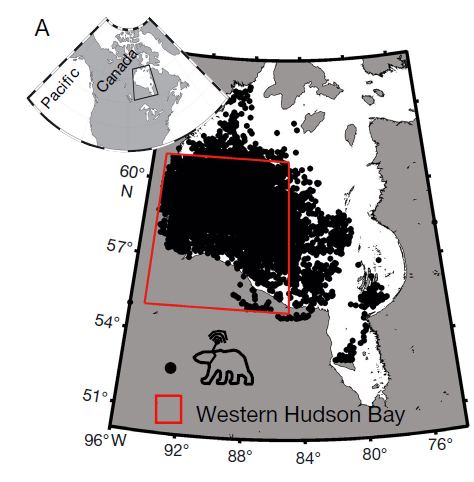
Here is the region in question, illustrated by Fig. 1 from the paper:

castro-de-la-guardia-et-al-derocher-2017-fig-1a-locationThe significant information contained in this paper is breakup and freeze-up dates and length of the ice-free period data for 2010-2015, which has been unavailable until now. More excerpts and comments below, including Figure 3 with its caption. Continue reading
Listen to the evidence: polar bears are thriving in current sea ice habitat

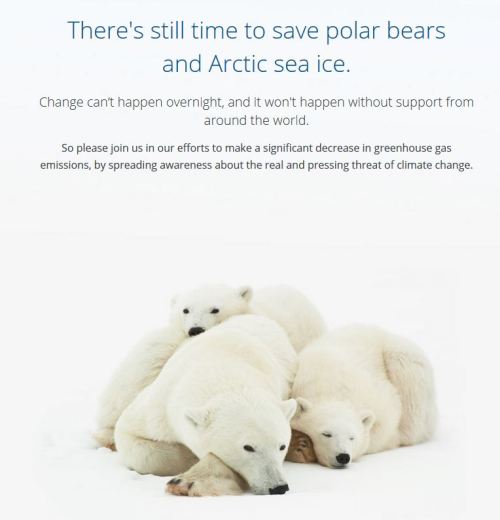
Oddly, activist organization Polar Bears International recently updated their website and now suggest there is still time to save polar bears and sea ice – even though the IUCN Red List documented more polar bears alive in 2015 than at any time in the last 50 years, despite the recent decline of summer sea ice – and even more bizarrely, call for a public uprising.

2017-pbi-save-polar-bears-and-sea-ice

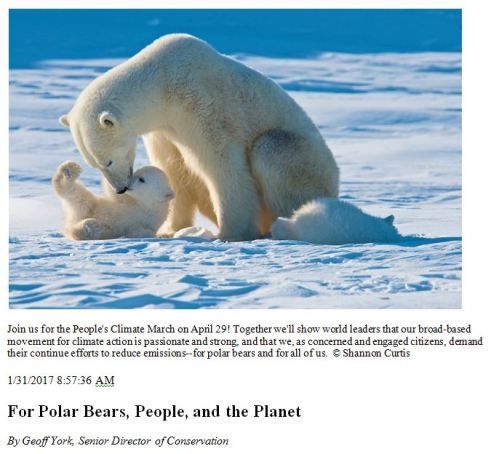
Polar Bears International (with three polar bear scientists on staff and other as active advisors) suggest that people who love polar bears should march the streets on Earth Day with scientists to demand (as concerned and engaged citizens) that world leaders take them seriously.

2017-peoples-climate-march-in-april-for-polar-bears-pbi-plea

Wow. I’ve been a career scientist for more than 40 years and I have to say, this is the oddest phenomenon I’ve encountered being advanced in the name of science. To me, it shows how disconnected these people are from what science is meant to be and what scientists are meant to do. Not just the polar bear scientists but the others like them that are behind this proposed march.

I recommend this blog post by Willis Eschenbach – an excerpt below.

Continue reading

Polar bear habitat update: as much sea ice in 2017 as 2006 at 18 January

Sea ice charts for 18 January from NSIDC Masie show exactly as much sea ice in 2017 as there was back in 2006 – 13.4 mkm2.

masie_all_zoom_4km-2017-jan-18

Continue reading

New paper asks: Has recent sea ice loss caused polar bear populations to crash?

A paper published today finds that predictions of polar bear population crashes due to summer sea ice loss are based on a scientifically unfounded assumption.

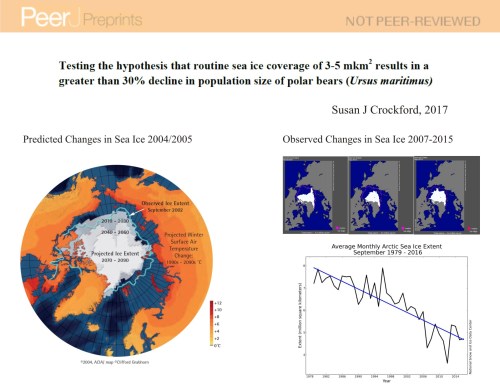
crockford-2017-title-page-graphic

[The graphic above was created by me from the title page and two figures from the paper]

Specifically, this paper of mine addresses the basic premise upon which predicted population declines linked to modeled habitat loss made by polar bear specialists back in 2006 and 2008 (by the International Union for the Conservation of Nature, IUCN, and the US Fish and Wildlife Service, USFWS), and concludes that when assessed as a testable hypothesis against data collected since then, it must be rejected.

The forum for this paper is PeerJ Preprints,  which I found while looking for recent research papers about ringed seals. I discovered that Canadian ringed seal biologist Steven Ferguson recently used this service, which is free, open access, accepts review commentary, and will show up on Google and Google Scholar searches.

Ferguson et al. 2016. Demographic, ecological and physiological responses of ringed seals to an abrupt decline in sea ice availability. DOI:10.7287/peerj.preprints.2309v1 Pdf here. https://peerj.com/preprints/2309/

I decided that if this publication forum was good enough for Ferguson and his Arctic research community, it was good enough for me.

Crockford, S.J. 2017. Testing the hypothesis that routine sea ice coverage of 3-5 mkm2 results in a greater than 30% decline in population size of polar bears (Ursus maritimus). PeerJ Preprints 19 January 2017 and 2 March 2017. Open access. Version 3 is the latest and most up-to-date,  https://doi.org/10.7287/peerj.preprints.2737v3

Continue reading

Polar bears onshore in Svalbard in most dangerous season for bear attacks

Yesterday marked the first report I’ve found for polar bears onshore this winter, in a potentially dangerous repeat of a pattern that has become all-too common in recent years (especially last year) with bear populations booming virtually everywhere (but especially around Svalbard).

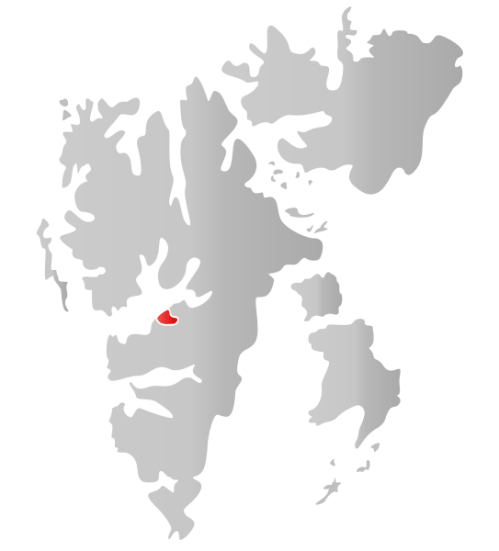
longyearbyen_sm_location_wikipedia

This is the leanest time of year for polar bears – fat Arctic seal pups won’t be available for another 2-3 months and meals for polar bears are hard to come by – and that makes the bears especially dangerous.

So, despite the marked lack of sea ice around Svalbard this winter, a female polar bear with two cubs were reported near the community of Longyearbyen (still enduring 24 hours of darkness) – on the west coast of the archipelago (see map above), where sea ice has been virtually non-existent for years (see map below).

Svalbard ice 2017 Jan 17_NIS.png

It appears these bears traveled overland from ice off the east coast. There is no mention in any of the reports that the bears were thin or in poor body condition, or had so far caused any of the problems for which desperately hungry polar bears are famous. However, one dog-sledding guide had a frightening encounter in the dark in this on-going saga that began over the weekend (details and photos below). Continue reading