Category Archives: Summary

‘Threatened’ Arctic species comparison shows USA most assertive about global warming

A cross-Arctic comparison shows that the US has been the most aggressive in designating polar bears and their main prey species as ‘threatened with extinction’ due to the predicted effects of human-caused (“anthropogenic”) global warming (AGW), even though the US has the least amount of sea ice habit of all circumpolar nations.
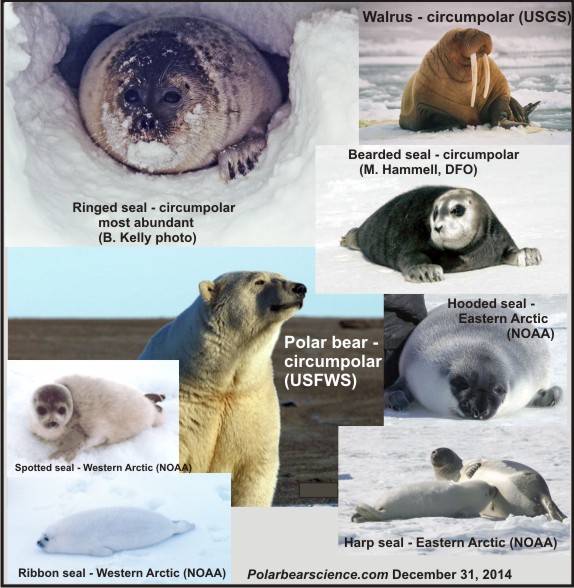
Arctic marine mammals_Dec 31 2014_Polarbearscience

I’ve made a chart listing the conservation status of these species across all Arctic nations (Canada, Russia, Norway, Denmark (for Greenland) and the USA), as well as the one international body that considers the conservation status of all species (International Union for Conservation of Nature, IUCN).

Oddly, the IUCN considers the polar bear vulnerable due to future threats from predicted sea ice losses but not ringed seals or bearded seals. This situation highlights the capricious nature of the use of “future threats” (almost exclusively based on predictions of AGW) as a valid criteria for evaluating the conservation status of Arctic marine mammals. It also suggests why the IUCN has tightened considerably its rules regarding this practice.

Continue reading

Challenging NOAA’s “Arctic Report Card 2014” on polar bears

NOAA’s list of purported evidence for harm being caused to polar bears by Arctic warming is short and weak. It puts the gloomiest spin possible on the current well-being of an animal with all the earmarks of a healthy, well-distributed species.

Arctic report card 2014 screencap_Dec 18 2014

This year, polar bears are virtually the only species that NOAA mentions in their Arctic Report Card – they’ve put all their icon-eggs in one leaky basket [what happened to walrus??]. But polar bears are doing so well that to make an alarming case for polar bears as victims of Arctic warming, many important caveats had to be left out or misrepresented. Some details given are simply wrong.

This year’s polar bear chapter was penned by IUCN Polar Bear Specialist Group chairman Dag Vongraven (you might recall his email to me earlier this year) and a polar bear conservation activist from Polar Bears International (whose battle cry for donations is Save Our Sea Ice!”), Geoff York.

I challenge their four weak talking points one by one below.

Continue reading

Walrus mass haulout hype refuted, the video

Produced by the Global Warming Policy Foundation, there is now a short video summary of my recently-released GWPF briefing paper, which I wrote and narrated.

Walrus fuss_GWPF video Crockford

Watch it below:

Available also at GWPF TV“The Walrus Fuss – Walrus haulouts are nothing new.”

The briefing paper is here.

Save

Walrus and sea ice, a summary

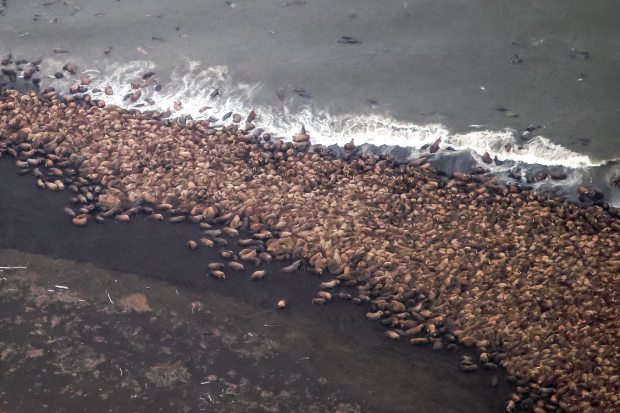
I’ve written a briefing paper for the GWPF refuting claims that huge herds of Pacific walruses hauled out on land are a sign of global warming.

Here’s the GWPF press release:

London, 20 October: A briefing paper published today by the Global Warming Policy Foundation refutes claims that Arctic walruses are in distress and danger due to global warming.

The paper, written by Canadian zoologist Dr Susan Crockford, assesses the recent mass haulouts of walrus females and calves on the beaches of Alaska and Russia bordering the Chukchi Sea. The events have been blamed by US government biologists and WWF activists on lack of summer sea ice, amplified into alarming scare stories by news media around the world.

Such claims ignore previous haulouts that suggest a different cause. Scientific reports about large walrus haulouts that have occurred repeatedly over the last 45 years show that they are not new phenomena for this region.

At least two documented incidents of similar magnitude have occurred in the recent past: one in 1978, on eastern St. Lawrence Island and the other in 1972, on the western end of Wrangel Island. The 1978 event involved an estimated total of almost 150,000 walrus hauled out within in a small geographic area.

Moreover, sea ice maps for the months when known mass haulouts occurred, compared to years when they did not, suggest no strong correlation with low sea ice levels.

“The WWF and American walrus biologists have categorically linked the Point Lay mass haulout event to global warming, but available evidence suggests that’s alarmist nonsense,” Dr Crockford said.

“Blaming lack of sea ice for recent events ignores the documented factor – large population size – that drove walruses onto beaches en masse in the past, when plenty of ice was available. Conservation measures have almost certainly led to a spectacular recovery of walrus numbers over the last few years. This suggests that recent mass haulouts are more an indicator that Chukchi walrus are nearing maximum capacity than a sign of impending global warming catastrophe,” Dr Crockford added.

Here’s the paper. [Link fixed, h/t HO]

Save

Polar bears are not in peril due to recent sea ice changes

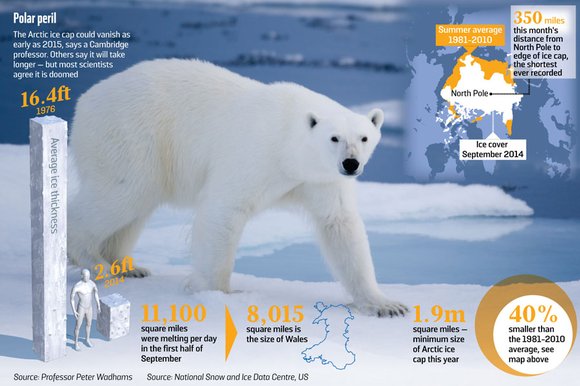
To counter the misleading ploy used by the Sunday Times — of implying polar bears are in peril because of recent changes in Arctic sea ice (Sunday Times & The Australian, 21/22 Sept. 2014 Arctic ice cap in a ‘death spiral’) — I’ll go over again why the polar bear as a species is not threatened by declines in summer sea ice or even winter ice that is predominantly “thin” (first year) ice.

Polar Peril_Arctic ice cap in a death spiral_SundayTimes_Sept 21 2014_21_NWS_20_POLAR_1096592k
Graphic above from the Sunday Times, September 21, 2014
Continue reading

Must watch – “The Politics of Polar Bears: Tracking the Celebrity Bear”

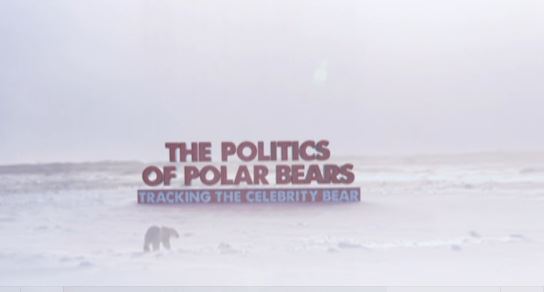
This powerful, balanced documentary, with a focus on the bears of Western Hudson Bay, can now be watched online. A Canadian Broadcasting Corporation (CBC) production, it includes interviews with polar bear biologists Mitch Taylor (screen-cap below) and Seth Stapleton – juxtaposed with statements from outspoken polar bear conservation advocate Andrew Derocher.

Politics of Polar bears_Mitch Taylor

I was not mentioned by name (making me “she who cannot be named” yet again?) but host Reg Sherren did discuss the contents of the email I received from PBSG chairman Dag Vongraven earlier this summer about their proposed clarification to the global population estimate (and posted here).

Politics of polar bears title

It can be viewed online at “CBC Player,” in its entirety (45 minutes long), without commercials – see it http://www.cbc.ca/player/Shows/Shows/Absolutely%20Canadian/Absolutely%20Manitoba/ID/2499492515/?cmp=rss

I can’t guarantee those outside Canada will be able to view it but I watched it Sunday night (August 31) from British Columbia. It’s well worth the time.

[Aired originally on “Absolutely Manitoba” (Season 2014, Episode 5, Aug 30, 2014), by Reg Sherren. See announcement article here]

[Note: the “Sharon Crockford” interviewed in the film is no relation to me, as far as I know!]

Reflections on my House of Lords lecture: Healthy polar bears, less than healthy science

Here is an excerpt of an essay I wrote reflecting on the recent (11 June 2014) lecture I gave at the House of Lords in London (“Healthy polar bears, less than healthy science”). The Global Warming Policy Foundation (GWPF) has just published that 14 page essay in its entirety as its 10th such report but you can get a taste of it here.

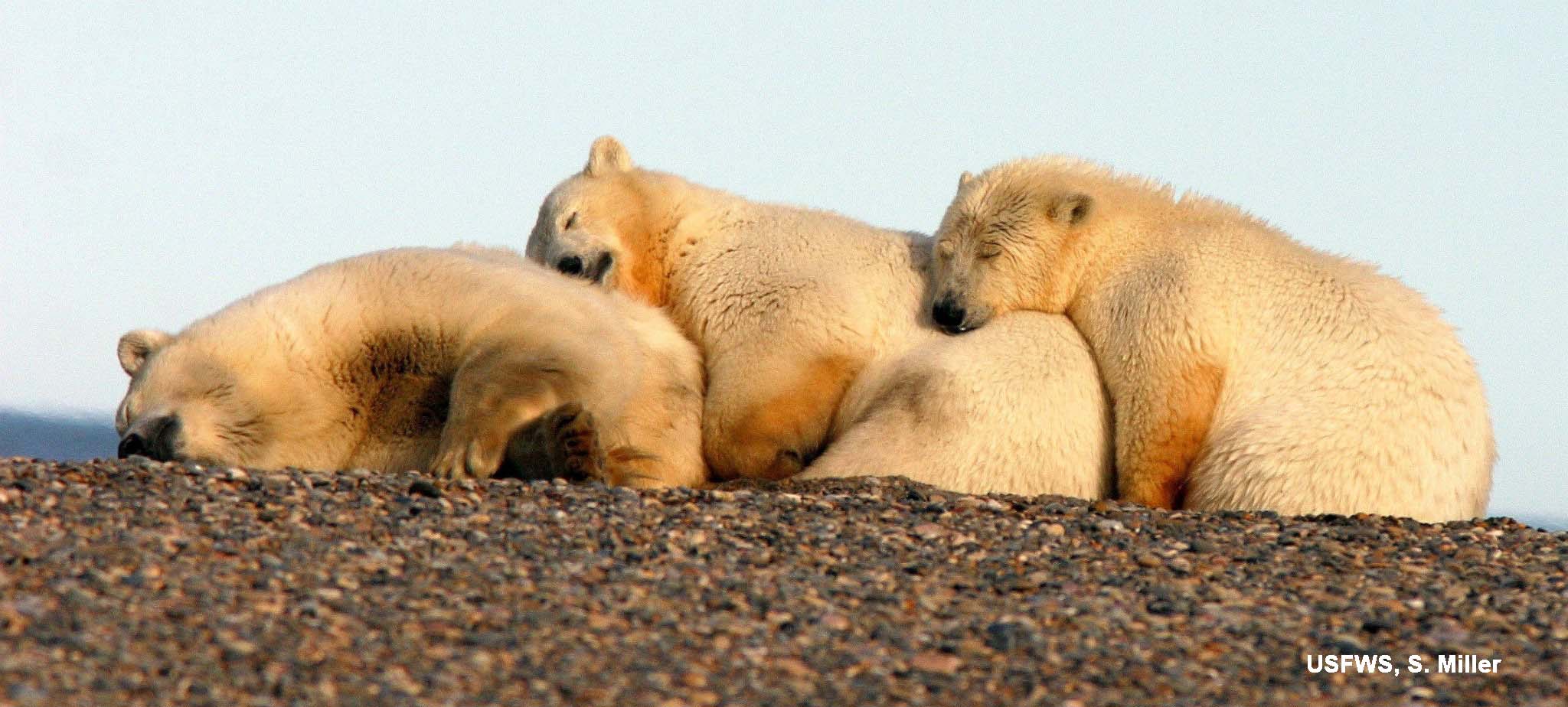
polarbears-arcticnatlwildliferefuge-suzannemiller-usfws_labeled_sm

My piece addressed the following issues that I talked about in the lecture or which came up afterwards during the question period and discussions later:

•  On what do you base your assertion that polar bear populations are “healthy”?
•  Are the media — or polar bear scientists — to blame for hyping the “polar bears are dying” meme?
•  How significant was the recent dismissal of a petition to force Canada into listing polar bears as ‘threatened with extinction’?
•  What do the recent actions of the Polar Bear Specialist Group say about their commitment to good science?
•  Is my blog helping to “self-correct” the science on polar bears?

The highlighted point is copied in full below. See the full essay here.
Continue reading

“Polar bears miss the message on global warming” – my article in RANGE Magazine

Here’s an excerpt of my article “Polar bears miss the message on global warming,” just out in the Fall 2014 issue of RANGE Magazine.

AK PB N Shore-USFWS Barrow_labeled Continue reading

My interview with Benny Peiser about polar bears, evolution and Arctic controversies

While I was in London, ahead of my House of Lords lecture on June 11, 2014 (“Healthy Polar Bears, Less Than Healthy Science)*, I had a chat with Benny Peiser of the Global Warming Policy Foundation.

Healthy Polar Bears Less Than Healthy Science GWPF interview screencap June 11 2014

Have a listen here: An Interview with Dr Susan Crockford on polar bears, evolution and Arctic controversies.

I’ve been traveling for a month but I am finally home — tired and jet-lagged after a journey that took me two-thirds of the way around the world and back. More on my experiences as my energy for blogging returns.

*I shouldn’t have to point this out but I will: I was not paid for this lecture, nor for the airfare to London (I was passing through town anyway). As the timing of the lecture required an overnight stay, GWPF did pick up the tab for a hotel room and dinner, as hosting organizations for such events do as a matter of course.

My upcoming lecture at House of Lords, London: how to get invited

Benny Peiser of the Global Warming Policy Foundation (GWPF) has arranged for me to give a lecture at the House of Lords (London) on June 11.

Healthy Polar Bears, Less Than Healthy Science
A lecture by Dr. Susan J. Crockford

When: 11 June 2014, 6pm

Where: House of Lords, Committee Room 3, London

Crockford 08_21_2011_0056b

This lecture focuses on recent research results that have shown that polar bear populations are not responding as predicted to recent declines in Arctic sea ice. Despite the fatalistic attitude of many polar bear field biologists, real-world evidence indicates that polar bears are well equipped to survive substantial variations in their Arctic sea ice habitat and have not been harmed by recent low ice coverage. Such resilience over the short term is hardly surprising, since polar bears are now known to have survived a multitude of past climate shifts of almost inconceivable magnitude.

As the venue has limited space, interested readers in the UK may contact the GWPF at info@thegwpf.org for an invitation. They will let you know if places are still available.

Hope to meet some of you there.

Susan

PS. I will be staying near Bristol later that week with relatives (June 13-15) and could take an afternoon or evening for a pub chat about polar bears and other issues, if anyone is interested. Send me a note via the contact page above.