Tag Archives: Chukchi Sea

Mass haulouts of female Pacific walrus as a sign of population health

Mass haulouts of female Pacific walrus and their calves in fall don’t happen all the time but they do occur. I recently pointed out (here and here) two instances of such incidents from the 1970s.

I said this provided evidence that the September 2014 incident reported in the media was not “a new phenomenon” for this region, as WWF spokepersons and Alaskan biologists have claimed (reiterated in this PBS interview).

Figure 1. Walrus females and calves hauled out on a beach in Svalbard, photo accompanying an October 6, 2014 news report in “Eye on the Arctic” of the rapidly increasing Atlantic walrus population there. (Photo: Thomas Nilsen/Barents Observer).

Figure 1. Walrus females and calves hauled out on a beach in Svalbard, photo accompanying an October 6, 2014 news report in “Eye on the Arctic” of the rapidly increasing Atlantic walrus population there. (Photo: Thomas Nilsen, Barents Observer).

One aspect of the recent occurrence of a large herd on an Alaskan beach that apparently needs reiterating is that the population of walruses declined rather markedly after a 1970s peak and has rebounded since. This suggests that huge herds of females and calves hauling out on beaches in the fall to feed might only be seen when the population is very large.
Continue reading
Tracking polar bears in the Beaufort Sea – September 2014 map

Here is the September 2014 follow-up to my post on the July 2013 track map for female polar bears being followed by satellite in the Beaufort Sea by the US Geological Survey (USGS) – “Ten out of ten polar bears being tracked this summer in the Beaufort Sea are on the ice.”

See that post for methods and other background on this topic, and some track maps from 2012 (also available at the USGS website here).

The USGS track map for September 2014 is copied below (Fig. 1).

At the end of September, with sea ice starting to rebuild, it appears there were 8 bears on the ice and three on land.

The situation for September was not very much different from August, except that two of the 11 bears (up from one) were on the ice in the Chukchi Sea in September, a phenomenon that was recently acknowledged to have affected the last population estimate for the Southern Beaufort subpopulation.

Continue reading

High walrus numbers may explain why females and calves are hauling out in droves

Are the recent mass gatherings of females and calves on the beaches of western Alaska and the Russian Far East a sign that population are again close to the limit the habitat can support, as they were in the 1970s?

At the risk of belabouring the point that lack of sea ice does not seem to be a reasonable explanation for this phenomenon (see my last two posts, here and here, and Andrew Montford’s excellent additions here), I think this is a possibility that needs to be considered.

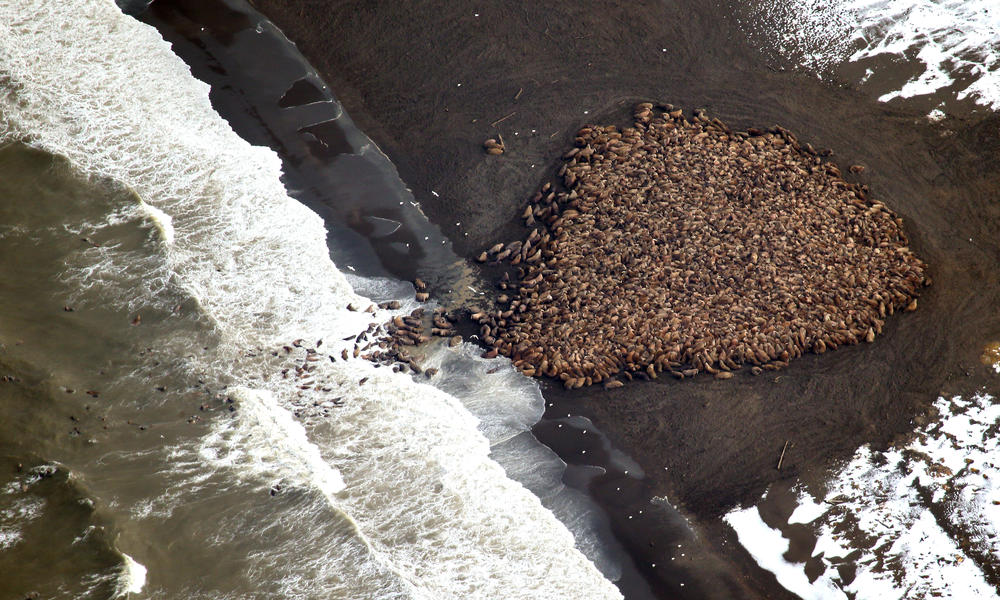
Walruses at Point Lay Sept 27 2014 NOAA CMDA0007_sm

2014 Point Lay, NOAA photo

Walrus are well protected in the US and Russia, and population numbers have risen again since the 1990s, after significant declines in the early 1900s and again in the 1980s.

A paper from the late 1980s suggests that a return to high population numbers may be a more plausible cause for mass gatherings of females and calves that lead to stampede deaths than does reduced sea ice due to global warming.

Have a look and see what you think. It may not be the only reason but it may be a major contributing factor.

Continue reading

Mass gatherings of walrus follow-up – sea ice maps for 1978 and 1972

Walruses as polar bear prey and sea ice were on my mind last night and I remembered that we DO have detailed sea ice information for 1978 and 1972 – from the sea ice atlas put together by University of Alaska Fairbanks (UAF), which has ice concentration maps for Alaska going back to 1850 — and for every year up to 2013 (reported previously here).

Chukchi Sea walrus, June 2014. US Fish and Wildlife Service.

Chukchi Sea walrus, June 2014. US Fish and Wildlife Service.

I’ve copied some of the ice maps below.

It is clear that ice was available close to Wrangel Island in 1972 when walruses chose to haul out on the island in huge numbers. And in 1978, there was ice present to the north of the walrus herd, but they had moved away from the ice to get to St. Lawrence Island, where they hauled out in large numbers.

This means it is more likely that food resources were the issue, not sea ice.
UPDATE OCTOBER 3 2014:

See another interesting follow-up elsewhere: Walrus inconsistencies
Continue reading

Mass haulouts of Pacific walrus and stampede deaths are not new, not due to low ice cover

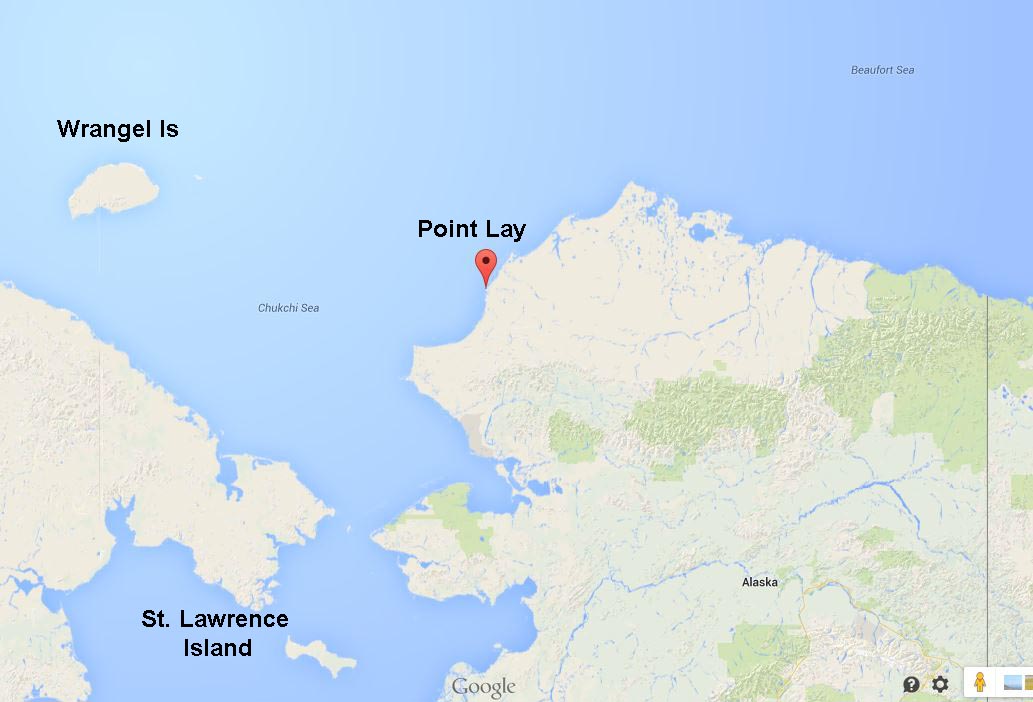
Large haulouts of walruses — such as the one making news at Point Lay, Alaska on the Chukchi Sea (and which happened before back in 2009) — are not a new phenomenon for this region over the last 45 years and thus cannot be due to low sea ice levels. Nor are deaths by stampede within these herds (composed primarily of females and their young) unusual, as a brief search of the literature reveals.

Pt Lay map Google marked

The attempts by WWF and others to link this event to global warming is self-serving nonsense that has nothing to do with science.

UPDATE October 3, 2014: See below. Also, do see follow-up posts here, here, and especially, here.

UPDATE October 23, 2014: A briefing paper summary is here and a video version of that paper (“The Walrus Fuss” — 3 1/2 minutes long) here.

There is also a follow-up post on the situation here.

Continue reading

Polar bears are not in peril due to recent sea ice changes

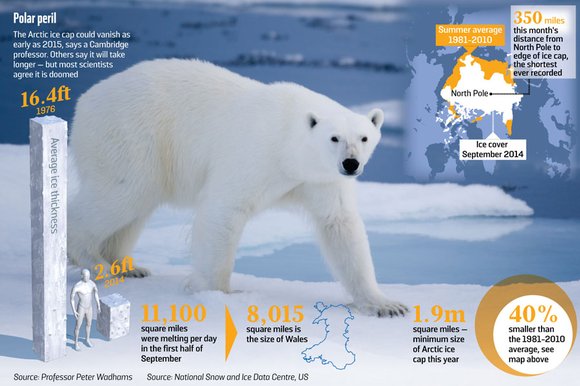
To counter the misleading ploy used by the Sunday Times — of implying polar bears are in peril because of recent changes in Arctic sea ice (Sunday Times & The Australian, 21/22 Sept. 2014 Arctic ice cap in a ‘death spiral’) — I’ll go over again why the polar bear as a species is not threatened by declines in summer sea ice or even winter ice that is predominantly “thin” (first year) ice.

Polar Peril_Arctic ice cap in a death spiral_SundayTimes_Sept 21 2014_21_NWS_20_POLAR_1096592k
Graphic above from the Sunday Times, September 21, 2014
Continue reading

Tracking polar bears in the Beaufort Sea – August 2014 map

Here is the August 2014 follow-up to my post on the July 2013 track map for female polar bears being followed by satellite in the Beaufort Sea by the US Geological Survey (USGS) – “Ten out of ten polar bears being tracked this summer in the Beaufort Sea are on the ice.”

See that post for methods and other background on this topic, and some track maps from 2012 (also available at the USGS website here).

The USGS track map for August 2014 is copied below (Fig. 1).

Compare this to July’s map (Fig. 4). The 20 bears from May (down to 13 in June) are now down to 11. All seven of the bears outfitted with glue-on satellite transmitters in April [either males or subadult animals] have either moved out of the area or their tags have fallen off or stopped transmitting. This means that all of the bears shown on the maps below are females.

At the end of August, nearing the minimum extent of ice for this year, seven bears were on the ice and only four were on land.
Continue reading

Tracking polar bears in the Beaufort Sea – July 2014 map and subpopulation boundary issues

Here is the July 2014 follow-up to my post on the July 2013 track map for female polar bears being followed by satellite in the Beaufort Sea by the US Geological Survey (USGS) – “Ten out of ten polar bears being tracked this summer in the Beaufort Sea are on the ice.”

See that post for methods and other background on this topic, and some track maps from 2012 (also available at the USGS website here).

The USGS track map July 2004 is copied below (Fig. 1).

Compare this to June’s map (Fig. 4). The 20 bears from May (down to 14 in June) are now down to 13. All seven of the bears outfitted with glue-on satellite transmitters in April [either males or subadult animals] have either moved out of the area or their tags have fallen off or stopped transmitting. This means that all of the bears shown on the June and July maps below are females.

One bear has moved into Canadian territory and another is well into the Chukchi Sea. This is now known to be a typical rather than unusual phenomenon, and is pertinent to the bigger picture of what constitutes a discrete geographic subpopulation for polar bears.
Continue reading

Are Polar Bears Really Endangered?

Christina Wu at the Urban Times (July 3, 2014) recently asked this question. She came up with a surprisingly balanced argument but some predictable responses from IUCN Polar Bear Specialist Group (PBSG) biologists. As a consequence, she overlooked some critical facts that make a big difference to the answer.

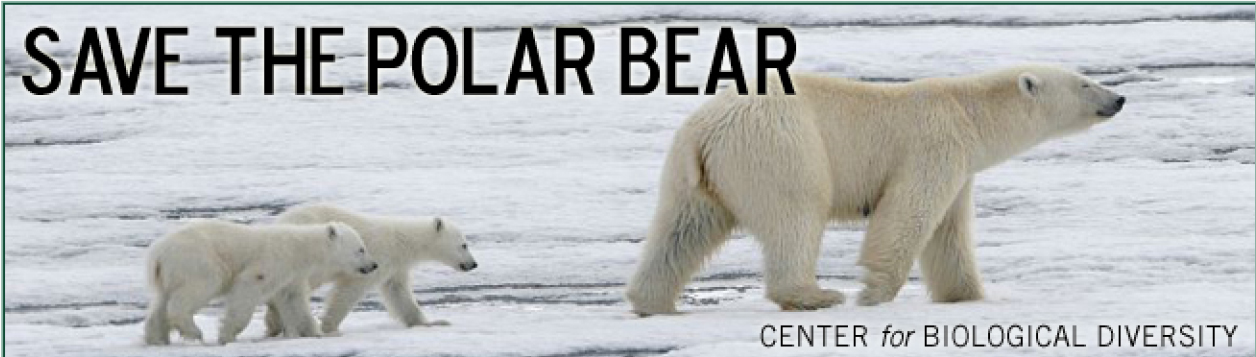
Figure 1. Are polar bears really endangered? The US Fish and Wildlife Service thinks so, but only because Steven Amstrup, based on a computer model projecting sea ice out to 2050, said so (Amstrup et al. 2007). This information has been used by the Center for Biological Diversity and other NGOs, like WWF and Polar Bears International (where Amstrup is now employed), to solicit donations.

Figure 1. Predictions of polar bear population declines by 2050 are being used by the Center for Biological Diversity, WWF and Polar Bears International to solicit donations.

UPDATED 18 May 2015 – see below.

Continue reading

Tracking polar bears in the Beaufort Sea: June 2014 map

Here is the June 2014 follow-up to my post on the July 2013 track map for female polar bears being followed by satellite in the Beaufort Sea by the US Geological Survey (USGS) – “Ten out of ten polar bears being tracked this summer in the Beaufort Sea are on the ice.”

See that post for methods and other background on this topic, and some track maps from 2012 (also available at the USGS website here).

The USGS track map for June 2004 is copied below (Fig. 1).

Compare this to May’s map (Fig. 2) – the 20 bears from last month are down to 14, and all seven of the bears outfitted with glue-on satellite transmitters in April [either males or subadult animals] have either moved out of the area or their tags have fallen off or stopped transmitting. This means that all of the bears shown on the June map below are females with satellite radio collars.
Continue reading