Second week of Polar Bear Alert Activity reports (16-22 July) for 2018 and already two bears are in jail, making it the busiest 3rd week in July since 2015:
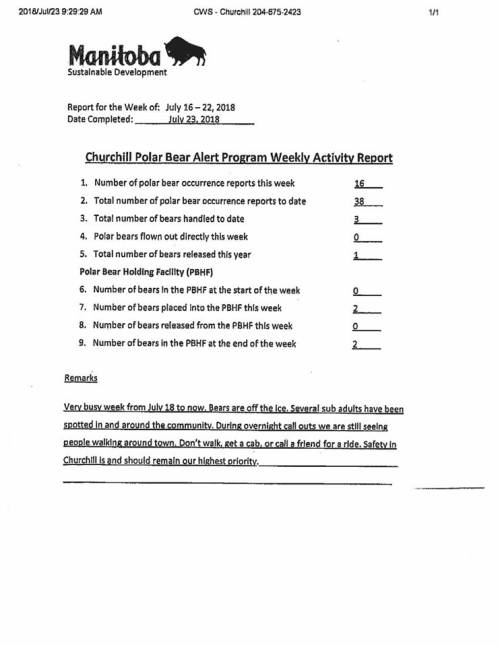

Second week of Polar Bear Alert Activity reports (16-22 July) for 2018 and already two bears are in jail, making it the busiest 3rd week in July since 2015:
Comments Off on Churchill area polar bears off the ice as of third week in July say problem bear reports
Posted in Life History, Polar bear attacks
Tagged alert, Churchill, polar bear, problem bears, sea ice
Additional information is available regarding the fatal mauling of a young Arviat father two weeks ago that may answer the question of why the bear left the Hudson Bay sea ice well before it was necessary. Was it lack of sea ice (blamed on global warming), as biologist Ian Stirling recently insisted — or did natural food attractants lure the bear ashore prematurely?

I would also like to appeal to readers to consider a donation to the Go Fund Me campaign set up to support the widow and children of Aaron Gibbons, who was only 31 years old. So far, there has not been an overwhelming response (less than 1/2 of the modest goal of $5,000 met after two weeks) and that saddens me deeply.
I have contributed myself but each individual can only do so much. Imagine losing your spouse in this most vicious manner (the children witnessed the attack and were the ones that called for help) and think of the challenges of healing your family and keeping it afloat financially. Please see the GO FUND ME page and contribute if you can.
What I’ve learned over the last week is that the polar bear that killed Aaron Gibbons was a big male in poor condition but he was not the only bear onshore at the time. In addition, the Arctic tern nesting colony on Sentry Island was undoubtedly an enticing natural attractant that seems to have encouraged these bears to leave the ice far north of where they might otherwise have come ashore.
UPDATE 20 July 2018: I’ve added the most recent (19 July) map of collared WH polar bear locations on Hudson Bay to the “Condition of the Sea Ice” discussion below. Also, I am pleased to see that the GO FUND ME campaign has now gone above the half-way mark (~$2800.00 as of 2:00 PM Pacific time). My personal thanks to every one who was able to contribute. I hope to see the goal reached within the next few days.
UPDATE 6 September 2018: A news announcement today revealed that the necropsy done on the bear that attacked Aaron Gibbons was an adult male in “fair” condition (thin but not skinny). See my report here and the news story here. And I’m pleased to report that the GoFundMe goal of $5000 for Aaron’s family has been reached: thanks to all PolarBearScience readers for their support.
Continue reading
Comments Off on New information on the fatal polar bear attack at Arviat, Western Hudson Bay
Posted in Life History, Polar bear attacks, Sea ice habitat
Tagged Aaron Gibbons, Arviat, attack, attractants, Churchill, climate change, fatality, Gordy Kidlapik, Ian Stirling, mauling, necropsy, polar bear, problem bears, sea ice, sea ice decline
A brave young father from Arviat on the northwest coast of Hudson Bay was killed yesterday evening by a polar bear while trying to protect his children.
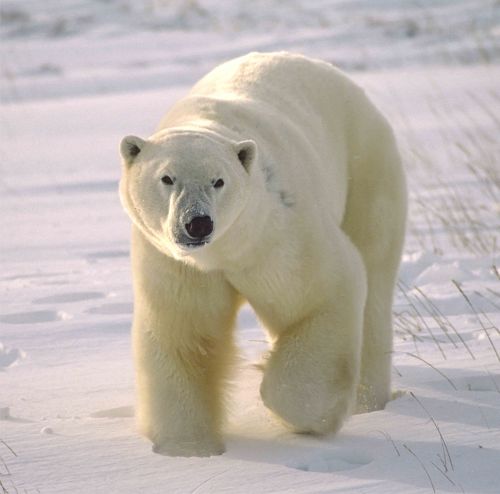
Aaron Gibbons, 31, was the nephew of Gordy Kidlapik, who follows this blog and my twitter account. Gordy has often sent me useful local information and perspectives from Arviat, which is in Nunavut (north of Churchill, Manitoba).
It was heartbreaking to hear this news firsthand from Gordy:
https://twitter.com/Irngutaq/status/1014336102461726720

More below and to follow as further details emerge. My sincere condolences to Gordy and his family – what a horrific loss.
UPDATE: 4 July 2018 9:00 pm PT. See correction below regarding the last fatal WHB attack, which was in 1999 (Rankin Inlet), not 1983 as my original title read. My apologies but as you’ll see, the newspaper didn’t get it right either.
Comments Off on First fatal polar bear attack in W. Hudson Bay since 1999 occurred yesterday in Arviat [corrected]
Posted in Polar bear attacks, Sea ice habitat
Tagged Arviat, attack, Churchill, climate change, fatality, global warming, mauling, polar bear, sea ice, western hudson bay
This year, due to an early freeze-up of the sea ice, many polar bears left the Western Hudson Bay area (including Churchill) the week of November 6-12. However, the folks who produce Churchill’s problem polar bear statistics did not generate a report for that week, so we are left with assessing the final freeze-up situation based on the previous report (see it here) and the one they have just released for the week of 13-19 November (below), the 18th week of the season (which began July 10):
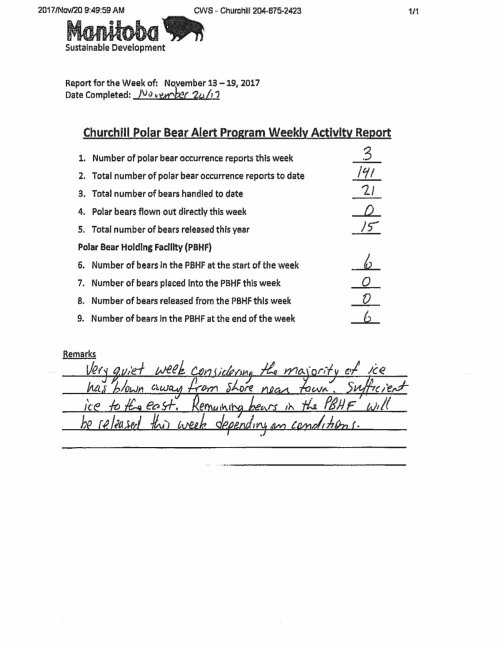
The “quiet” week was almost certainly due to the fact that very few bears were still around, having left the previous week.
While it is apparently true that a south wind briefly blew ice away from the area around the town of Churchill, most bears had left by that point and there was plenty of ice to the north and southeast for bears that had congregated outside the town to wait for the ice to form.
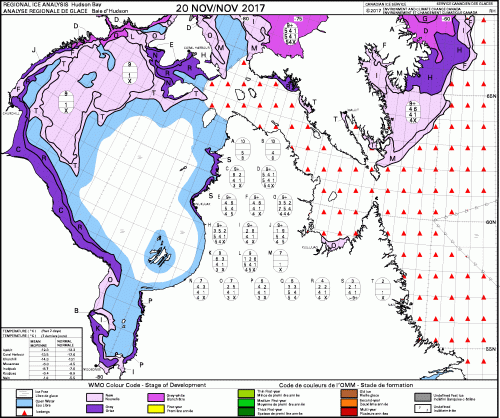
Churchill sits on a point of land (see map below) that makes new ice vulnerable to winds from the south but this year impact was small: the north winds returned within a few days and so did the ice.
By this week there were still a few stragglers that hadn’t left shore but most of these were mothers with cubs, as well as young bears living on their own, who often hold back to avoid dangerous encounters with adult males at the ice edge.
A few adult males that were still in excellent condition after 4 months ashore without food seemed in no particular hurry to resume hunting. In part, this may have been due to the rather foul weather prevalent since the first week of November (with howling winds, low temperatures and blowing snow much of the time).
You can see in the chart below just how much more ice there was for the week of 20 November compared to average — all those dark and light blue areas along the west coast of Hudson Bay (and east of Baffin Bay) indicate more ice than usual. Even Southern Hudson Bay has enough shore ice for bears to resume hunting. Foxe Basin (to the north of Hudson Bay) has less ice than usual (red and pink) but there is still enough ice for polar bears there to begin their fall hunting, as the chart above makes very clear.
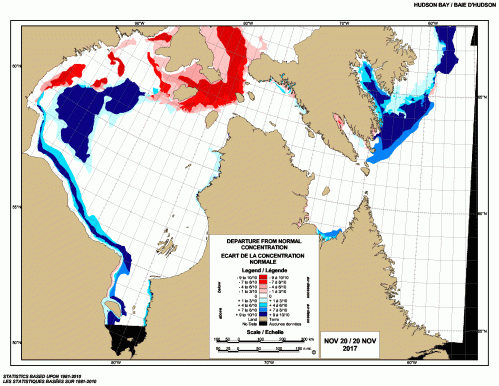
Freeze-up and bear movement offshore were about three weeks earlier this year in Western Hudson Bay compared to 2016, which made a huge difference to the number of problem bears in Churchill, see below.
UPDATE 23 November 2017: CIS ice chart for today showing the ice forming in the northwest sector of Hudson Bay
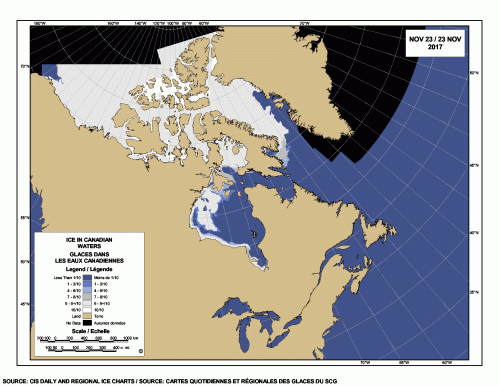
UPDATE 27 November 2017: Final problem polar bear report copied below, issued by the town of Churchill. As noted above, the fact that some bears remained onshore into last week was a very local anomaly not experienced over the rest of the region.

Comments Off on W Hudson Bay polar bear season wrap-up: problem bear stats & sea ice vs. 2016
Posted in Life History, Sea ice habitat
Tagged Churchill, fat bears, freeze-up, problem bears, sea ice, south winds, stats, western hudson bay
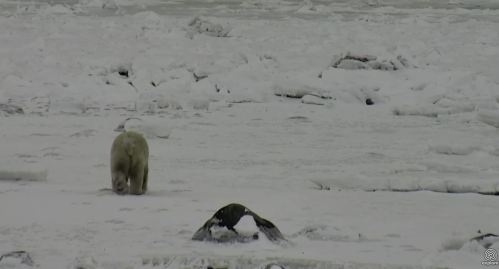 Western Hudson Bay polar bears have been leaving shore for the rapidly thickening sea ice since at least 8 November (bear above was heading out 10 Nov.). However, Polar Bears International chose not to mention the unusually early freeze-up until the week-long (5-11 November) doomsday bombardment they call “Polar Bear Week” was almost over.
It’s worse than that: two days earlier, PBI’s activist spokesperson Steven Amstrup apparently told the Sierra Club (“People Show Up for Polar Bear Week, But the Ice Hasn’t Yet”; 8 November 2017) that “the bears are still waiting on shore for that ice to freeze” even though ice development had been well on its way for days at that point. As if freeze-up on 10 November came as a big surprise to him, with no warning whatsoever.
Apparently, they didn’t want their naive and gullible supporters to know at the beginning of Polar Bear Week that the sea ice loss of which PBI spokespeople rant about constantly (Save Our Sea Ice) was a total non-issue this year: breakup was not earlier than usual and new ice began developing off Churchill at about the same time it did in the 1980s (last week of October).
As I discussed last year regarding newly-published studies (Obbard et al. 2015, 2016) on the status of Southern Hudson Bay (SHB) bears:
“…SHB polar bears left the ice (or returned to it) when the average ice cover near the coast was about 5%. This finding is yet more evidence that the meteorological definition of “breakup” (date of 50% ice cover) used by many researchers (see discussion here) is not appropriate for describing the seasonal movements of polar bears on and off shore.”
That post (with its list of references) is worth another look for its discussion of the following points: the definition of freeze-up; the relationship of official freeze-up and breakup dates to the dates that bears depart; the overall health and survival of Western and Southern Hudson Bay polar bears.
Below I dissect the misinformation that PBI calls “science communication” in their attempt to minimize the damage caused by this early freeze-up to their message of looming catastrophe for polar bears.
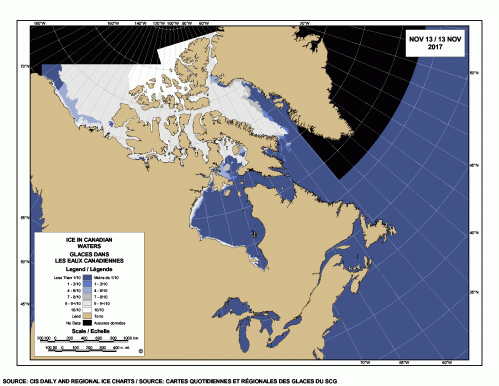
Bottom line: Not only was freeze-up early this year, 2017 will go down as one of the earliest WHB freeze-up years since 1979 and for Southern Hudson Bay bears as well, since as of 13 November there is concentrated ice all the way into James Bay.
UPDATE 14 November 2017: CBC Radio broadcasted an interview yesterday with a recent visitor to Churchill who was remarkably candid about what he saw regarding polar bears, sea ice, and what he heard from locals about freeze-up (“the earliest since 1991”). It corroborates what I’ve reported here. Worth a listen (about 8 minutes):
“Brian Keating: Polar bears in Churchill, Manitoba” (The Homestretch, November 13, 2017, Season 2017, Episode 300312418)
The closest Doug Dirks has come to seeing a live polar bear was at the Calgary Zoo many moons ago. But naturalist Brian Keating has just returned from another trip to Churchill, Manitoba. He joined Doug Dirks with the details of that frosty adventure.
Comments Off on W Hudson Bay freeze-up one of earliest since 1979, not “closer to average”
Posted in Advocacy, Life History, Sea ice habitat
Tagged activism, Amstrup, Arctic, CBC, Churchill, condition, extirpation, freeze-up, Hudson Bay, polar bear, polar bear week, predictions, sea ice, Sierra Club, York
It seems that Churchill residents and visitors woke up this morning to find most local polar bears had left to go hunting — on the sea ice that supposedly doesn’t exist. Right in the middle of the Polar Bear Week campaign devised by Polar Bears International to drum up donation dollars and public sympathy for polar bear conservation!
 Frigid temperatures and north winds last night helped the process along, but this early freeze-up has been in the works for almost a week. From what I can ascertain, it appeared the only bears around onshore today were a mother with her young cub moving out towards the ice (females with cubs are usually the last to move offshore, probably to reduce the risk of encounters with adult males who might kill the cubs).
Tundra Buggy cams at Explore.org have been showing markedly fewer bears today and those that have been seen were on the ice (see above and below) or heading out to it.
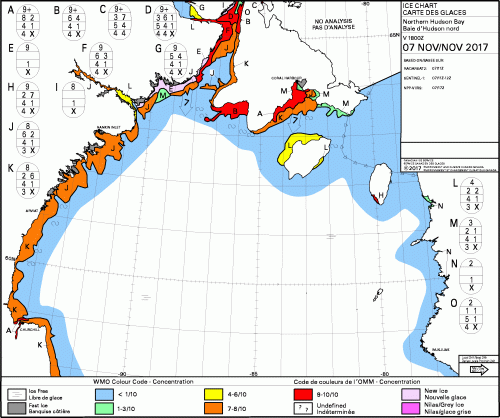
The chart below is for yesterday (7 November), before the cold and north winds hit the region. It shows the concentration of ice that’s >15 cm thick.

The chart for 8 November is below, after the storm.

This is ice thick and extensive enough for polar bears to go hunting. Some bears almost certainly left shore yesterday, with the rest following quickly on their heals today. There are sure to be some stragglers left ashore that will leave over the next few days but the fact remains: there is sea ice to be had for those polar bear willing to start hunting.
Watch polar bear on the WHB sea ice below (screen caps below – and one above – were taken the afternoon of 8 November, from the Tundra Buggy Cam live feed near Churchill).
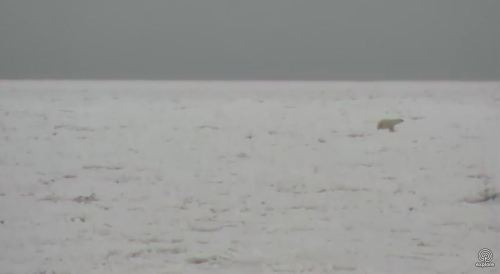
Keep in mind that in the 1980s, bears left for the ice on 8 November, on average. That means we’re back to a 1980s freeze-up scenario, at least for this year.
Funny how no one bothered to mention the potential for an early freeze-up to the media last week, when scientist were so eager to talk about the imminent demise of WHB bears. And funny that Polar Bears International hasn’t tweeted a word today about the famous Churchill bears having enough sea ice to go hunting, smack in the middle of Polar Bear Week.
Yes, the “Save Our Sea Ice” PBI rallying cry sounds a bit hollow with sea ice as far as the eye can see off Churchill today. But will anyone in the mainstream media point out the irony?
See charts below for years back to 2004, on this date (2005 missing for some reason), to compare to the above 8 November image (2004 is as far back as the archive goes).
Comments Off on Experts talk of their bleak future, W Hudson Bay polar bears get earliest freezeup in decades
Posted in Advocacy, Life History, Sea ice habitat
Tagged activism, Churchill, demise, extinction, freeze-up, habitat, hunting, polar bear, sea ice, threatened, western hudson bay
Good news for Western Hudson Bay polar bears that have been getting into trouble in Churchill, Manitoba: the seasons looks to be almost over. Only a few more days of “Polar Bear Week” likely remain, as sea ice will build along the shoreline in response to severe cold and the north winds expected later today.

This morning near Churchill, from one of the tundra buggies, post at Explore.org:
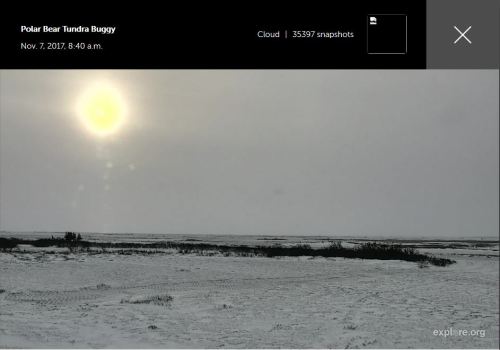
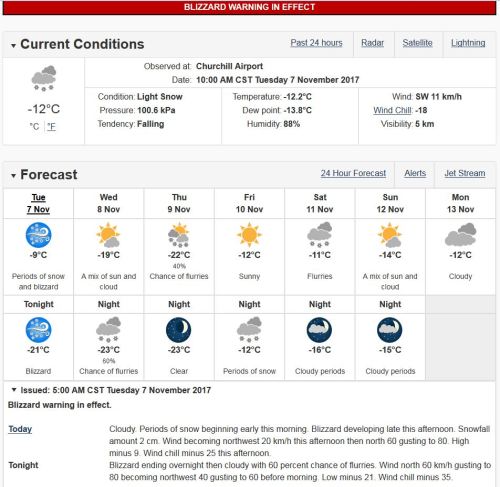
Sea ice at 7 November, will be updated so check back:
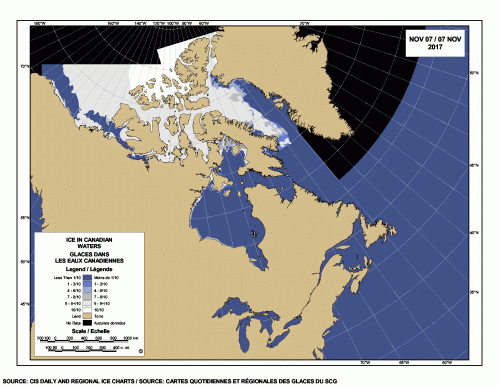
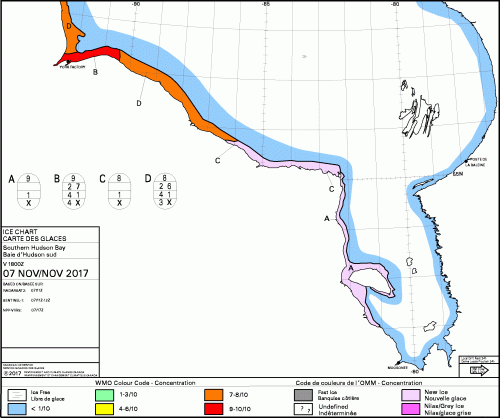
Ice forming all the way into James Bay (Southern Hudson Bay), as shown by the daily ice concentration charts for 7 November 2017 (Northern and Southern Hudson Bay) of ice thicker than 15 cm:
Comments Off on Problem bear report for Churchill might be second-last one this year
Posted in Sea ice habitat
Tagged Churchill, freeze-up, polar bear week, sea ice, western hudson bay
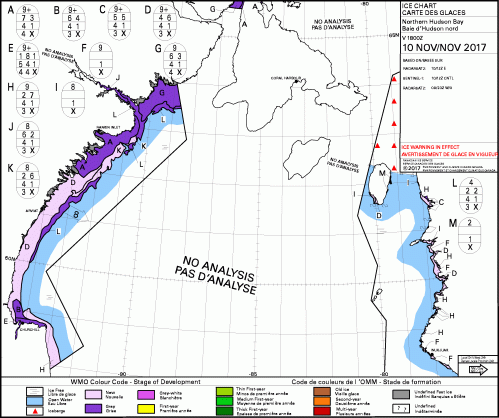
In contrast to 2016, when freeze-up along Western Hudson Bay was about as late as its ever been (early December), ice is already forming along the shore of northern Hudson Bay. There is much more ice than usual for this date, indicated by the dark blue in the latest weekly ice chart below:
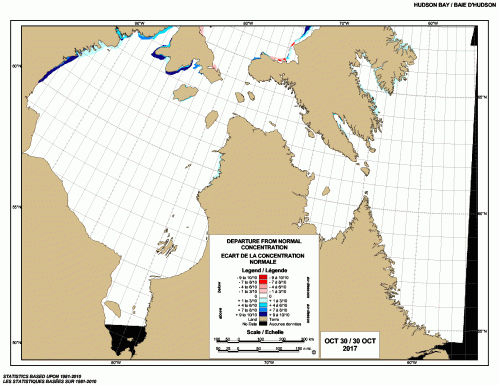
The ice is still thin, as the chart below indicates, but that’s how freeze-up starts. As long as strong winds don’t blow the ice away (as it sometimes does at this stage), the ice gets thicker day by day — and advances further and further off shore. Polar bears get out on the ice as soon as they are physically able, when the ice is about 3-4 inches thick (about 10 cm) or less.
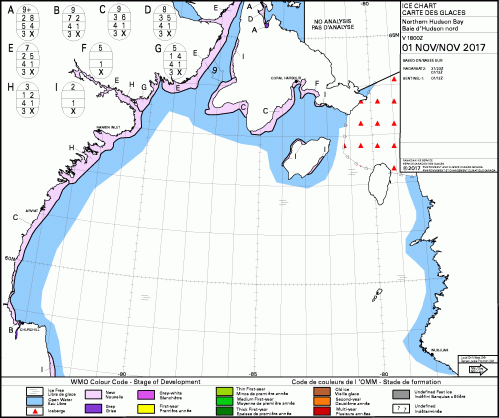
Below is a video of a bear traversing that thin ice yesterday (1 November 2017), near Churchill. Is this a portend of a freeze-up date as early as occurred in the 1980s?
Continue reading
Comments Off on Early freeze-up in progress on Hudson Bay – what a difference a year makes
Posted in Life History, Sea ice habitat
Tagged Churchill, freeze-up, Hudson Bay, hunting, ice thickness, polar bear, sea ice, video, western hudson bay
Comparing Churchill problem bear statistics over a few years provides some critical perspective: this year, the bears are causing much fewer problems.
This 2nd week in September is no exception, being the 9th week ashore in all cases: 2017 (4-10 September, where I think “total number of polar bear occurrence reports to date” should be 64, not 53, see week 7 report here), 2016 (5-11 September), 2015 (7-13 September), where there were about 1/2 the number of bears in “jail” this year compared to the last two years (i. e., 6 vs. 11 and 12) and slightly more than 1/2 the number of occurrence reports in 2017 than in 2016 and 2015 (64 vs. 107 and 99):



Comments Off on Problem polar bears in Churchill at this date show 2017 less than 2016 and 2015
Posted in Life History, Polar bear attacks
Tagged Alert Program, Churchill, ice-free season, jail, onshore, problem bears, summer, western hudson bay
Now that all bears are ashore for the season, the folks at the Polar Bear Alert program in Churchill note in their report for week 7 (21-27 August, 2017) that the bears ashore are in excellent condition (confirming reports on the first bears ashore in July):

Rather marked contrast to the pessimistic spin on conditions from the field a few months ago:
[yes, a few bears fail to make it through the winter, especially young bears; but that has always been the case — it’s not a sign of human-caused global warming catastrophe]
Last week’s problem bear report also confirmed news from the Churchill Polar Bears website a few weeks ago that showed several images of very fat bears:
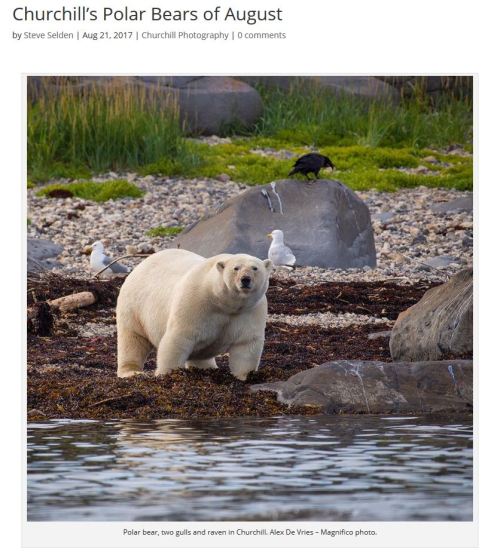
See below for last year’s report for week 7 and this year’s report for week 8 (28 August-3 September). Western Hudson Bay polar bears that come ashore near Churchill, Manitoba are starting their third month on land this week, out of the five months or so they have spent ashore in recent years (about 3 weeks more than in the 1980s, no longer than they did in 2004 — conditions have not been getting worse).
Comments Off on Problem bear reports confirm Churchill polar bears are in excellent condition
Posted in Life History, Sea ice habitat
Tagged alert, Churchill, Hudson Bay, ice-free, onshore, polar bear, problem bears, sea ice, summer, western hudson bay





 polarbearscience
You must be logged in to post a comment.