Tag Archives: Labrador

Horse killed by a polar bear in southern Greenland this week

“Until Wednesday, Malik Frederiksen owned nine horses at his property in southern Greenland. After an attack by a polar bear, he now owns eight.”

Nanortalik Greenland_in context Google maps

So begins an article published in The Arctic Journal yesterday (18 February) about more problem bears onshore in mid-winter. But this time, the location is the south-west tip of Greenland and this time, the polar bear killed something before it was shot. It could just as easily have been a person.

In addition, according to this report, this is the second time in two days that a polar bear has been shot onshore in Greenland because it got too close for comfort.

It’s also the second report in as many weeks of multiple polar bears onshore causing problems in the middle of winter – the other reports were from southern Labrador in late January/early February.  This is a new pattern: it’s different and it means something. Continue reading
Polar bears roaming Labrador in winter due to climate change, says minister

This is a follow-up to a post on my book blog that I wrote this morning because it’s relevant to the scenario I describe in my novel, set in the year 2025 in northern Newfoundland. I’m cross posting it for the benefit of regular readers here.

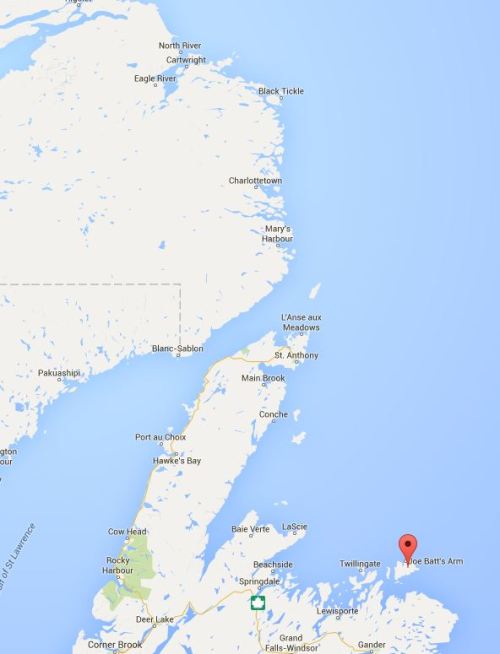
It appears that most of the blame for this phenomenon of multiple sightings of hungry bears onshore in the dead of winter (creating havoc and roaming among houses in the coastal Labrador communities of Black Tickle and Charlottetown) has been placed squarely on…climate change. By a government minister. You have to hear this man’s words to believe it.

Labrador south and Fogo Nfld marked

Continue reading

Spring sea ice prediction for next year off Newfoundland: extensive ice coverage

EATEN – my new polar bear attack novel – is set in Newfoundland 2025 for a reason. I wondered: what if sea ice coverage 10 years from now is as high or higher than it has been for the last two years, with inevitable positive effects on Davis Strait harp seal and polar bear populations?

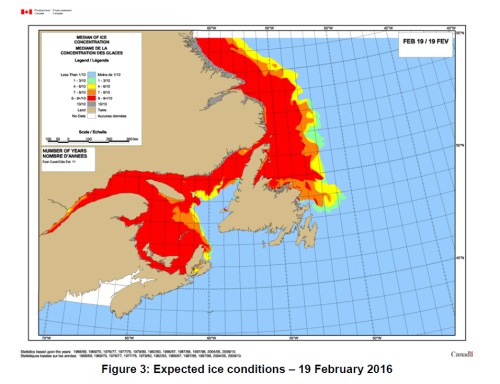
The Canadian Ice Service prediction for this region, released earlier this week (1 December 2015, see references for link), is that 2016 is set to meet my “what-if” scenario handily. Nine years to go! See the CIS expected ice coverage for 19 February 2016 below (CIS fig. 3):

2016 Newfoundland Ice outlook for 19 Feb 2016_at Dec 1 2015

How does the above ice map compare to the last two years? At least as high or higher. Have a look below.

Continue reading

Labrador polar bear not lost or in danger – just running down a rural highway

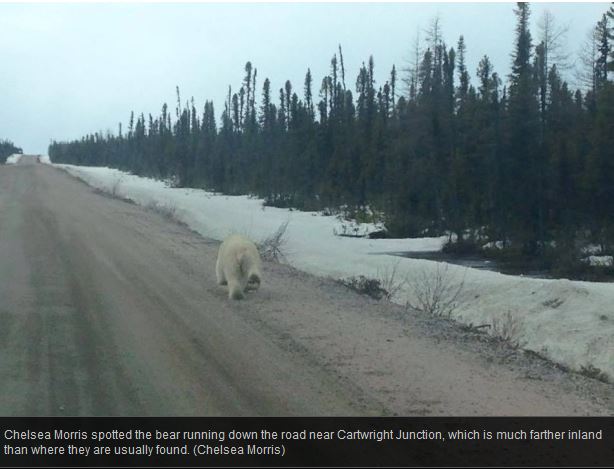
An interesting report from Labrador this morning: video footage of a fat polar bear running down an isolated 2-lane highway in southern Labrador.

Cartright Junction_Labrador pb_Chelsea Morris photo from video

Yet another reminder that there is still a lot of sea ice off that coast, which is home to the Davis Strait polar bear subpopulation.
Continue reading

Polar bear habitat update – sea ice for hunting plentiful in all subpopulation regions

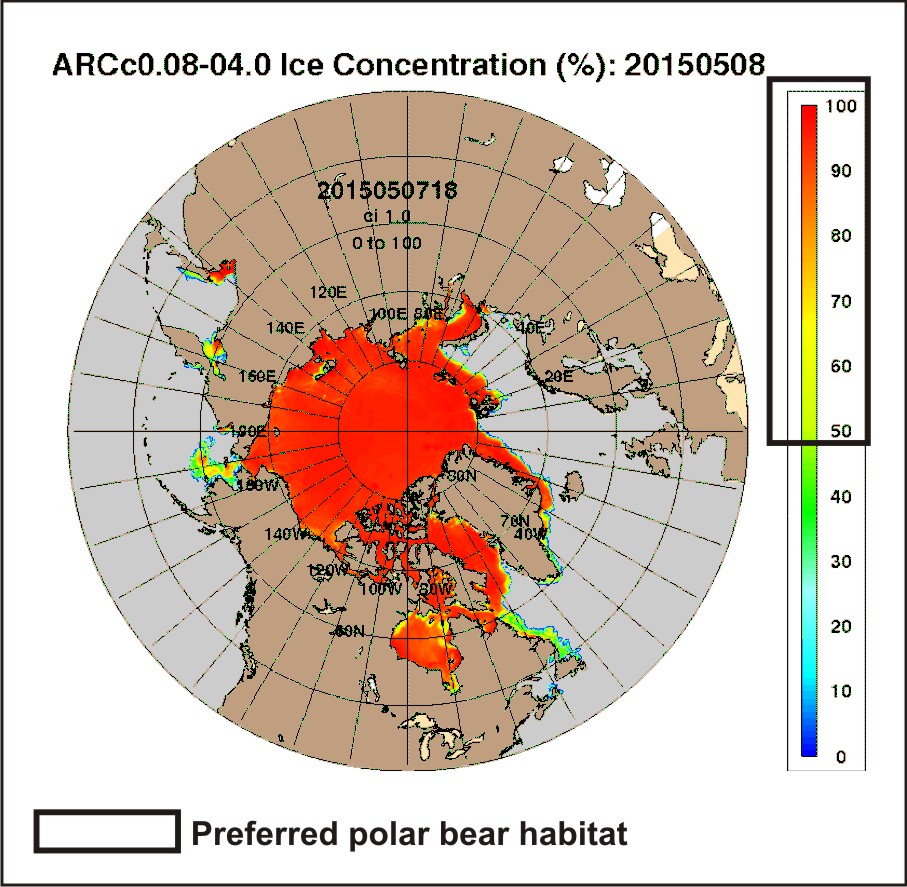
Preferred polar bear habitat is said to be 50% concentration or higher over continental shelves, which describes all but the fringes of sea ice extent today, including Hudson Bay, the Southern Beaufort, and the Barents Sea.

Preferred polar bear habitat 50pc concentration_May 8 2015_PolarBearScience

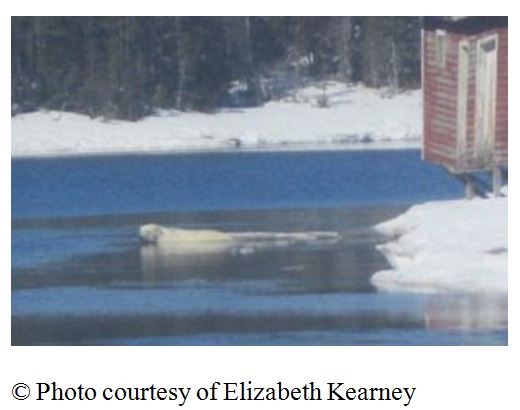
However, polar bears – excellent swimmers that they are – are quite capable of utilizing areas with 15-50% sea ice concentration if necessary (Durner et al. 2004; Rode et al. 2014:79), especially when prey are plentiful.  This would account for the fact that there are still sightings of polar bears in and around northern Newfoundland (see previous post here and photo below1), where ice concentration is in the 30-50% range.

Photo with this news story (7 May 2015): "(Update) Polar bear sighting in Croque"

Photo with this news story (7 May 2015): “(Update) Polar bear sighting in Croque”

Continue reading

Polar bear season for Newfoundland residents still going strong, recent sightings confirm

Two recent sightings of polar bears along the north shore of Newfoundland are a reminder that sea ice is still a prominent feature of the Davis Strait polar bear subpopulation landscape at this time of year.

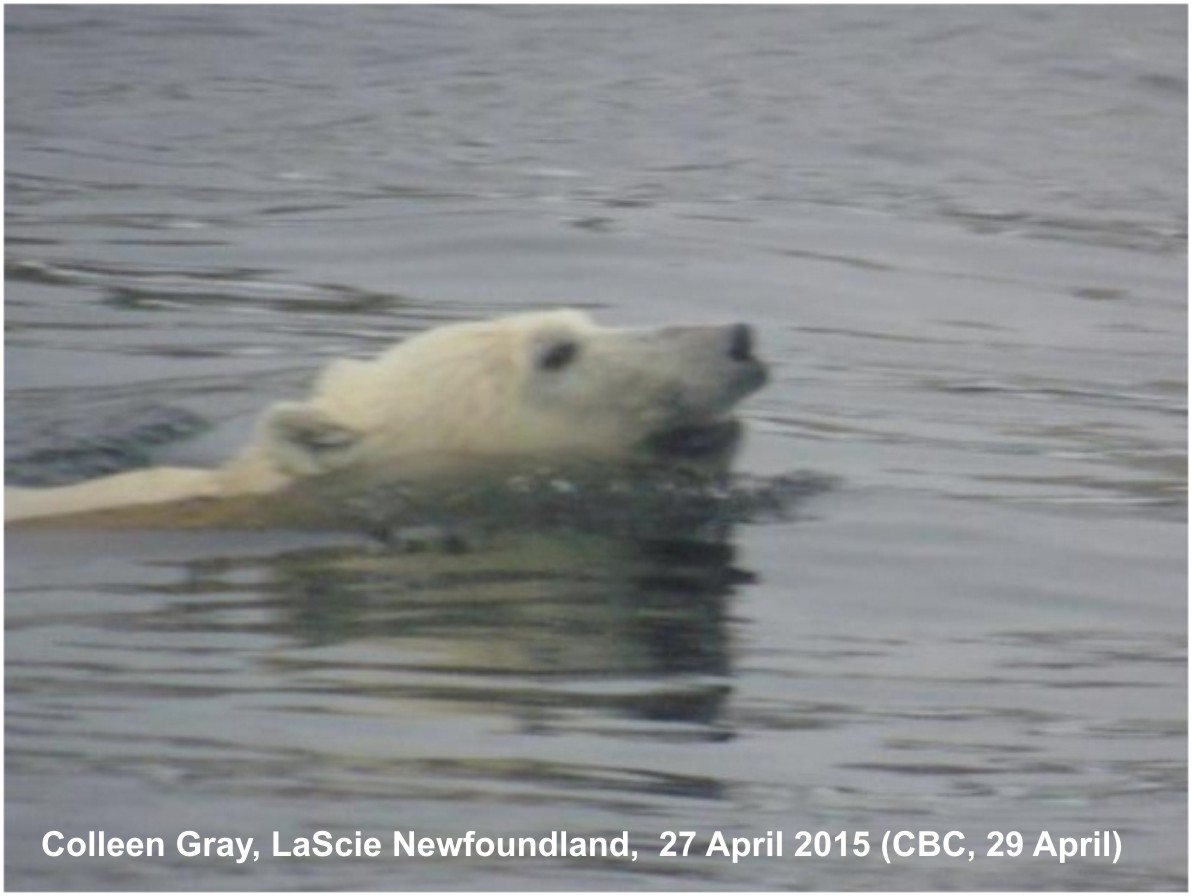
LaScie_Newfoundland_April 27 2015_ColleenGray label

A polar bear was sighted in the community of La Scie, northern Newfoundland Monday, 27 April (pictured above, swimming in the harbour), while another landed in the town of Fogo, on Fogo Island, last week (see maps below).
Continue reading

Polar bear encounter in the Canadian High Arctic reminiscent of recent attacks

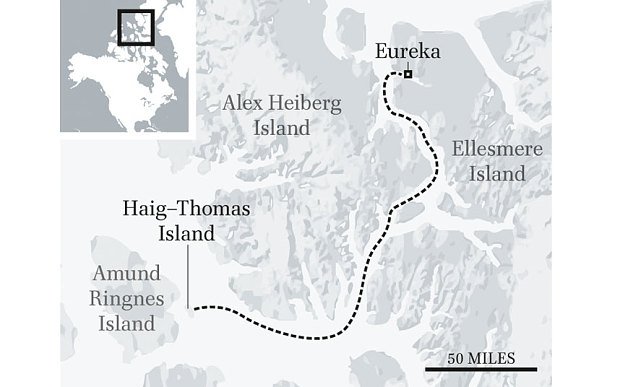
Men recreating the 1938 expedition of explorer David Haig-Thomas have a mid-April 2015 polar bear encounter reminiscent of two recent polar bear attacks (Labrador, 2013, Svalbard, 2011) but with a happier ending.

Haig-Thomas expedition map_Telegraph_April 18 2015

Continue reading

Polar bear habitat update – even more ice this week in the Barents Sea

Polar bear habitat is close to average for this date all over the Arctic this week. Barents Sea pack ice has increased substantially since last week and the ice in Eastern Canada is still well above average (and higher than 1979-early 1980s). Arctic ice has grown since a preemptive call for “the lowest maximum extent on record” was made by NSIDC last week — there is now at least as much ice for this date as there was in 2011 and almost as much as there was last year (2014).

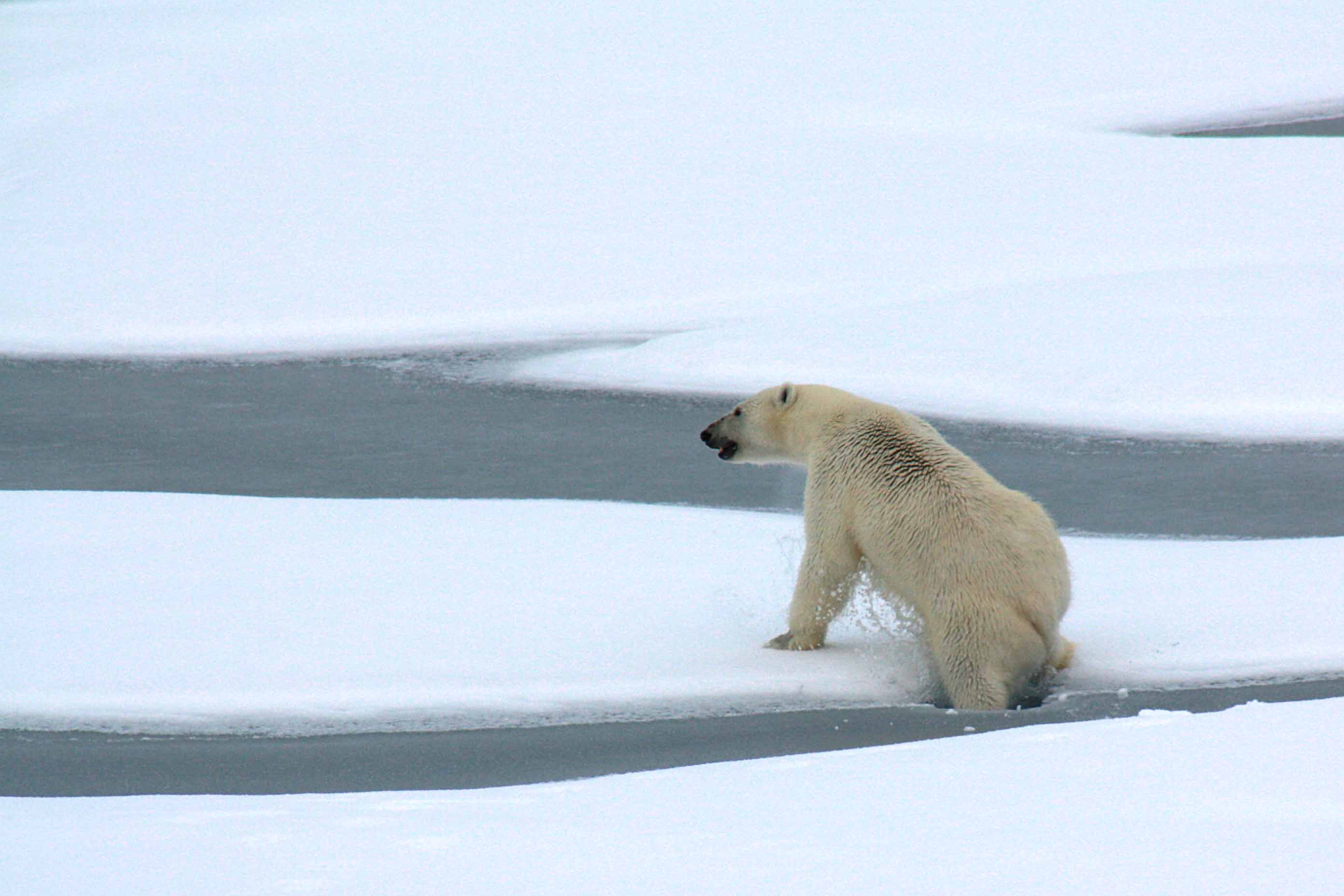
Polar Bear Breaks Ice

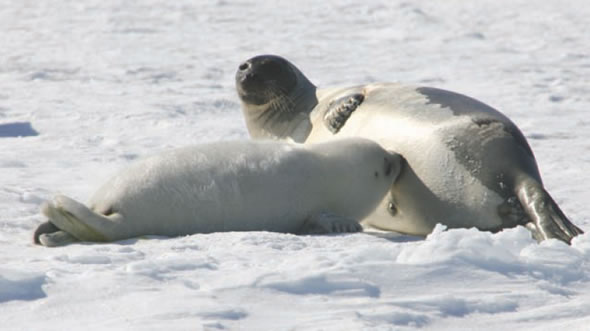
Southern Davis Strait polar bears are out feeding on the glut of harp seals in the pack ice off Labrador and Newfoundland (discussed in detail here). One or more bears strayed a bit from the pack and ended up swimming around near the Hibernia oil platform (not far from the ice edge, although the CBC reports didn’t mention that “minor” fact), discussed in this recently updated post (with maps).

Harp seal female with nursing pup, DFO Canada.

Harp seal female with nursing pup, DFO Canada.

Ice maps and graphs below: it’s worth a look.
Continue reading

International Polar Bear Day & Polar bears in the news this week

Today’s the day to celebrate the resilience and adaptability of polar bears.

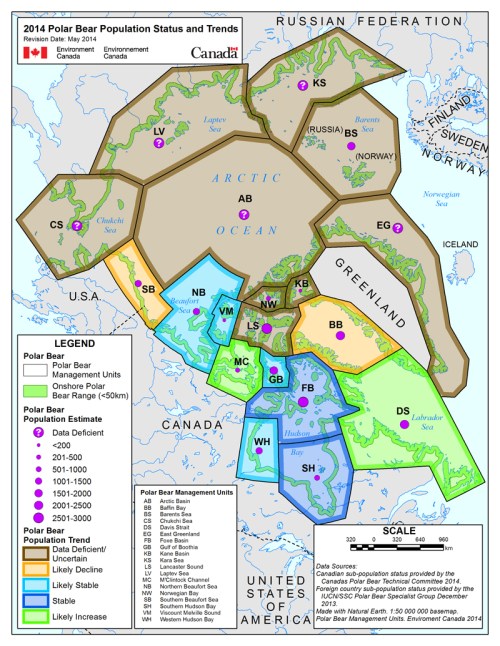
Not only did the record-breaking sea ice low of 2012 have virtually no effect on the bears but in 2014, only two subpopulations were classified as “declining” or “likely declining” – down from seven in 2010 and four in 2013 (see map below).

 Figure 6.  Most recent global polar bear population status assessment, using figures from the IUCN Polar Bear Specialist Group assessment (2013) and Environment Canada (May 2014). Note that of the two subpopulations denoted as being on a likely declining trend, BB (Baffin Bay) is suspected to be declining due to over-hunting and SB (Southern Beaufort) had an unfinished rebound caused by thick spring ice conditions in 2004-2006; a more recent survey (2012) indicated SB numbers were higher than the previous 10 years.

See my recent Twenty good reasons not to worry about polar bears.
[GWPF Briefing Paper version (pdf), just out today, here]

POLAR BEARS IN THE NEWS…

Kudos to the CBC for producing a propaganda-free polar bear “Fun Facts” page for kids that won’t give them nightmares – have a look.

Other news: Polar bears come early to Black Tickle, Labrador this year, a new population count is planned for the Barents Sea subpopulation, and The Times (UK) publishes some good news about polar bears. Details below.

UPDATE February 27, 2015. I’ve added another news item I missed below.

UPDATE APRIL 7, 2015. Correction to the February 27 update below.
Continue reading

“A Harrowing Encounter”- my published review of “Meltdown”

Here’s an excerpt of my just-published review of “Meltdown: Terror at the Top of the World” (the story of the July 2013 polar bear attack in Labrador, Canada), adapted from my November 2014 blog post. The review is called “A Harrowing Encounter” and it’s just out in the Spring 2015 issue of RANGE Magazine.

Polarbear vs dogs_lger_Norbert Rosing photo 2008_Brian Ladoon dogs WHB
In the photo above, a polar bear approaches Brian Ladoon’s Canadian Eskimo Dogs in Churchill, Manitoba – in this case, unlike the hiker described in “Meltdown,” there was a happy ending. Norbert Rosing photo, from this Daily Mail article, 2008 (for more, see also “A priest of dogs and bears” from 2013 and cool video here).

Continue reading