Tag Archives: Newfoundland

Polar bear visiting Hibernia oil platform off Newfoundland was not far from sea ice

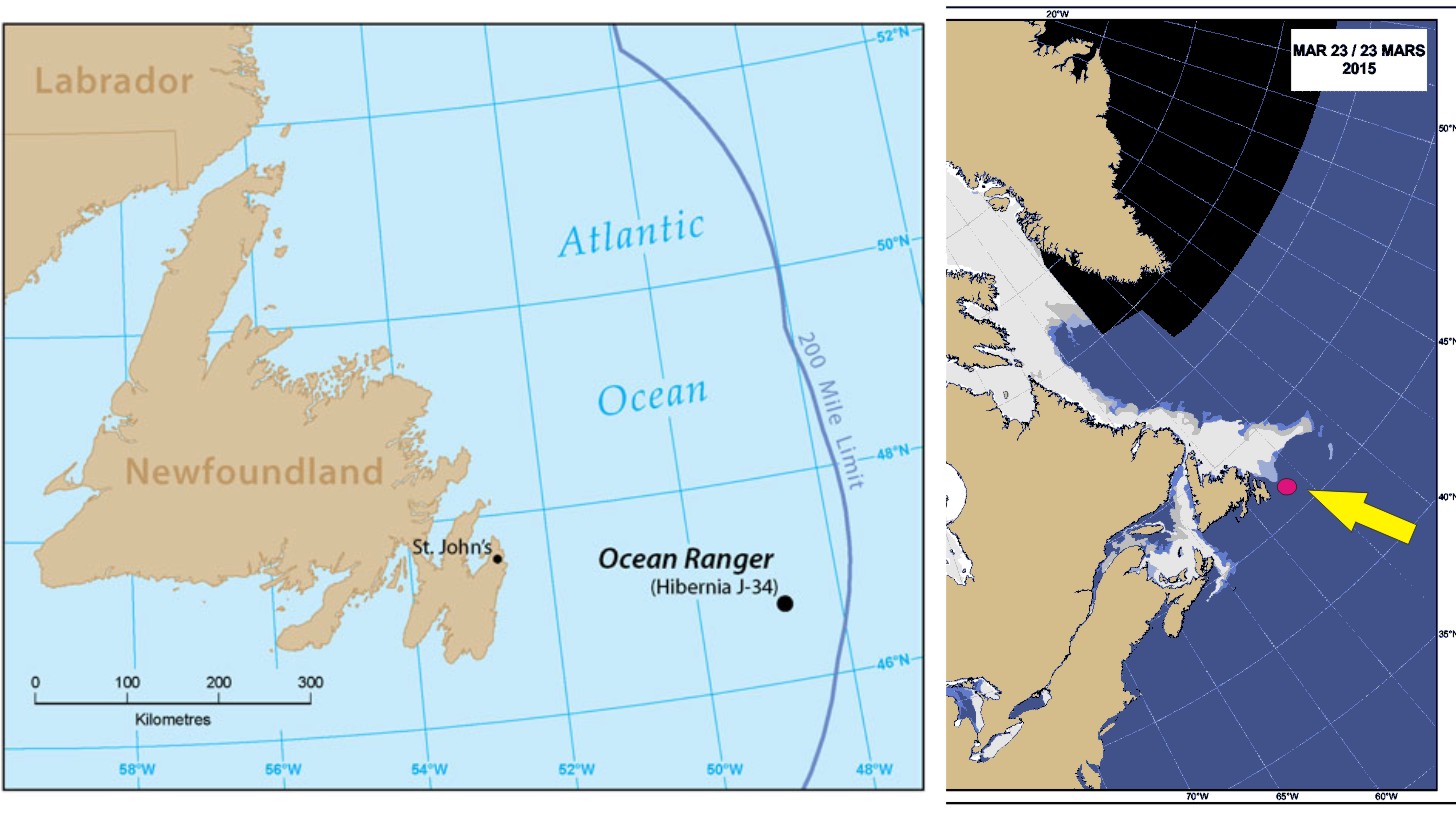
Perhaps the folks on the platform couldn’t see it, but sea ice wasn’t far off on Monday when a polar bear came to visit the Hibernia oil platform southeast of St. John’s, Newfoundland. See the map below (composite from Heritage Newfoundland and Canadian Ice Service):

Hibernia platform and sea ice at 23 March 2015_Polarbearscience
UPDATE 26 March 2015: Ian Stirling has added his expert comment on this incident, see below.

UPDATE 28 March 2015: Newfoundland’s Director of Wildlife has commented on this incident, see below.
Continue reading

Claim of range-contraction of polar bears due to declines in summer sea ice doesn’t hold up

Have polar bears suffered a contraction of their historical range due to recent declines in summer sea ice? Buried in a recent journal article lies such a claim, one I can’t recall having seen before. That makes it worth close examination.

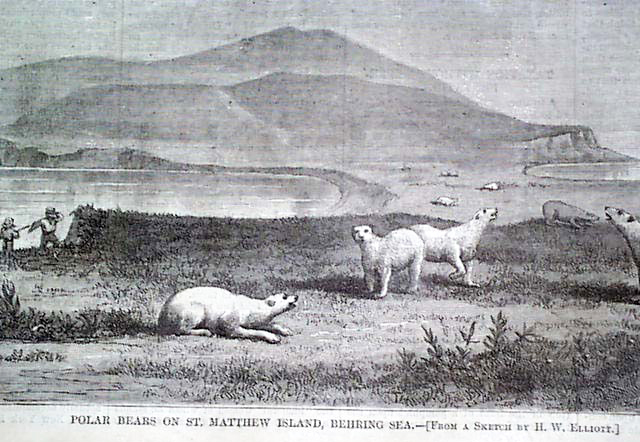
Figure 2. A drawing of polar bears on St. Matthew Island that accompanied the May 1, 1875 Harper’s Weekly Journal of Civilization article written by Henry Elliot. See here.

A drawing of polar bears on St. Matthew Island that accompanied the May 1, 1875 Harper’s Weekly Journal of Civilization article written by Henry Elliot. See here.

The assertion appears in the introduction of a recently published paper that got a lot of attention online (“Implications of the Circumpolar Genetic Structure of Polar Bears for Their Conservation in a Rapidly Warming Arctic” by Peacock and colleagues (2015), discussed previously here, news coverage here and here).

Here is how the authors put it:

There is already evidence of change in the contemporary distribution of polar bears. For example, polar bears, once common in Newfoundland [29], are now seen there only infrequently and in small numbers. Similarly, polar bears once regularly summered on St. Lawrence and St. Matthew islands in the Bering Sea [30–32]. Now they are irregularly observed in the Bering Sea and do not spend summers on St. Matthew Island. Although these changes in polar bear distribution may also have been related to overharvest, the recent reductions in the extent of sea-ice due would prevent current and regular use of these areas.[my emphasis]

There are three main reasons the claim doesn’t hold up to scrutiny:
Continue reading

Polar bear habitat: Spring 2014 in Eastern Canada was much better than 1969

It was a good year for polar bear habitat in the southern portions of Eastern Canada this spring – surprisingly, much better than it was in 1968 through 1970. And since spring conditions are what really matter to polar bears, this is good news indeed.

Environment Canada’s Canadian Ice Service recently published a nice little summary that has some rather eye-opening graphs. These describe the conditions for polar bears in the southern Davis Strait subpopulation – the one whose population size increased so dramatically between 1974 and 2007 despite lower-than-average ice extent in some years, even while their body condition declined (see here and here).

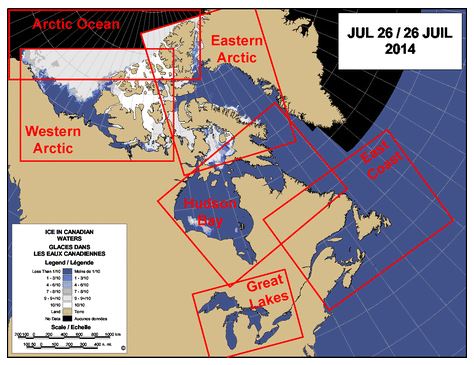
Environment Canada - Ice maps regions at July 26 2014

[Fitting post for the second anniversary of this blog, I think – more below1]

Note that I’ve added a “Blog Archive” page that lists all of my posts, easier to browse now that there are more than 200 of them.
Continue reading

Current ice conditions don’t bode well for Beaufort Sea polar bears

Thick spring ice along the shore of the Eastern and Southern Beaufort is bad news for polar bears, especially females emerging from their dens with new cubs. Are those conditions developing now?
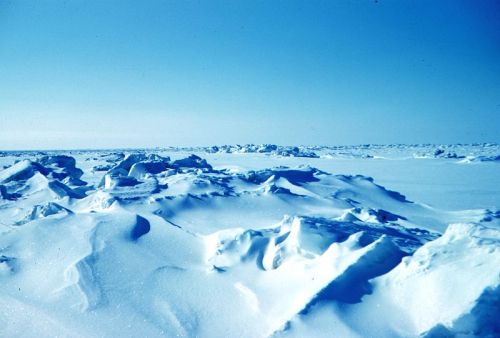
Beaufort Sea pressure ridges_Spring 1949 wikipedia sm

Every 10 years or so, since at least the 1960s, nearshore ice gets too thick for ringed seals to maintain their breathing holes and many breeding seals depart the area. This leaves a lot of polar bears without the baby seals they need to consume to get them through the rest of the year (that’s if they don’t (or can’t) leave themselves).

I’ve discussed various aspects of this phenomenon before, with references – see the list at the end of this post.

Sadly, we are on schedule for such conditions to recur – could be this year, could be next. The last time of heavy spring ice was 2004 and previous heavy ice conditions occurred the springs of 1964, 1974 (the worst), 1984, 1992 and 2004. The 2004-2006 event was reportedly almost as bad as the 1974-1976 event.

So, prompted by reports of the heaviest sea ice conditions on the East Coast “in decades” and news that ice on the Great Lakes is, for mid-April, the worst it’s been since records began, I took a close look at ice thickness charts for the Arctic. I’m not suggesting these conditions are necessarily related to Beaufort ice, just that they got me thinking.

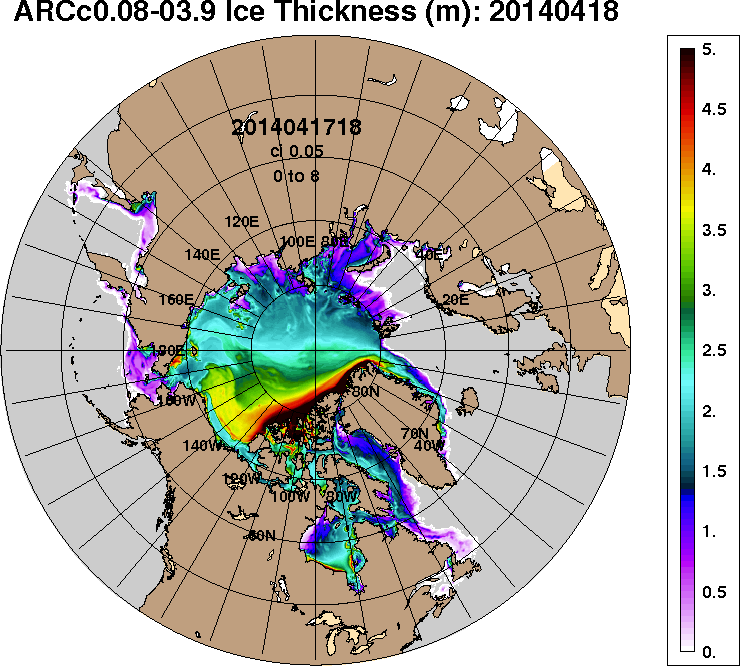
Here’s a screencap of the US Navy ice thickness animation chart for yesterday [from WUWT Sea Ice Page]
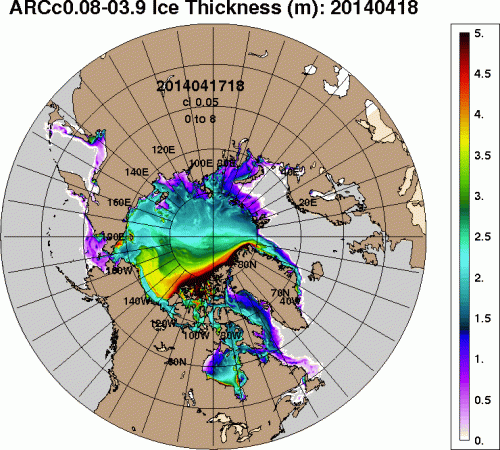
Figure 1. Arctic Sea Ice Thickness (NRL), for April 18, 2014. Look at thick ice (yellow, 3.5-4.0 meters thick) spreading along the north coast of Alaska. See the 30 day animation here.

Figure 1. Arctic Sea Ice Thickness (NRL), for April 18, 2014. Look at thick ice (yellow, 3.5-4.0 meters thick) spreading along the north coast of Alaska. See the 30 day animation here.

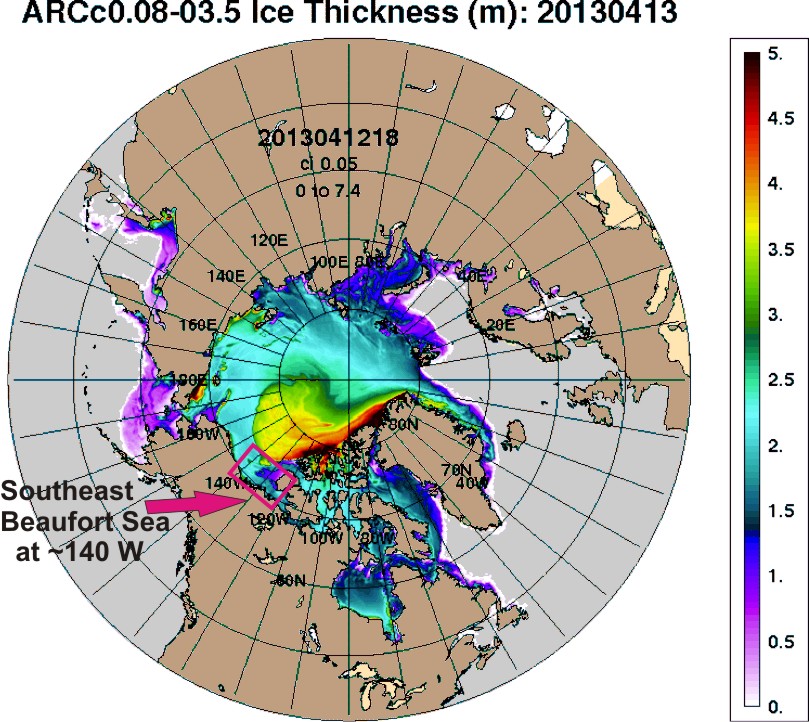
Below is a similar image from about the same time last year, with the Southeast Beaufort Sea marked.
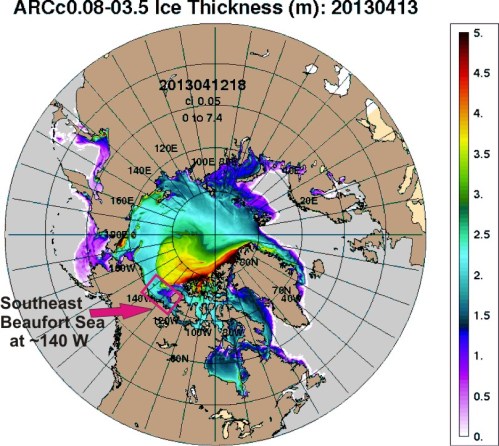
Figure 2. Arctic Sea Ice Thickness (NRL), for April 13, 2013. Southeastern Beaufort marked.

Figure 2. Arctic Sea Ice Thickness (NRL), for April 13, 2013. Southeastern Beaufort marked.

I don’t think this bodes well for Beaufort bears but we’ll have to wait and see if there are any reports of starving bears bit later this spring and summer. Sea ice charts aren’t a guarantee that this heavy spring ice phenomenon is developing in the Beaufort, but they could be a warning.

Below are archived ice age charts from the US National Snow and Ice Data Center (NSIDC) for some previous years when Beaufort bears had trouble, especially 2004-2006, with which I compare this year’s conditions. [h/t Steve Goddard for alerting me to this resource]

Continue reading

Of Labrador polar bears and sea ice way above normal off Newfoundland

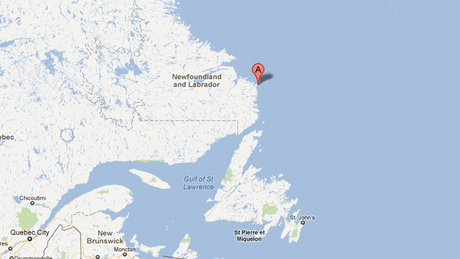
A report yesterday of polar bears making a nuisance of themselves in Black Tickle, southern Labrador is the inspiration for this post. Those bears are part of the Davis Strait subpopulation (discussed previously here and here). Black Tickle is marked on the map below.

Black-tickle-map-Labrador

Arctic sea ice is tracking just at the edge of two standard deviations for this time of year but while extent is low in the Barents Sea, it is way up around the east coast of Canada.
Continue reading

Sea ice maximum reached March 15: what it means for polar bears

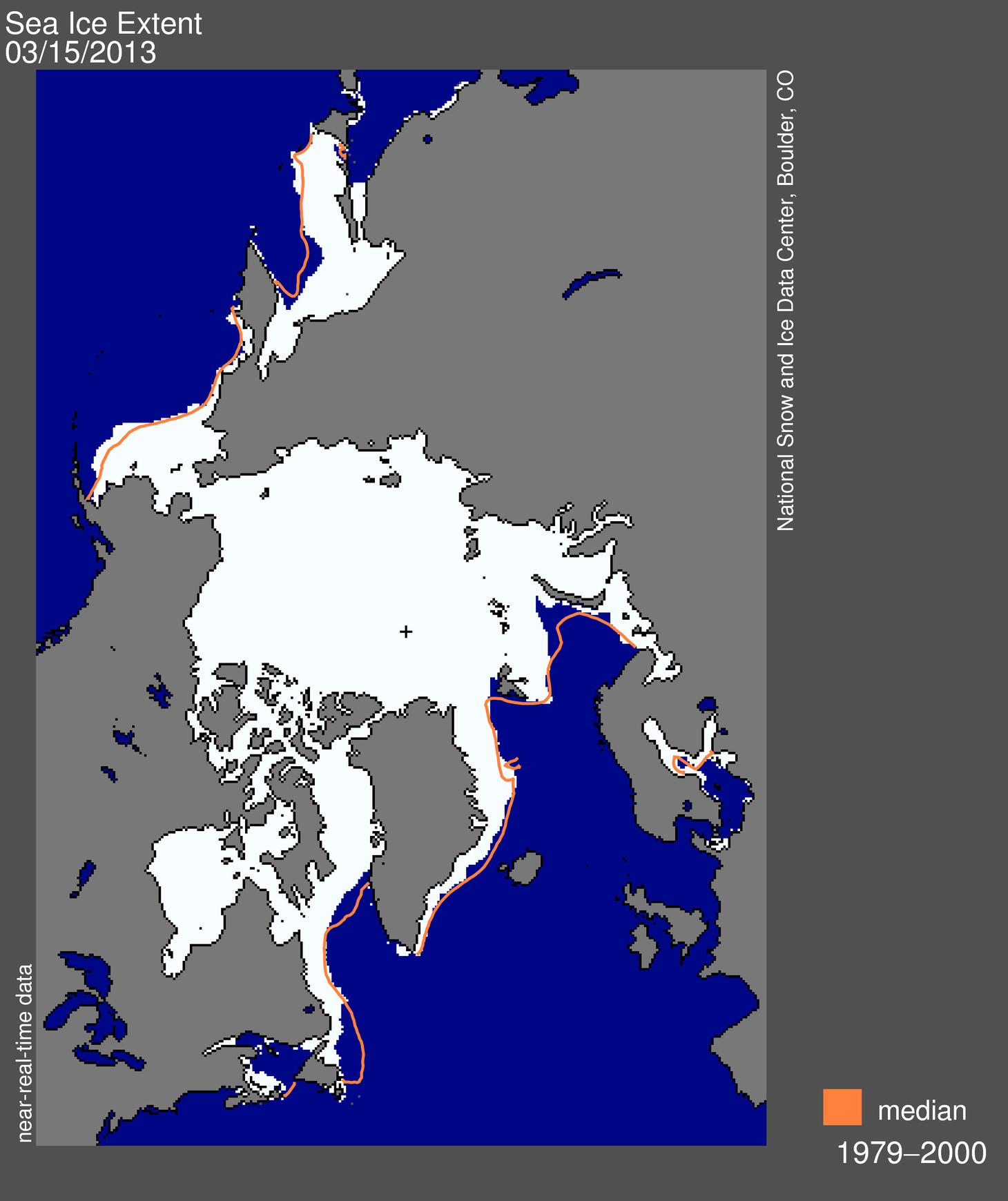
On Monday, March 25, the National Snow and Ice Data Center (NSIDC) announced that March 15 2013 was likely the maximum extent reached this winter. Note that just a few days ago, I discussed the relationship between maximum extent of sea ice and the global distribution of polar bears around the Arctic (see March 20th post here).

NSIDC says: “Arctic sea ice extent on March 15 was 15.13 million square kilometers (5.84 million square miles). The orange line shows the 1979 to 2000 median extent for that day. The black cross indicates the geographic North Pole.”

NSIDC says: “Arctic sea ice extent on March 15 was 15.13 million square kilometers (5.84 million square miles). The orange line shows the 1979 to 2000 median extent for that day. The black cross indicates the geographic North Pole.” Click to enlarge.

Continue reading