Tag Archives: polar bears

EATEN the movie – what are the odds?

Could polar bears trump sharks at the theatre? Does the fact that unlike sharks, polar bears make house calls, give it better odds than most?

Take a walk down memory lane and give some thought to what has made films starring big animal predators a hit (or not), like JAWS, THE SHALLOWS, THE BIRDS, GRIZZLY, and a number of others, both classics and bombs. What do these predator attack films tell us (if anything) about the probability of EATEN becoming a terrifying motion picture?

jaws-1975-and-the_shallows_poster_aug-2016

Read the rest here.

Save

Fall Arctic ice growth often differs regionally: 2016 compared to other years

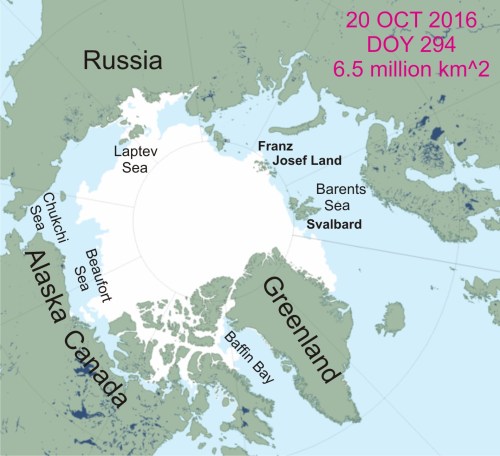
Arctic sea ice is spreading out quickly from its central basin summer refuge – according to this NSIDC Masie ice chart, it has already grown more than 2 mkm2 beyond the annual minimum reached in early September. Ice is already pushing south into the eastern Beaufort and the archipelago of Franz Josef Land in the Barents Sea.

masie-sea-ice-2016-oct-20-cropped-and-marked_polarbearscience

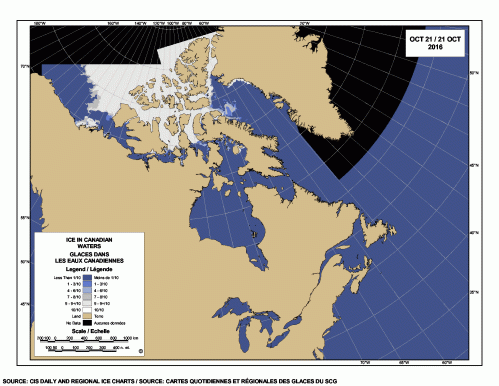
Over the next couple of weeks, shorefast ice will start forming along the coasts of North America and Eurasia (see the first bits off Alaska in the 21 October CIS map below), which will eventually meet the expanding Arctic Basin pack to fill the Basin and Canadian Arctic Archipelago with ice – as it has done for eons.

sea-ice-extent-canada-2016-oct-21_cis

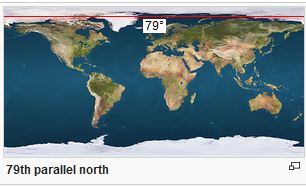
The evidence from the last decade or so suggests that by the end of October, most of the Arctic north of the 79th parallel (see map below) will be filled with ice – although the Chukchi Sea (north of the Bering Strait) may not fill until sometime in November:

79-th-parallel-north_wikipedia

Polar bears usually resume hunting as soon as sea ice conditions permit in the fall, since it’s their last chance to top up their fat reserves before the dark and cold of winter when hunting may become next to impossible.

I’ve copied ice charts from the Masie archives for some previous years at 31 October below.

Continue reading

Kaktovik, AK has a polar bear problem but not because bears are desperate for food

PBS has published a bizarre poor-starving-polar-bears story that uses pictures of fat, healthy bears to illustrate the supposed desperation of malnourished bears of the Southern Beaufort Sea that is blamed on declining sea ice.
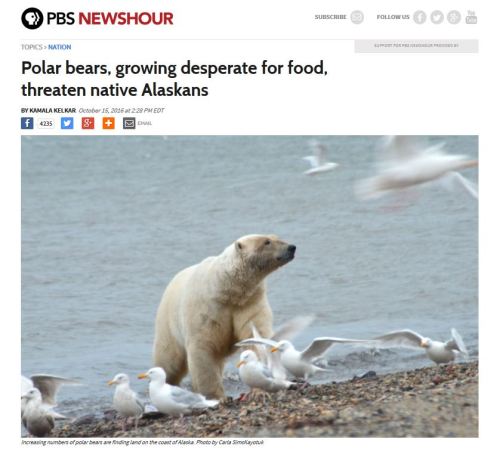
pbs-newshour-headline_15-october-2016

The photo of the fat bear above, taken by the Kaktovik resident quoted in the 15 October 2016 PBS story, Polar bears, growing desperate for food, threaten native Alaskans, accompanies this statement:

“While images of malnourished polar bears have become a national symbol of the effects of climate change, they are a front line reality for Native Alaskans, who face them on their own property and do not want them to get hurt.”

Except this is not a story about starving bears but too many fat bears hanging around one particular community looking for other kinds of food – after being lured in by the enticing smell of rotting whale meat left onshore by the residents.

If photos of starving Beaufort bears existed that PBS could have used to illustrate this story, I’m certain those photos would have been used. But virtually all of the pictures I’ve seen of Kaktovik bears are the epitome of health – fat and sassy – but none that could be described as starving.
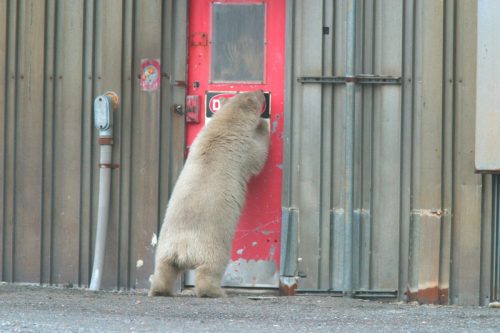
polar_bear-US FWS_young bear Alaska maybe Kaktovik no date.jpg

It turns out that while native Kaktovik residents have profited from tourists and journalist who have shown up in droves to view the large numbers of bears attracted to the bone piles left after butchering summer-caught bowhead whales, the bears have also put the community at risk of personal attack and loss of stored food. Who would have thought?

Residents of Kaktovik (see map below) have unwittingly enticed these polar bears ashore and now must deal with the consequences. As the residents of Churchill discovered decades ago, having polar bears close to your community comes with benefits, problems – and danger.
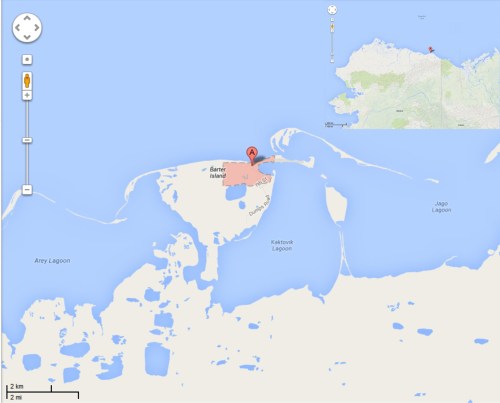
kaktovik-composite

There is no doubt that Kaktovik has a polar bear problem but it cannot plausibly be blamed on anthropogenic global warming, retreating sea ice, or starving bears – an irresistible attractant close to the community is the cause and solutions must be found to keep residents safe and their food secure. The PBS article discusses a few of those solutions. Some quotes and background below.

Continue reading

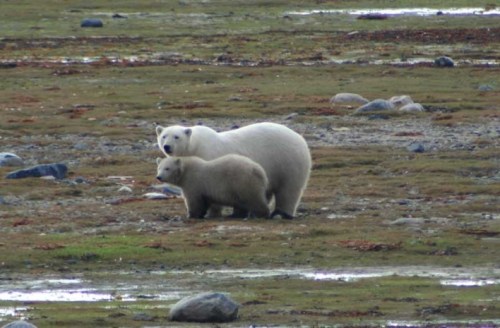
Polar bears off the ice in W. Hudson Bay are “well fed and in great shape” this year

Churchill_Polar_Bear_2004-11-15 Wikipedia

Reports from Seal River, just north of Churchill at Churchillwild, at July 26 were crowing about seeing lots of bears onshore, with a veritable beehive of activity the weekend of 16/17 July:

“This has without a doubt been Churchill Wild’s most spectacular start to the summer polar bear watching season. …Bear numbers are up spectacularly this year and all are looking very fat and healthy, perhaps much to the chagrin of climate change “experts.” Our best day for the seductive white carnivores over the past week featured 21 polar bears sighted between the Lodge and our whale swim spot!

The ice pack, which was still visible a week ago [i.e, 17 July or so], has finally dissipated and pushed a large number of bears on to our coastline here at Seal River, with the end result being many very happy cameras!” [my bold]

And in Churchill proper, the Polar Bear Alert program has issued three reports so far this season (courtesy the Town of Churchill), which confirm that bears in the Polar Bear Capital of the World are also in great shape.

For the week of July 11-17, 2016:

“Bears are off the sea ice and on land. They are looking well fed and in great shape.”

See all three PBA reports below, compared to one from last year at this time (as well as a map and some ice charts).

More fat, healthy bears than last year, enough to keep the Polar Bear Alert folks hopping and tourists in the north happy. Sure doesn’t sound like a suffering population to me. Continue reading

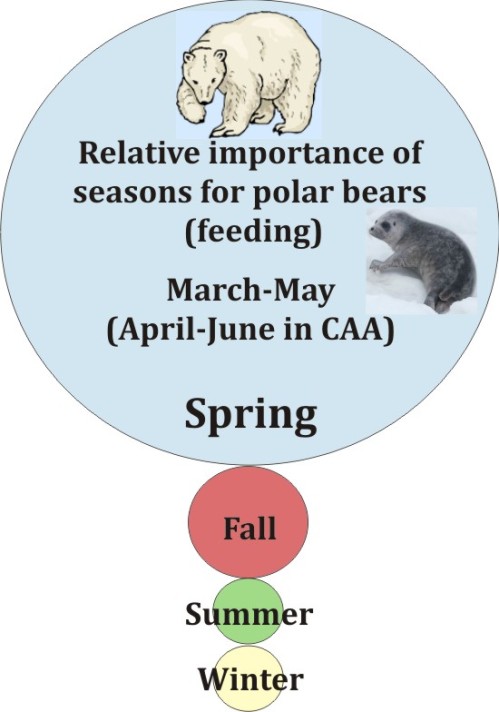
Critical spring feeding for polar bears is over – sea ice levels are now irrelevant

Polar bears in virtually all regions will now have finished their intensive spring feeding, which means sea ice levels are no longer an issue. A few additional seals won’t make much difference to a bear’s condition at this point.

Relative importance of seasons polar bear graphic_PolarBearScience_June2016

The only seals available on the ice for polar bears to hunt in early July are predator-savvy adults and subadults but since the condition of the sea ice makes escape so much easier for the seals, most bears that continue to hunt are unsuccessful – and that’s been true since the 1970s. So much for the public hand-wringing over the loss of summer sea ice on behalf of polar bear survival! Continue reading

Southern Hudson Bay polar bears are not starving to death

Reposted from 23 March 2016: Despite the fact that the polar bears of Southern Hudson Bay (SHB) live further south year round than any others, a recent study found their average body weight has declined relatively little since the 1980s. There has been no decline in the size of the population over that time either.

James Bay female and cub_Ontaro Govt

Remarkably – despite what we are told about how critical breakup dates are to polar bear health and survival in Hudson Bay – this study found that for SHB bears, the small decline in body condition index correlated only with freeze-up dates, not breakup dates or length of the ice-free season. They also found that regional breakup and freeze-up dates relevant to polar bears in this area was the day when ice cover reached 5% (not 50%).

In other words, SHB polar bears left the ice (or returned to it) when the average ice cover near the coast was about 5%. This finding is yet more evidence that the meteorological definition of “breakup” (date of 50% ice cover) used by many researchers (see discussion here) is not appropriate for describing the seasonal movements of polar bears on and off shore.

The news (two weeks after this post originally went up, see also here), however, is about the bit of weight decline, hyped to the maximum.

Continue reading

2016 record low maximum will make headlines but unlikely to affect polar bears

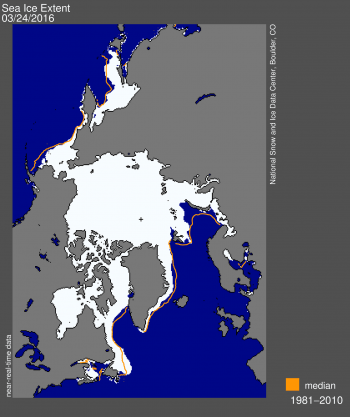
Never mind that the sea ice maximum this year came almost a month later than last year (and close to latest since 1979) – and was lower by only .02 – the US National Sea Ice Data Center (NSIDC) today trumpeted a new record low.  What this means to polar bears, if anything, remains to be seen.

Sea ice extent 2016 March 24 NSIDC_max 14_52mkm2 sm

2015: maximum set February 25 (day 56), at 14.54 mkm2

2016: maximum set March 24 (day 84), at 14.52 mkm2

[The difference in area? Smaller than the Islands of the Bahamas]

Latest maximum extent (since 1979) occurred in 2010 on April 2 (Day 92).

The average date for maximum extent is March 12.

I note, however, that given the lateness of the winter sea ice surge meant that the amount of ice present at 24 March 2016 (see NSIDC Interactive) was more than was present on the same date in 2006, 2007 and 2015.

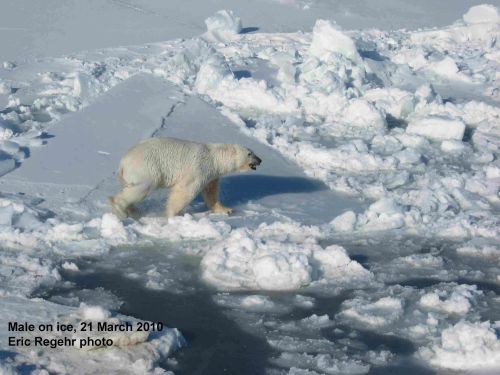
Clearly, there was plenty enough sea ice in the spring of those years for most polar bears to hunt seals successfully and put on the weight they needed to survive the summer fast ahead. I see no reason to expect 2016 to be different.

Polar_Bear_male_Regehr photo_March 21 2010_labeled
Continue reading

Polar bear habitat update: Labrador sea ice highest in 20 years

Sea ice off the southern Labrador coast hasn’t been this high for this date in 20 years: that’s great news for the harp and hooded seals that will give birth at the Front in another few weeks – for a while anyway, because a bumper crop of baby seals is also good news for the polar bears who gather there to eat them.

Sea_ice_near_coast_of_Labrador_-a_wikipedia sm

So brutal, but true. The polar bear must gorge over the short Arctic spring and early summer to survive the rest of the year.

Continue reading

Ten dire polar bear predictions that have failed as global population hits 22-31k

Grim predictions of the imminent demise of polar bears – their “harsh prophetic reality” as it’s been called – have been touted since at least 2001. But such depressing prophesies have so widely missed the mark they can now be said to have failed.

Rode and Regehr 2010_Chukchi_report2010_triplets redone PNG


While polar bears may be negatively affected by declines in sea ice sometime in the future, so far there is no convincing evidence that any unnatural harm has come to them. Indeed, global population size (described by officials as a “tentative guess“) appears to have grown slightly over this time, as the maximum estimated number was 28,370 in 1993 (Wiig and colleagues 1995; range 21,470-28,370) but rose to 31,000 in 2015 (Wiig and colleagues 2015, [pdf here] aka 2015 IUCN Red List assessment; range 22,000-31,000).

These ominous prophesies have been promoted primarily by Ian Stirling, Steven Amstrup, Andrew Derocher and a few other IUCN Polar Bear Specialist Group (PBSG) members but ironically, it’s data collected by their colleagues that’s refuted their message of doom.

Here are the predictions (in no particular order, references at the end):
Continue reading

Horse killed by a polar bear in southern Greenland this week

“Until Wednesday, Malik Frederiksen owned nine horses at his property in southern Greenland. After an attack by a polar bear, he now owns eight.”

Nanortalik Greenland_in context Google maps

So begins an article published in The Arctic Journal yesterday (18 February) about more problem bears onshore in mid-winter. But this time, the location is the south-west tip of Greenland and this time, the polar bear killed something before it was shot. It could just as easily have been a person.

In addition, according to this report, this is the second time in two days that a polar bear has been shot onshore in Greenland because it got too close for comfort.

It’s also the second report in as many weeks of multiple polar bears onshore causing problems in the middle of winter – the other reports were from southern Labrador in late January/early February.  This is a new pattern: it’s different and it means something. Continue reading