Tag Archives: sea ice

Tracking polar bears in the Beaufort Sea: January map

Here is the January 2014 follow-up to my post on the July 2013 track map for female polar bears being followed by satellite in the Beaufort Sea by the US Geological Survey (USGS) – Ten out of ten polar bears being tracked this summer in the Beaufort Sea are on the ice.

See that post for methods and other background on this topic, and some track maps from 2012 (also available at the USGS website here).

The USGS track map for January 2014 is copied below (Fig. 1).

Both the Southern Beaufort and the Chukchi Sea were completely ice-covered by the end of January. The seven bears tracked during November and December were reduced to five in January — down 50% from the ten bears collared in July.
Continue reading

New interactive sea ice atlas for Alaska, 1953-2012: check out past polar bear habitat

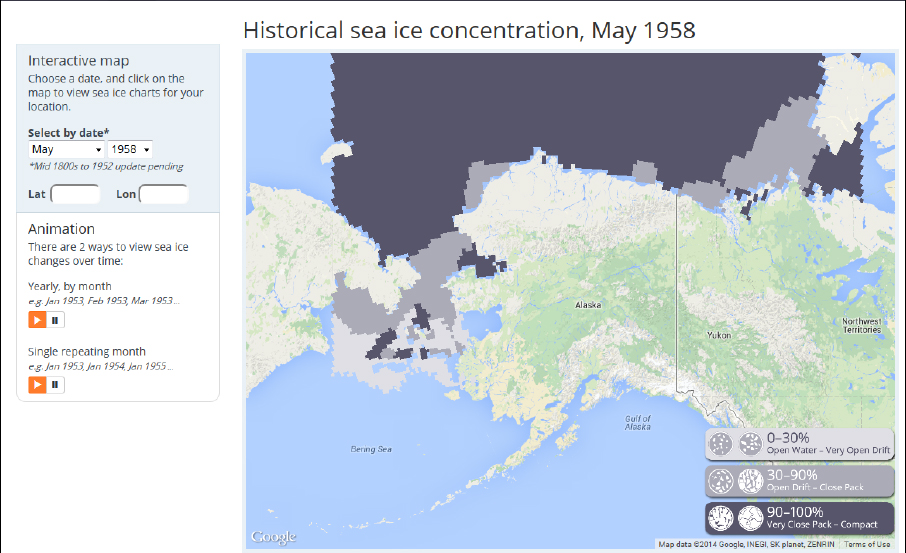
University of Alaska Fairbanks (UAF) is offering a new interactive sea ice map (which they call an atlas), that looks interesting and potentially useful, announced at Alaska Dispatch over the weekend (January 25, 2014: New sea ice map offers a long-term look at climate change).

UAF Sea ice atlas_May 1958 screenshot

At the moment, the years and months available include January 1953 to December 2012. Oddly, 2013 data is not included. The sea ice atlas charts polar bear habitat for the Southern Beaufort and Chukchi Sea subpopulations (including the Bering Sea), as well as the western portion of the Northern Beaufort Sea subpopulation region.
Continue reading

Tracking polar bears in the Beaufort Sea: December map

Here is the December 2013 follow-up to my post on the July track map for female polar bears being followed by satellite in the Beaufort Sea by the US Geological Survey (USGS) – Ten out of ten polar bears being tracked this summer in the Beaufort Sea are on the ice.

See that post for methods and other background on this topic, and some track maps from 2012 (also available at the USGS website here).

The track map for December 2013 is copied below (Figure 1).

There has been little change from November: six of the bears that were being tracked in October were still present (down from ten in July) and one bear that went Arctic walkabout in October has returned and is still in the area. The same seven bears present in November were still being tracked in December but did not move very much. Continue reading

Tracking polar bears in the Beaufort Sea: November map

Here is the November follow-up to my post on the July track map for female polar bears being followed by satellite in the Beaufort Sea by the US Geological Survey (USGS) – Ten out of ten polar bears being tracked this summer in the Beaufort Sea are on the ice.

See that post for methods and other background on this topic, and some track maps from 2012 (also available at the USGS website here).

The track map for November is copied below (Figure 1).

By the end of November, ice covered the entire Alaska coast. Six of the bears that were being tracked in October were still present (down from ten in July) and one bear that went Arctic walkabout in October has returned. So, a total of seven bears were tracked in November.
Continue reading

International polar bear forum Moscow, Dec. 3-6

International Forum on Conservation of Polar Bears
December 3-6, Moscow.

[Updated November 30, 2013]
If you’ve wondered why there’s been so much polar bear hype circulating over the last couple of weeks, the reason is almost certainly this upcoming meeting.

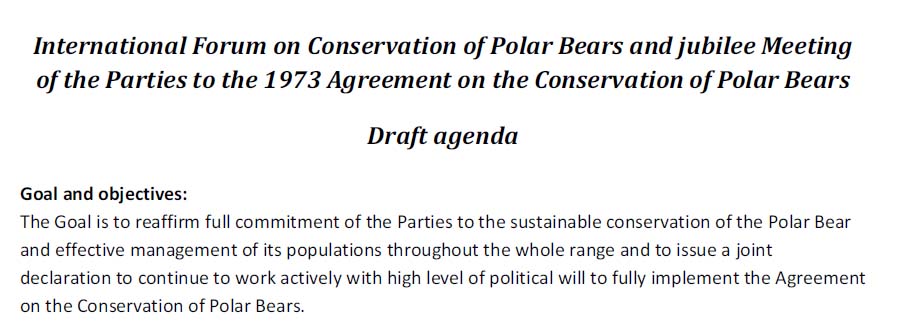
This year marks the 40th anniversary of the signing of an international agreement to protect polar bears from commercial and unregulated sport hunting. Next week, the five Arctic nations that signed the original agreement will meet again, in Moscow, to renew their vows.

Polar bear forum_Moscow_Goals and objectives_01

One of stated goals of the meeting is to redefine the original agreement, which focused on over-hunting (see the complete draft agenda here). Can you guess what the changes will involve?
Continue reading

Barents Sea polar bear status and sea ice declines

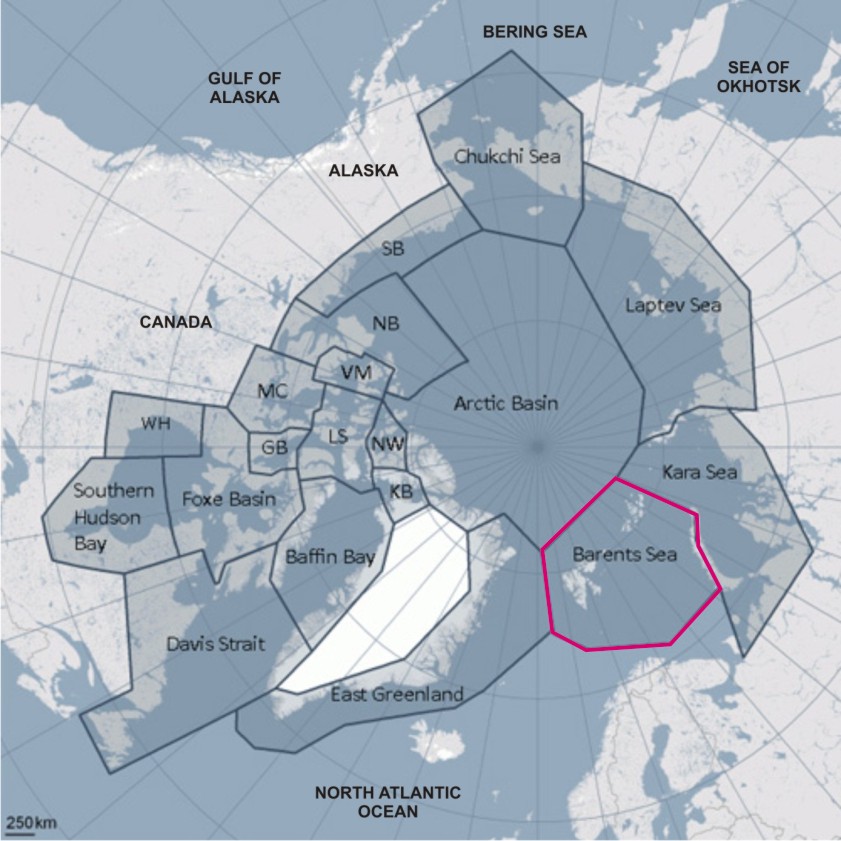
So far, I’ve not discussed the Barents Sea subpopulation in very much detail, except in comparison to other groups. For example, the Barents is considered to be the same type of sea ice “ecoregion” as the Chukchi Sea and the Southern Beaufort (discussed here). Previous studies on the Barents Sea polar bear population (Derocher 2005) indicate it may have recovered from extreme levels of overhunting (discussed here) and had stabilized, or was increasing very slowly, as early as 2002 (discussed here) — similar to what has happened in Davis Strait (discussed here).

Figure 1. Polar bear subpopulations, with the Barents Sea region highlighted; map courtesy the IUCN Polar Bear Specialist Group (PBSG), extra labels added.

Figure 1. Polar bear subpopulations, with the Barents Sea region highlighted; map courtesy the IUCN Polar Bear Specialist Group (PBSG), extra labels added.

The most recent Barents Sea population estimate was done in 2004 (2,650; range ~1900-3600), based on an aerial survey (Aars et al. 2009). Aerial surveys are the only practical method of establishing population counts in regions like this where many bears never set foot on land. The previous estimate for the Barents (1982) was “2,000-5,000” but its accuracy was considered “poor” (discussed here).

The IUCN Polar Bear Specialist Group (PBSG), in their most recent report, lists the Barents Sea population as “data deficient” for status, current trend and estimated risk of decline within 10 years (Obbard et al. 2010:62, Table 1) and the “notes” for this entry say:

Population estimate is based on a new aerial survey. There was likely an increase in the subpopulation size after 1973 until recently. Current growth trend is unknown.

This 2004 estimate is now almost a decade old and potentially no longer an accurate representation of what’s happening in the Barents Sea. The most up-to-date information has not yet been published but it is available online. It’s eye-opening to say the least, if only that it appears to be yet another example of a polar bear population that is so far not showing signs of being harmed by sea ice declines, as I’ve discussed before (here).

[Update October 15, 2013: I’ve simplified the text discussion and figure regarding the Aars and Andersen denning study from the original posted]

Continue reading

Kaktovik polar bears could be back on the ice this weekend

This is a quick follow up on my last post (here) on Kaktovik polar bears of the Southern Beaufort Sea subpopulation.

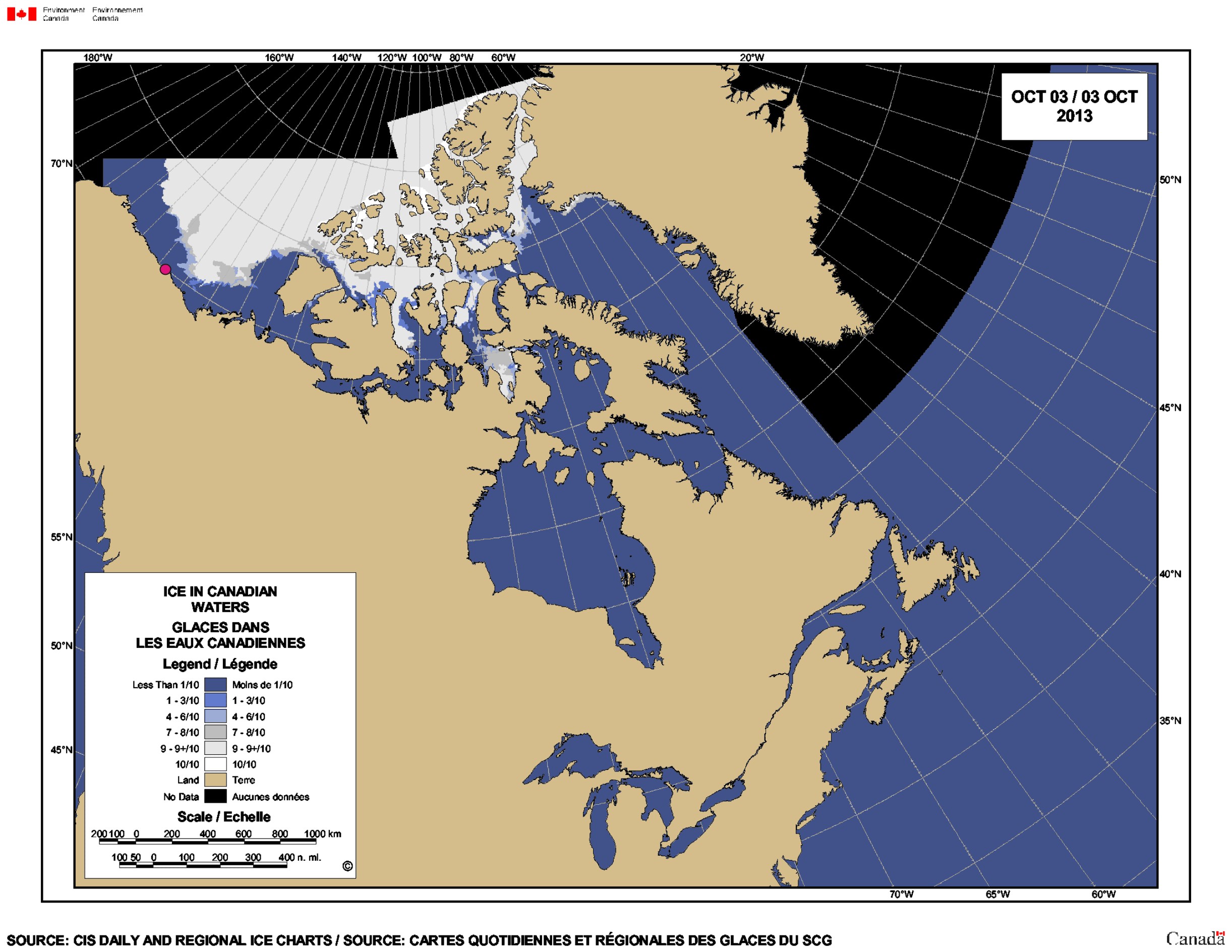
Kaktovik is the bright pink dot on the ice map below (October 3, 2013: click to enlarge), from the Canadian Ice Service – if the ice doesn’t get to the polar bears waiting on shore this weekend, it will be within swimming distance.

Note that this map doesn’t show the shorefast ice that is already forming along the beaches, bridging the gap between land and the offshore ice.

Shorefast ice provides the fall’s first ice platform for polar bears to hunt seals. It doesn’t need to be extensive for the bears to get out there — researchers working in Western Hudson Bay found that an ice concentration of only 10% marked the point when polar bears left the shore.

Kaktovik on CIS chart Oct 3 2013

Polar bears have not been harmed by sea ice declines in summer – the evidence

PB  logo colouredThe polar bear biologists and professional activists of the IUCN Polar Bear Specialist Group (PBSG) continue to insist that since 1979 increasingly smaller amounts of Arctic sea ice left at the end of summer (the September ice minimum) have already caused harm to polar bears. They contend that global warming due to CO2 from fossil fuels (“climate warming” in their lexicon) is the cause of this decline in summer ice.

In a recent (2012) paper published in the journal Global Change Biology (“Effects of climate warming on polar bears: a review of the evidence”), long-time Canadian PBSG  members Ian Stirling and Andrew Derocher (both of University of Alberta) summarized their position this way:

“Climate warming is causing unidirectional changes to annual patterns of sea ice distribution, structure, and freeze-up. We summarize evidence that documents how loss of sea ice, the primary habitat of polar bears (Ursus maritimus), negatively affects their long-term survival”

I’ve spent the last year examining their evidence of on-going harm, but in addition, I’ve looked at the evidence (much of it not mentioned in the Stirling and Derocher paper1) that polar bears have either not been harmed by less sea ice in summer or have thrived in spite of it.

This is a summary of my findings. I’ve provided links to my original essays on individual topics, which are fully referenced and illustrated. You are encouraged to consult them for complete details. This synopsis (pdf with links preserved, updated; pdf with links as footnotes, updated) complements and updates a previous summary, “Ten good reasons not to worry about polar bears” (pdf with links preserved; pdf with a foreword by Dr. Matt Ridley, with links as footnotes).

Update 8 September 2013: to include links to my post on the recently published Chukchi population report; updated pdfs have been added above.

Update 22 January 2014: added figure comparing March vs. September sea ice extent using the same scale, from NOAA’s “2014 Arctic Report Card,” discussed here.
Continue reading

Biologists spreading misinformation: hybridization with grizzlies not due to polar bears moving inland

A paper published last week in the journal Science, written by a team of biologists and atmospheric scientists, expounds on a possible dire future for a range of Arctic animals. It’s called, “Ecological consequences of sea-ice decline” and surprisingly, polar bears are discussed only briefly.

However, with the inclusion of one short sentence, the paper manages to perpetuate misinformation on grizzly/polar bear hybridization that first appeared in a commentary essay three years ago in Nature  (Kelly et al. 2010)1. The Post et al. 2013 missive contains this astonishing statement (repeated by a Canadian Press news report):

Hybridization between polar bears and grizzly bears may be the result of increasing inland presence of polar bears as a result of a prolonged ice-free season.

Lead author of the paper, Professor of Biology Eric Post, is quoted extensively in the press release issued by his employer (Penn State University, pdf here). In it, Post re-states the above sentence in simpler terms, removing any doubt of its intended interpretation:

“… polar and grizzly bears already have been observed to have hybridized because polar bears now are spending more time on land, where they have contact with grizzlies.

Both statements are patently false. All recent hybridization events documented (2006-2013) occurred because a few male grizzlies traveled over the sea ice into polar bear territory and found themselves a polar bear female to impregnate (see news items here and here, Fig. 1 below). These events did not occur on land during the ice-free season (which is late summer/early fall), but on the sea ice in spring (March-May).

Grizzlies have been documented wandering over the sea ice of the western Arctic since at least 1885 (Doupe et al. 2007; Fig. 2, below) and the presence in this region of hybrid grizzly/polar bear offspring is not an indicator of declining summer sea ice, whether due to global warming or natural causes, or some combination thereof.

Continue reading