Posted onJune 25, 2024|Comments Off on Arctic sea ice at the summer solstice: more polar bear habitat than 2022 after hottest year on record
We are just into the 2024 sea ice melt season in the Arctic with no signs of any big, dramatic changes despite claims that 2023 was the warmest year on record (since 1850). There is still abundant sea ice habitat for polar bears ahead of the summer months (July-September) when Arctic ice melts back considerably.
Polar bears in Western Hudson Bay are still on the ice despite vast open water levels normally signaling “breakup” has happened: the wind-driven ice is packed tight against the western shore and the bears are still on it.
Posted onSeptember 22, 2023|Comments Off on 17 years of near-zero trend in September sea ice demolishes claim that more CO2 means less sea ice
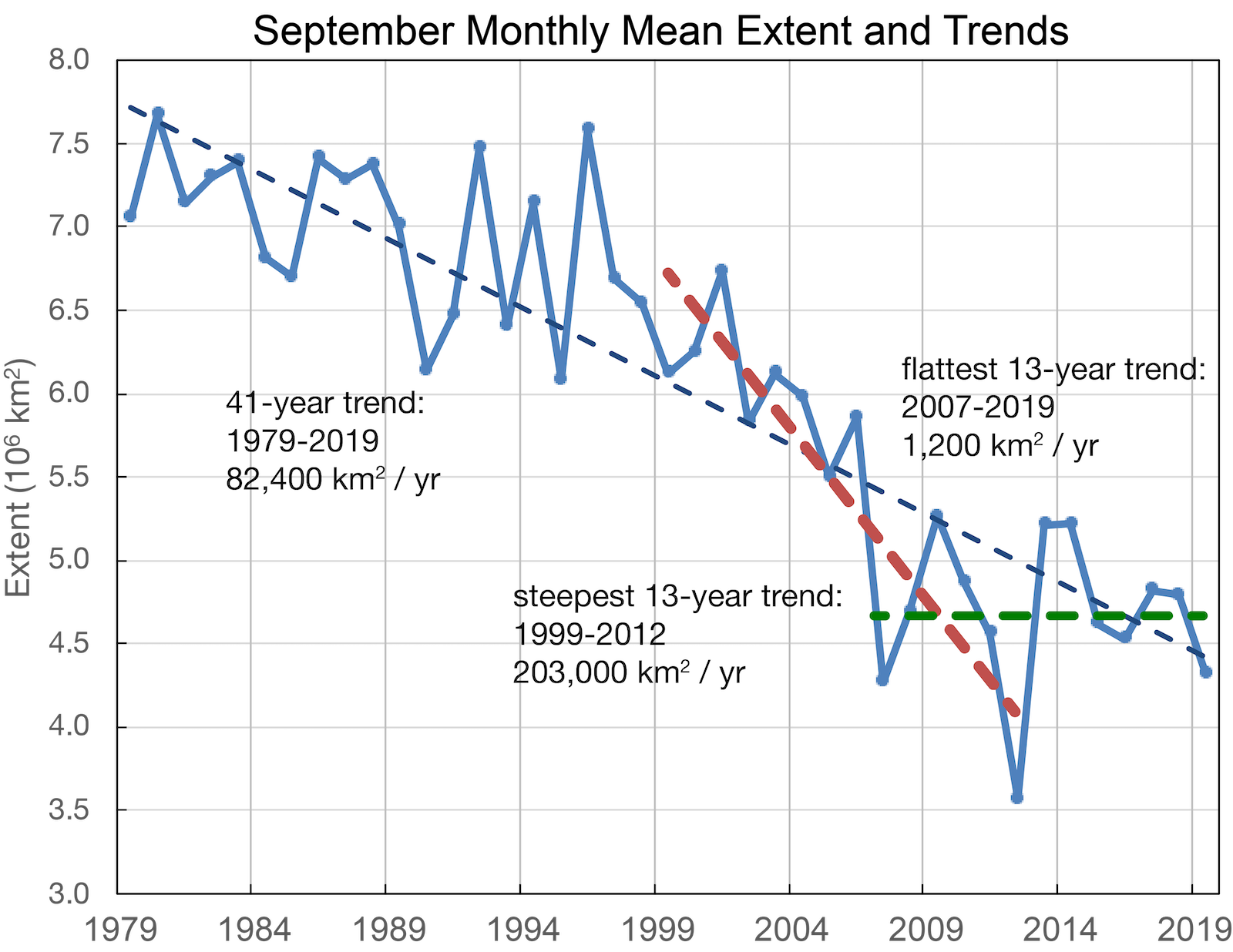
If the hottest year ever can’t precipitate ‘ice-free’ conditions in September, what’s it going to take? Arctic sea ice failed to nose-dive again this year, undoubtedly disappointing expects who have been anticipating a ‘death-spiral’ decline for ages. Arctic sea ice hit its seasonal low sometime around mid-September this year and although the precise value hasn’t been published, the average September ice coverage will likely be about 4.2 mkm2 once it gets announced in early October.
This means we have now had 17 years of a near-zero trend for September sea ice, extending the nearly-flat trend NSIDC sea ice experts acknowledged four years ago. This surely busts a huge hole in the prevailing concept that more atmospheric CO2 causes less summer sea ice. Note that CO2 levels measured in August 2023 were 419.7 parts per million (ppm), compared to 382.2 in August 2007, a rise of 37.5ppm with no corresponding decline in summer sea ice (and vs. 314.2 ppm in 1960). Measured in metric tons, CO2 emissions due to fossil fuels rose from 31.1 billion in 2007 to 37.1 billion in 2021 (last year of data), again with no corresponding decline in summer sea ice.
Posted onAugust 27, 2022|Comments Off on Last WH polar bears ashore even later than 2009 as Hudson Bay finally becomes ice-free
According to Andrew Derocher this morning, the last of his teams’ tagged polar bears have come ashore in Western Hudson Bay, in the last week of August. That makes two years out of the last three when the tagged WH bears came ashore as late, or later than, they had done in 2009 (a very cold year when they were onshore by about 20/21 August), something Derocher failed to mention during a CBC Radio interview also published today.
Don’t forget: this is the subpopulation that polar bear specialists use to model the future of all bears, everywhere in the Arctic but only use stale data from the 2000s because including more recent information would give a much more optimistic picture.
Meanwhile, no further reports from Churchill about problem bears: the last one issued was for the first week in August. Time will tell at freeze-up whether this will be yet another very good year for Western Hudson Bay bears.
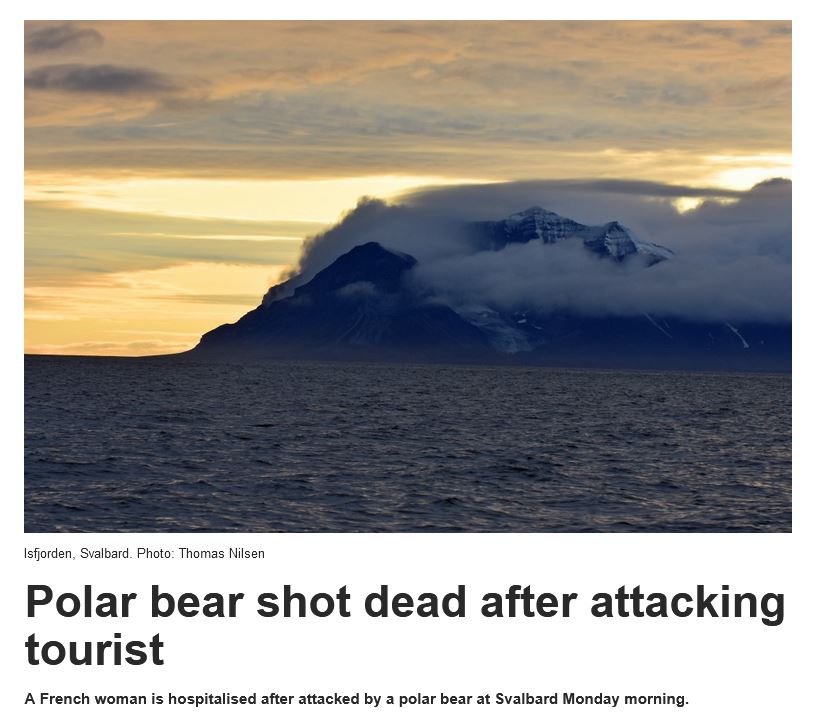
Posted onAugust 8, 2022|Comments Off on Polar bear shot after early morning attack on French tourist camping in Svalbard
There was another polar bear attack on Svalbard this morning, similar to others in previous years. As usual, the body condition of the bear was not mentioned (whether fat or thin) and photos of it were not published. The woman survived, the bear did not.
Posted onJuly 23, 2022|Comments Off on Thick sea ice in the Western Arctic is not good habitat for polar bears, seals, or walrus
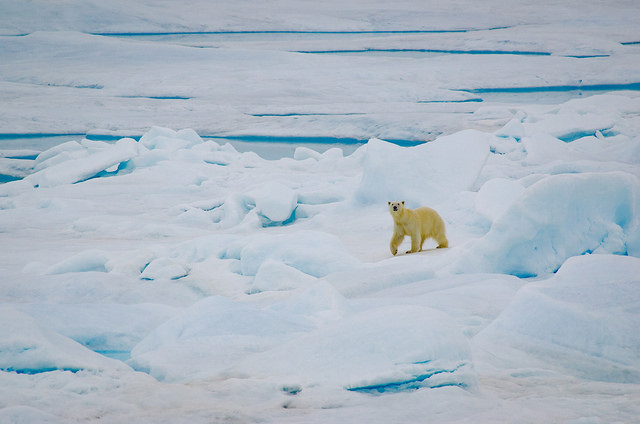
A few weeks into the Arctic summer (July-September), sea ice in the Beaufort and Chukchi Seas is dominated by thick, multi-year ice.
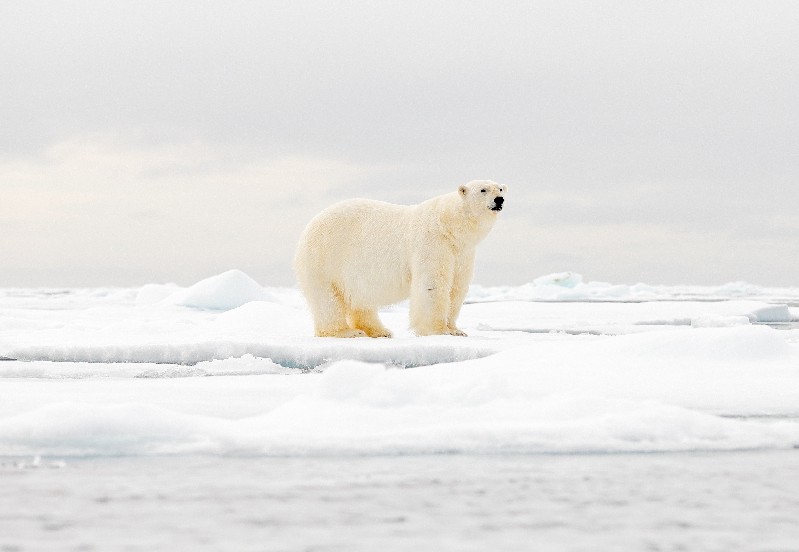
At this time of year, multi-year ice is an important refuge habitat for many polar bears when seasonal ice melts out. However, it provides few opportunities for hunting seals. In fact, it is nearly as devoid of food as is the shore during the melt season. Consequently, most polar bears eat little over the summer whether they are on land or on sea ice due to the scarcity of seals.
Posted onJuly 14, 2022|Comments Off on Arctic sea ice still quite abundant for early summer
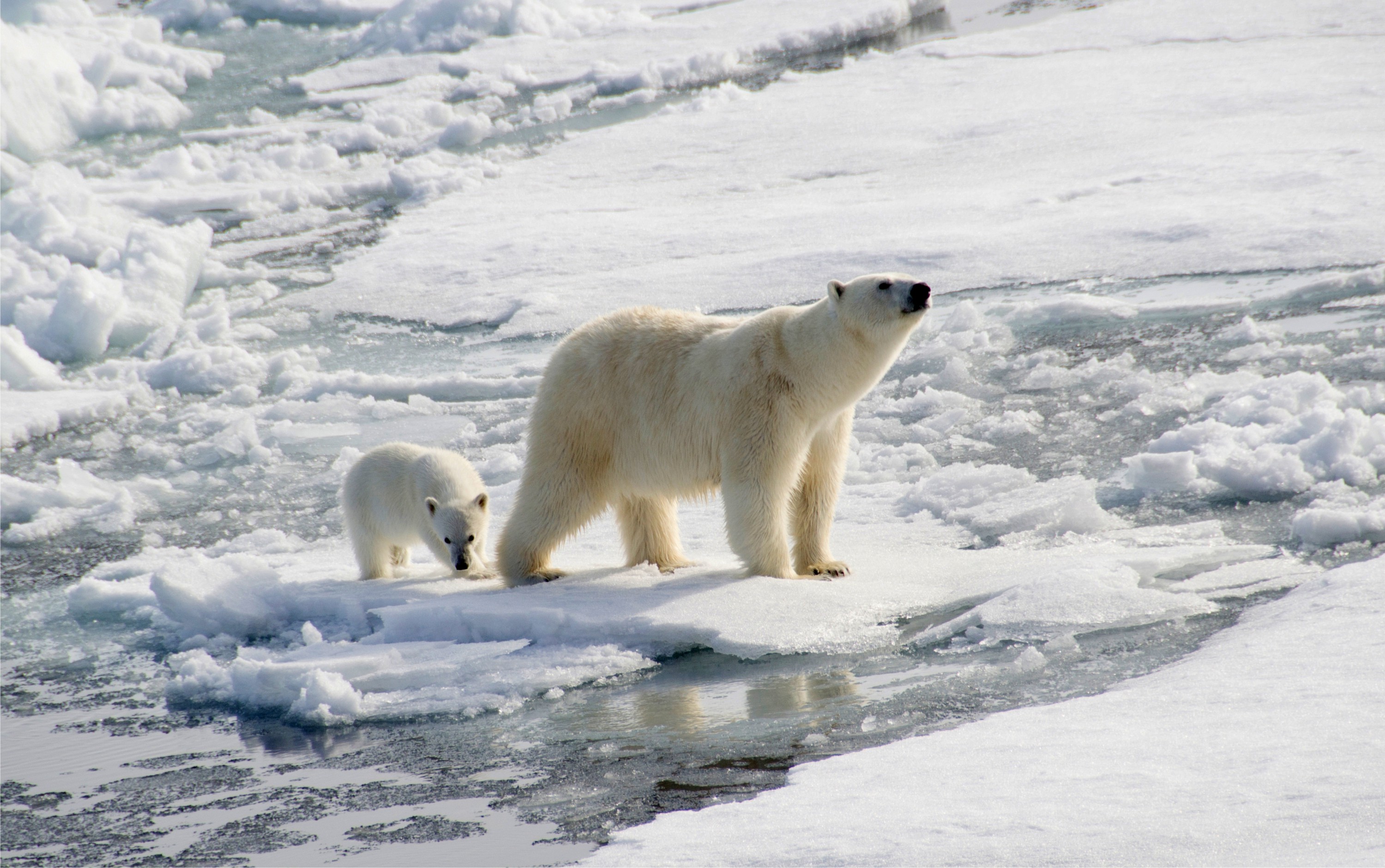
Despite rhetoric to the contrary, there is still plenty of sea ice over Arctic regions this summer, supplying feeding platforms for polar bears, ice-dependent seals, and walrus cows nursing their young calves. Forget about whether the numbers are below or above some short-term average, there is no catastrophe in the making for marine mammals in the Arctic at this time.
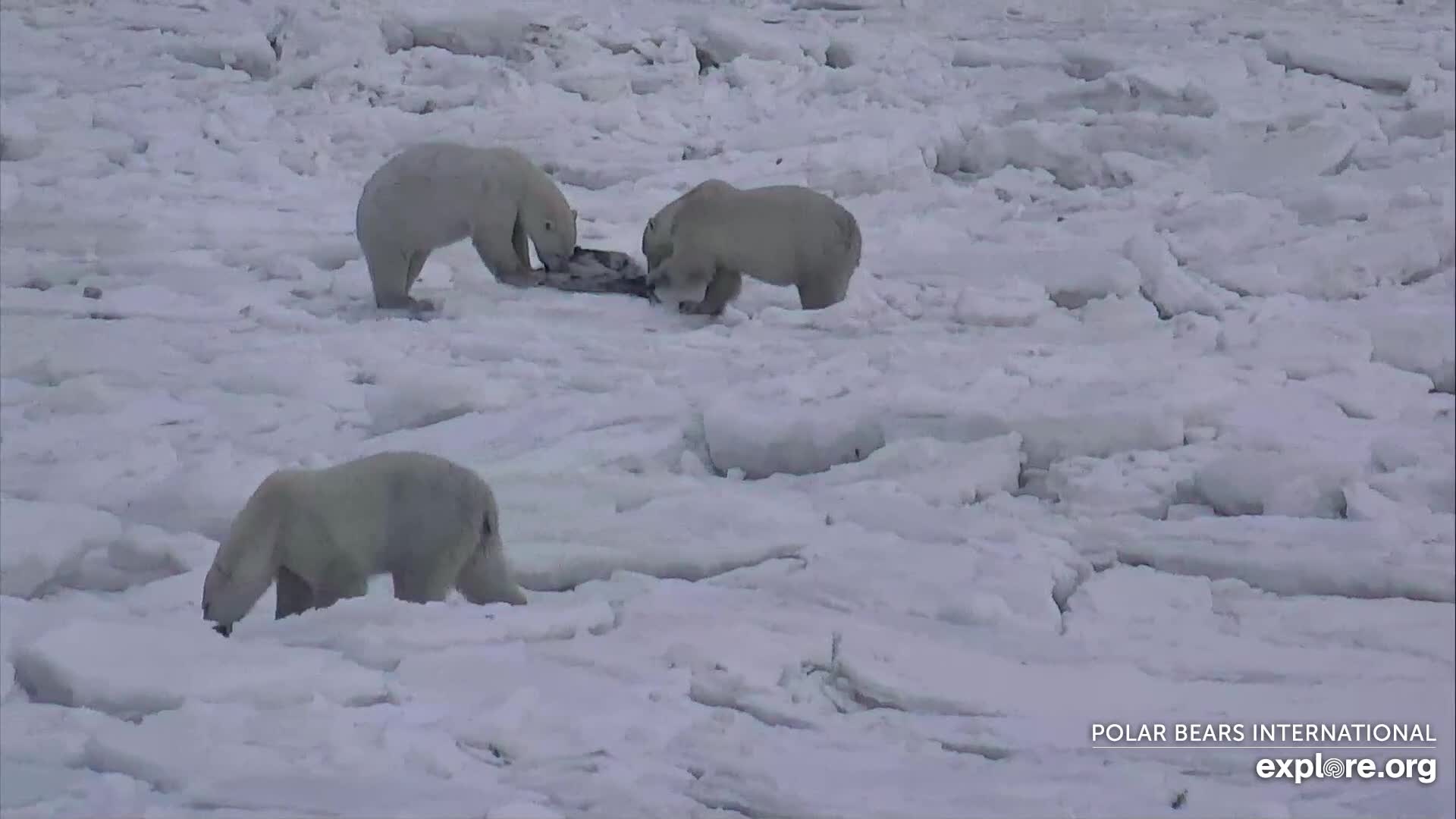
Remember, by early summer, young seals have left the surface of the ice and are in the water feeding; predator-savvy adults and subadults are hauled out on broken chunks of ice moulting their hair-coat. They may look like sitting ducks but polar bears have a hard time catching them because the seals are vigilant and have many escape routes available (due to all the open water). Most polar bears in Hudson Bay are still on the ice (you’ll see why below): the live cams near Churchill set up to watch polar bears are presently showing images of ravens with sea ice in the background, not bears.
This post is predominantly sea ice charts for mid-July, what we in the science field call observational evidence, aka ‘facts’. Keep in mind that satellites used to produce these images have an especially hard time distinguishing ice topped with melt water from open water, which means much more ice useful to these marine mammals is almost certainly present than is shown in the charts (as much as 20% more in some regions).
Posted onJune 29, 2022|Comments Off on Claim: data exists showing polar bear body condition improves over summer on sea ice
Do polar bears increase their body condition if they stay on the sea ice over the summer? Do they continue to hunt successfully from broken ice in July and early August in areas like Hudson Bay where ice eventually melts out completely? There seems to be an assumption that they do but one polar bear specialists repeatedly claims there is data showing this is the case.
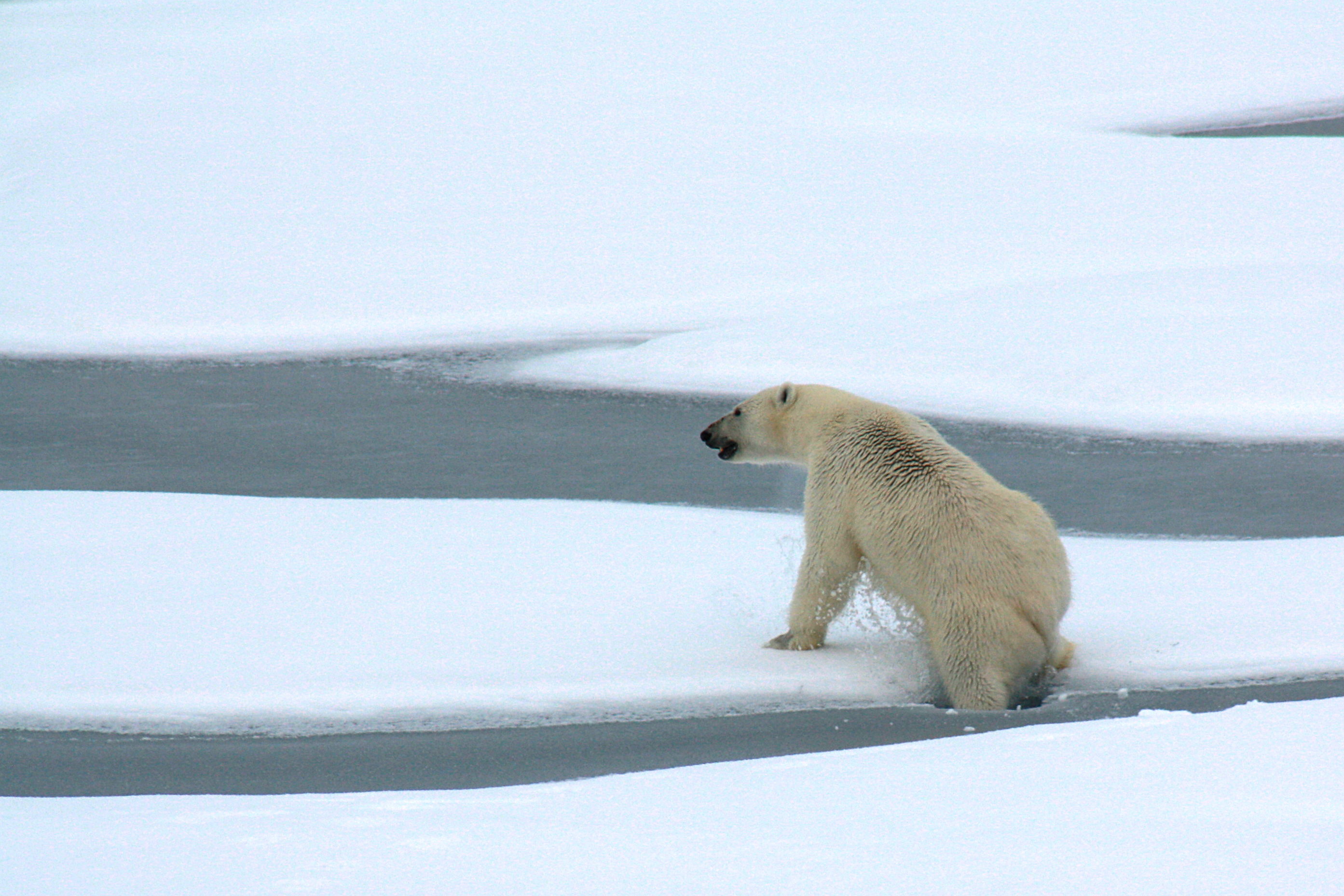
A polar bear breaks through thin Actic Ocean ice Aug. 23, 2009.
“Anyone saying sea ice at this time of year doesn’t affect polar bears is ignoring research showing their body condition continues to increase through summer if they’re out on the ice.” [Andrew Derocher 28 June 2022]
I would seriously like to know which paper or papers this data appears in but of course, he doesn’t provide that information. Instead, it’s ‘trust me, I’m the expert’.
Posted onSeptember 20, 2020|Comments Off on Potential impact of the second-lowest sea ice minimum since 1979 on polar bear survival
The annual summer sea ice minimum in the Arctic has been reached and while the precise extent has not yet been officially determined, it’s clear this will be the ‘second lowest’ minimum (after 2012) since 1979. However, as there is no evidence that polar bears were harmed by the 2012 ‘lowest’ summer sea ice this year’s ‘second-lowest’ is unlikely to have any negative effect.
This is not surprising since even 2nd lowest leaves summer ice coverage in the Arctic at the level sea ice experts wrongly predicted in 2005 wouldn’t be seen until 2050 (ACIA 2005; Amstrup et al. 2007; Wang and Overland 2012) and this is the same amount of summer sea ice that polar bear experts incorrectly predicted would cause 2/3 of all polar bears to disappear. My book explains how it all went wrong: The Polar Bear Catastrophe That Never Happened.
In this summary of how polar bears have been doing since the the lowest sea ice minimum in 2012, I show that contrary to all predictions, polar bears have been thriving despite reduced summer ice in the Barents, Chukchi and Southern Beaufort Seas, and because of unexpectedly short ice-free seasons in Hudson Bay and less multiyear ice in the Canadian Arctic Archipelago.
UPDATE 21 September (10:20 PT): NSIDC has just announced the Arctic sea ice extent minimum (preliminary) for 2020 at 3.74 mkm2 reached on 15 September. See full report here.
Posted onAugust 27, 2020|Comments Off on Amid crying over low Arctic ice, W Hudson Bay polar bears leave ice as late as 2009
This year, the last collared Western Hudson Bay polar bear to leave the ice left as late, or later, than the last collared bear did in 2009 (which was an unusually late breakup year) and so far, all bears spotted have been in good physical condition despite inhabiting one of the most southern regions of the Arctic. All the while, sea ice experts have been hand-wringing about low Arctic sea ice –– in general and as polar bear habitat.
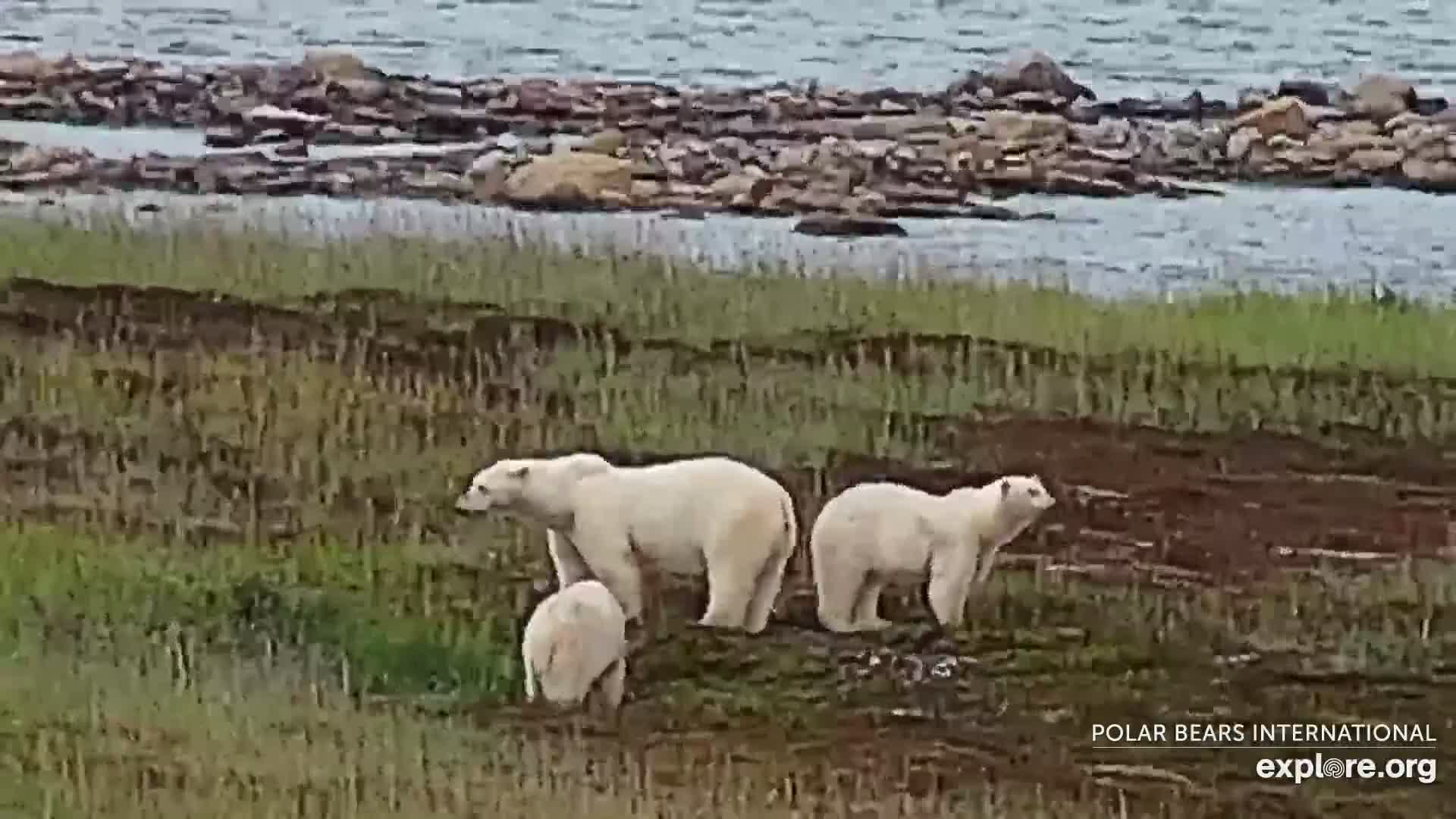
A female with two yearling cubs on the shore of Wakusp National Park, Western Hudson Bay on 24 August 2020. Taken via livecam from almost a mile away.
Watch polar bear habitat reform in the Canadian Arctic: “last 10 days” Canadian Ice Service animation (works anytime) HERE.
See Quote archive for details.








 polarbearscience
You must be logged in to post a comment.