Author Archives: susanjcrockford

Tracking polar bears in the Beaufort Sea – October 2014 map shows most ice since 2010

Here is the October 2014 follow-up to my post on the July 2013 track map for female polar bears being followed by satellite in the Beaufort Sea by the US Geological Survey (USGS) – “Ten out of ten polar bears being tracked this summer in the Beaufort Sea are on the ice.”

See that post for methods and other background on this topic, and some track maps from 2012 (also available at the USGS website here). The USGS track map for October 2014 is copied below (Fig. 1).

For the end of October, there was more ice in the Southern Beaufort this year than there has been since 2010.

Eight bears (all females) were on the ice and four were onshore. Only six of the eight on-ice bears were actually in the Southern Beaufort – the other two were in the Chukchi Sea (west of Point Lay, see discussion here).

Note that the recent boundary change between the Southern and Northern Beaufort subpopulations (the US/Canada boundary of the Southern Beaufort), reported here, has not addressed the fact that many western “Southern Beaufort” bears move into the Chukchi Sea. Continue reading

A more optimistic view of Churchill polar bears and Hudson Bay freeze-up

Finally, an unbiased first-hand report about Churchill polar bears and freeze-up on Hudson Bay.

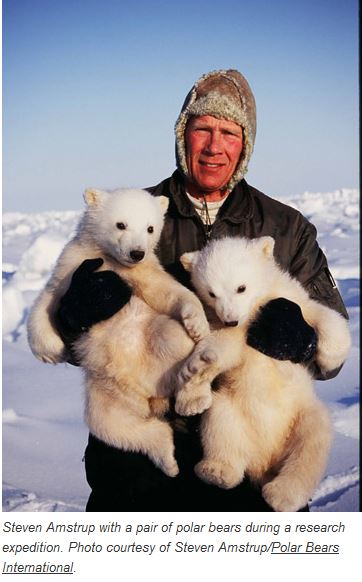
Over the last few weeks, biologists Andrew Derocher and Steve Amstrup have been repeating their tired old tales of doom and gloom about the polar bears around Churchill and I’ve done my best to refute the worst of their nonsense.

Figure 1. Polar bear female with cub, 2009, Churchill, Western Hudson Bay. Wikipedia.

Figure 1. Polar bear female with cub, 2009, Churchill, Western Hudson Bay. Wikipedia.

To that effort we can now add this report from PolarBearAlley, where Kelsey Eliasson has posted a good-news story about the bears of Cape Churchill and the progress of freeze-up, including sightings of a number of mothers with cubs.
Continue reading

No proof walrus are “struggling from the loss of sea ice” as new Earthjustice lawsuit claims

A new day, a new lawsuit by environmentalists: this time, the species-on-a-pedestal is the same population of Chukchi Sea walrus that generated a news frenzy last month, which apparently still has legs.

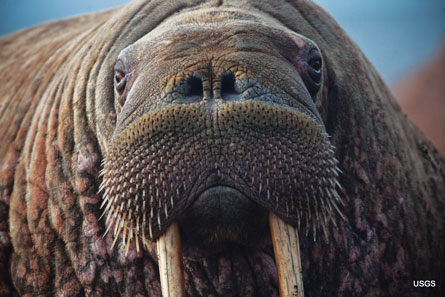
Walrus puss_USGS_IMG_4763
Continue reading

Polar bear listed as a migratory species by UNEP to restrict oil exploration & extraction

In a press release this afternoon, the Convention on the Conservation of Migratory Species of Wild Animals (CMS) announced it had added polar bears to their list of Appendix II migratory species. [CMS is a pseudo-arm of the UN Environment Programme, the UNEP1]

polarbear_new_USGS
The Polar Bear, the largest apex predator on Earth is affected by climate change that has led to the loss of 2 million m2 of sea ice. The Appendix II listing introduces the global perspective of existing threats to Arctic species stemming from shipping and oil exploration, making it a case for all CMS Parties.

But why formally list the polar bear as a migratory species when it is protected under several other national and international programs?

UPDATED 10 November 2014, see additions below
Continue reading

BBC provides a forum for desperate biologists: “Will polar bears become extinct?”

Yesterday, the BBC published a story that gave the two most alarmist polar bear researchers on the planet a forum to market their ‘polar bears are doomed’ message. This time the desperation shows: watch how these biologists move the goal-posts, make claims so misleading they border on lies, and pretend they don’t have big, big trouble with their predictive models.

Amstrup_only solution_with 2 cubs_Oct 8 2014

Amstrup photo that accompanied an interview last month.

Continue reading

Polar bear specialist says there are 800 polar bears in W Hudson Bay, gov’t says ~1,000-1,500

Activist polar bear biologist Andrew Derocher (University of Alberta) may have gone too far this time. In an interview with Yahoo News, Derocher is quoted as saying:

“When I first started here about 30 years ago the population was about 1,200 bears and now we’re down to about 800,” team member Andrew Derocher, a biology professor at the University of Alberta, said in a phone interview from the tundra outside Churchill.”  [my bold]

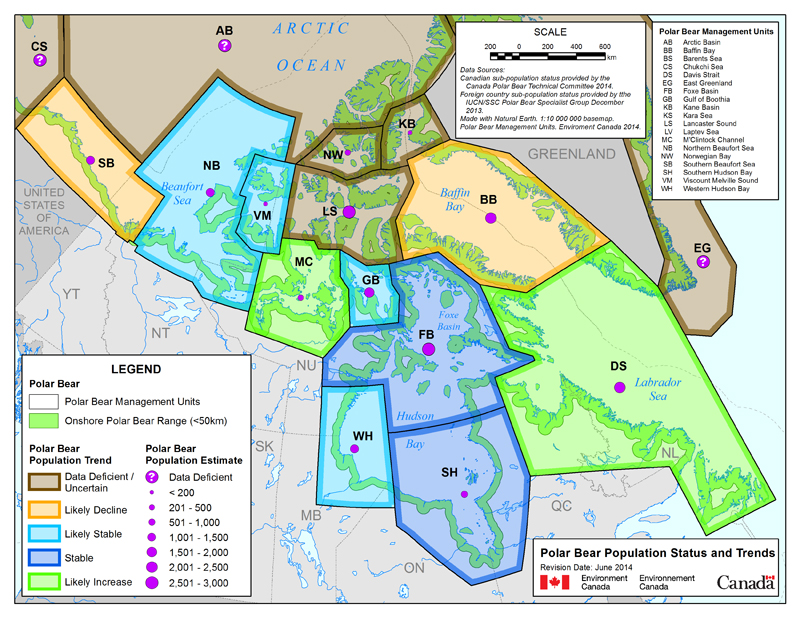
Figure 4. Environment Canada's "Map 3: 2014 Canadian Polar Bear Subpopulation and Status Map," original here.

Environment Canada’s “Map 3: 2014 Canadian Polar Bear Subpopulation and Status Map,” original here. Click to enlarge.

However, the Polar Bear Technical Committee of Environment Canada says differently: it estimates there are ~1000-1,500 bears in Western Hudson Bay (WH) and that the population is probably stable, as their new status map (dated June 2014, copied above) shows. A recent (2014) peer-reviewed paper by Stapleton and colleagues (discussed here) provides the data for that estimate.
Continue reading

Polar bear habitat update: what a difference a year makes to sea ice coverage in Canada!

There is far more ice — and far more concentrated ice — in Canada this year than on this day last year. That’s good news for most polar bear populations.

[And, it turns out, more ice total this year on this date than there has been since 2001!]

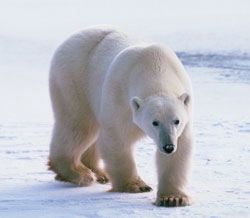
Polar bears off Churchill_2000-11-20_wikipedia

I’ve made a composite 2014/2013 ice map for 4 November that tells the story (courtesy daily Canadian Ice Service sea ice maps).
Continue reading

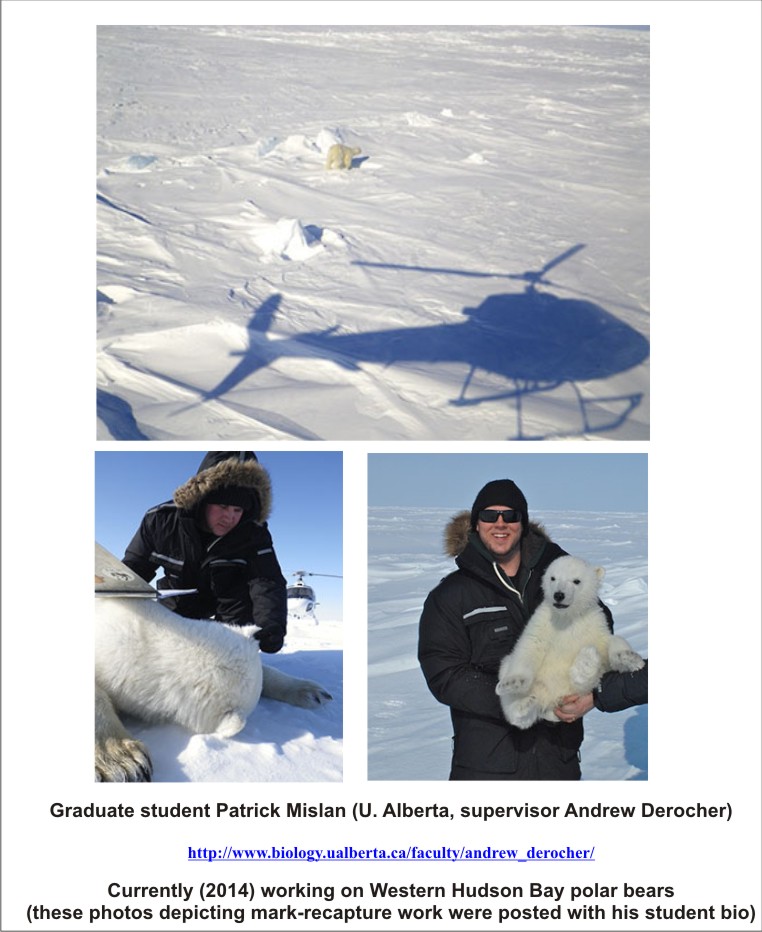
Polar bear biologists doing mark-recapture work in Hudson Bay may have misled the world

What exactly are Western Hudson Bay (WHB) polar bear researchers hiding? Since 2004, research on the body condition and cub production of Western Hudson Bay (WHB) polar bears has been carried out but none of the results of these mark-recapture studies have been made public.

U Alberta student Mislan bio photos_PolarBearScience

The researchers all claim that WHB polar bears are struggling to survive because of recent sea ice changes but won’t release the 10 years worth of updated information they possess on the bears or the sea ice.

Continue reading

Polar bear habitat update – Sea ice starting to form on Hudson Bay

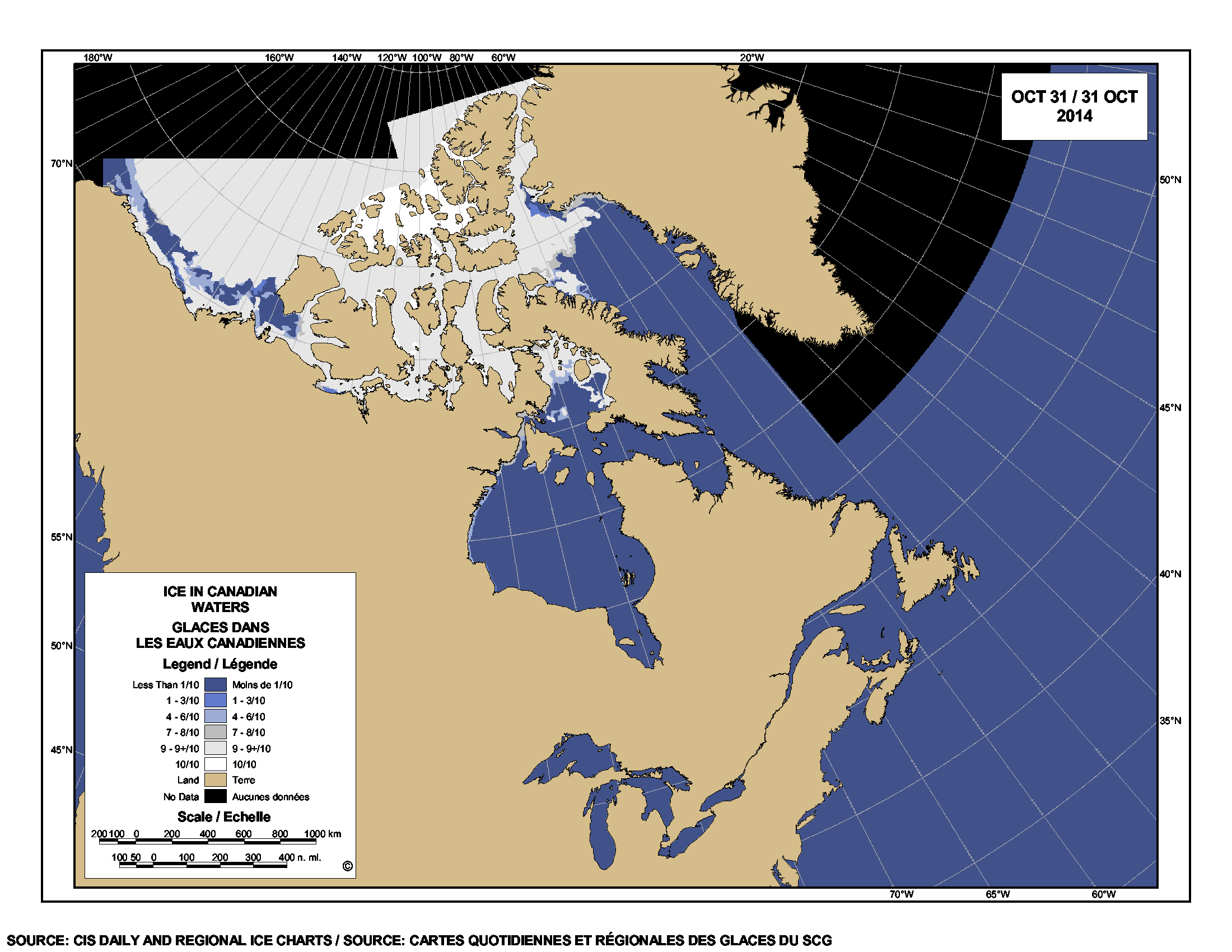
Is that ice I see forming along the shore of Hudson Bay, just in time for Hallowe’en? Not enough to resume hunting but a sign that freeze-up can’t be too far off. See the ice map below and this photo posted at PolarBearAlley confirming the presence of slushy ice on the shore near Churchill.

Sea ice extent Canada 2014 Oct 31 CIS

[Map above from Canadian Ice Service updated daily, click to enlarge]

Continue reading

W Hudson Bay polar bear population no longer “declining” – where are the headlines?

Why are the #saveourseaice folks at Polar Bears International, who have being working in Western Hudson Bay for decades, not dancing in the streets of Churchill? Environment Canada’s Polar Bear Technical Committee upgraded the status of Western Hudson Bay polar bears from “declining” to “likely stable” four months ago (details here). Why has this fabulous news not made major headlines around the world?

Figure 4. Environment Canada's "Map 3: 2014 Canadian Polar Bear Subpopulation and Status Map," original here.

Figure 1. Environment Canada’s “Map 3: 2014 Canadian Polar Bear Subpopulation and Status Map,” original here. Western Hudson Bay is “WH.”

After years of being told by polar bear specialists and activists organizations like Polar Bears International and the World Wildlife Fund that the Western Hudson Bay (WHB) population is already suffering mightily because of global warming, it now appears that is far from the truth.

Continue reading