Author Archives: susanjcrockford

Tracking polar bears in the Beaufort Sea – September 2014 map

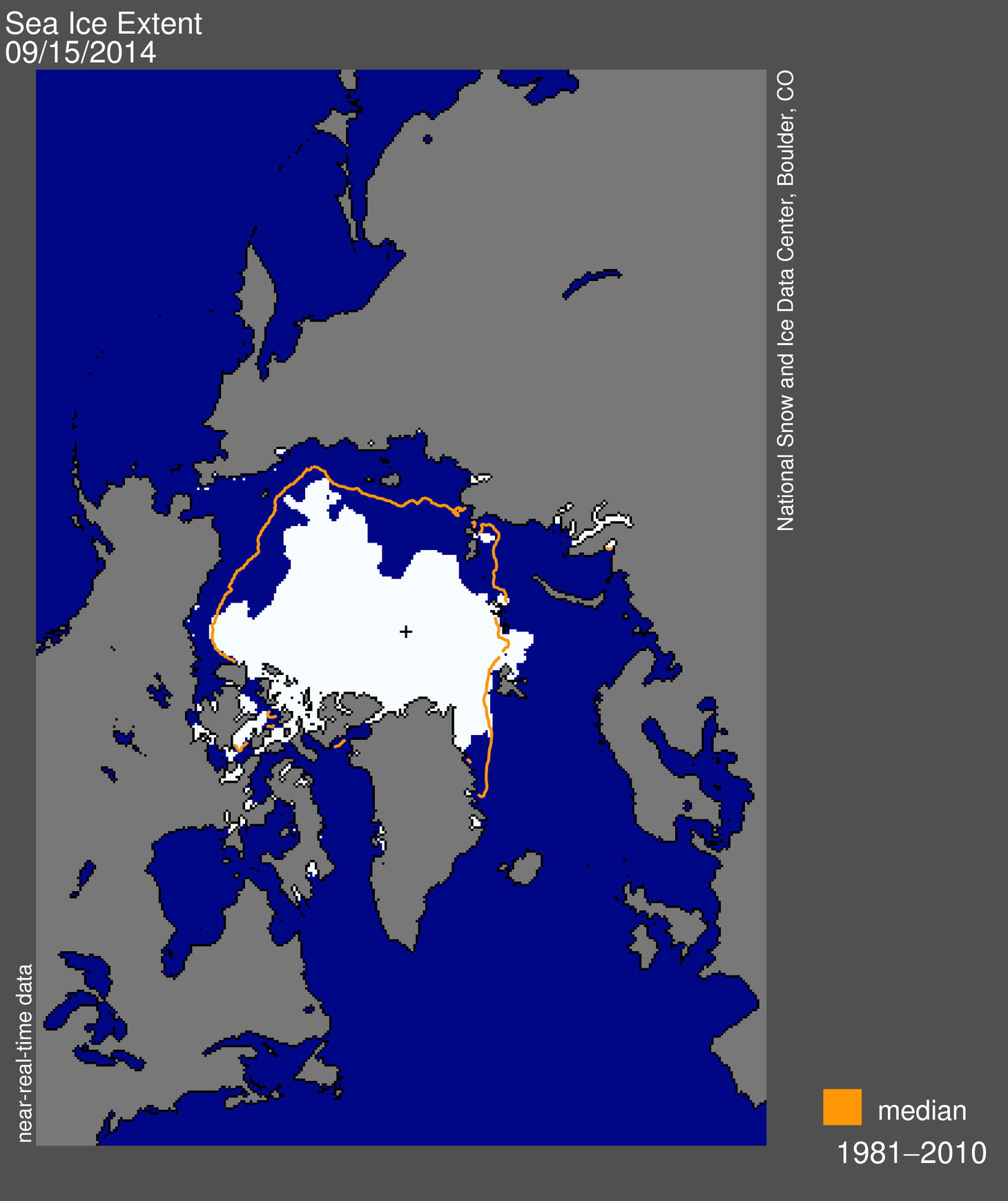
Here is the September 2014 follow-up to my post on the July 2013 track map for female polar bears being followed by satellite in the Beaufort Sea by the US Geological Survey (USGS) – “Ten out of ten polar bears being tracked this summer in the Beaufort Sea are on the ice.”

See that post for methods and other background on this topic, and some track maps from 2012 (also available at the USGS website here).

The USGS track map for September 2014 is copied below (Fig. 1).

At the end of September, with sea ice starting to rebuild, it appears there were 8 bears on the ice and three on land.

The situation for September was not very much different from August, except that two of the 11 bears (up from one) were on the ice in the Chukchi Sea in September, a phenomenon that was recently acknowledged to have affected the last population estimate for the Southern Beaufort subpopulation.
Continue reading

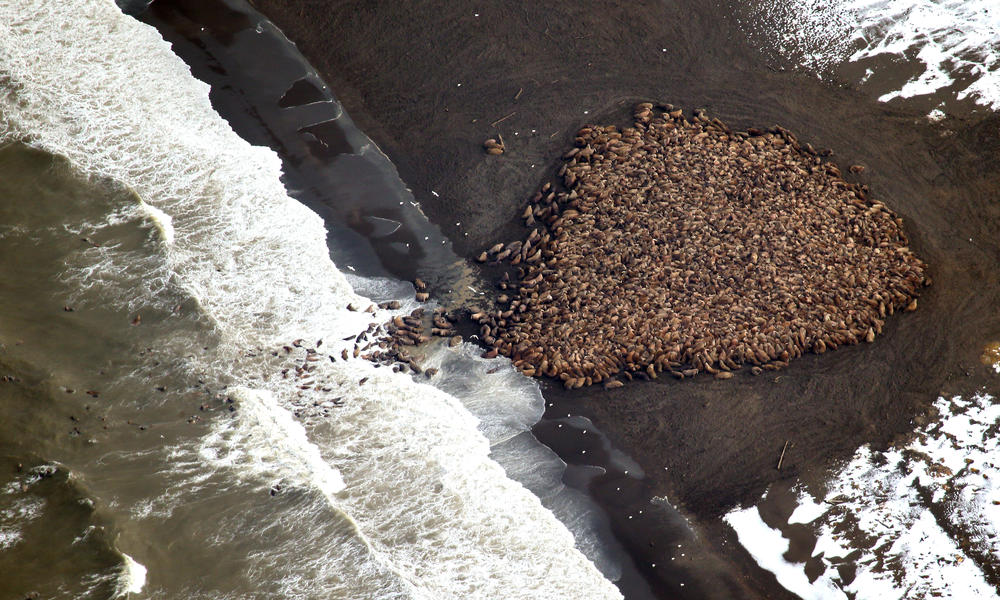
High walrus numbers may explain why females and calves are hauling out in droves

Are the recent mass gatherings of females and calves on the beaches of western Alaska and the Russian Far East a sign that population are again close to the limit the habitat can support, as they were in the 1970s?

At the risk of belabouring the point that lack of sea ice does not seem to be a reasonable explanation for this phenomenon (see my last two posts, here and here, and Andrew Montford’s excellent additions here), I think this is a possibility that needs to be considered.

Walruses at Point Lay Sept 27 2014 NOAA CMDA0007_sm

2014 Point Lay, NOAA photo

Walrus are well protected in the US and Russia, and population numbers have risen again since the 1990s, after significant declines in the early 1900s and again in the 1980s.

A paper from the late 1980s suggests that a return to high population numbers may be a more plausible cause for mass gatherings of females and calves that lead to stampede deaths than does reduced sea ice due to global warming.

Have a look and see what you think. It may not be the only reason but it may be a major contributing factor.

Continue reading

Mass gatherings of walrus follow-up – sea ice maps for 1978 and 1972

Walruses as polar bear prey and sea ice were on my mind last night and I remembered that we DO have detailed sea ice information for 1978 and 1972 – from the sea ice atlas put together by University of Alaska Fairbanks (UAF), which has ice concentration maps for Alaska going back to 1850 — and for every year up to 2013 (reported previously here).

Chukchi Sea walrus, June 2014. US Fish and Wildlife Service.

Chukchi Sea walrus, June 2014. US Fish and Wildlife Service.

I’ve copied some of the ice maps below.

It is clear that ice was available close to Wrangel Island in 1972 when walruses chose to haul out on the island in huge numbers. And in 1978, there was ice present to the north of the walrus herd, but they had moved away from the ice to get to St. Lawrence Island, where they hauled out in large numbers.

This means it is more likely that food resources were the issue, not sea ice.
UPDATE OCTOBER 3 2014:

See another interesting follow-up elsewhere: Walrus inconsistencies
Continue reading

Mass haulouts of Pacific walrus and stampede deaths are not new, not due to low ice cover

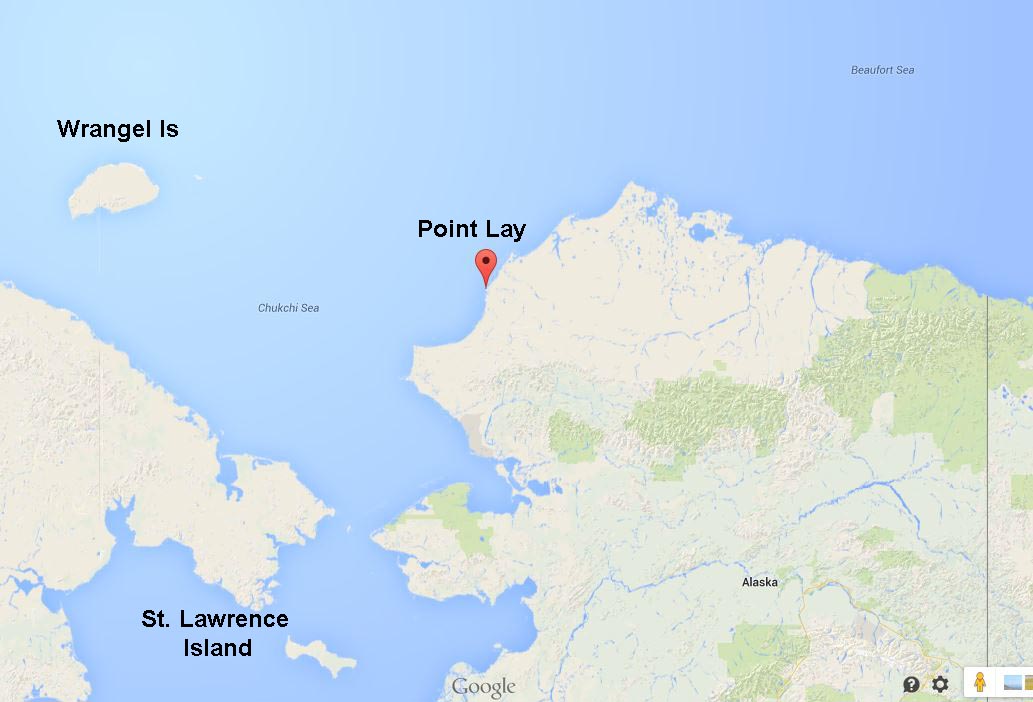
Large haulouts of walruses — such as the one making news at Point Lay, Alaska on the Chukchi Sea (and which happened before back in 2009) — are not a new phenomenon for this region over the last 45 years and thus cannot be due to low sea ice levels. Nor are deaths by stampede within these herds (composed primarily of females and their young) unusual, as a brief search of the literature reveals.

Pt Lay map Google marked

The attempts by WWF and others to link this event to global warming is self-serving nonsense that has nothing to do with science.

UPDATE October 3, 2014: See below. Also, do see follow-up posts here, here, and especially, here.

UPDATE October 23, 2014: A briefing paper summary is here and a video version of that paper (“The Walrus Fuss” — 3 1/2 minutes long) here.

There is also a follow-up post on the situation here.

Continue reading

Natural selection helps polar bears adapt to sea ice variability – which means some bears die

Evolution is not just for the long-term – natural selection also goes on over short time periods. In the case of polar bears, this adaptation is almost certainly critical for its long-term survival.

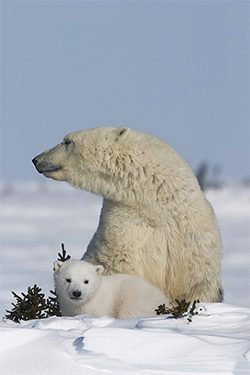
Hudson Bay female with cub_Wapusk_Thorsten Milse_Gov CA

Hudson Bay female with cub Wapusk National Park, Thorsten Milse, Government of Canada

Not all polar bears are identical — that is the reality that allows natural selection to operate.

I will argue that early breakup years in Western Hudson Bay weed out individual polar bears that do not have the physiological or behavioral characteristics necessary to be useful members of the population – and that this is a good thing for the entire population.

Continue reading

About the time I asked a challenging question at a global warming workshop

When you really want to challenge a speaker at a scientific meeting or public lecture, deciding what’s the best question to ask is often difficult. Here’s an example that might inspire you.

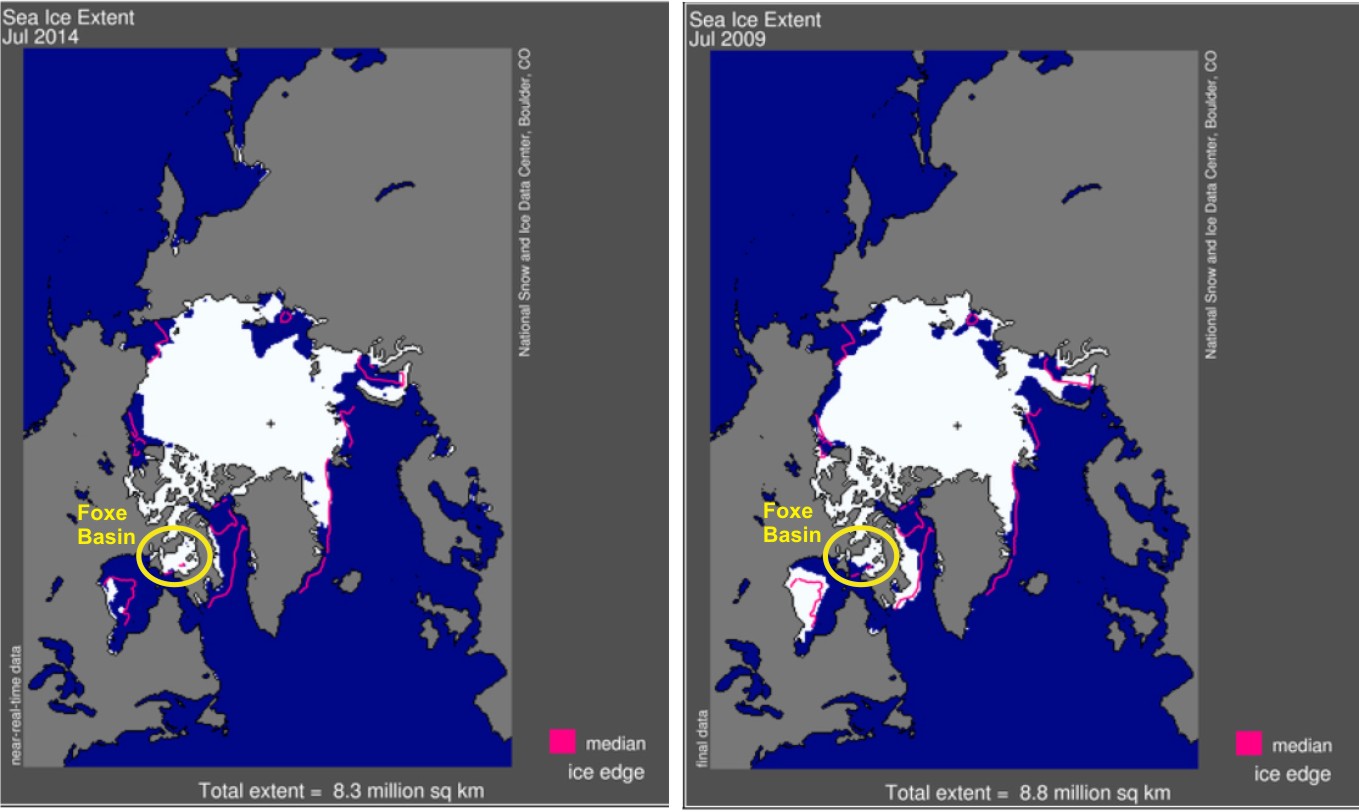
In 2009, I asked polar bear biologist Lily Peacock what appeared to be an innocuous question about Foxe Basin sea ice1 at a scientific workshop that got everyone’s attention.

The question — and the reaction — might surprise you.

Arctic sea ice 2009 vs 2014 NSIDC BIST Foxe Basin marked_PolarBearScience Continue reading

Journalists still pushing the “polar bears eat snow geese story,” as if it matters

I wrote about this issue in January (January – and journalists are still pushing it).

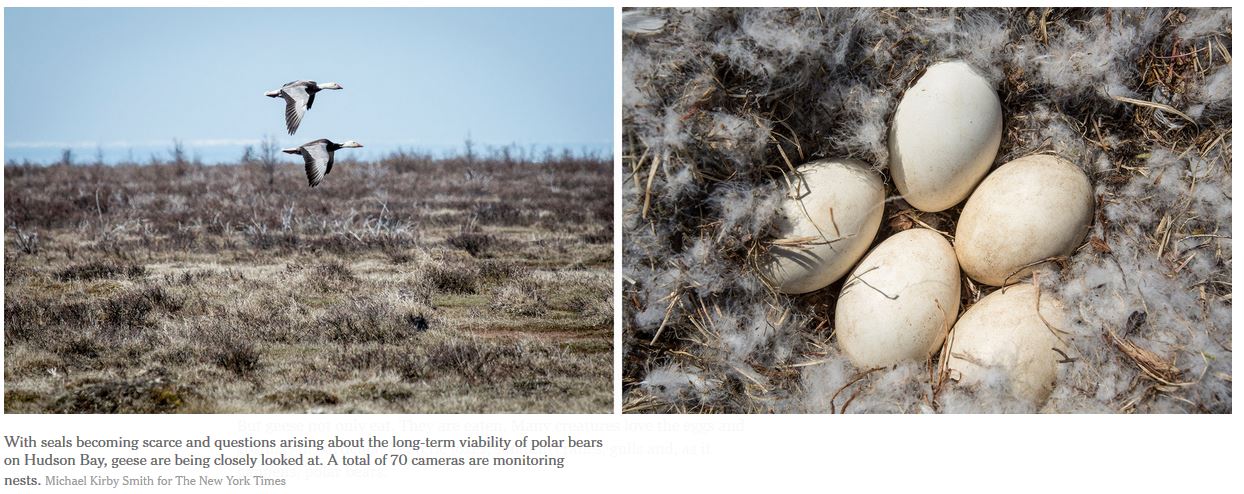
Courtesy NY Times, Sept. 22 2014.

Figure 1. Courtesy NY Times, Sept. 22 2014. Click to enlarge.

This month, the New York Times (September 22, 2014 James Gorman, “For Polar Bears, a Climate Change Twist”) is pushing it big-time (and so it’s been picked up elsewhere, like by the Anchorage Daily News).

Myths and misinformation about this phenomenon dispelled below.
Continue reading

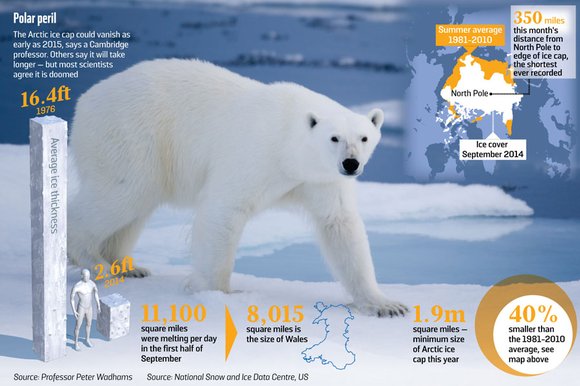
Polar bears are not in peril due to recent sea ice changes

To counter the misleading ploy used by the Sunday Times — of implying polar bears are in peril because of recent changes in Arctic sea ice (Sunday Times & The Australian, 21/22 Sept. 2014 Arctic ice cap in a ‘death spiral’) — I’ll go over again why the polar bear as a species is not threatened by declines in summer sea ice or even winter ice that is predominantly “thin” (first year) ice.

Polar Peril_Arctic ice cap in a death spiral_SundayTimes_Sept 21 2014_21_NWS_20_POLAR_1096592k
Graphic above from the Sunday Times, September 21, 2014
Continue reading

Ian Stirling now says the polar bear that “died of climate change” last year was “in his prime”

With Barents Sea ice way above average this summer, Polar Bear Specialist Group biologist Ian Stirling now claims the old polar bear that he said died of climate change last year on Svalbard was “in his prime” and still blames the bear’s death on lack of sea ice — despite all evidence to the contrary.

UPDATE Sept. 19, 2014 typo fixed in Fig. 1 caption [sea ice low for 2012 was 3.41 m2km, not 4.1, see here.]

Figure 1. The National Snow and Ice Data Center (NSIDC) says the September minimum for 2014 is “imminent” and suggests the low may come in at 5.1 million square kilometers (far short of the 4.1 m2km low reached in 2012. About the much larger than average amount of ice around Svalbard and Franz Josef Land, they said only: “As was the case for the beginning of the month, extent remains below average in all sectors of the Arctic except for a region in the Barents Sea, east of Svalbard.”

Figure 1. The National Snow and Ice Data Center (NSIDC) says the September minimum for 2014 is “imminent” and suggests the low may come in at 5.1 million square kilometers (far short of the 4.1 3.41 m2km low reached in 2012. About the much larger than average amount of ice around Svalbard and Franz Josef Land, they said only: “As was the case for the beginning of the month, extent remains below average in all sectors of the Arctic except for a region in the Barents Sea, east of Svalbard.”

Continue reading

Polar bear attacks on humans – an evolutionary perspective

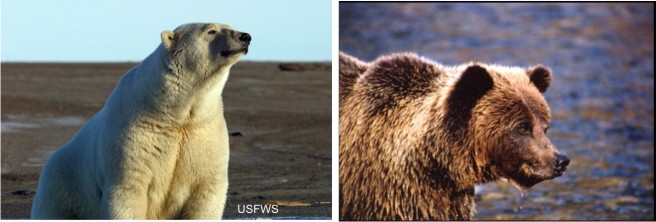
What with polar bear populations higher than they were 50 years ago and with many bears onshore during the ice-free season, a few polar bear attacks are to be expected – but how does the behaviour that drives those attacks compare with their closest evolutionary cousin, the grizzly?

Polar bear grizzly profiles_composite_Sept 15

I’ve done some summer reading on this topic, which I’ve summarized below. The results may surprise you.
Continue reading