Category Archives: Conservation Status

Polar bear myths perpetuate from the mouth of stuck-in-the-past Ian Stirling

In my last post, I complained about “vague and misleading statements” made by polar bear specialists and conservation advocates. Here’s a recent example of that phenomena, from veteran polar bear biologist Ian Stirling.
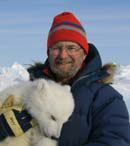
 

stirling_UA faculty page photo accessed July 22 2012

The magazine of Canada’s North, UpHere, published an interview with Ian Stirling this month. The piece begins:

“No fear-mongering. No exaggeration. For Ian Stirling, it’s purely about the science.”

Yeah, well – judge for yourself. Here’s a sample:

“We have lost on average about half the sea ice that we had in 1979, which is the first year that satellite coverage of the Arctic was taken [he’s talking about September ice here]. Places like Hudson Bay are breaking up three weeks earlier than they used to and freezing up a couple weeks later. We’re going to have even more significant effects over a much wider area in the Arctic. We’re likely to lose another 30 or 40 percent, or even half of the bears that we have today in the middle of the century, and unchecked, we will likely have very few bears left at the turn of the next century. In 2100, we’ll probably just have a few small remaining pockets in the northern Canadian Arctic islands and northern Greenland.”

Read the rest here.

Stirling’s opinion about polar bears and climate change hasn’t changed since at least 2004 despite the following scientific developments: Continue reading
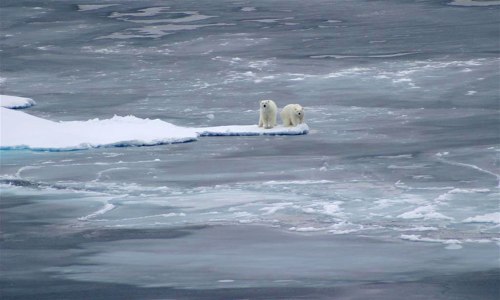
Many otherwise intelligent people believe only a few hundred polar bears remain

The other day, I got a call from an international journalist who admitted he’d done no research into the polar bear issue but believed, based on media reports he’d heard, that there must only be about 100-200 bears remaining in the Arctic. I know he’s not alone.

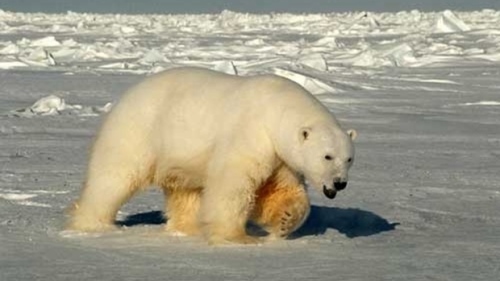
polar-bears-3-large_USGS

This journalist was utterly astonished to learn that the IUCN Red List assessment in 2015 put the polar bear population total at 22,000-31,000 bears and demanded proof that this was true.

Here is a summary of the Red List report, with references and links to the report:

The 2015 IUCN Red List assessment update for polar bears (published 18 November 2015) states that the global polar bear population is 22,000 – 31,000 (26,000), that the current trend is ‘unknown’ and that there is only a 70% chance that polar bear numbers will decline by 30% in 35 years (with virtually zero chance that the numbers will decline by 80% or more by 2050) – in other words, zero chance of extinction. [Detailed in a document called 22823 Ursus maritimus]. It classifies the polar bear as ‘vulnerable’ to extinction based on predictions of future sea ice decline due to global warming [similar to ‘threatened’ by other organizations] Pdf here.

Below is a list of what truly worrying species declines look like: that is, animals whose numbers have actually declined, no prophesies involved (Adler 2008).
Continue reading

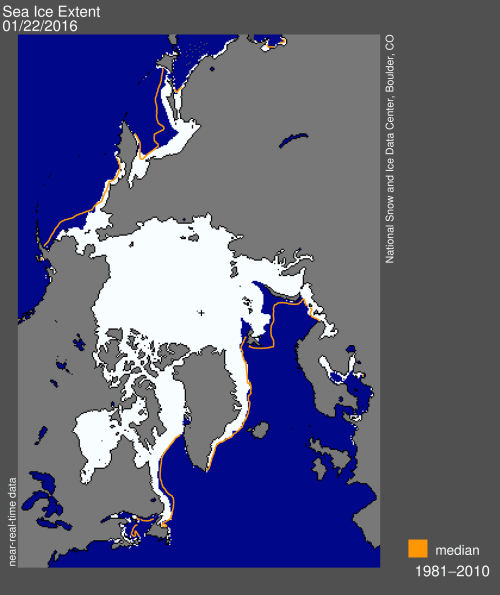
Polar bear survival: habitat 2013 vs. 2016 for 22 January

Using sea ice maps issued by the National Sea Ice Data Center (NSIDC), it’s interesting to compare these two years with respect to polar bear health and survival (keeping in mind that no polar bears live in what I like to call the armpits of the Arctic – the Sea of Okhotsk, the Baltic Sea or in the Gulf of St. Lawrence)1:

22 January 2016

Sea ice extent 2016 Jan 22 NSIDC

Continue reading

The old ‘website revision’ excuse for not updating polar bear status changes

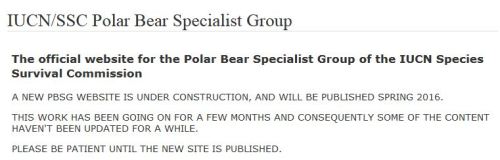
Apparently, the IUCN Polar Bear Specialist Group (PBSG) thinks that it’s OK to mislead the public on the conservation status of polar bears for half a year because its website is being revamped. This conservation organization is of the opinion that people landing on their website while searching for official polar bear status information don’t need to know right away that a new IUCN Red List document was published in November 2015. We know this because the message below appeared on the PBSG homepage 14 January 2016 (text in bold was there previously: the new message is in CAPS), screencap of entire page at 16 Jan 2016 pdf here:

PBSG website notice_2016 Jan 14 update

It appears that the PBSG feels that the public can wait to be told about 2015 Red List decision until the PBSG are ready for them to be told, which could be anywhere from March to the end of June 2016, depending on what definition of “spring” they use. Anyone (like moi) suggesting this tactic is paramount to withholding unpleasant information is just being “impatient.”

Decide for yourself but to me, this PBSG message speaks volumes: it says the 2015 IUCN Red List assessment is bad news for polar bear predictions of gloom and doom. Polar bear specialists don’t want to talk about it because it is a slap-down of all previous attempts at predicting a grim future for the bears (see the summary at the end of this post).
Continue reading

Genetic similarity of polar bears does not make them vulnerable to global warming

A new genetics paper suggests that global warming will “fragment” polar bear habitat to such an extent that it will further reduce the already-low genetic variability documented in the bears, with disastrous effects on survival.

Beaufort Sea male polar bear USGS_2005 Amstrup photo

However, that argument only works if you disregard a rather large body of literature on other mammals as well as the history of polar bears themselves. I’ve addressed this issue before (“Low genetic diversity will not make polar bears more vulnerable to extinction”) and what I said then needs to be repeated now:

“…there is lots of evidence to support my contention that polar bears are not more vulnerable to extinction just because they have low genetic diversity.

I continued:

Many populations that were reduced to very low numbers (i.e., gone through a ‘bottleneck’ ), ending up with low genetic variation, have subsequently recovered dramatically without adverse affects.

In other words, they not only recouped their population size after a population bottleneck but did so while dealing with subsequent environmental fluctuations and other natural threats to their survival (Lehman 1998:R723-724).

In some cases, genetic diversity increased after a population bottleneck, via mechanisms biologists are only just beginning to understand.

In fact, there is good evidence to suggest that ice age cooling is what previously fragmented polar bear populations: past warm interglacial periods brought bears closer together, confined more or less to the area within the Arctic Circle – even in winter.

Go back and read the entire genetic diversity post. I concluded it by recounting several examples of abundant and successful mammal populations with low genetic diversity (with references), including Northern elephant seals, Guadalupe fur seal, Sand Nicolas Island fox, Mouflon sheep, and North Atlantic right whale. The details are worth reviewing. If you can’t access a paper you want to read, contact me via the contact page above and I’ll send it along.

Regarding this new paper (Kutschera et al. 2016), what I said before needs repeating:

“To suggest that polar bears cannot endure a bit of Arctic warming in the future (whether natural or due to human influences on climate, or a bit of both) is absurd: climatic extremes have defined the evolutionary history of polar bears, which means that climatic extremes have fine-tuned their biological adaptability.”

In fact, the paleoclimate/genetics paper by Cronin and Cronin (2015) which I summarized a few days ago, documents those climatic extremes. See below for details on the polar bear genetic diversity paper.
Continue reading

2015 was a great year for polar bears and for EATEN

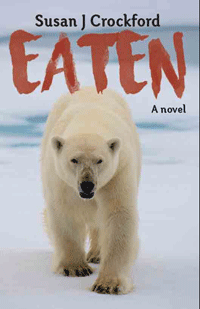
Not only did we see plenty of great news about polar bears but EATEN (my first novel) is now well on it’s way to being a resounding success. Don’t let your friends and colleagues have all the nightmares! Fabulous read for a long cold NH winter’s night but also an excellent choice for the beach…perhaps fewer nightmares?

polar_bear570  ONTARIO MINISTRY OF NATURAL RESOURCES

The Canadian Ice Service predictions for winter 2016 off eastern Canada (where my novel takes place) is for extensive ice for the third year in a row. That means only nine years to go for the situation in 2025 to meet my speculations regarding a most terrifying onslaught of starving polar bears in Newfoundland.

I don’t ask for donations here at PolarBearScience – if you appreciate my efforts (418 posts and almost 630,000 views since late July 2012) and would like to see more of the same, please buy a copy or two of my book (and don’t forget to go back and leave a brief review; only the number of stars count). Paperback editions here and here; Ebooks for immediate gratification (Kindle; All other e formats).

EATEN-cover-front_thumbnail

In 2015, the Arctic Fallacy was exposed, there were official admissions of population increases (here and here) – all after we had Twenty Good Reasons Not to Worry About Polar Bears.

More of the same for 2016!

A heartfelt Happy New Year to you and yours, from a Canadian zoologist not afraid to wonder ‘what if’ but honest enough to call the output fiction.

Susan

Survey Results: Svalbard polar bear numbers increased 42% over last 11 years

Results of this fall’s Barents Sea population survey have been released by the Norwegian Polar Institute and they are phenomenal: despite several years with poor ice conditions, there are more bears now (~975) than there were in 2004 (~685) around Svalbard (a 42 30% increase) and the bears were in good condition.

Svalbard polar bear fall 2015_Aars

Oddly, in a September report right after the count, biologist Jon Aars reported them in “excellent” condition, with some of them “as fat as pigs.” I guess “good” is the same as “excellent.”

Bears in the Russian portion of the Barents Sea were not counted this year because the Russians would not allow it; the previous total count, from 2004, was 2,650 (range ~1900-3600) for the entire region.

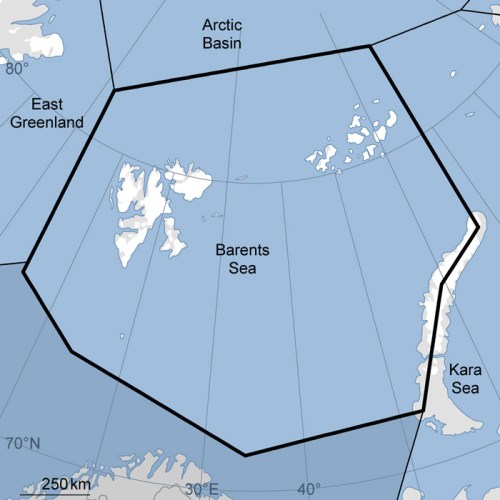
map-BarentsSea

In the map above (courtesy the IUCN Polar Bear Specialist Group), the Svalbard archipelago is on the left (Norwegian territory) and the archipelagos of Franz Josef Land and Novaya Zemlya on the right (Russian territory).

Oddly, the comments made by lead researcher Jon Aars to a Norwegian newspaper (in English), which picked this up yesterday (“Polar bears make a comeback” ), were far more positive than those in the press release (which is likely all that western media will see).

UPDATE 24 December 2015: The new population survey number for Svalbard is actually a 42% increase over the 2004 number. Thanks to Arvid Oen, a WUWT reader, for alerting Anthony Watts to the error, and to Anthony for passing it along. Title and text fixed accordingly, apologies to any others who have picked this up. Cheers and Merry Christmas.

Continue reading

Organizations fail to acknowledge 2015 Red List polar bear assessment info

You have to know that the 2015 IUCN Red List assessment for polar bears contains good news because no one is talking about it – and none of the online information sources I’ve checked have updated their polar bear profiles to reflect it.

For all its flaws (including the deceptive focus on summer sea ice), this Red List update is the most statistically robust, in-depth study of the conservation status of polar bears – why is it being ignored, especially by the conservation organizations people turn to for information online?

UPDATE: see 18 January 2016 post here.

Continue reading

Ian Stirling uses lifetime award to repeat flawed predictions for polar bears

It has been less than a month since the 2015 IUCN Red List assessment for polar bears was announced, which emphasized that the population trend for polar bears is unknown and that there is only a 70% chance that polar bear numbers could decline by 30% over the next 35 years.

ian-stirling_full

Yet, in a press release announcing the Weston Family Prize for lifetime achievement in northern research (along with $50,000) to Ian Stirling for his work on polar bears (Newswire, December 9, 2015), Stirling is quoted repeating an out-of-date prediction:

“Dr. Stirling estimates that about half of the polar bear population around the circumpolar Arctic could disappear by 2050 to 2060, if climate warming continues as is currently projected…”

I’d have thought that if Stirling did not agree with the IUCN assessment prepared by his colleagues, he would have said so last month when the report was released to international fanfare. Instead, he seems to be deliberately ignoring the 2015 IUCN Red List assessment and pretending that the flawed predictions he had a hand in making are still plausible.  Continue reading

Paris climate change deal will not stop polar bears dying due to thick ice in spring

Thick spring ice due to natural causes is currently the single biggest threat to polar bears. Not declining summer sea ice – thick spring ice. That could change in the future but right now, the evidence supports that statement.

polar_bear with collar_USGS

Polar bear deaths due to cyclical changes in Arctic sea ice thickness in the spring have continued despite rising CO2 emissions and declining summer sea ice extent (last major incident, 2004-2006): there is no reason to expect this will not continue. Unwarranted attention on summer ice extent has deflected attention from this major cause of local polar bear population decline.

Sea ice models do not address past or future changes in spring ice thickness and predictive models of polar bear survival blame all population declines on summer sea ice declines despite strong evidence to the contrary (Crockford 2015: The Arctic Fallacy). Continue reading